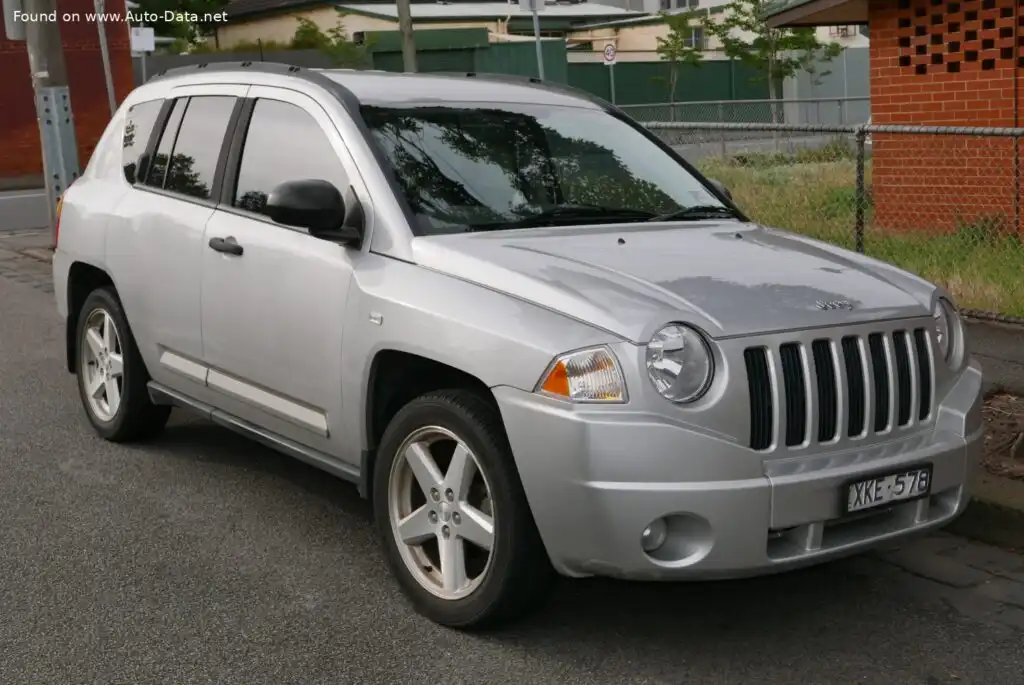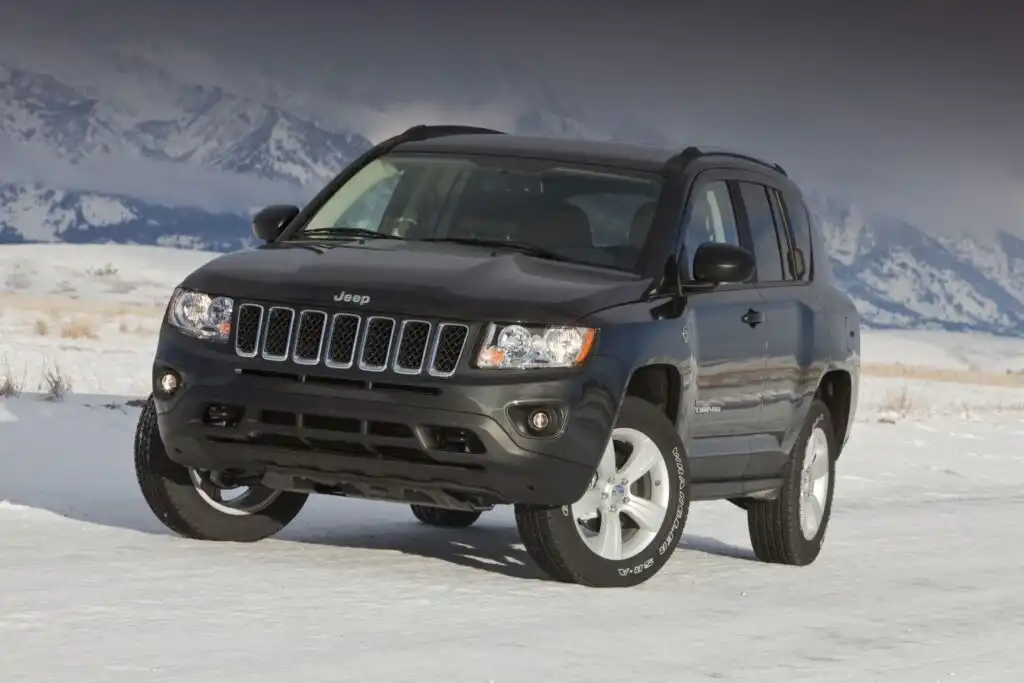
The Jeep Compass I (MK), specifically the facelifted version introduced in 2011, represented Jeep’s entry into the compact crossover SUV segment. Produced from 2011 to 2013, this variant featured a 2.0-liter gasoline engine producing 158 horsepower, paired exclusively with a continuously variable transmission (CVT). This configuration aimed to provide a balance of fuel efficiency and adequate performance for everyday driving, positioning itself as a more accessible option within the Compass lineup. The facelift brought updated styling and some interior refinements compared to the original 2007 model, but the core mechanicals remained largely consistent.
Technical Specifications
| Brand | Jeep |
| Model | Compass |
| Generation | Compass I (MK, facelift 2011) |
| Type (Engine) | 2.0 (158 Hp) CVT |
| Start of production | 2011 |
| End of production | 2013 |
| Powertrain Architecture | Internal Combustion engine |
| Body type | SUV, Crossover |
| Seats | 5 |
| Doors | 5 |
| Fuel consumption (urban) | 10.2-10.7 l/100 km (23.1 – 22 US mpg) |
| Fuel consumption (extra urban) | 8.4-8.7 l/100 km (28 – 27 US mpg) |
| Fuel Type | Petrol (Gasoline) |
| Weight-to-power ratio | 9.1 kg/Hp |
| Weight-to-torque ratio | 7.6 kg/Nm |
| Power | 158 Hp @ 6400 rpm |
| Torque | 191 Nm @ 5000 rpm (140.87 lb.-ft. @ 5000 rpm) |
| Maximum engine speed | 6750 rpm |
| Engine layout | Front, Transverse |
| Engine Model/Code | World / ECN |
| Engine displacement | 1998 cm3 (121.93 cu. in.) |
| Number of cylinders | 4 |
| Engine configuration | Inline |
| Cylinder Bore | 86 mm (3.39 in.) |
| Piston Stroke | 86 mm (3.39 in.) |
| Compression ratio | 10.5:1 |
| Number of valves per cylinder | 4 |
| Fuel injection system | Multi-port manifold injection |
| Engine aspiration | Naturally aspirated engine |
| Valvetrain | DOHC, Dual VVT |
| Engine oil capacity | 4.26 l (4.5 US qt | 3.75 UK qt) |
| Coolant capacity | 6.8 l (7.19 US qt | 5.98 UK qt) |
| Kerb Weight | 1445 kg (3185.68 lbs.) |
| Trunk (boot) space – minimum | 643 l (22.71 cu. ft.) |
| Trunk (boot) space – maximum | 1519 l (53.64 cu. ft.) |
| Fuel tank capacity | 51.5 l (13.6 US gal | 11.33 UK gal) |
| Length | 4448 mm (175.12 in.) |
| Width | 1812 mm (71.34 in.) |
| Height | 1651 mm (65 in.) |
| Wheelbase | 2635 mm (103.74 in.) |
| Front track | 1520 mm (59.84 in.) |
| Rear track | 1520 mm (59.84 in.) |
| Ride height (ground clearance) | 206 mm (8.11 in.) |
| Minimum turning circle | 10.8-11.3 m (35.43 – 37.07 ft.) |
| Front brakes | Ventilated discs, 294×26 mm |
| Rear brakes | Drum, 229×35 mm |
| Gearbox | automatic transmission CVT |
Powertrain & Engine Architecture
The 2011-2013 Jeep Compass 2.0L CVT utilized the World/ECN engine, a 1.998-liter inline-four cylinder gasoline engine. This engine featured a dual overhead camshaft (DOHC) valvetrain with dual variable valve timing (VVT) to optimize performance and fuel efficiency across the rev range. Fuel delivery was handled by a multi-port fuel injection system. The engine produced 158 horsepower at 6400 rpm and 191 Nm (140.87 lb-ft) of torque at 5000 rpm. The continuously variable transmission (CVT) was chosen for its smooth operation and ability to keep the engine operating in its most efficient range. While CVTs are known for fuel economy, they often lack the direct feel of a traditional automatic transmission. The World/ECN engine was a relatively common design used across several Chrysler and partner vehicles, known for its simplicity and reasonable reliability.
Driving Characteristics
The 158 hp 2.0L engine paired with the CVT delivered adequate, but not particularly exciting, performance. Acceleration was sufficient for everyday driving situations, but passing maneuvers required planning. The CVT’s stepless gear ratios eliminated traditional shift points, resulting in a smooth, linear power delivery. However, this smoothness sometimes came at the expense of responsiveness. Compared to the available manual transmission or the more powerful 2.4L engine option, this configuration felt noticeably less energetic. The CVT tended to hold the engine at higher RPMs during acceleration, which could be perceived as droning by some drivers. The front-wheel-drive configuration contributed to reasonable fuel economy, but limited traction in adverse weather conditions. The gear ratios of the CVT were tuned for efficiency, prioritizing fuel savings over brisk acceleration. This meant that while highway cruising was comfortable, demanding situations required a heavier foot on the accelerator.
Equipment & Trim Levels
The 2.0L CVT Compass typically came standard with features like air conditioning, power windows and locks, a basic audio system with auxiliary input, and steel wheels with wheel covers. Higher trim levels, such as the Limited, added features like alloy wheels, upgraded audio systems, a sunroof, and leather upholstery. Optional extras included a navigation system, remote start, and a premium sound system. The interior design was functional but not luxurious, with hard plastic surfaces dominating the cabin. The focus was on practicality and affordability rather than premium materials. The base models were fairly spartan, while the Limited trim offered a more comfortable and visually appealing interior. The Compass aimed to provide essential features at a competitive price point.
Chassis & Braking
The Compass utilized an independent McPherson strut suspension in the front and an independent multi-link suspension in the rear. This setup provided a reasonably comfortable ride, although it wasn’t particularly sporty. Stabilizer bars were included at both ends to reduce body roll during cornering. The braking system consisted of ventilated discs in the front and drum brakes in the rear. Anti-lock braking system (ABS) was standard. The relatively modest power output of the 2.0L engine meant that the braking system was generally adequate for most driving situations. The rear drum brakes were a cost-saving measure, typical for entry-level trims. The suspension tuning prioritized ride comfort over handling precision.
Market Reception & Comparison
Critics generally viewed the 2.0L CVT Compass as a competent but unremarkable vehicle. The CVT was often criticized for its lack of responsiveness and the droning engine noise. Fuel economy was a positive point, but the overall driving experience was considered bland. Compared to the 2.4L engine option, the 2.0L offered lower performance but a slightly better fuel economy. The 2.0L was positioned as the entry-level engine choice, appealing to buyers prioritizing affordability and fuel efficiency over performance. Reliability was generally average, with some reports of CVT issues over the long term. Consumer reports indicated that the 2.4L engine was generally more reliable than the 2.0L, and the manual transmission offered a more engaging driving experience.
Legacy
The 2011-2013 Jeep Compass 2.0L CVT remains a relatively common sight on the used car market. The powertrain, while not known for exceptional performance or longevity, is generally considered reliable if properly maintained. The CVT, however, requires regular fluid changes to prevent premature failure. These vehicles are often sought after by budget-conscious buyers looking for an affordable and practical compact SUV. While it may not offer the refinement or driving dynamics of more modern crossovers, the Compass 2.0L CVT provides a functional and economical transportation option. The availability of affordable parts and relatively simple mechanicals contribute to its continued appeal as a budget-friendly vehicle. However, potential buyers should be aware of the potential for CVT issues and ensure that maintenance records are available.