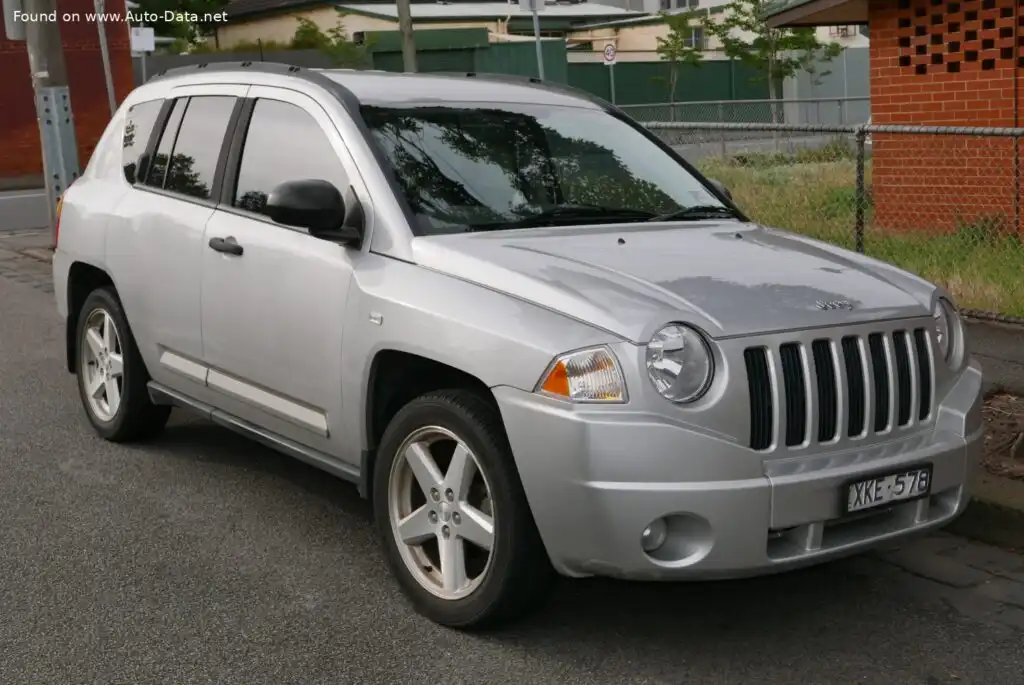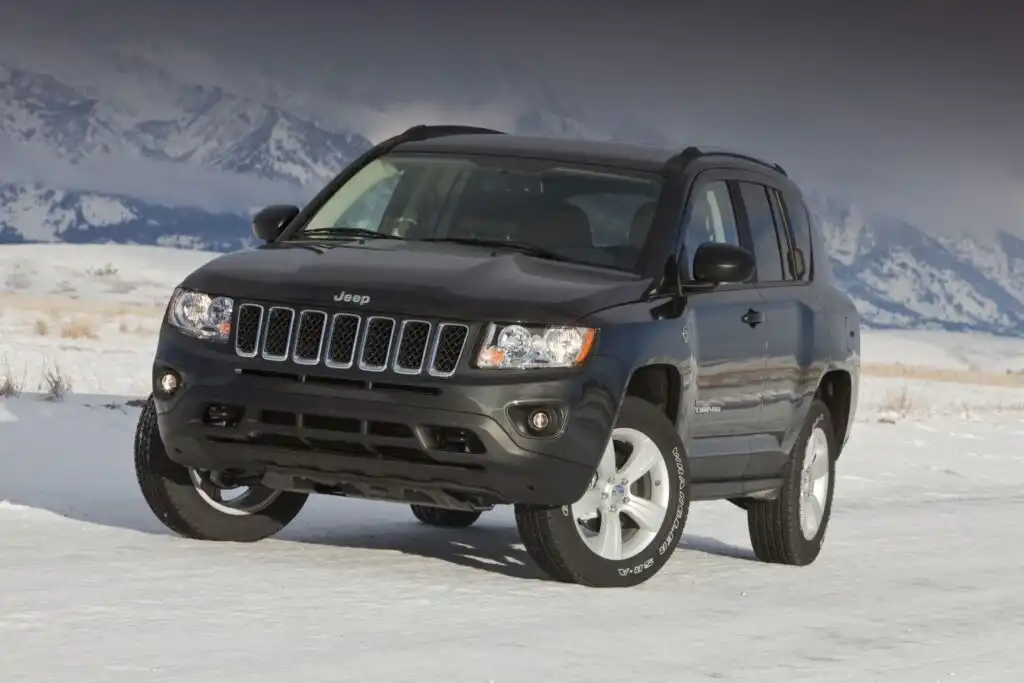
The Jeep Compass I (MK), specifically the facelifted version produced from 2011 to 2015, represented Jeep’s entry into the increasingly popular compact crossover SUV segment. The 2.2 CRD variant, equipped with a 136 horsepower turbodiesel engine, was a significant offering, particularly in European markets where diesel fuel was prevalent and fuel efficiency was highly valued. This model year saw updates to the original Compass (introduced in 2007), aiming to address criticisms regarding interior quality and overall refinement. The 2.2 CRD trim occupied a middle ground in the Compass lineup, offering a balance between affordability and capability, positioned above the base gasoline engines and below the more powerful, though less common, options.
Technical Specifications
| Brand | Jeep |
| Model | Compass |
| Generation | Compass I (MK, facelift 2011) |
| Type (Engine) | 2.2 CRD (136 Hp) |
| Start of production | 2011 |
| End of production | 2015 |
| Powertrain Architecture | Internal Combustion engine |
| Body type | SUV, Crossover |
| Seats | 5 |
| Doors | 4 |
| Fuel consumption (urban) | 7.4 l/100 km (31.8 US mpg) |
| Fuel consumption (extra urban) | 5.4 l/100 km (43.6 US mpg) |
| Fuel consumption (combined) | 6.1 l/100 km (38.6 US mpg) |
| CO2 emissions | 161 g/km |
| Fuel Type | Diesel |
| Acceleration 0 – 100 km/h | 10.9 sec |
| Acceleration 0 – 62 mph | 10.9 sec |
| Acceleration 0 – 60 mph | 10.4 sec |
| Maximum speed | 180 km/h (111.85 mph) |
| Emission standard | Euro 5 |
| Weight-to-power ratio | 11.5 kg/Hp |
| Weight-to-torque ratio | 4.9 kg/Nm |
| Power | 136 Hp @ 3600 rpm |
| Torque | 320 Nm @ 1400 rpm (236.02 lb.-ft. @ 1400 rpm) |
| Engine layout | Front, Transverse |
| Engine Model/Code | ENE |
| Engine displacement | 2143 cm3 (130.77 cu. in.) |
| Number of cylinders | 4 |
| Engine configuration | Inline |
| Cylinder Bore | 83 mm (3.27 in.) |
| Piston Stroke | 99 mm (3.9 in.) |
| Compression ratio | 16.2:1 |
| Number of valves per cylinder | 4 |
| Fuel injection system | Diesel Commonrail |
| Engine aspiration | Turbocharger, Intercooler |
| Valvetrain | DOHC |
| Engine oil capacity | 7.5 l (7.93 US qt | 6.6 UK qt) |
| Coolant capacity | 9.5 l (10.04 US qt | 8.36 UK qt) |
| Kerb Weight | 1559-1602 kg (3437.01 – 3531.81 lbs.) |
| Max. weight | 2054 kg (4528.29 lbs.) |
| Max load | 452-495 kg (996.49 – 1091.29 lbs.) |
| Trunk (boot) space – minimum | 458 l (16.17 cu. ft.) |
| Trunk (boot) space – maximum | 1269 l (44.81 cu. ft.) |
| Fuel tank capacity | 51 l (13.47 US gal | 11.22 UK gal) |
| Max. roof load | 68 kg (149.91 lbs.) |
| Permitted trailer load with brakes (12%) | 1200 kg (2645.55 lbs.) |
| Permitted trailer load without brakes | 450 kg (992.08 lbs.) |
| Length | 4448 mm (175.12 in.) |
| Width | 1812 mm (71.34 in.) |
| Height | 1718 mm (67.64 in.) |
| Wheelbase | 2635 mm (103.74 in.) |
| Front track | 1520 mm (59.84 in.) |
| Rear track | 1520 mm (59.84 in.) |
| Front overhang | 916 mm (36.06 in.) |
| Rear overhang | 897 mm (35.31 in.) |
| Ride height (ground clearance) | 205 mm (8.07 in.) |
| Minimum turning circle | 11.3 m (37.07 ft.) |
| Front suspension | Independent, McPherson with coil spring and anti-roll bar |
| Rear suspension | Independent multi-link spring suspension with stabilizer |
| Front brakes | Ventilated discs |
| Rear brakes | Disc |
| Steering type | Steering rack and pinion |
| Power steering | Hydraulic |
| Tires size | 215/60 R17 |
| Wheel rims size | 6.5J x 15 |
Powertrain & Engine Architecture
The heart of the 2.2 CRD Compass is the Mercedes-Benz-derived 2.2-liter inline-four cylinder diesel engine, internally designated as the ENE. This engine was a common sight in various Stellantis (then Chrysler/Fiat) vehicles. It utilizes a common rail direct injection system, delivering fuel at extremely high pressures for optimized combustion. The engine features a variable geometry turbocharger (VGT) and an intercooler, enhancing both power and efficiency. The DOHC (Double Overhead Camshaft) valvetrain, with four valves per cylinder, contributes to improved breathing and overall engine performance. The 2.2 CRD was paired with a six-speed automatic transmission, offering smooth shifts and contributing to the vehicle’s relatively relaxed driving experience. This transmission was a crucial component in making the diesel engine accessible to a wider range of drivers who preferred the convenience of an automatic.
Driving Characteristics
The 136 horsepower and 320 Nm (236 lb-ft) of torque produced by the 2.2 CRD engine provided adequate, though not exhilarating, performance for the Compass. Acceleration from 0-60 mph took around 10.4 seconds, making it competitive with other compact crossovers of the time. The automatic transmission, while smooth, did contribute to a slight reduction in responsiveness compared to the available manual transmission. The engine’s peak torque, available from a low 1400 rpm, meant that the Compass felt reasonably strong in everyday driving situations, such as merging onto highways or overtaking slower vehicles. However, it lacked the outright punch of higher-output gasoline engines or more powerful diesel variants. The front-wheel-drive configuration, standard on this trim, provided decent traction in normal conditions, but limited its off-road capabilities compared to the available four-wheel-drive models.
Equipment & Trim Levels
The 2.2 CRD Compass typically came with a reasonable level of standard equipment. This included air conditioning, power windows and locks, a basic audio system with CD player, and steel wheels with wheel covers. Higher trim levels, such as the Limited, added features like alloy wheels, upgraded audio systems, a sunroof, and leather upholstery. Optional extras included a navigation system, rear parking sensors, and heated front seats. The interior design was functional but not particularly luxurious, reflecting the Compass’s positioning as an affordable crossover. Safety features included ABS brakes, electronic stability control, and multiple airbags.
Chassis & Braking
The Compass I utilized a unibody construction. The front suspension employed an independent McPherson strut setup, while the rear featured an independent multi-link suspension. This configuration aimed to provide a comfortable ride and reasonable handling. The 2.2 CRD models were equipped with ventilated disc brakes at the front and solid discs at the rear. The hydraulic power steering provided a light and easy steering feel. Stabilizer bars were fitted to both the front and rear axles to reduce body roll during cornering.
Market Reception & Comparison
The 2.2 CRD Compass received mixed reviews. Critics generally praised its fuel economy and the engine’s torque, making it a practical choice for long-distance driving. However, the interior quality and overall driving experience were often criticized as being below par compared to competitors like the Honda CR-V or Toyota RAV4. Compared to the gasoline-powered Compass models, the 2.2 CRD offered significantly better fuel economy, but at a higher initial purchase price. Against other diesel-powered crossovers, the Compass offered a competitive price point, but lacked the refinement and brand prestige of some European rivals.
Legacy
The 2.2 CRD engine proved to be relatively reliable, although, like any diesel engine, it required regular maintenance, including oil changes and filter replacements. The automatic transmission, when properly maintained, also demonstrated good durability. In the used car market, the 2.2 CRD Compass represents a relatively affordable and fuel-efficient option for those seeking a compact crossover. However, potential buyers should be aware of the potential for diesel-specific maintenance issues, such as diesel particulate filter (DPF) clogging. The Compass I, while not a groundbreaking vehicle, played a role in expanding Jeep’s lineup and appealing to a broader range of customers.