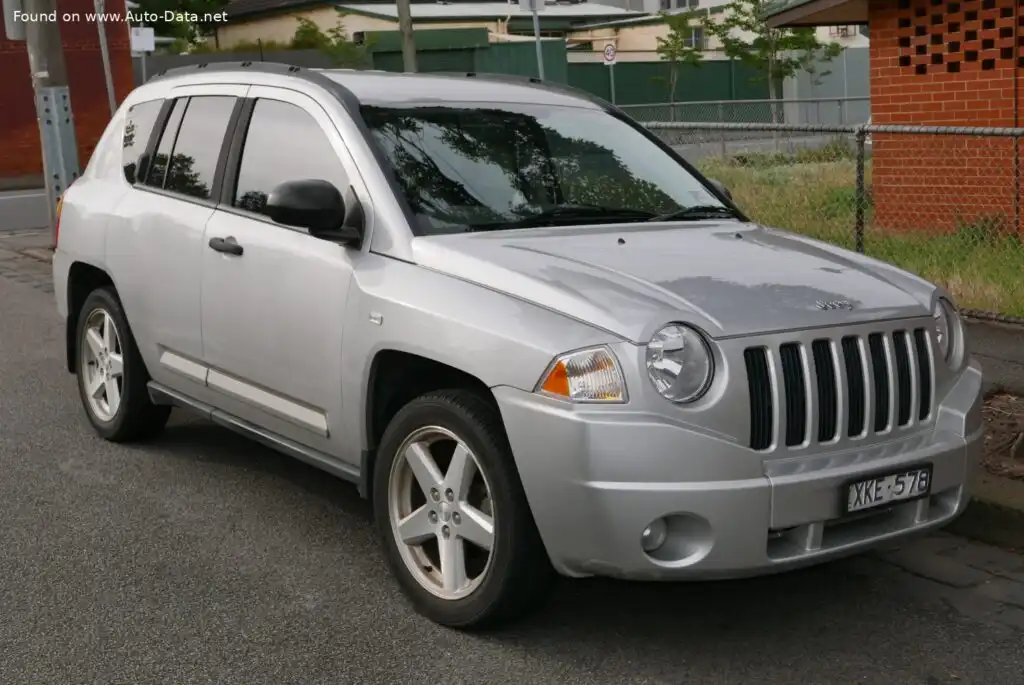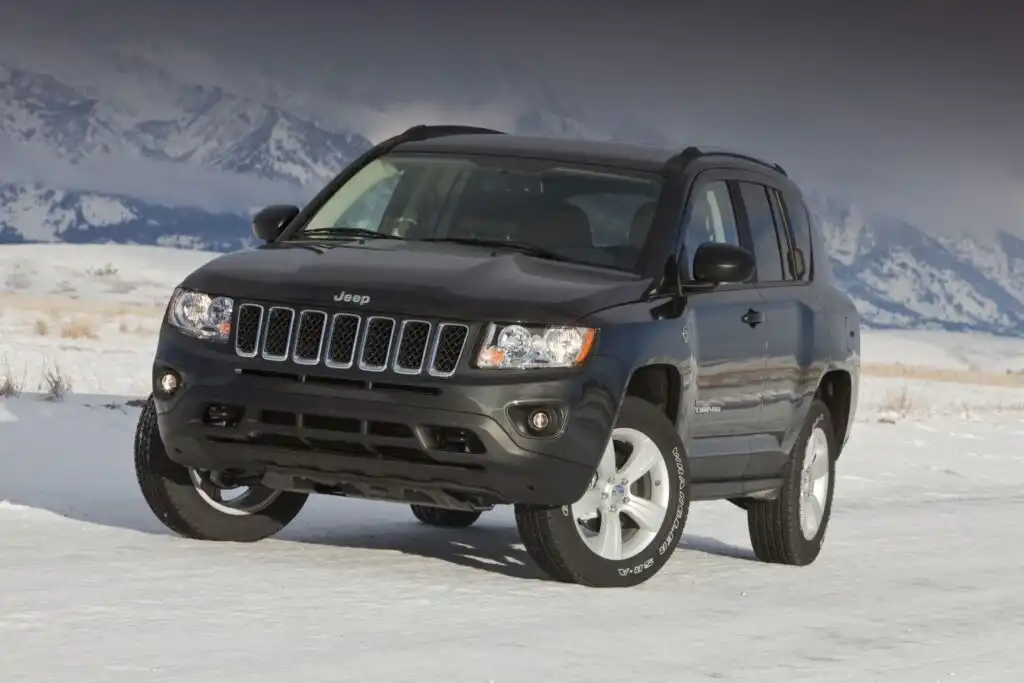
The Jeep Compass I (MK, facelift 2011) 2.4 (170 Hp) 4×4 Automatic represents a mid-cycle refresh of the first-generation Compass, produced from 2013 to 2016. Positioned as a more capable and refined offering within the Compass lineup, this variant aimed to broaden the model’s appeal, particularly to buyers seeking all-weather capability and a more comfortable driving experience. It was part of the MK platform, sharing its underpinnings with the Dodge Caliber. This version sought to address some of the criticisms leveled at the initial Compass release, focusing on improved interior quality and powertrain refinement.
| Brand | Jeep |
| Model | Compass |
| Generation | Compass I (MK, facelift 2011) |
| Type (Engine) | 2.4 (170 Hp) 4×4 Automatic |
| Start of production | 2013 |
| End of production | 2016 |
| Powertrain Architecture | Internal Combustion engine |
| Body type | SUV, Crossover |
| Seats | 5 |
| Doors | 5 |
| Fuel consumption (urban) | 12 l/100 km (19.6 US mpg) |
| Fuel consumption (extra urban) | 7.1 l/100 km (33.1 US mpg) |
| Fuel consumption (combined) | 9 l/100 km (26.1 US mpg) |
| CO2 emissions | 209 g/km |
| Fuel Type | Petrol (Gasoline) |
| Acceleration 0 – 100 km/h | 10.7 sec |
| Acceleration 0 – 60 mph | 10.2 sec |
| Maximum speed | 180 km/h (111.85 mph) |
| Emission standard | Euro 6 |
| Weight-to-power ratio | 8.9 kg/Hp |
| Weight-to-torque ratio | 6.9 kg/Nm |
| Power | 170 Hp @ 6000 rpm |
| Torque | 220 Nm @ 4500 rpm (162.26 lb.-ft. @ 4500 rpm) |
| Engine layout | Front, Transverse |
| Engine Model/Code | World / ED3 |
| Engine displacement | 2359 cm3 (143.96 cu. in.) |
| Number of cylinders | 4 |
| Engine configuration | Inline |
| Cylinder Bore | 88 mm (3.46 in.) |
| Piston Stroke | 97 mm (3.82 in.) |
| Compression ratio | 10.5:1 |
| Number of valves per cylinder | 4 |
| Fuel injection system | Multi-port manifold injection |
| Engine aspiration | Naturally aspirated engine |
| Valvetrain | DOHC, Dual VVT |
| Engine oil capacity | 4.26 l (4.5 US qt | 3.75 UK qt) |
| Coolant capacity | 6.8 l (7.19 US qt | 5.98 UK qt) |
| Kerb Weight | 1511-1576 kg (3331.18 – 3474.49 lbs.) |
| Max. weight | 2010 kg (4431.29 lbs.) |
| Max load | 434-499 kg (956.81 – 1100.11 lbs.) |
| Trunk (boot) space – minimum | 458 l (16.17 cu. ft.) |
| Trunk (boot) space – maximum | 1269 l (44.81 cu. ft.) |
| Fuel tank capacity | 51 l (13.47 US gal | 11.22 UK gal) |
| Permitted trailer load with brakes (12%) | 1500 kg (3306.93 lbs.) |
| Permitted trailer load without brakes | 450 kg (992.08 lbs.) |
| Length | 4448 mm (175.12 in.) |
| Width | 1812 mm (71.34 in.) |
| Height | 1718 mm (67.64 in.) |
| Wheelbase | 2635 mm (103.74 in.) |
| Front track | 1520 mm (59.84 in.) |
| Rear track | 1520 mm (59.84 in.) |
| Front overhang | 916 mm (36.06 in.) |
| Rear overhang | 897 mm (35.31 in.) |
| Ride height (ground clearance) | 205 mm (8.07 in.) |
| Minimum turning circle | 11.3 m (37.07 ft.) |
| Approach angle | 20° |
| Departure angle | 32° |
| Ramp-over angle | 20° |
| Drivetrain Architecture | All wheel drive (4×4) |
| Number of gears | 6 |
| Type of gearbox | automatic transmission |
| Front suspension | Independent, type McPherson with coil spring and anti-roll bar |
| Rear suspension | Independent multi-link spring suspension with stabilizer |
| Front brakes | Ventilated discs |
| Rear brakes | Disc |
| Steering type | Steering rack and pinion |
| Power steering | Hydraulic Steering |
| Tires size | 215/55 R18 |
| Wheel rims size | 7J x 18 |
Powertrain & Engine Architecture
The 2013-2016 Jeep Compass 2.4 4×4 Automatic is powered by the Chrysler World Engine family, specifically the ED3 code. This 2.4-liter inline-four cylinder engine utilizes a dual overhead camshaft (DOHC) design with dual variable valve timing (VVT). The engine employs multi-port fuel injection, delivering fuel directly into the intake ports. The engine’s 170 horsepower output at 6000 rpm and 220 Nm (162 lb-ft) of torque at 4500 rpm were considered adequate for the vehicle’s weight, but not particularly sporty. The engine is transversely mounted in the front of the vehicle. Paired with this engine is a six-speed automatic transmission, providing smooth shifts but prioritizing fuel economy over rapid acceleration. This transmission was a key component in making the vehicle more accessible to a wider range of drivers, particularly those who preferred the convenience of an automatic.
Driving Characteristics
The 170 hp, automatic transmission combination in the Jeep Compass delivered a comfortable, if not exhilarating, driving experience. Acceleration from 0-60 mph took approximately 10.2 seconds, which was slower than the manual transmission variants or those equipped with the more powerful engine options. The automatic transmission’s gear ratios were tuned for fuel efficiency and smooth cruising, rather than aggressive performance. In real-world driving, the Compass 2.4 Automatic felt competent around town and on the highway, but struggled with quick overtaking maneuvers or steep inclines. The 4×4 system provided enhanced traction in inclement weather, making it a suitable choice for drivers in regions with snow or rain. The automatic transmission, while convenient, did contribute to a slight reduction in fuel economy compared to the manual transmission options.
Equipment & Trim Levels
The 2.4 4×4 Automatic trim typically included standard features such as air conditioning, power windows and locks, a basic audio system with CD player and auxiliary input, and cloth upholstery. Higher trim levels, such as the Limited, added features like leather upholstery, heated front seats, a premium audio system, and alloy wheels. Optional extras included a sunroof, navigation system, and remote start. The interior design was functional but lacked the premium feel of some competitors. The focus was on practicality and durability rather than luxury.
Chassis & Braking
The Jeep Compass utilized an independent suspension system, with a McPherson strut setup at the front and a multi-link setup at the rear. This provided a reasonably comfortable ride, although it wasn’t particularly sporty. The 4×4 system employed a fully automatic drivetrain, seamlessly switching between two-wheel drive and four-wheel drive as needed. Braking duties were handled by ventilated discs at the front and solid discs at the rear. Anti-lock braking system (ABS) was standard. The suspension was tuned to prioritize ride comfort over handling precision, making it well-suited for everyday driving conditions.
Market Reception & Comparison
The Jeep Compass 2.4 4×4 Automatic received mixed reviews from automotive critics. While the all-wheel-drive system and automatic transmission were praised for their convenience and capability, the engine’s performance and the interior’s quality were often criticized. Compared to other compact crossovers, such as the Honda CR-V and Toyota RAV4, the Compass offered a more rugged aesthetic and standard four-wheel drive, but lacked the refinement and fuel efficiency of its Japanese competitors. Fuel economy was rated at around 26.1 US mpg combined, which was average for the segment. Reliability was generally considered acceptable, but not exceptional.
Legacy
The Jeep Compass I (MK) 2.4 4×4 Automatic, while not a standout performer, remains a relatively affordable and capable used vehicle. The World Engine is generally considered reliable, although regular maintenance is crucial to prevent issues such as oil leaks and timing chain wear. The six-speed automatic transmission has proven to be durable. Today, these vehicles are often sought after by buyers looking for a budget-friendly SUV with all-wheel drive capability. The Compass helped to expand Jeep’s reach into the compact crossover segment, paving the way for the significantly improved second-generation model.