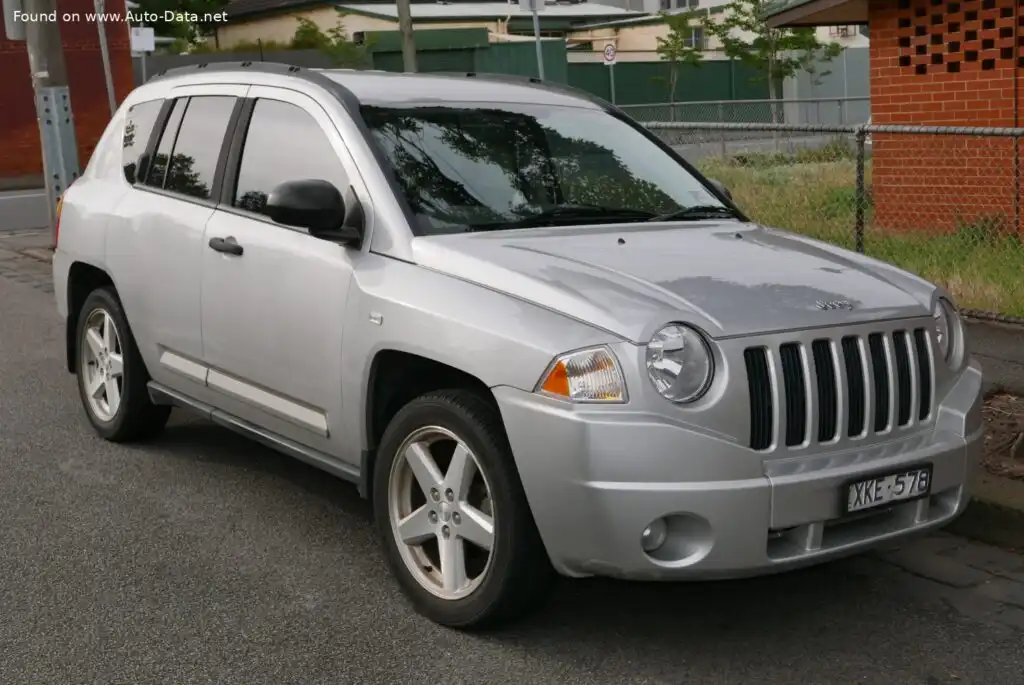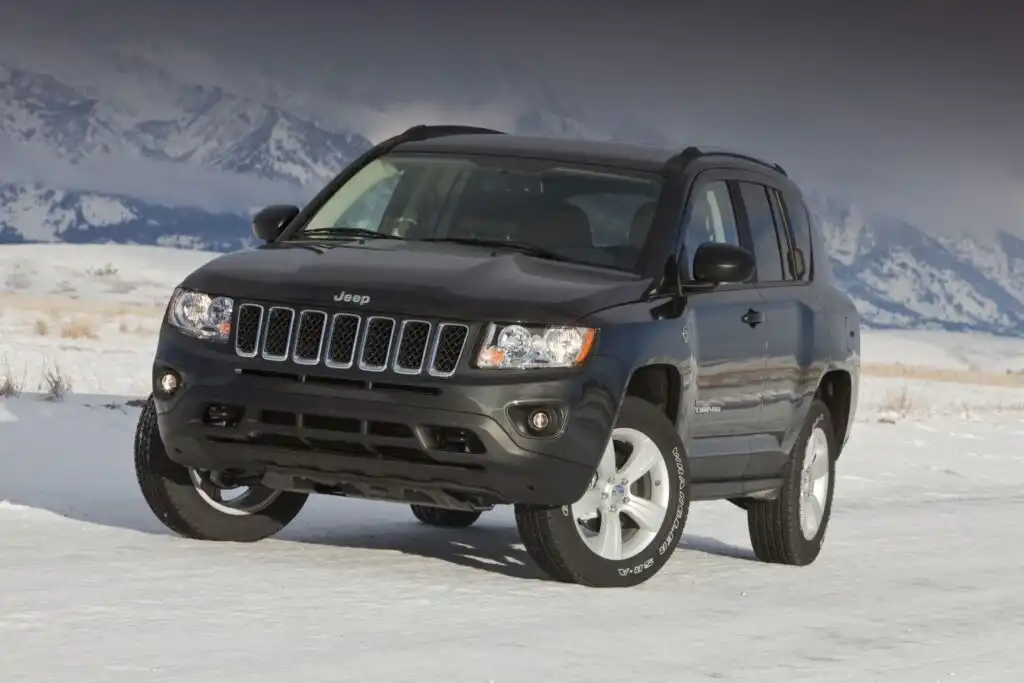
The Jeep Compass I (MK), specifically the facelifted version introduced in 2011, represented a significant update to Jeep’s entry-level crossover SUV. Produced from 2011 through 2016, this iteration of the Compass aimed to address criticisms leveled at the original model, offering revised styling, an upgraded interior, and improved mechanical components. The 2.4-liter (172 hp) variant occupied a middle ground in the Compass lineup, positioned above the base 2.0-liter engine and below the more powerful, though less commonly available, 2.0-liter turbocharged option. This model was primarily marketed towards North American consumers seeking a compact, affordable SUV with Jeep’s traditional off-road aesthetic and a degree of practicality.
Technical Specifications
| Brand | Jeep |
| Model | Compass |
| Generation | Compass I (MK, facelift 2011) |
| Type (Engine) | 2.4 (172 Hp) |
| Start of production | 2011 |
| End of production | 2016 |
| Powertrain Architecture | Internal Combustion engine |
| Body type | SUV, Crossover |
| Seats | 5 |
| Doors | 5 |
| Fuel consumption (economy) – urban (EPA) | 10.2 l/100 km (23.1 US mpg) |
| Fuel consumption (economy) – extra urban (EPA) | 8.4 l/100 km (28 US mpg) |
| Fuel consumption (economy) – combined (EPA) | 9.4 l/100 km (25 US mpg) |
| Fuel Type | Petrol (Gasoline) |
| Weight-to-power ratio | 8.2 kg/Hp, 122.2 Hp/tonne |
| Weight-to-torque ratio | 6.3 kg/Nm, 159.2 Nm/tonne |
| Power | 172 Hp @ 6000 rpm |
| Power per litre | 72.9 Hp/l |
| Torque | 224 Nm @ 4400 rpm (165.21 lb.-ft. @ 4400 rpm) |
| Maximum engine speed | 6500 rpm |
| Engine layout | Front, Transverse |
| Engine Model/Code | World / ED3 |
| Engine displacement | 2360 cm3 (144.02 cu. in.) |
| Number of cylinders | 4 |
| Engine configuration | Inline |
| Cylinder Bore | 88 mm (3.46 in.) |
| Piston Stroke | 97 mm (3.82 in.) |
| Compression ratio | 10.5:1 |
| Number of valves per cylinder | 4 |
| Fuel injection system | Multi-port manifold injection |
| Engine aspiration | Naturally aspirated engine |
| Valvetrain | DOHC, Dual VVT |
| Engine oil capacity | 4.26 l (4.5 US qt | 3.75 UK qt) |
| Coolant | 6.8 l (7.19 US qt | 5.98 UK qt) |
| Kerb Weight | 1407-1479 kg (3101.9 – 3260.64 lbs.) |
| Trunk (boot) space – minimum | 643 l (22.71 cu. ft.) |
| Trunk (boot) space – maximum | 1519 l (53.64 cu. ft.) |
| Fuel tank capacity | 51.5 l (13.6 US gal | 11.33 UK gal) |
| Permitted trailer load without brakes | 450 kg (992.08 lbs.) |
| Length | 4448 mm (175.12 in.) |
| Width | 1812 mm (71.34 in.) |
| Height | 1651 mm (65 in.) |
| Wheelbase | 2635 mm (103.74 in.) |
| Front track | 1520 mm (59.84 in.) |
| Rear (Back) track | 1520 mm (59.84 in.) |
| Front overhang | 916 mm (36.06 in.) |
| Rear overhang | 897 mm (35.31 in.) |
| Ride height (ground clearance) | 206 mm (8.11 in.) |
| Minimum turning circle (turning diameter) | 10.8-11.3 m (35.43 – 37.07 ft.) |
| Approach angle | 19.5° |
| Departure angle | 28.5° |
| Ramp-over (brakeover) angle | 20.6° |
| Drivetrain Architecture | The Internal combustion engine (ICE) drives the front wheels of the vehicle. |
| Drive wheel | Front wheel drive |
| Number of gears and type of gearbox | 5 gears, manual transmission |
| Front suspension | Independent, type McPherson with coil spring and anti-roll bar |
| Rear suspension | Independent multi-link spring suspension with stabilizer |
| Front brakes | Ventilated discs, 294×26 mm |
| Rear brakes | Drum, 229×35 mm |
| Assisting systems | ABS (Anti-lock braking system) |
| Steering type | Steering rack and pinion |
| Power steering | Hydraulic Steering |
| Tires size | 215/60 R17; 225/60 R17; 215/55 R18 |
| Wheel rims size | 6.5J x 17; 7J x 18 |
Powertrain & Engine Architecture
The 2.4-liter inline-four engine, designated the World/ED3 engine, was a mainstay of the Chrysler/Jeep lineup during this period. It’s a naturally aspirated engine featuring a cast iron block and an aluminum cylinder head. The engine utilizes a multi-port fuel injection system, delivering fuel directly into the intake ports. The dual overhead camshafts (DOHC) with variable valve timing (VVT) on both intake and exhaust valves contribute to improved efficiency and a broader torque curve. The 2.4L engine produced 172 horsepower at 6000 rpm and 224 Nm (165 lb-ft) of torque at 4400 rpm. The engine was typically paired with a five-speed manual transmission, but a continuously variable transmission (CVT) was also offered. The CVT was designed to improve fuel economy and provide smoother acceleration, though it often came at the expense of a more engaging driving experience.
Driving Characteristics
The 2.4-liter Compass offered adequate, but not exhilarating, performance. Acceleration from 0 to 60 mph typically took around 9-10 seconds. The engine felt reasonably responsive in everyday driving situations, but could become strained when fully loaded or attempting quick overtaking maneuvers. The five-speed manual transmission provided a more direct connection to the engine, while the CVT prioritized smoothness and fuel efficiency. Compared to the base 2.0-liter engine, the 2.4-liter offered a noticeable improvement in power and torque, making it a more suitable choice for drivers who frequently encountered hills or carried passengers and cargo. However, it lacked the punch of the optional turbocharged 2.0-liter engine. The front-wheel-drive configuration, standard on this variant, limited its off-road capabilities compared to the available four-wheel-drive models.
Equipment & Trim Levels
The 2.4-liter engine was available on several trim levels of the Compass, including the Sport, Latitude, and Limited. Standard features typically included air conditioning, power windows and locks, a basic audio system, and steel wheels. Higher trim levels, such as the Latitude and Limited, added features like alloy wheels, upgraded audio systems, a rearview camera, and premium interior materials. Optional extras included a sunroof, leather upholstery, and a navigation system. The interior design of the 2011-2016 Compass was a significant improvement over the original model, with a more modern dashboard layout and improved material quality. However, it still lagged behind some of its competitors in terms of overall refinement.
Chassis & Braking
The Compass utilized an independent suspension system, with a McPherson strut setup at the front and a multi-link setup at the rear. This provided a reasonably comfortable ride, although it wasn’t particularly sporty. The front brakes were ventilated discs, while the rear brakes were drums. ABS (Anti-lock Braking System) was standard. The steering was hydraulic power-assisted rack and pinion, offering decent feel and responsiveness. The Compass’s ride height of 206mm (8.11 inches) provided adequate ground clearance for light off-road use, but it wasn’t designed for serious trail work.
Market Reception & Comparison
The 2011-2016 Jeep Compass, particularly the 2.4-liter variant, received mixed reviews. Critics praised the improved styling and interior compared to the original model, but noted that it still lacked the refinement and driving dynamics of some of its competitors, such as the Honda CR-V and Toyota RAV4. Fuel economy was considered average for the class, with the EPA-estimated 25 mpg combined being fairly typical. Reliability was also a concern for some owners, with reports of issues with the transmission and electrical systems. However, the Compass’s affordability and Jeep brand appeal made it a popular choice for budget-conscious buyers.
Legacy
The 2.4-liter engine in the 2011-2016 Jeep Compass proved to be generally reliable, although regular maintenance is crucial. The CVT transmission, while offering fuel efficiency, has been known to require more frequent servicing and potential replacement at higher mileages. On the used car market, these Compass models represent an affordable entry point into Jeep ownership. They are often sought after by buyers looking for a practical and capable crossover SUV with a rugged aesthetic. While not a class leader in terms of performance or refinement, the 2.4-liter Compass remains a viable option for those seeking a budget-friendly and versatile vehicle.