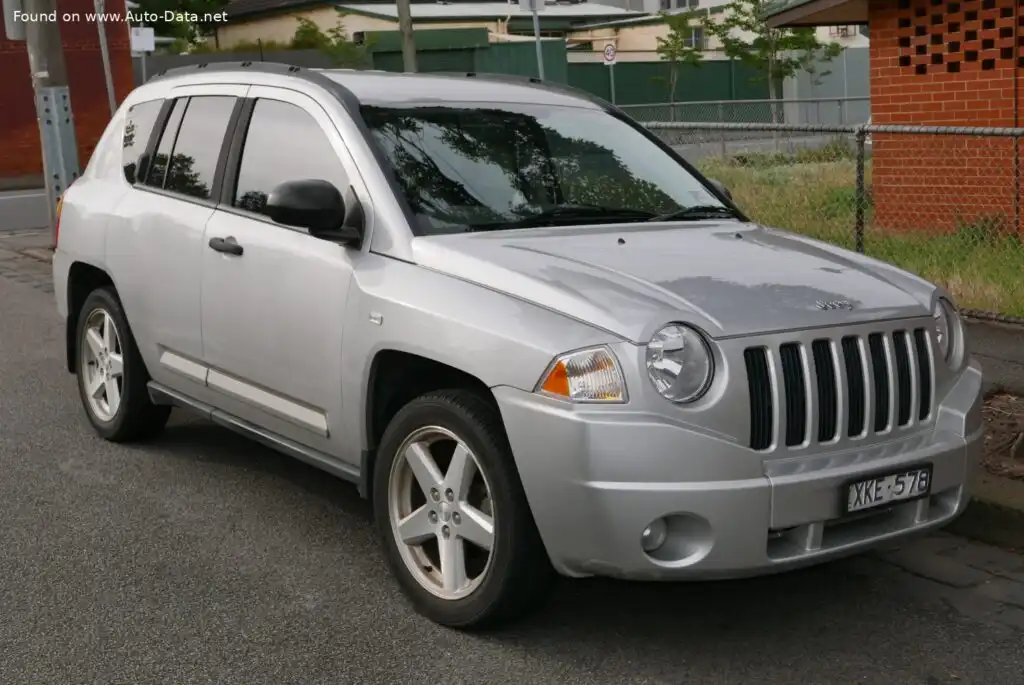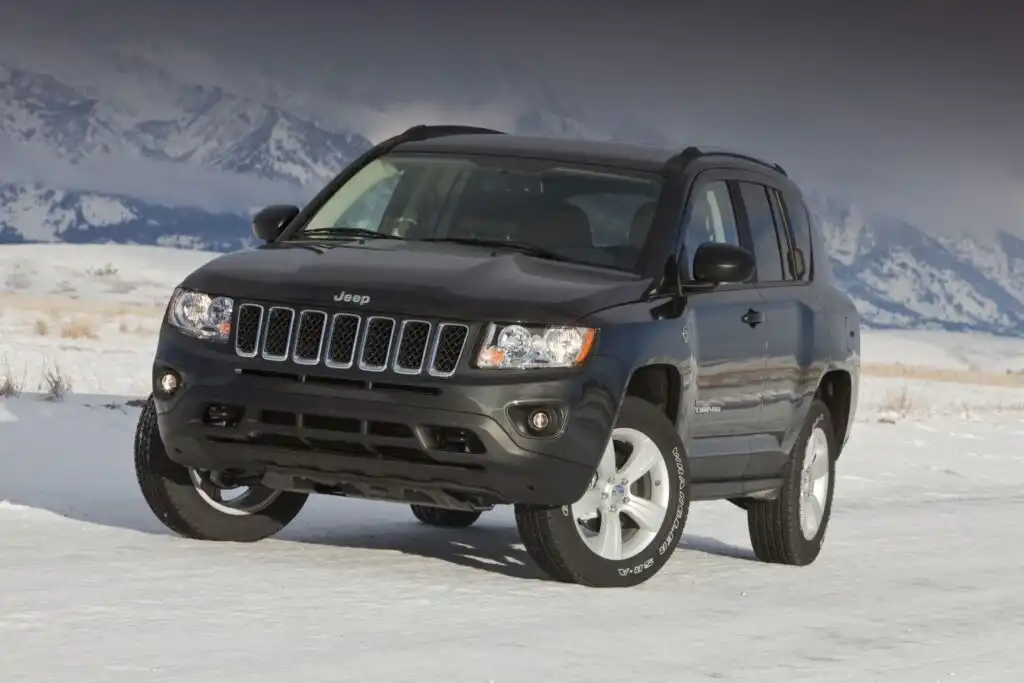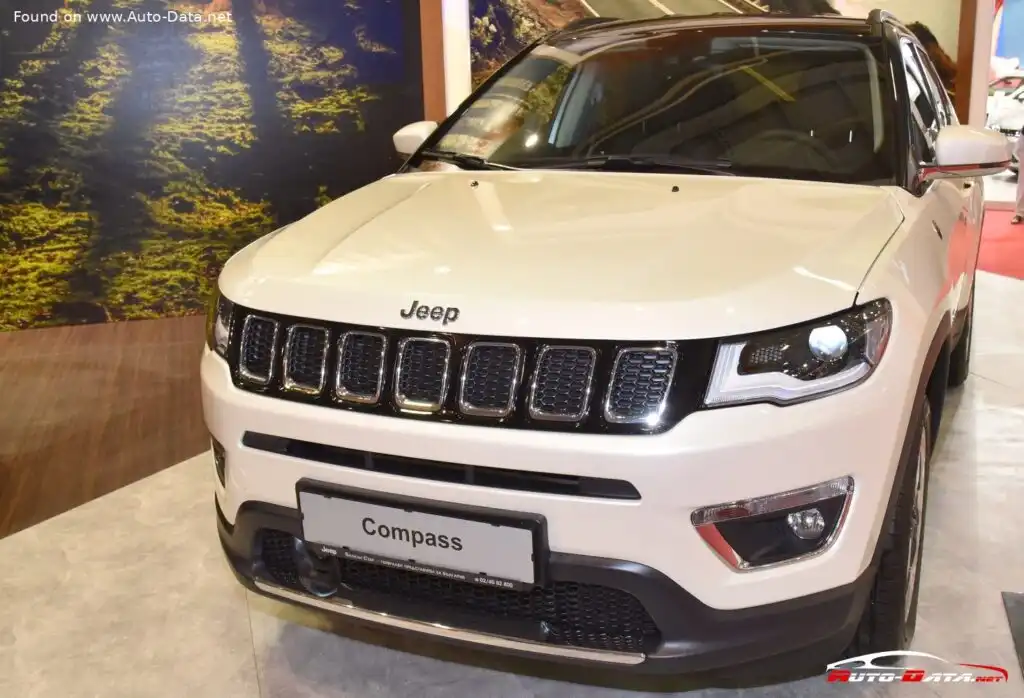
The Jeep Compass II (MP) 2.0 Multijet 4×4 Automatic, produced from July 2017 to August 2018, represents a significant iteration of Jeep’s compact SUV offering. Positioned as a mid-range trim within the broader Compass II (MP) lineup, this variant aimed to balance fuel efficiency, all-weather capability, and a more relaxed driving experience compared to its lower-powered or manual transmission siblings. It was primarily marketed in Europe and other international markets where diesel engines and all-wheel drive systems are highly valued. This model falls within the C-SUV segment, competing with vehicles like the Nissan Qashqai, Kia Sportage, and Hyundai Tucson.
Technical Specifications
| Brand | Jeep |
| Model | Compass |
| Generation | Compass II (MP) |
| Type (Engine) | 2.0 Multijet (170 Hp) 4×4 Automatic |
| Start of production | July, 2017 |
| End of production | August, 2018 |
| Powertrain Architecture | Internal Combustion engine |
| Body type | SUV, Crossover |
| Seats | 5 |
| Doors | 5 |
| Fuel consumption (economy) – urban (NEDC) | 6.6 l/100 km (35.6 US mpg, 42.8 UK mpg, 15.2 km/l) |
| Fuel consumption (economy) – extra urban (NEDC) | 5.1 l/100 km (46.1 US mpg, 55.4 UK mpg, 19.6 km/l) |
| Fuel consumption (economy) – combined (NEDC) | 5.7 l/100 km (41.3 US mpg, 49.6 UK mpg, 17.5 km/l) |
| CO2 emissions (NEDC) | 148 g/km |
| Fuel Type | Diesel |
| Acceleration 0 – 100 km/h | 9.5 sec |
| Acceleration 0 – 62 mph | 9.5 sec |
| Acceleration 0 – 60 mph | 9 sec |
| Maximum speed | 196 km/h (121.79 mph) |
| Emission standard | Euro 6 |
| Weight-to-power ratio | 9.1 kg/Hp, 110.4 Hp/tonne |
| Weight-to-torque ratio | 4.1 kg/Nm, 246.8 Nm/tonne |
| Power | 170 Hp @ 3750 rpm |
| Power per litre | 86.9 Hp/l |
| Torque | 380 Nm @ 1750 rpm (280.27 lb.-ft. @ 1750 rpm) |
| Engine layout | Front, Transverse |
| Engine Model/Code | EBS |
| Engine displacement | 1956 cm3 (119.36 cu. in.) |
| Number of cylinders | 4 |
| Engine configuration | Inline |
| Cylinder Bore | 83 mm (3.27 in.) |
| Piston Stroke | 90.4 mm (3.56 in.) |
| Compression ratio | 16.5:1 |
| Number of valves per cylinder | 4 |
| Fuel injection system | Diesel Commonrail |
| Engine aspiration | Turbocharger, Intercooler |
| Valvetrain | DOHC |
| Engine oil capacity | 4.2 l (4.44 US qt | 3.7 UK qt) |
| Coolant | 6.5 l (6.87 US qt | 5.72 UK qt) |
| Kerb Weight | 1540-1741 kg (3395.12 – 3838.25 lbs.) |
| Max. weight | 2132 kg (4700.26 lbs.) |
| Max load | 391-592 kg (862.01 – 1305.14 lbs.) |
| Trunk (boot) space – minimum | 438 l (15.47 cu. ft.) |
| Trunk (boot) space – maximum | 1251 l (44.18 cu. ft.) |
| Fuel tank capacity | 60 l (15.85 US gal | 13.2 UK gal) |
| Max. roof load | 68 kg (149.91 lbs.) |
| Permitted trailer load with brakes (12%) | 1500 kg (3306.93 lbs.) |
| Permitted trailer load without brakes | 525 kg (1157.43 lbs.) |
| Permitted towbar download | 75 kg (165.35 lbs.) |
| Length | 4394 mm (172.99 in.) |
| Width | 1819 mm (71.61 in.) |
| Height | 1647 mm (64.84 in.) |
| Wheelbase | 2636 mm (103.78 in.) |
| Front track | 1550 mm (61.02 in.) |
| Rear (Back) track | 1550 mm (61.02 in.) |
| Ride height (ground clearance) | 215 mm (8.46 in.) |
| Minimum turning circle (turning diameter) | 11.07 m (36.32 ft.) |
| Approach angle | 16.3° |
| Departure angle | 31.4° |
| Ramp-over (brakeover) angle | 22.9° |
| Wading depth | 406 mm (15.98 in.) |
| Drivetrain Architecture | The Internal combustion engine (ICE) drives the front wheels permanently, and the rear wheels are driven through an electrically or mechanically operated clutch if necessary. |
| Drive wheel | All wheel drive (4×4) |
| Number of gears and type of gearbox | 9 gears, automatic transmission |
| Front suspension | Independent, type McPherson with coil spring and anti-roll bar |
| Rear suspension | Independent coil spring, Transverse stabilizer |
| Front brakes | Ventilated discs |
| Rear brakes | Disc |
| Assisting systems | ABS (Anti-lock braking system) |
| Steering type | Steering rack and pinion |
| Power steering | Electric Steering |
| Tires size | 225/55 R18; 235/45 R19 |
| Wheel rims size | 7J x 18; 7.5J x 19 |
Powertrain & Engine Architecture
The heart of this Compass variant is the 2.0-liter Multijet diesel engine, specifically the EBS code. This engine is a four-cylinder, inline configuration, utilizing a common-rail direct injection system for optimized fuel delivery and combustion. The EBS engine features a turbocharger with an intercooler, boosting power output to 170 horsepower at 3750 rpm and 380 Nm (280 lb-ft) of torque at a low 1750 rpm. The high compression ratio of 16.5:1 is typical for diesel engines, contributing to their efficiency. Paired with this engine is a ZF-sourced 9-speed automatic transmission. This transmission was chosen for its wide gear ratio spread, aiding both fuel economy and performance. The 9-speed automatic allows the engine to operate within its optimal torque band more frequently.
Driving Characteristics
The 170 hp Multijet with the 9-speed automatic delivers a comfortable and capable driving experience. Acceleration from 0-60 mph takes approximately 9.5 seconds, which is adequate for everyday driving but doesn’t offer particularly sporty performance. The automatic transmission provides smooth shifts, and the wide gear range helps maintain reasonable fuel economy even under load. Compared to the manual transmission versions of the 2.0 Multijet, the automatic sacrifices some responsiveness, but gains in ease of use, especially in urban environments. The 4×4 system provides enhanced traction in slippery conditions, making it a suitable vehicle for inclement weather or light off-road use. The torque delivery is strong from low RPMs, making it easy to navigate hills and maintain speed on the highway.
Equipment & Trim Levels
The 2.0 Multijet 4×4 Automatic typically came equipped with a respectable level of standard features. These included air conditioning, power windows and locks, a touchscreen infotainment system with Bluetooth connectivity, and alloy wheels. Higher trim levels offered upgrades such as leather upholstery, a panoramic sunroof, navigation system, and advanced driver-assistance systems (ADAS) like adaptive cruise control and lane departure warning. Interior upholstery was generally cloth on base models, with leather options available. The dashboard layout was functional and modern, with a focus on ease of use.
Chassis & Braking
The Compass II (MP) utilizes an independent suspension setup on all four wheels. The front suspension employs a McPherson strut design with coil springs and an anti-roll bar, while the rear features an independent coil spring setup with a transverse stabilizer. This configuration provides a good balance between ride comfort and handling. Braking duties are handled by ventilated discs on the front wheels and solid discs on the rear. ABS (Anti-lock Braking System) is standard. The suspension tuning was geared towards comfort rather than outright sportiness, prioritizing a smooth ride over sharp handling.
Market Reception & Comparison
The Jeep Compass II (MP) 2.0 Multijet 4×4 Automatic was generally well-received by automotive critics as a practical and capable SUV. The diesel engine was praised for its fuel efficiency and torque, while the 9-speed automatic transmission was noted for its smoothness. However, some reviewers found the acceleration to be somewhat underwhelming compared to gasoline-powered rivals. Compared to the lower-powered 1.6 Multijet versions, this 2.0-liter variant offered a noticeable performance improvement, making it a more suitable choice for drivers who frequently carry passengers or cargo. Fuel economy was a strong point, averaging around 41.3 US mpg in combined driving.
Legacy
The 2.0 Multijet engine, in various iterations, has proven to be a relatively reliable powertrain. However, like all diesel engines, it’s susceptible to issues related to the diesel particulate filter (DPF) if not properly maintained with regular highway driving. The 9-speed automatic transmission, while generally reliable, has been known to experience occasional software glitches. In the used car market, this Compass variant represents a good value proposition for buyers seeking a fuel-efficient and capable SUV with all-wheel drive. Its combination of practicality, comfort, and all-weather capability continues to make it a popular choice among used car shoppers.