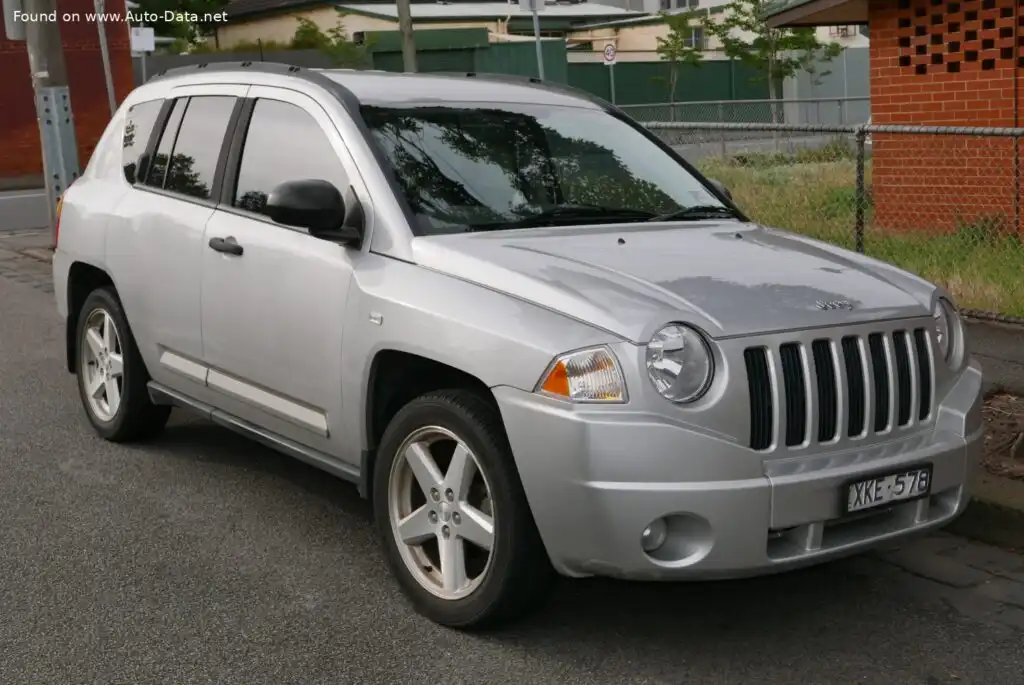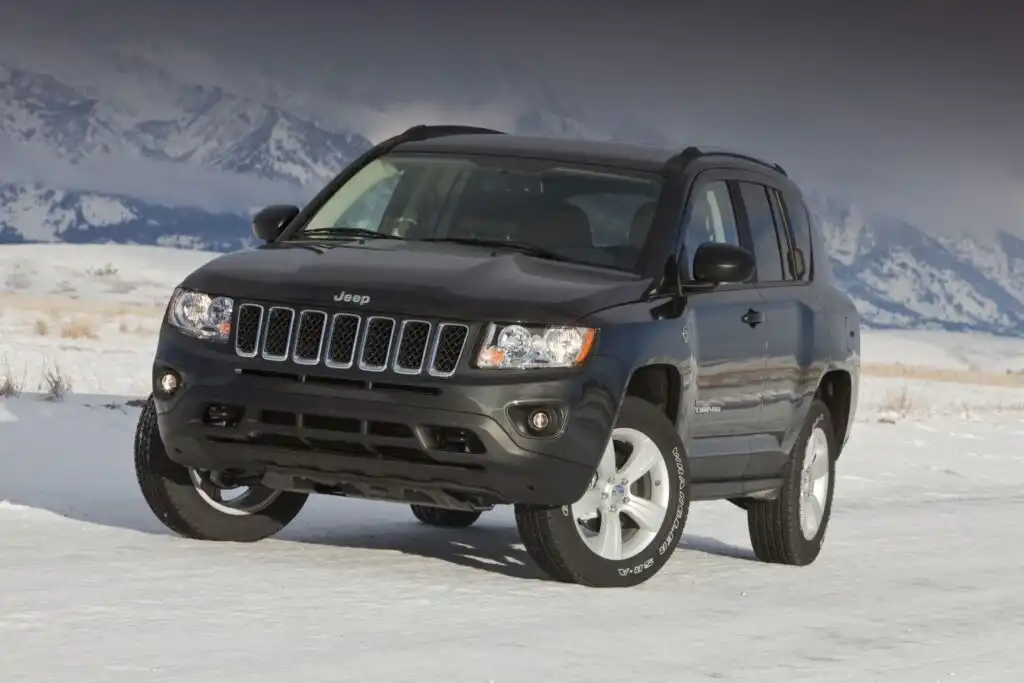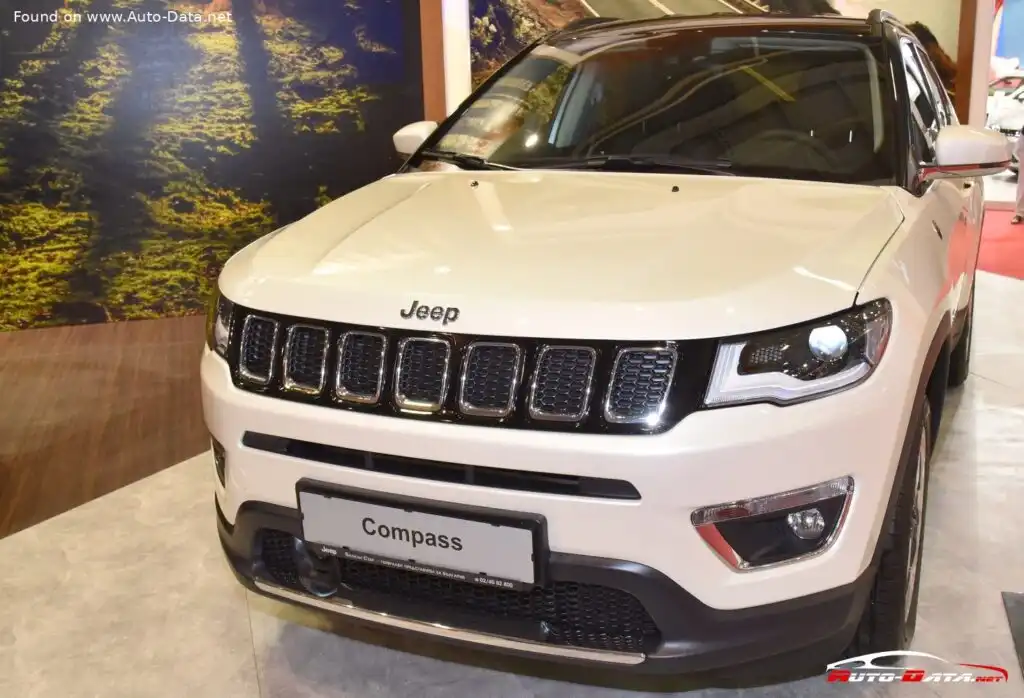
The Jeep Compass II (MP) 2.4 MultiAir, producing 180 horsepower, was a key variant of the second-generation Compass lineup produced from February 2017 to June 2021. Positioned as a mid-range offering, it aimed to balance affordability with a more potent engine option compared to the base models. This version played a significant role in Jeep’s attempt to broaden the Compass’s appeal in the highly competitive compact SUV/Crossover segment, particularly in North America where the model was increasingly focused. It utilized the 1HX0/A3 platform shared with other Stellantis vehicles.
Technical Specifications
| Brand | Jeep |
| Model | Compass |
| Generation | Compass II (MP) |
| Type (Engine) | 2.4 MultiAir (180 Hp) |
| Start of production | February, 2017 |
| End of production | June, 2021 |
| Powertrain Architecture | Internal Combustion engine |
| Body type | SUV, Crossover |
| Seats | 5 |
| Doors | 5 |
| Fuel consumption (economy) – urban (EPA) | 10.2 l/100 km (23.1 US mpg, 27.7 UK mpg, 9.8 km/l) |
| Fuel consumption (economy) – extra urban (EPA) | 7.4 l/100 km (31.8 US mpg, 38.2 UK mpg, 13.5 km/l) |
| Fuel consumption (economy) – combined (EPA) | 9 l/100 km (26.1 US mpg, 31.4 UK mpg, 11.1 km/l) |
| Fuel Type | Petrol (Gasoline) |
| Weight-to-power ratio | 8 kg/Hp, 124.7 Hp/tonne |
| Weight-to-torque ratio | 6.1 kg/Nm, 164.1 Nm/tonne |
| Power | 180 Hp @ 6400 rpm |
| Power per litre | 76.3 Hp/l |
| Torque | 237 Nm @ 3900 rpm (174.8 lb.-ft. @ 3900 rpm) |
| Maximum engine speed | 6400 rpm |
| Engine layout | Front, Transverse |
| Engine Model/Code | Tigershark |
| Engine displacement | 2360 cm3 (144.02 cu. in.) |
| Number of cylinders | 4 |
| Engine configuration | Inline |
| Cylinder Bore | 88 mm (3.46 in.) |
| Piston Stroke | 97 mm (3.82 in.) |
| Compression ratio | 10:1 |
| Number of valves per cylinder | 4 |
| Fuel injection system | Multi-port manifold injection |
| Engine aspiration | Naturally aspirated engine |
| Valvetrain | SOHC |
| Engine oil capacity | 5.2 l (5.49 US qt | 4.58 UK qt) |
| Coolant | 6.5 l (6.87 US qt | 5.72 UK qt) |
| Kerb Weight | 1444 kg (3183.48 lbs.) |
| Trunk (boot) space – minimum | 770 l (27.19 cu. ft.) |
| Trunk (boot) space – maximum | 1693 l (59.79 cu. ft.) |
| Fuel tank capacity | 51 l (13.47 US gal | 11.22 UK gal) |
| Length | 4394 mm (172.99 in.) |
| Width | 1819 mm (71.61 in.) |
| Width with mirrors folded | 1874 mm (73.78 in.) |
| Width including mirrors | 2033 mm (80.04 in.) |
| Height | 1641 mm (64.61 in.) |
| Wheelbase | 2636 mm (103.78 in.) |
| Front track | 1542 mm (60.71 in.) |
| Rear (Back) track | 1532 mm (60.31 in.) |
| Ride height (ground clearance) | 198 mm (7.8 in.) |
| Minimum turning circle (turning diameter) | 11.07 m (36.32 ft.) |
| Approach angle | 15.8° |
| Departure angle | 30.8° |
| Ramp-over (brakeover) angle | 21.8° |
| Wading depth | 406 mm (15.98 in.) |
| Drivetrain Architecture | The Internal combustion engine (ICE) drives the front wheels of the vehicle. |
| Drive wheel | Front wheel drive |
| Number of gears and type of gearbox | 6 gears, manual transmission |
| Front suspension | Independent, type McPherson with coil spring and anti-roll bar |
| Rear suspension | Independent coil spring, Transverse stabilizer |
| Front brakes | Ventilated discs, 305×28 mm |
| Rear brakes | Disc, 278×12 mm |
| Assisting systems | ABS (Anti-lock braking system) |
| Steering type | Steering rack and pinion |
| Power steering | Electric Steering |
| Tires size | 215/65 R16 |
| Wheel rims size | 6.5J x 16 |
Introduction
The Jeep Compass II (MP) 2.4 MultiAir, launched in 2017, represented a significant step forward for the Compass line. The second generation Compass aimed to address criticisms leveled at the first generation, offering a more refined driving experience, improved interior quality, and a broader range of engine options. The 2.4-liter MultiAir engine, paired with a 6-speed manual transmission, was positioned as a sweet spot in the lineup, offering a balance between performance and fuel efficiency. It was intended to appeal to buyers who wanted more power than the base engine but didn’t require the added expense of the available 4×4 systems or higher trim levels.
Powertrain & Engine Architecture
At the heart of this Compass variant lies the Tigershark 2.4-liter inline-four cylinder engine. This engine, internally designated as part of the GDE family, utilizes MultiAir technology, a fully variable valve lift system developed by Fiat Powertrain Technologies. MultiAir eliminates the mechanical linkage between the camshaft and the intake valves, instead using hydraulic actuators controlled by the engine control unit (ECU). This allows for independent control of valve lift and timing, optimizing combustion efficiency and reducing emissions. The engine features a single overhead camshaft (SOHC) design and multi-port fuel injection. The 6-speed manual transmission was chosen for its affordability and driver engagement. The transmission’s gear ratios were tuned to provide a balance of acceleration and fuel economy, with a relatively tall sixth gear for highway cruising.
Driving Characteristics
The 180 horsepower and 174.8 lb.-ft. of torque provided by the 2.4-liter MultiAir engine offered a noticeable improvement in performance over the base engine options. While not a sports car, the Compass 2.4 MultiAir delivered adequate acceleration for everyday driving and highway merging. The manual transmission allowed for greater driver control, but the shift quality was sometimes criticized for being slightly notchy. The relatively long gearing contributed to decent fuel economy, but also meant that the engine needed to be revved to access its full power potential. Compared to the available 4×4 models, the front-wheel-drive 2.4 MultiAir was lighter and more nimble, but lacked the all-weather capability of its all-wheel-drive siblings.
Equipment & Trim Levels
The 2.4 MultiAir engine was typically offered on the Latitude and Limited trim levels of the Compass II. Standard features on the Latitude included air conditioning, a 5-inch touchscreen infotainment system, Bluetooth connectivity, and a rearview camera. The Limited trim added features such as leather upholstery, heated front seats, a larger 8.4-inch touchscreen, and a premium sound system. Optional extras included a panoramic sunroof, navigation system, and advanced safety features like blind-spot monitoring and rear cross-path detection. Interior upholstery was typically cloth on the Latitude and leather on the Limited. Dashboard configurations were consistent across trims, featuring a straightforward layout with easy-to-use controls.
Chassis & Braking
The Compass II utilized an independent suspension system at all four corners. The front suspension employed a McPherson strut design with coil springs and an anti-roll bar, while the rear suspension featured an independent coil spring setup with a transverse stabilizer. This suspension setup provided a comfortable ride quality, although it wasn’t particularly sporty. Front brakes consisted of ventilated discs measuring 305x28mm, while rear brakes were solid discs measuring 278x12mm. The braking system was equipped with ABS (Anti-lock Braking System) as standard. The relatively modest weight of the front-wheel-drive Compass 2.4 MultiAir contributed to its respectable braking performance.
Market Reception & Comparison
Critics generally praised the Compass II for its improved design and interior quality compared to the first generation. The 2.4-liter MultiAir engine was seen as a good compromise between performance and fuel economy. However, some reviewers noted that the engine could feel strained under heavy acceleration, and the manual transmission wasn’t as refined as those found in some competitors. Fuel economy figures were competitive for the class, averaging around 26.1 US mpg in combined driving. Compared to the base 2.0-liter engine, the 2.4 MultiAir offered a significant performance boost. Compared to the available 4×4 models, the front-wheel-drive version was more affordable and fuel-efficient, but lacked the added traction and capability.
Legacy
The Jeep Compass II (MP) 2.4 MultiAir has proven to be a relatively reliable vehicle in the used car market. The Tigershark engine, while not without its quirks, is generally considered durable when properly maintained. Common issues include occasional oil consumption and potential problems with the MultiAir system, although these are not widespread. The 6-speed manual transmission is also generally reliable. Today, these models represent an affordable entry point into Jeep ownership, offering a decent level of features and a reasonably comfortable driving experience. Their value proposition continues to be strong for buyers seeking a practical and capable compact SUV.