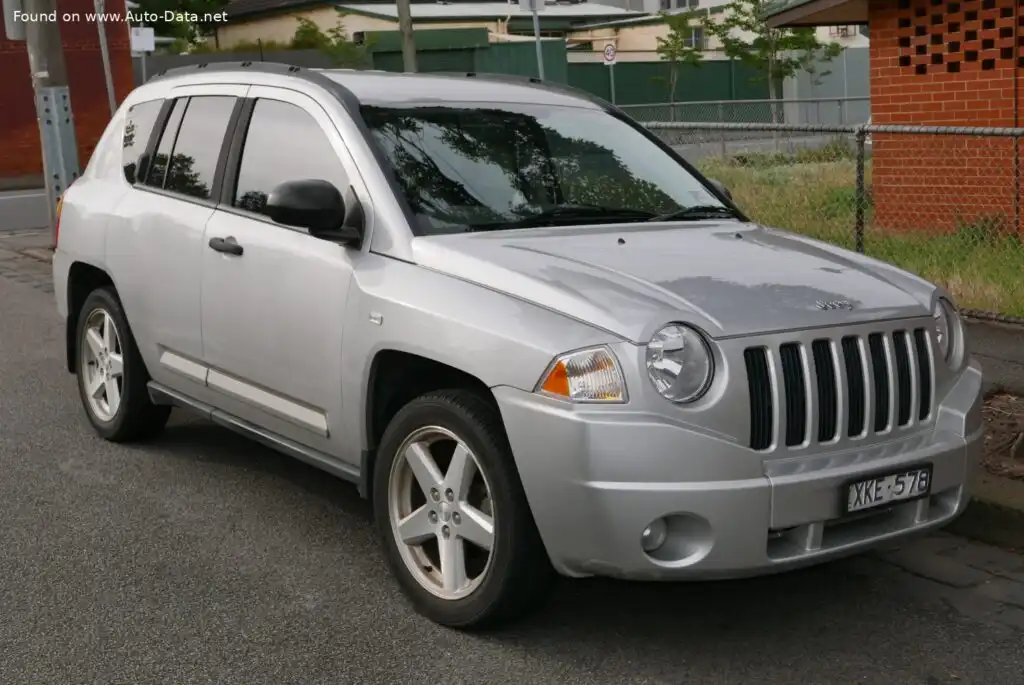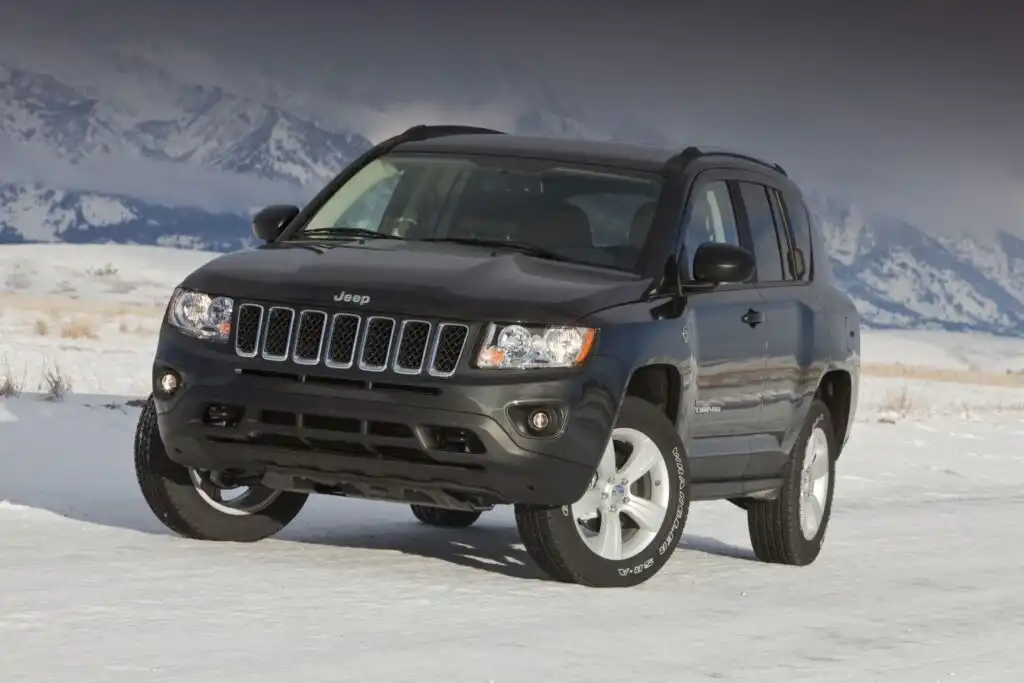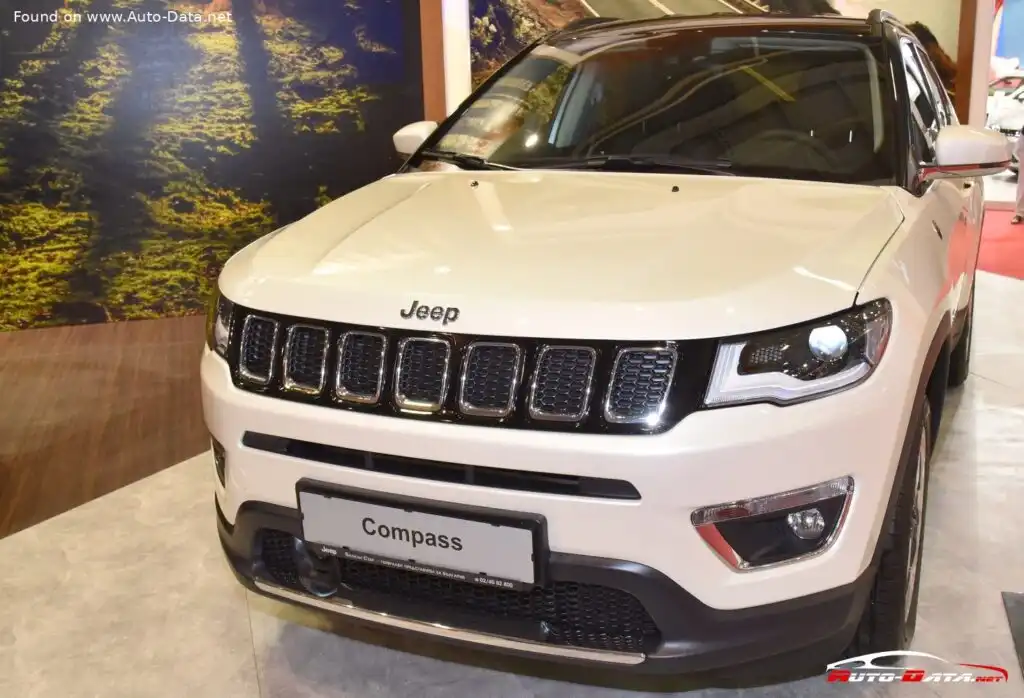
The Jeep Compass II (MP) 2.4 MultiAir 4×4 Automatic, produced from February 2017 to June 2021, represents a significant step forward for the compact SUV in the North American market. Positioned as a mid-range offering within the broader Compass II (MP) lineup – which spanned from base engine options to more premium trims – this variant aimed to balance capability with fuel efficiency and a comfortable driving experience. It was built on the 551 platform, shared with other Stellantis vehicles, and represented Jeep’s attempt to broaden its appeal beyond traditional off-road enthusiasts. This model year marked a complete redesign for the Compass, moving away from the previous generation’s European-sourced roots and focusing on a more globally competitive vehicle.
Technical Specifications
| Brand | Jeep |
| Model | Compass |
| Generation | Compass II (MP) |
| Type (Engine) | 2.4 MultiAir (180 Hp) 4×4 Automatic |
| Start of production | February, 2017 |
| End of production | June, 2021 |
| Powertrain Architecture | Internal Combustion engine |
| Body type | SUV, Crossover |
| Seats | 5 |
| Doors | 5 |
| Fuel consumption (economy) – urban (EPA) | 10.7 l/100 km (22 US mpg, 26.4 UK mpg, 9.3 km/l) |
| Fuel consumption (economy) – extra urban (EPA) | 7.8 l/100 km (30.2 US mpg, 36.2 UK mpg, 12.8 km/l) |
| Fuel consumption (economy) – combined (EPA) | 9.4 l/100 km (25 US mpg, 30.1 UK mpg, 10.6 km/l) |
| Fuel Type | Petrol (Gasoline) |
| Weight-to-power ratio | 8.4 kg/Hp, 119.3 Hp/tonne |
| Weight-to-torque ratio | 6.4 kg/Nm, 157.1 Nm/tonne |
| Power | 180 Hp @ 6400 rpm |
| Power per litre | 76.3 Hp/l |
| Torque | 237 Nm @ 3900 rpm (174.8 lb.-ft. @ 3900 rpm) |
| Maximum engine speed | 6400 rpm |
| Engine layout | Front, Transverse |
| Engine Model/Code | Tigershark |
| Engine displacement | 2360 cm3 (144.02 cu. in.) |
| Number of cylinders | 4 |
| Engine configuration | Inline |
| Cylinder Bore | 88 mm (3.46 in.) |
| Piston Stroke | 97 mm (3.82 in.) |
| Compression ratio | 10:1 |
| Number of valves per cylinder | 4 |
| Fuel injection system | Multi-port manifold injection |
| Engine aspiration | Naturally aspirated engine |
| Valvetrain | SOHC |
| Engine oil capacity | 5.2 l (5.49 US qt | 4.58 UK qt) |
| Coolant | 6.5 l (6.87 US qt | 5.72 UK qt) |
| Kerb Weight | 1509 kg (3326.78 lbs.) |
| Trunk (boot) space – minimum | 770 l (27.19 cu. ft.) |
| Trunk (boot) space – maximum | 1693 l (59.79 cu. ft.) |
| Fuel tank capacity | 51 l (13.47 US gal | 11.22 UK gal) |
| Length | 4394 mm (172.99 in.) |
| Width | 1819 mm (71.61 in.) |
| Width with mirrors folded | 1874 mm (73.78 in.) |
| Width including mirrors | 2033 mm (80.04 in.) |
| Height | 1641 mm (64.61 in.) |
| Wheelbase | 2636 mm (103.78 in.) |
| Front track | 1542 mm (60.71 in.) |
| Rear (Back) track | 1532 mm (60.31 in.) |
| Ride height (ground clearance) | 208 mm (8.19 in.) |
| Minimum turning circle (turning diameter) | 11.07 m (36.32 ft.) |
| Approach angle | 16.8° |
| Departure angle | 31.7° |
| Ramp-over (brakeover) angle | 22.9° |
| Wading depth | 406 mm (15.98 in.) |
| Drivetrain Architecture | The Internal combustion engine (ICE) drives the front wheels permanently, and the rear wheels are driven through an electrically or mechanically operated clutch if necessary. |
| Drive wheel | All wheel drive (4×4) |
| Number of gears and type of gearbox | 9 gears, automatic transmission |
| Front suspension | Independent, type McPherson with coil spring and anti-roll bar |
| Rear suspension | Independent coil spring, Transverse stabilizer |
| Front brakes | Ventilated discs, 305×28 mm |
| Rear brakes | Disc, 278×12 mm |
| Assisting systems | ABS (Anti-lock braking system) |
| Steering type | Steering rack and pinion |
| Power steering | Electric Steering |
| Tires size | 215/65 R16; 225/60 R17; 225/55 R18; 235/45 R19 |
| Wheel rims size | 6.5J x 16; 7J x 17; 7J x 18; 7.5J x 19 |
Powertrain & Engine Architecture
At the heart of this Compass variant lies the 2.4-liter Tigershark inline-four engine. This engine, designated as the GDE, is a naturally aspirated powerplant featuring multi-port fuel injection and a single overhead camshaft (SOHC) valvetrain. The MultiAir technology, a variable valve timing system, is a key feature, designed to improve both fuel efficiency and performance by controlling valve lift and timing. The engine produces 180 horsepower at 6,400 rpm and 174.8 lb-ft of torque at 3,900 rpm. Paired with this engine is a ZF-sourced nine-speed automatic transmission. This transmission was chosen for its wide gear ratio spread, contributing to both improved fuel economy and enhanced acceleration. The 4×4 system utilizes a rear axle disconnect, seamlessly engaging all-wheel drive when traction is needed.
Driving Characteristics
The 2.4-liter MultiAir engine, when coupled with the nine-speed automatic and all-wheel drive, delivers a competent, if not particularly exhilarating, driving experience. Acceleration is adequate for everyday driving, with the nine-speed transmission generally shifting smoothly. However, the engine can feel strained under hard acceleration, and the transmission sometimes hesitates when downshifting. Compared to the available 1.4-liter turbocharged engine, the 2.4-liter offers more readily available torque, making it feel more responsive in typical driving situations. Compared to a manual transmission equipped Compass, the automatic sacrifices some driver engagement but provides greater convenience, particularly in urban environments. The all-wheel-drive system provides added confidence in inclement weather conditions.
Equipment & Trim Levels
The 2.4 MultiAir 4×4 Automatic was typically offered in mid-level trims, such as the Latitude and Limited. Standard features generally included air conditioning, a touchscreen infotainment system with Apple CarPlay and Android Auto compatibility, a rearview camera, and keyless entry. Higher trims added features like leather upholstery, heated front seats, a power liftgate, and advanced safety technologies such as blind-spot monitoring and rear cross-traffic alert. Optional extras included a panoramic sunroof, premium audio systems, and navigation.
Chassis & Braking
The Compass II (MP) utilizes an independent suspension setup at all four corners. The front suspension employs a McPherson strut design with coil springs and an anti-roll bar, while the rear features an independent multi-link setup with coil springs and a transverse stabilizer. Braking duties are handled by ventilated discs at the front and solid discs at the rear. The braking system is augmented by an Anti-lock Braking System (ABS). The suspension tuning prioritizes comfort over sporty handling, providing a relatively smooth ride on most road surfaces.
Market Reception & Comparison
Critics generally praised the Compass II (MP) for its improved design and interior quality compared to the previous generation. However, the 2.4-liter engine and nine-speed automatic combination received mixed reviews. Some testers found the powertrain to be adequate, while others criticized its lack of refinement and occasional hesitation. Fuel economy figures were competitive within the compact SUV segment, averaging around 25 mpg combined. Compared to rivals like the Honda CR-V and Toyota RAV4, the Compass offered a more affordable price point but lacked the same level of refinement and fuel efficiency.
Legacy
The 2.4-liter MultiAir engine, while not without its quirks, has proven to be reasonably reliable in the Compass II (MP). Common issues include occasional oil consumption and potential problems with the MultiAir system itself, though these are not widespread. On the used car market, this variant represents a good value proposition for buyers seeking a capable and well-equipped compact SUV. The nine-speed automatic transmission, while sometimes criticized, has generally held up well over time. The Compass II (MP) marked a turning point for the Jeep brand, demonstrating its commitment to producing a competitive and modern compact SUV.