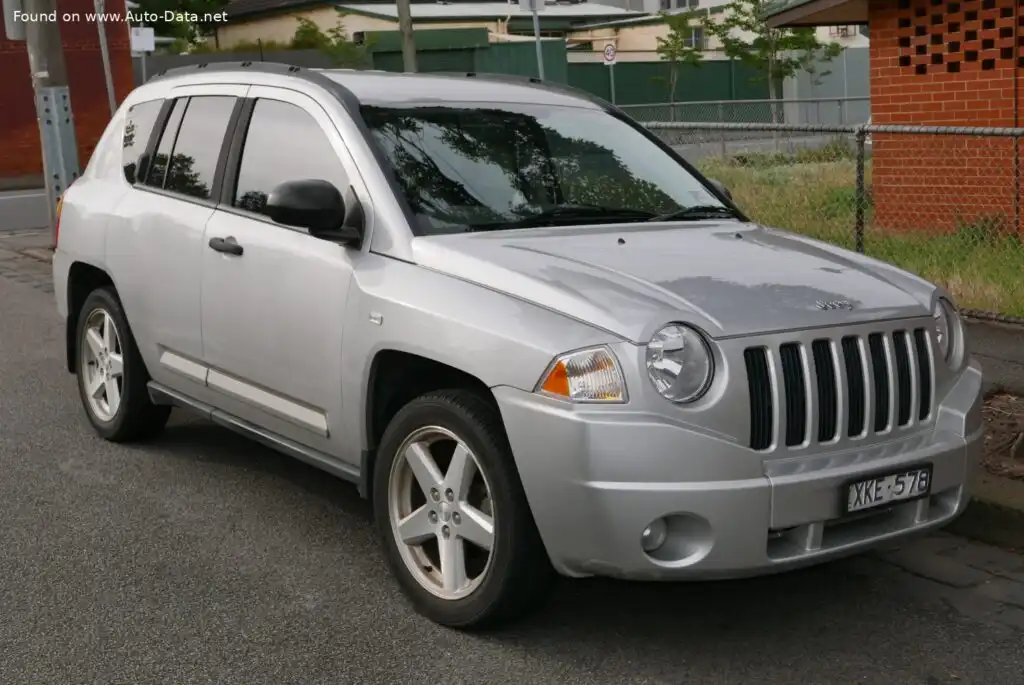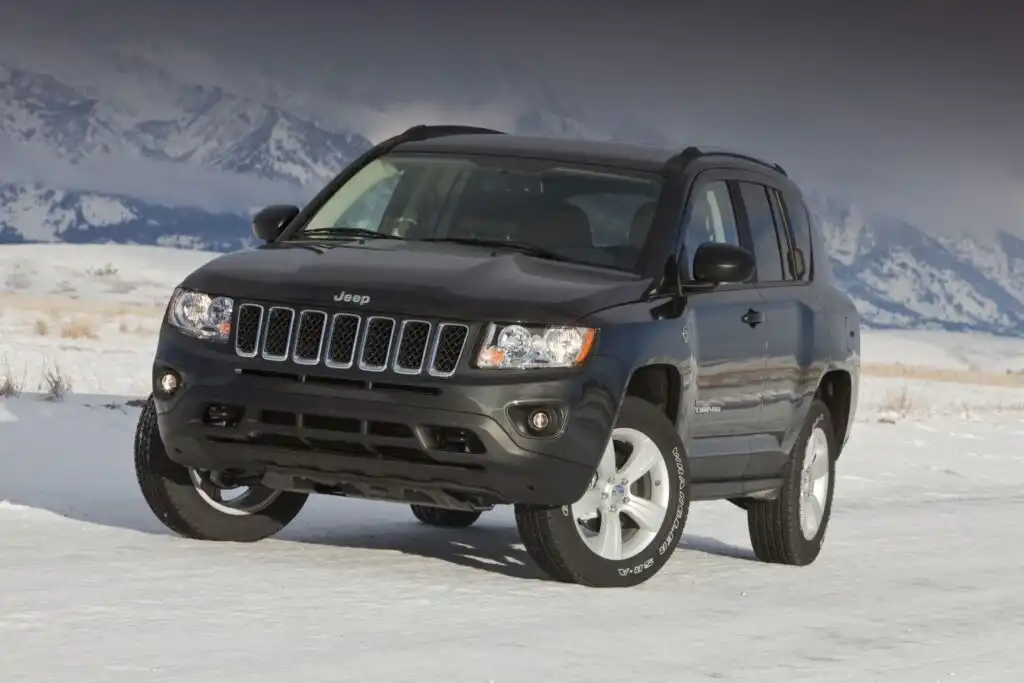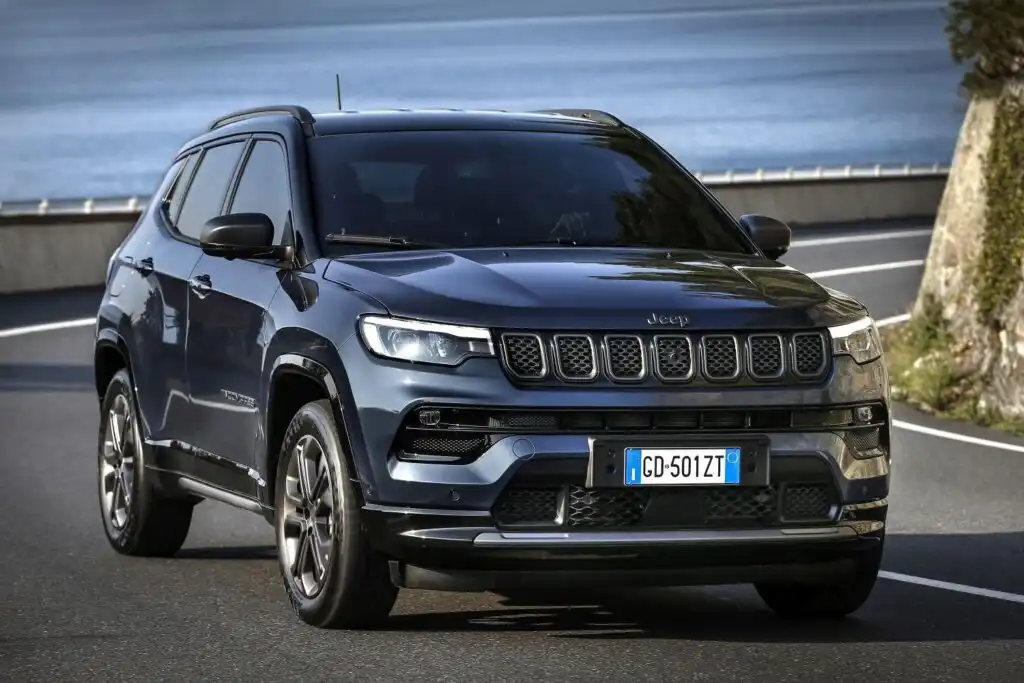
The Jeep Compass II (MP), specifically the facelift model introduced in April 2021, represented a mid-cycle refresh of the second-generation Compass. This variant, powered by the 1.3 GSE T4 engine producing 130 horsepower, was offered through March 2022. Positioned as a mainstream offering within the Compass lineup, it aimed to balance fuel efficiency with acceptable performance for everyday driving. The MP facelift brought updated styling, improved interior materials, and enhanced technology compared to the original Compass II, solidifying its position in the highly competitive compact SUV segment, particularly in the European market where it saw significant sales.
Technical Specifications
| Brand | Jeep |
| Model | Compass |
| Generation | Compass II (MP, facelift 2021) |
| Type (Engine) | 1.3 GSE T4 (130 Hp) |
| Start of production | April, 2021 |
| End of production | March, 2022 |
| Powertrain Architecture | Internal Combustion engine |
| Body type | SUV, Crossover |
| Seats | 5 |
| Doors | 5 |
| Fuel consumption (urban) | 7.6 l/100 km (30.9 US mpg) |
| Fuel consumption (extra urban) | 4.8 l/100 km (49 US mpg) |
| Fuel consumption (combined) | 6.6-6.9 l/100 km (35.6 – 34.1 US mpg) |
| CO2 emissions | 152-158 g/km |
| Fuel Type | Petrol (Gasoline) |
| Acceleration 0 – 100 km/h | 10.3 sec |
| Acceleration 0 – 62 mph | 10.3 sec |
| Acceleration 0 – 60 mph | 9.8 sec |
| Maximum speed | 192 km/h (119.3 mph) |
| Emission standard | Euro 6d-Final |
| Weight-to-power ratio | 11 kg/Hp |
| Weight-to-torque ratio | 5.3 kg/Nm |
| Power | 130 Hp @ 4750 rpm |
| Torque | 270 Nm @ 1560 rpm (199.14 lb.-ft. @ 1560 rpm) |
| Engine layout | Front, Transverse |
| Engine Model/Code | 55282328 |
| Engine displacement | 1332 cm3 (81.28 cu. in.) |
| Number of cylinders | 4 |
| Engine configuration | Inline |
| Cylinder Bore | 70 mm (2.76 in.) |
| Piston Stroke | 86.5 mm (3.41 in.) |
| Compression ratio | 10.5:1 |
| Number of valves per cylinder | 4 |
| Fuel injection system | Direct injection |
| Engine aspiration | Turbocharger, Intercooler |
| Engine oil capacity | 4.7 l (4.97 US qt | 4.14 UK qt) |
| Coolant | 7.5 l (7.93 US qt | 6.6 UK qt) |
| Engine systems | Start & Stop System, Particulate filter |
| Kerb Weight | 1430 kg (3152.61 lbs.) |
| Trunk (boot) space – minimum | 438 l (15.47 cu. ft.) |
| Trunk (boot) space – maximum | 1387 l (48.98 cu. ft.) |
| Fuel tank capacity | 55 l (14.53 US gal | 12.1 UK gal) |
| Length | 4394 mm (172.99 in.) |
| Width with mirrors folded | 1819 mm (71.61 in.) |
| Height | 1624 mm (63.94 in.) |
| Wheelbase | 2636 mm (103.78 in.) |
| Ride height (ground clearance) | 198 mm (7.8 in.) |
| Drivetrain Architecture | Front wheel drive |
| Number of gears and type of gearbox | 6 gears, manual transmission |
| Front brakes | Ventilated discs |
| Rear brakes | Ventilated discs |
| Assisting systems | ABS (Anti-lock braking system) |
| Steering type | Steering rack and pinion |
| Power steering | Electric Steering |
| Tires size | 215/65 R16 |
| Wheel rims size | 16 |
Introduction
The 2021-2022 Jeep Compass II (MP) 1.3 GSE T4 130 Hp variant was a key model in Jeep’s European and global strategy. The facelift brought a more refined aesthetic and updated technology to the already popular Compass. This particular engine and transmission combination was designed to appeal to buyers seeking a balance between fuel economy and usability, making it a common choice for urban and suburban drivers. Built on the 551 platform (shared with the Fiat 500X and Renegade), the Compass aimed to provide a more comfortable and practical alternative to the smaller Renegade while remaining more affordable than larger Jeep models like the Cherokee.
Powertrain & Engine Architecture
The heart of this Compass variant is the 1.3 GSE (Global Small Engine) turbocharged four-cylinder engine. This engine, developed in collaboration with Stellantis, utilizes direct fuel injection and a single-scroll turbocharger to deliver a respectable 130 horsepower and 270 Nm (199 lb-ft) of torque. The engine code 55282328 identifies this specific iteration. The 1.3L engine is known for its responsiveness at lower RPMs, thanks to the turbocharger, providing adequate power for daily commutes and highway merging. The engine features a timing chain for durability and is designed to meet stringent Euro 6d-Final emissions standards. Paired with a six-speed manual transmission, the powertrain prioritizes fuel efficiency and a relatively engaging driving experience. While an automatic transmission was available on other Compass trims, this 130 hp version was primarily offered with the manual gearbox.
Driving Characteristics
The 1.3 GSE T4 engine, when coupled with the six-speed manual transmission, delivers a driving experience geared towards practicality rather than outright performance. Acceleration from 0-60 mph takes around 9.8 seconds, and 0-100 km/h in 10.3 seconds. The turbocharger provides a noticeable boost in power during acceleration, but it’s not a particularly aggressive or sporty feel. The gear ratios are well-chosen for everyday driving, offering a good balance between fuel economy and responsiveness. Compared to higher-output Compass variants (like those with the 1.4L engine or the diesel options), this 1.3L version feels less powerful, especially when fully loaded or tackling steep inclines. However, the lighter engine weight contributes to improved handling and a more nimble feel in urban environments. The manual transmission provides a greater sense of control and driver engagement than an automatic would.
Equipment & Trim Levels
The 1.3 GSE T4 130 Hp Compass typically came equipped with a reasonable level of standard features. These generally included air conditioning, a touchscreen infotainment system (usually 7-inch), Bluetooth connectivity, USB ports, and basic safety features like ABS, electronic stability control, and multiple airbags. Interior upholstery was typically cloth, with options for upgraded materials available. Higher trim levels added features like a larger touchscreen, navigation, Apple CarPlay and Android Auto integration, rear parking sensors, a rearview camera, and automatic climate control. Optional extras could include a panoramic sunroof, leather seats, and advanced driver-assistance systems (ADAS) such as lane departure warning and automatic emergency braking.
Chassis & Braking
The Compass II (MP) utilizes a front-wheel-drive platform with independent suspension at the front (typically McPherson struts) and a multi-link rear suspension. This setup provides a comfortable ride quality, absorbing bumps and imperfections in the road reasonably well. The braking system consists of ventilated discs on all four wheels, providing adequate stopping power for the vehicle’s weight and performance. ABS (Anti-lock Braking System) is standard, enhancing safety during emergency braking situations. The steering is electrically assisted, offering a light and easy feel, making it well-suited for city driving. Stabilizer bars are present at both the front and rear to reduce body roll during cornering.
Market Reception & Comparison
The 1.3 GSE T4 130 Hp Compass was generally well-received as a practical and affordable option in the compact SUV segment. Critics praised its fuel efficiency and comfortable ride, but some noted its lack of outright performance compared to rivals. Compared to the diesel-powered Compass variants, the 1.3L petrol engine offered lower running costs in terms of fuel price but potentially higher maintenance costs over the long term. Against competitors like the Nissan Qashqai, Kia Sportage, and Hyundai Tucson, the Compass offered a distinctive Jeep styling and a reputation for off-road capability (although this variant was primarily geared towards on-road use). Fuel economy figures of 35.6-34.1 US mpg combined were competitive within its class.
Legacy
The 1.3 GSE T4 engine has proven to be a relatively reliable powertrain, although long-term durability is still being assessed as the engine is relatively new. Common issues reported include occasional turbocharger lag and potential problems with the direct injection system. On the used car market, the 2021-2022 Compass II (MP) 1.3 GSE T4 130 Hp variant represents a good value proposition for buyers seeking a practical and fuel-efficient compact SUV. Its relatively simple mechanicals and readily available parts contribute to lower maintenance costs compared to more complex or high-performance models. The facelifted styling and updated technology also make it a more appealing option than earlier Compass II models.