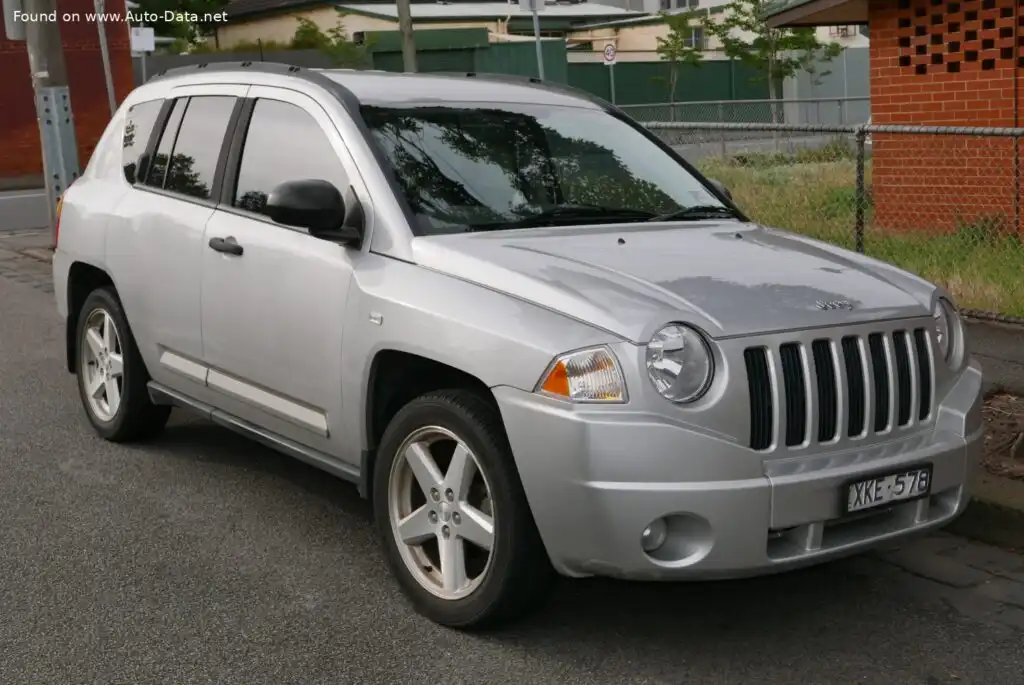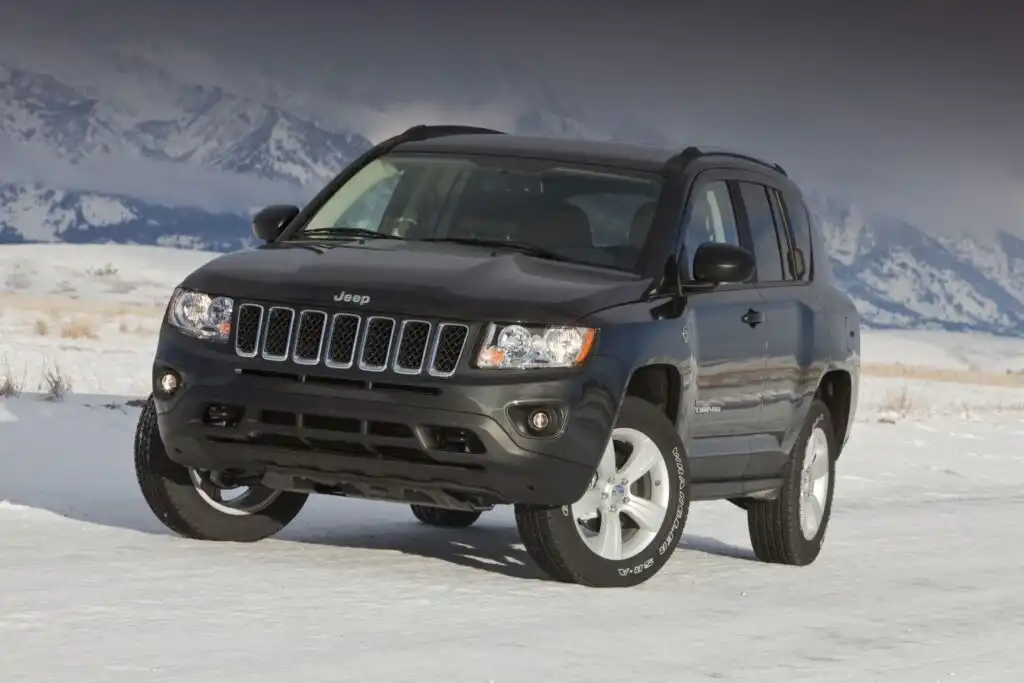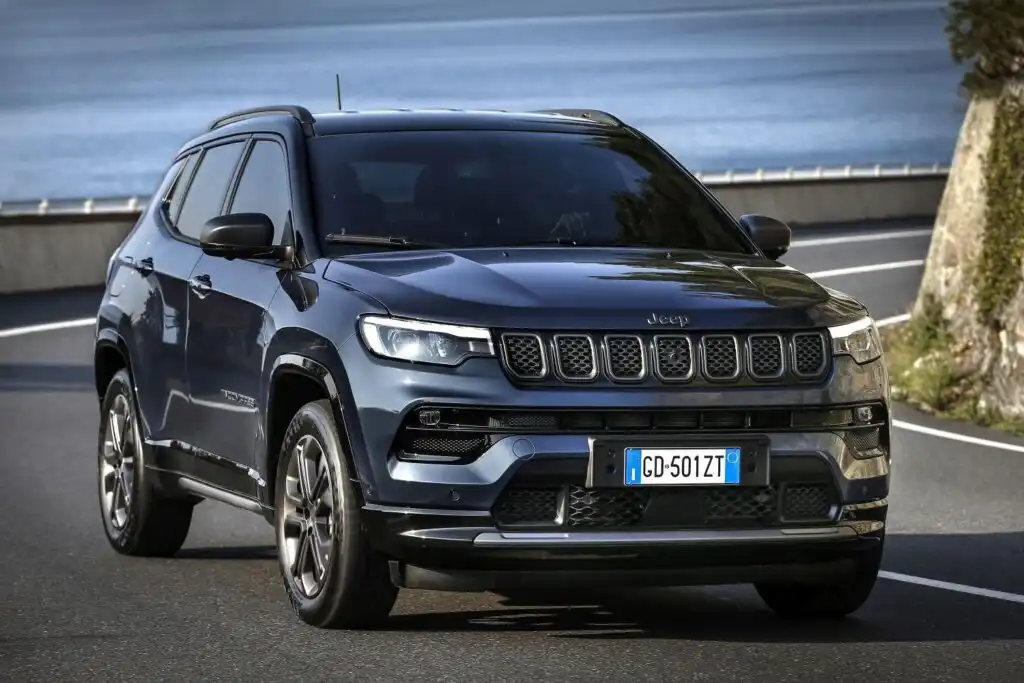
The Jeep Compass II (MP, facelift 2021) 1.5 GSE (130 Hp) e-Hybrid DCT represents a significant step in Jeep’s efforts to modernize its compact SUV offering for the European and global markets. Introduced in February 2022 and continuing through May 2025, this variant utilizes a mild-hybrid powertrain to balance performance with improved fuel efficiency. It slots into the Compass lineup as a mainstream option, positioned between the base gasoline models and the more powerful plug-in hybrid (PHEV) 4xe variants. The facelifted MP series, building upon the original Compass II (MP) launched in 2017, brought updated styling, interior refinements, and crucially, this new electrified powertrain option. This model is primarily aimed at buyers seeking a fuel-conscious SUV with the Jeep brand’s reputation for capability, without the higher cost and range anxiety associated with full hybrid or electric vehicles.
Technical Specifications
| Brand | Jeep |
| Model | Compass |
| Generation | Compass II (MP, facelift 2021) |
| Type (Engine) | 1.5 GSE (130 Hp) e-Hybrid DCT |
| Start of production | February, 2022 |
| End of production | May, 2025 |
| Powertrain Architecture | MHEV (Mild Hybrid Electric Vehicle) |
| Body type | SUV, Crossover |
| Seats | 5 |
| Doors | 5 |
| Combined fuel consumption (WLTP) | 5.6-6.0 l/100 km (42 – 39.2 US mpg) |
| CO2 emissions (WLTP) | 128-136 g/km |
| Fuel Type | Petrol (Gasoline) |
| Acceleration 0 – 100 km/h | 10 sec |
| Acceleration 0 – 62 mph | 10 sec |
| Acceleration 0 – 60 mph | 9.5 sec |
| Maximum speed | 193 km/h (119.92 mph) |
| Emission standard | Euro 6d Final |
| Weight-to-power ratio | 11.5 kg/Hp |
| Weight-to-torque ratio | 6.3 kg/Nm |
| Battery voltage | 48 V |
| Battery technology | Lithium-ion (Li-Ion) |
| Electric motor power | 20 Hp |
| Electric motor Torque | 55 Nm (40.57 lb.-ft.) |
| Engine Power | 130 Hp @ 5500 rpm |
| Engine Torque | 240 Nm @ 1500 rpm (177.01 lb.-ft. @ 1500 rpm) |
| Engine displacement | 1469 cm3 (89.64 cu. in.) |
| Number of cylinders | 4 |
| Cylinder Bore | 71.2 mm (2.8 in.) |
| Piston Stroke | 92.2 mm (3.63 in.) |
| Compression ratio | 12.5:1 |
| Fuel injection system | Direct injection |
| Engine oil capacity | 4.3 l (4.54 US qt | 3.78 UK qt) |
| Coolant capacity | 5.5 l (5.81 US qt | 4.84 UK qt) |
| Kerb Weight | 1500 kg (3306.93 lbs.) |
| Trunk (boot) space – minimum | 424 l (14.97 cu. ft.) |
| Trunk (boot) space – maximum | 1270 l (44.85 cu. ft.) |
| Fuel tank capacity | 55 l (14.53 US gal | 12.1 UK gal) |
| Length | 4404 mm (173.39 in.) |
| Width with mirrors folded | 1874 mm (73.78 in.) |
| Height | 1629 mm (64.13 in.) |
| Wheelbase | 2636 mm (103.78 in.) |
| Ride height (ground clearance) | 198 mm (7.8 in.) |
| Number of gears | 7 |
| Gearbox type | Automatic transmission DCT |
Powertrain & Engine Architecture
The heart of the Compass II 1.5 GSE e-Hybrid is the Firefly 1.5-liter turbocharged four-cylinder gasoline engine, internally designated as the 46347813 engine code. This engine utilizes direct fuel injection and a turbocharger with an intercooler to deliver a balance of power and efficiency. The engine produces 130 horsepower at 5500 rpm and 240 Nm (177 lb-ft) of torque at 1500 rpm. The “e-Hybrid” designation indicates the integration of a 48-volt mild-hybrid system. This system incorporates a 20 horsepower electric motor integrated directly into the transmission, along with a lithium-ion battery pack. The mild-hybrid system doesn’t allow for fully electric driving, but it provides engine start-stop functionality, regenerative braking, and electric assistance during acceleration, reducing the load on the gasoline engine and improving fuel economy. The transmission is a 7-speed dual-clutch transmission (DCT), chosen for its quick and smooth gear changes, contributing to a more responsive driving experience.
Driving Characteristics
The 1.5 GSE e-Hybrid DCT delivers a comfortable and refined driving experience. Acceleration from 0-60 mph takes approximately 9.5 seconds, and 0-100 km/h in 10 seconds, which is adequate for everyday driving but doesn’t offer particularly sporty performance. The DCT transmission provides crisp shifts, and the electric motor assist helps to fill in torque gaps during acceleration. Compared to the higher-output 1.3 GSE Firefly engine (available in some markets), this 130 hp version feels less eager, but the mild-hybrid system provides a noticeable improvement in low-speed responsiveness. Compared to the diesel options (like the 1.6 Multijet), the 1.5 GSE offers a smoother and quieter driving experience, albeit with slightly less low-end torque. The DCT transmission is generally more responsive than a traditional automatic, but can occasionally exhibit some hesitation at low speeds.
Equipment & Trim Levels
The 1.5 GSE e-Hybrid DCT trim typically comes well-equipped, reflecting its position as a mainstream offering within the Compass range. Standard features generally include air conditioning, a touchscreen infotainment system with Apple CarPlay and Android Auto compatibility, a rearview camera, and various safety systems like ABS, electronic stability control, and multiple airbags. Higher trim levels add features such as leather upholstery, heated front seats, a larger touchscreen display, a premium sound system, and advanced driver-assistance systems (ADAS) like adaptive cruise control and lane-keeping assist. Optional extras often include a panoramic sunroof, navigation system, and upgraded wheel designs.
Chassis & Braking
The Compass II utilizes a front-wheel-drive platform, with all-wheel drive available as an option on other trims. The suspension consists of MacPherson struts at the front and a multi-link setup at the rear, providing a comfortable ride quality. The braking system typically features disc brakes on the front wheels and drum brakes on the rear wheels, although higher trim levels may offer rear disc brakes. The steering is an electric power-assisted rack and pinion system, providing light and precise steering feel. Tire sizes vary depending on the trim level, with 225/60 R17 and 225/55 R18 being common options.
Market Reception & Comparison
The 1.5 GSE e-Hybrid DCT was generally well-received by automotive critics as a sensible and efficient option within the Compass lineup. Its fuel economy of 5.6-6.0 l/100 km (42-39.2 US mpg) is competitive within its class, and the mild-hybrid system provides a noticeable improvement in real-world fuel consumption. Compared to the more powerful gasoline and plug-in hybrid variants, the 1.5 GSE offers a more affordable entry point into the Compass range. However, some critics noted that its performance is not as exciting as the higher-output options. Against competitors like the Nissan Qashqai and Kia Sportage, the Compass 1.5 GSE e-Hybrid offers a compelling combination of features, fuel efficiency, and brand appeal.
Legacy
The 1.5 GSE e-Hybrid powertrain represents Jeep’s commitment to electrification and fuel efficiency. While it’s still relatively early to assess its long-term reliability, the Firefly engine family has proven to be generally robust. The mild-hybrid system, being less complex than a full hybrid system, is expected to be relatively reliable as well. On the used car market, the Compass II 1.5 GSE e-Hybrid DCT is likely to appeal to buyers seeking a fuel-efficient and well-equipped compact SUV with the Jeep brand’s reputation for durability. Its relatively affordable price point and lower running costs will likely make it a popular choice in the used car segment.