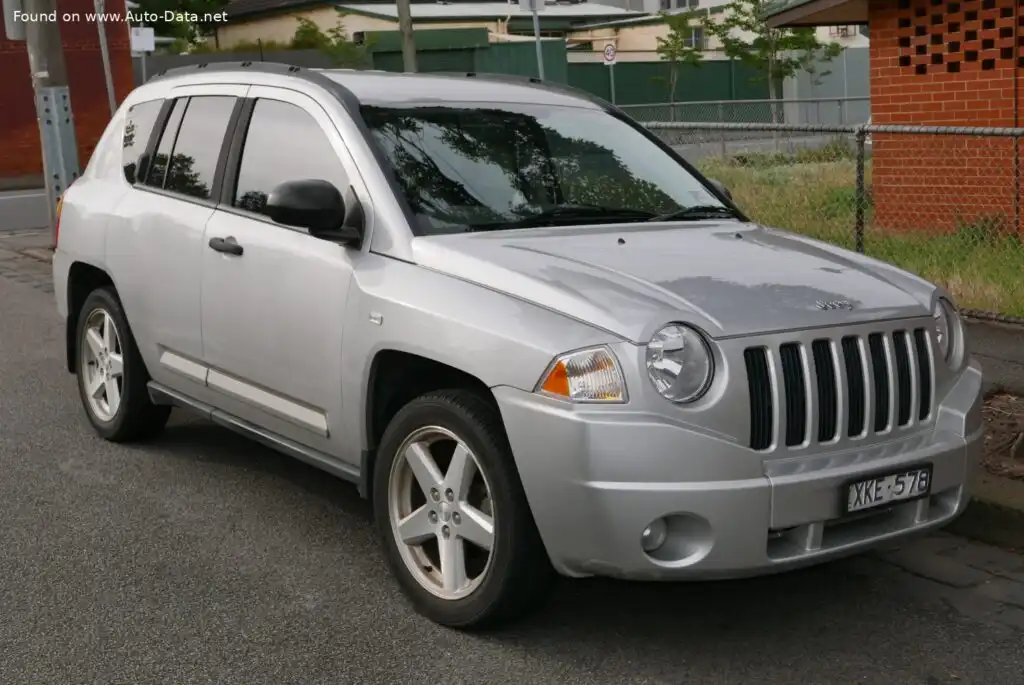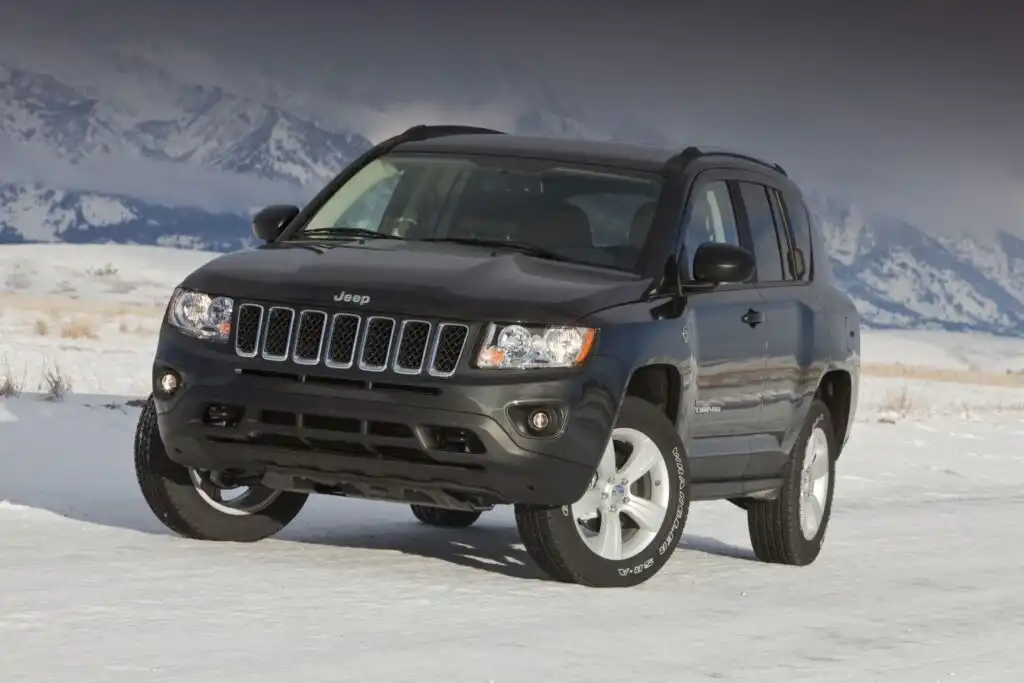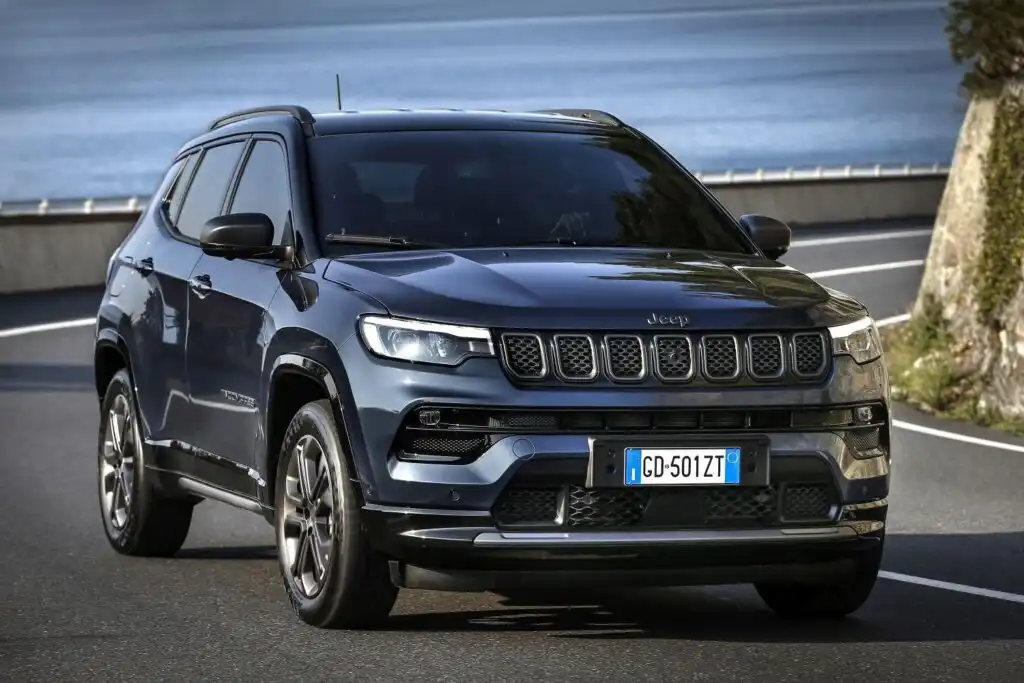
The Jeep Compass II (MP), specifically the 1.6 Multijet variant producing 130 horsepower, represents a significant iteration in Jeep’s compact SUV offerings. Introduced in April 2021 as part of a facelift for the second-generation Compass (launched in 2017), this model aimed to balance fuel efficiency with practicality for the European and international markets. Production continued until February 2022. This version occupied a mid-range position within the Compass lineup, offering a diesel engine option for buyers prioritizing fuel economy and torque over outright performance, slotting below the more powerful petrol variants and above base-level trims.
Technical Specifications
| Brand | Jeep |
| Model | Compass |
| Generation | Compass II (MP, facelift 2021) |
| Type (Engine) | 1.6 Multijet (130 Hp) |
| Start of production | April, 2021 |
| End of production | February, 2022 |
| Powertrain Architecture | Internal Combustion engine |
| Body type | SUV, Crossover |
| Seats | 5 |
| Doors | 5 |
| Fuel consumption (urban) | 5.9 l/100 km (39.9 US mpg, 47.9 UK mpg, 16.9 km/l) |
| Fuel consumption (extra urban) | 4.0 l/100 km (58.8 US mpg, 70.6 UK mpg, 25 km/l) |
| Fuel consumption (combined) | 5.2-5.3 l/100 km (45.2 – 44.4 US mpg, 54.3 – 53.3 UK mpg, 19.2 – 18.9 km/l) |
| CO2 emissions | 135-140 g/km |
| Fuel Type | Diesel |
| Acceleration 0 – 100 km/h | 10.6 sec |
| Acceleration 0 – 62 mph | 10.6 sec |
| Acceleration 0 – 60 mph | 10.1 sec |
| Maximum speed | 194 km/h (120.55 mph) |
| Emission standard | Euro 6d-Final |
| Weight-to-power ratio | 11.8 kg/Hp, 84.4 Hp/tonne |
| Weight-to-torque ratio | 4.8 kg/Nm, 207.8 Nm/tonne |
| Power | 130 Hp @ 3750 rpm |
| Torque | 320 Nm @ 1500 rpm (236.02 lb.-ft. @ 1500 rpm) |
| Engine layout | Front, Transverse |
| Engine Model/Code | 46346020 |
| Engine displacement | 1598 cm3 (97.52 cu. in.) |
| Number of cylinders | 4 |
| Engine configuration | Inline |
| Cylinder Bore | 79.5 mm (3.13 in.) |
| Piston Stroke | 80.5 mm (3.17 in.) |
| Compression ratio | 16.5:1 |
| Number of valves per cylinder | 4 |
| Fuel injection system | Diesel Commonrail |
| Engine aspiration | Turbocharger, Intercooler |
| Engine oil capacity | 4.8 l (5.07 US qt | 4.22 UK qt) |
| Coolant | 5.5 l (5.81 US qt | 4.84 UK qt) |
| Kerb Weight | 1540 kg (3395.12 lbs.) |
| Trunk (boot) space – minimum | 438 l (15.47 cu. ft.) |
| Trunk (boot) space – maximum | 1387 l (48.98 cu. ft.) |
| Fuel tank capacity | 55 l (14.53 US gal | 12.1 UK gal) |
| AdBlue tank | 13 l (3.43 US gal | 2.86 UK gal) |
| Length | 4404 mm (173.39 in.) |
| Width with mirrors folded | 1874 mm (73.78 in.) |
| Height | 1629 mm (64.13 in.) |
| Wheelbase | 2636 mm (103.78 in.) |
| Ride height (ground clearance) | 198 mm (7.8 in.) |
| Drivetrain Architecture | The Internal combustion engine (ICE) drives the front wheels of the vehicle. |
| Drive wheel | Front wheel drive |
| Number of gears and type of gearbox | 6 gears, manual transmission |
| Front brakes | Ventilated discs |
| Rear brakes | Ventilated discs |
| Assisting systems | ABS (Anti-lock braking system) |
| Steering type | Steering rack and pinion |
| Power steering | Electric Steering |
| Tires size | 235/45 R19 |
| Wheel rims size | 19 |
Powertrain & Engine Architecture
The heart of this Compass variant is the 1.6-liter Multijet diesel engine, identified by engine code 46346020. This engine is a four-cylinder, inline configuration, utilizing a turbocharger with an intercooler to boost power and efficiency. The engine employs a common-rail direct fuel injection system, delivering fuel directly into the cylinders at extremely high pressure for optimized combustion. A compression ratio of 16.5:1 contributes to the engine’s thermal efficiency. The 130 horsepower output is achieved at 3750 rpm, while the substantial 320 Nm (236 lb-ft) of torque is readily available from just 1500 rpm, making it well-suited for everyday driving and towing. This particular model was equipped with a 6-speed manual transmission, chosen for its balance of fuel economy and driver engagement. While an automatic transmission was offered on other Compass trims, it wasn’t paired with this specific engine and power output.
Driving Characteristics
The 1.6 Multijet 130 hp Compass delivers a practical and economical driving experience. Acceleration from 0-60 mph takes approximately 10.1 seconds, and top speed is around 120.55 mph. The readily available torque makes overtaking and merging onto highways manageable, though it doesn’t offer the brisk acceleration of the higher-powered petrol versions. The manual transmission allows for greater driver control, but requires more engagement than an automatic. The gear ratios are tuned for fuel efficiency, meaning the engine doesn’t rev as freely as some competitors. Compared to the 1.3-liter petrol engine, the 1.6 Multijet offers significantly more torque, resulting in better pulling power and a more relaxed driving experience, especially when fully loaded. However, it lacks the responsiveness of the petrol engine.
Equipment & Trim Levels
The 1.6 Multijet 130 hp Compass typically came with a reasonable level of standard equipment. This included air conditioning, a touchscreen infotainment system with Bluetooth connectivity, alloy wheels, and basic safety features like ABS and multiple airbags. Higher trim levels offered upgrades such as a larger touchscreen, navigation system, parking sensors, a rearview camera, and leather upholstery. Interior materials were generally durable and functional, reflecting the Compass’s positioning as a value-oriented SUV. Optional extras included a panoramic sunroof, premium audio system, and advanced driver-assistance systems.
Chassis & Braking
The Compass II utilizes a front-wheel-drive chassis with independent suspension at the front and a multi-link setup at the rear. This configuration provides a comfortable ride quality, although it’s not particularly sporty. The steering is electrically assisted, offering light and precise control. Braking duties are handled by ventilated discs on all four wheels, providing adequate stopping power. The ABS system enhances safety by preventing wheel lockup during hard braking. Stabilizer bars are fitted to both the front and rear axles to reduce body roll during cornering.
Market Reception & Comparison
The 1.6 Multijet Compass was generally well-received by critics as a practical and fuel-efficient option in the compact SUV segment. Its strong point was its fuel economy, achieving around 45-54 mpg on the combined cycle. However, some reviewers noted that the engine could be somewhat noisy and lacked the refinement of some competitors. Compared to the petrol versions, the diesel offered superior fuel economy and torque, but at the expense of outright performance. Against rivals like the Nissan Qashqai and Kia Sportage, the Compass offered a competitive price point and a distinctive Jeep aesthetic.
Legacy
The 1.6 Multijet engine, in various iterations, has proven to be a relatively reliable powertrain. While diesel engines, in general, can be more susceptible to issues with the diesel particulate filter (DPF) and fuel injection system, the 1.6 Multijet has a reasonably good track record. On the used car market, these Compass models are often sought after by buyers looking for a fuel-efficient and practical SUV. Regular maintenance, including timely oil changes and DPF regeneration, is crucial for ensuring long-term reliability. The Compass II, including this 1.6 Multijet variant, helped to solidify Jeep’s presence in the European and international compact SUV markets.