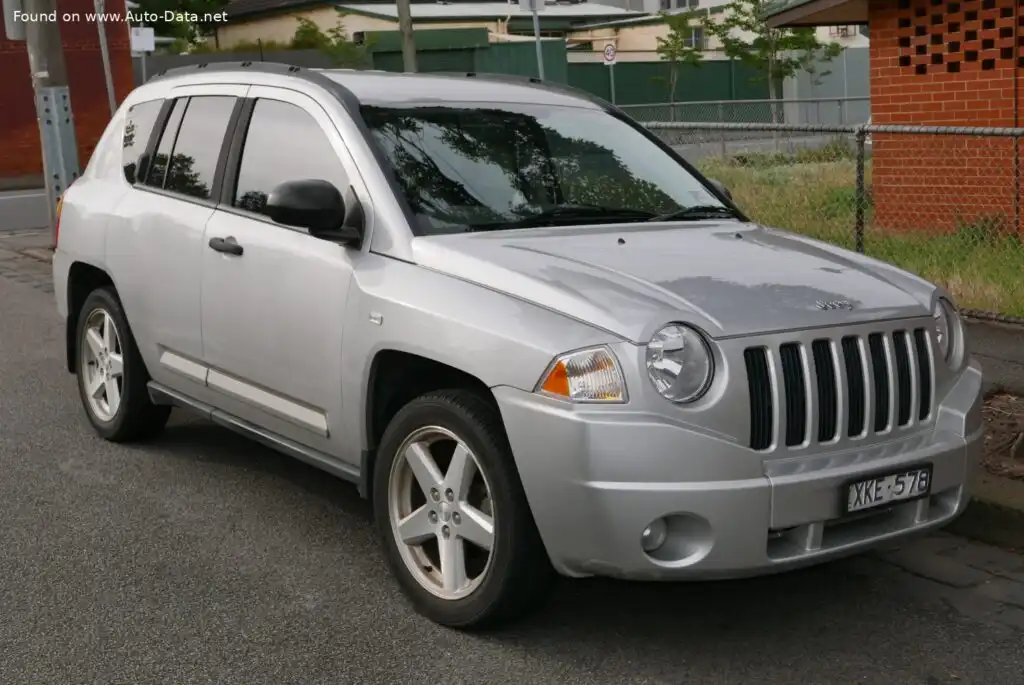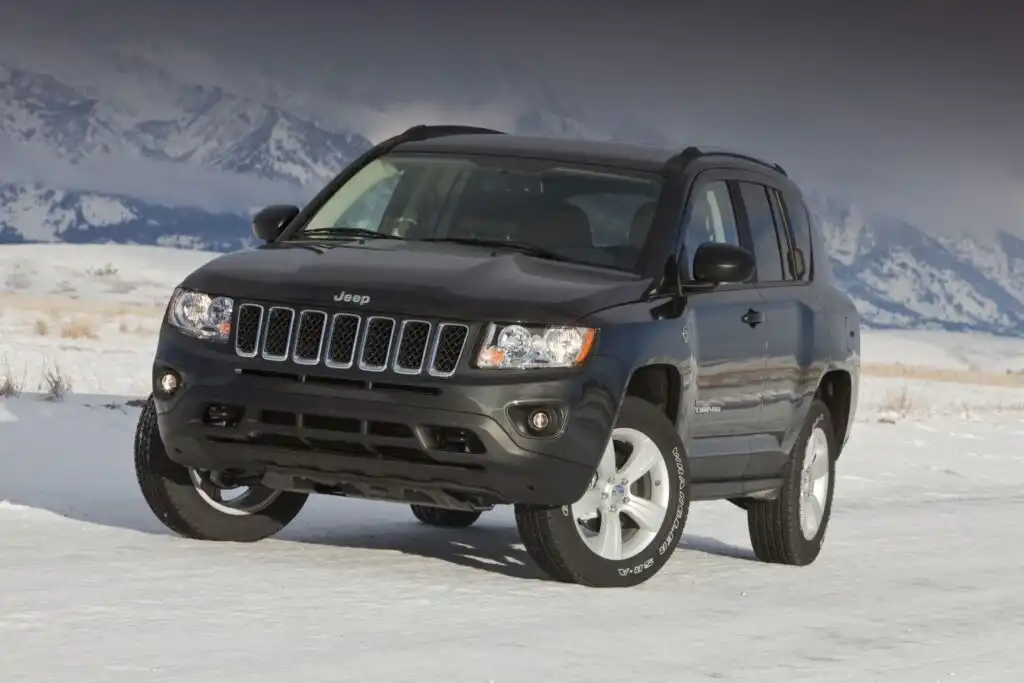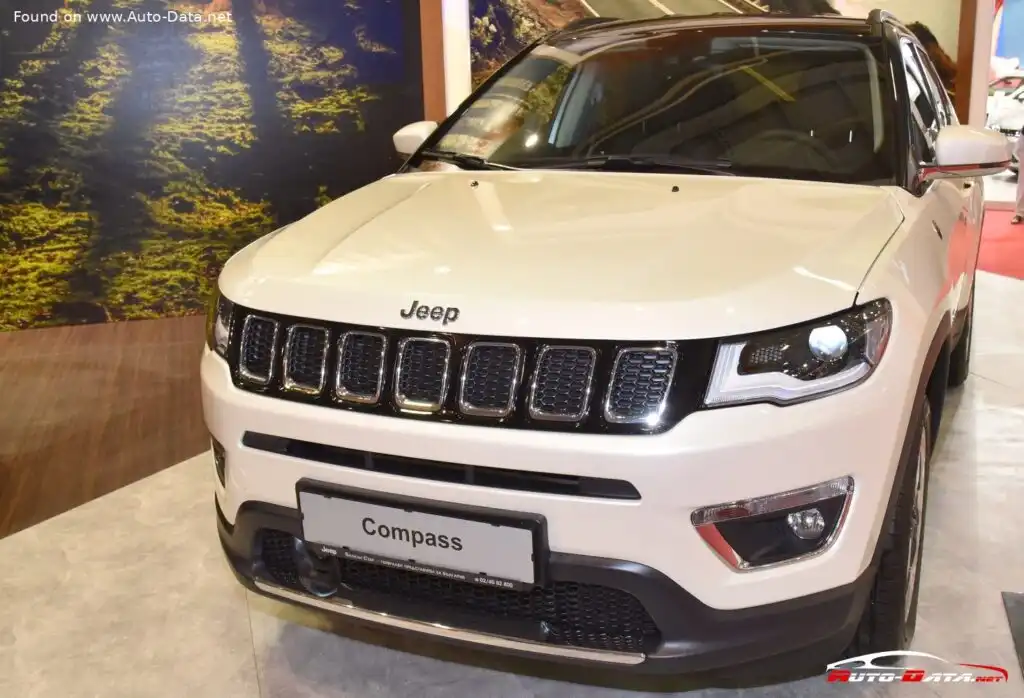
The Jeep Compass II (MP) Trailhawk 2.0 Multijet 4×4 Automatic, produced from July 2017 to August 2018, represents a significant iteration of the Compass line, specifically tailored for off-road capability and positioned as the premium trim level within the MP generation. Built on the 551 platform, this variant aimed to bridge the gap between everyday practicality and genuine trail performance, appealing to drivers seeking adventure without sacrificing comfort. It was primarily marketed in Europe and other international markets where compact SUVs with diesel powertrains and all-wheel drive were in high demand. This model distinguished itself from other Compass II trims through its enhanced off-road hardware, aggressive styling, and the potent 2.0-liter Multijet diesel engine paired with a nine-speed automatic transmission.
Technical Specifications
| Brand | Jeep |
| Model | Compass |
| Generation | Compass II (MP) |
| Type | Trailhawk 2.0 Multijet (170 Hp) 4×4 Automatic |
| Start of production | July, 2017 |
| End of production | August, 2018 |
| Powertrain Architecture | Internal Combustion engine |
| Body type | SUV, Crossover |
| Seats | 5 |
| Doors | 5 |
| Fuel consumption (urban) | 6.7 l/100 km (35.1 US mpg, 42.2 UK mpg, 14.9 km/l) |
| Fuel consumption (extra urban) | 5.2 l/100 km (45.2 US mpg, 54.3 UK mpg, 19.2 km/l) |
| Fuel consumption (combined) | 5.8 l/100 km (40.6 US mpg, 48.7 UK mpg, 17.2 km/l) |
| CO2 emissions | 150 g/km |
| Fuel Type | Diesel |
| Acceleration 0 – 100 km/h | 10.1 sec |
| Acceleration 0 – 62 mph | 10.1 sec |
| Acceleration 0 – 60 mph | 9.6 sec |
| Maximum speed | 190 km/h (118.06 mph) |
| Emission standard | Euro 6 |
| Weight-to-power ratio | 9.6 kg/Hp, 104.2 Hp/tonne |
| Weight-to-torque ratio | 4.3 kg/Nm, 233 Nm/tonne |
| Power | 170 Hp @ 4000 rpm |
| Power per litre | 86.9 Hp/l |
| Torque | 380 Nm @ 1750 rpm (280.27 lb.-ft. @ 1750 rpm) |
| Engine layout | Front, Transverse |
| Engine Model/Code | EBS |
| Engine displacement | 1956 cm3 (119.36 cu. in.) |
| Number of cylinders | 4 |
| Engine configuration | Inline |
| Cylinder Bore | 83 mm (3.27 in.) |
| Piston Stroke | 90.4 mm (3.56 in.) |
| Compression ratio | 16.5:1 |
| Number of valves per cylinder | 4 |
| Fuel injection system | Diesel Commonrail |
| Engine aspiration | Turbocharger, Intercooler |
| Valvetrain | DOHC |
| Engine oil capacity | 4.2 l (4.44 US qt | 3.7 UK qt) |
| Coolant capacity | 6.5 l (6.87 US qt | 5.72 UK qt) |
| Kerb Weight | 1631-1832 kg (3595.74 – 4038.87 lbs.) |
| Max. weight | 2223 kg (4900.88 lbs.) |
| Max load | 391-592 kg (862.01 – 1305.14 lbs.) |
| Trunk (boot) space – minimum | 438 l (15.47 cu. ft.) |
| Trunk (boot) space – maximum | 1251 l (44.18 cu. ft.) |
| Fuel tank capacity | 60 l (15.85 US gal | 13.2 UK gal) |
| Max. roof load | 68 kg (149.91 lbs.) |
| Permitted trailer load with brakes (12%) | 1500 kg (3306.93 lbs.) |
| Permitted trailer load without brakes | 525 kg (1157.43 lbs.) |
| Permitted towbar download | 75 kg (165.35 lbs.) |
| Length | 4398 mm (173.15 in.) |
| Width | 1819 mm (71.61 in.) |
| Height | 1660 mm (65.35 in.) |
| Wheelbase | 2636 mm (103.78 in.) |
| Front track | 1540 mm (60.63 in.) |
| Rear track | 1540 mm (60.63 in.) |
| Ride height (ground clearance) | 229 mm (9.02 in.) |
| Minimum turning circle | 11.07 m (36.32 ft.) |
| Approach angle | 29.1° |
| Departure angle | 33.1° |
| Ramp-over angle | 23.7° |
| Wading depth | 483 mm (19.02 in.) |
| Drivetrain Architecture | All wheel drive (4×4). ICE drives front wheels, rear driven via clutch. |
| Number of gears | 9 |
| Gearbox type | Automatic transmission |
| Front suspension | Independent, McPherson with coil spring and anti-roll bar |
| Rear suspension | Independent coil spring, Transverse stabilizer |
| Front brakes | Ventilated discs |
| Rear brakes | Disc |
| Assisting systems | ABS (Anti-lock braking system) |
| Steering type | Steering rack and pinion |
| Power steering | Electric |
| Tires size | 225/60 R17 |
| Wheel rims size | 6.5J x 17 |
Powertrain & Engine Architecture
The heart of the Trailhawk is the 2.0-liter Multijet diesel engine, identified by the EBS engine code. This engine is a four-cylinder, inline configuration, featuring a turbocharger with intercooling and a common rail direct injection system. The 16.5:1 compression ratio is typical for diesel engines, maximizing efficiency. The engine produces 170 horsepower at 4000 rpm and a substantial 380 Nm (280 lb-ft) of torque at a low 1750 rpm, providing ample low-end grunt for off-road situations. The engine utilizes a double overhead camshaft (DOHC) valvetrain with four valves per cylinder, optimizing gas flow and contributing to its power output. Paired with this engine is a ZF-sourced nine-speed automatic transmission. This transmission offers a wide range of gear ratios, enhancing both fuel economy and performance. The automatic transmission was specifically chosen for its ability to provide smooth shifts and maintain optimal engine speed in various driving conditions, including challenging off-road terrain.
Driving Characteristics
The 2.0 Multijet with the nine-speed automatic delivers a balanced driving experience. While not exceptionally quick – 0-60 mph in around 9.6 seconds – the abundant torque makes it feel responsive in everyday driving. The automatic transmission is generally smooth, although some drivers have noted occasional hesitation during downshifts. The wide gear spread allows the engine to operate efficiently at highway speeds, contributing to good fuel economy. Compared to the base 1.4-liter gasoline engine, the 2.0 Multijet offers significantly more power and torque, making it better suited for towing and tackling steep inclines. Compared to other diesel variants, like the 1.6 Multijet, the 2.0 provides a noticeable increase in overall performance and refinement.
Equipment & Trim Levels
The Trailhawk trim came standard with a comprehensive list of features. Interior appointments included cloth and leather upholstery, a leather-wrapped steering wheel, and a user-friendly infotainment system with a touchscreen display. Standard safety features included ABS, electronic stability control, and multiple airbags. Unique to the Trailhawk were off-road specific features such as a Selec-Terrain traction management system with settings for Auto, Snow, Sand, Mud, and Rock, as well as skid plates, tow hooks, and increased ground clearance. Optional extras included a panoramic sunroof, premium audio system, and advanced driver-assistance systems like adaptive cruise control and lane departure warning.
Chassis & Braking
The Compass II Trailhawk features an independent suspension system on all four wheels. The front utilizes a McPherson strut setup with coil springs and an anti-roll bar, while the rear employs an independent coil spring arrangement with a transverse stabilizer. This setup provides a comfortable ride on paved roads while offering sufficient articulation for off-road driving. Braking duties are handled by ventilated discs on the front wheels and solid discs on the rear. The ABS system ensures optimal braking performance in various conditions.
Market Reception & Comparison
The Jeep Compass II Trailhawk 2.0 Multijet received generally positive reviews, particularly for its off-road capability and refined diesel powertrain. Critics praised its rugged styling and comfortable interior. Fuel economy was also a strong point, with combined figures around 5.8 l/100 km (40.6 US mpg). Compared to competitors like the Nissan Qashqai and Kia Sportage, the Trailhawk offered a more focused off-road experience. However, some reviewers noted that the interior materials weren’t as premium as those found in some rivals.
Legacy
The 2.0 Multijet engine paired with the nine-speed automatic proved to be a reliable powertrain combination. While diesel engines, in general, have faced increased scrutiny regarding emissions, this particular engine, when properly maintained, has demonstrated good long-term durability. In the used car market, the Trailhawk 2.0 Multijet holds its value relatively well, appealing to buyers seeking a capable and fuel-efficient compact SUV with genuine off-road credentials. Its blend of practicality, performance, and off-road prowess continues to make it a desirable option for those seeking adventure.