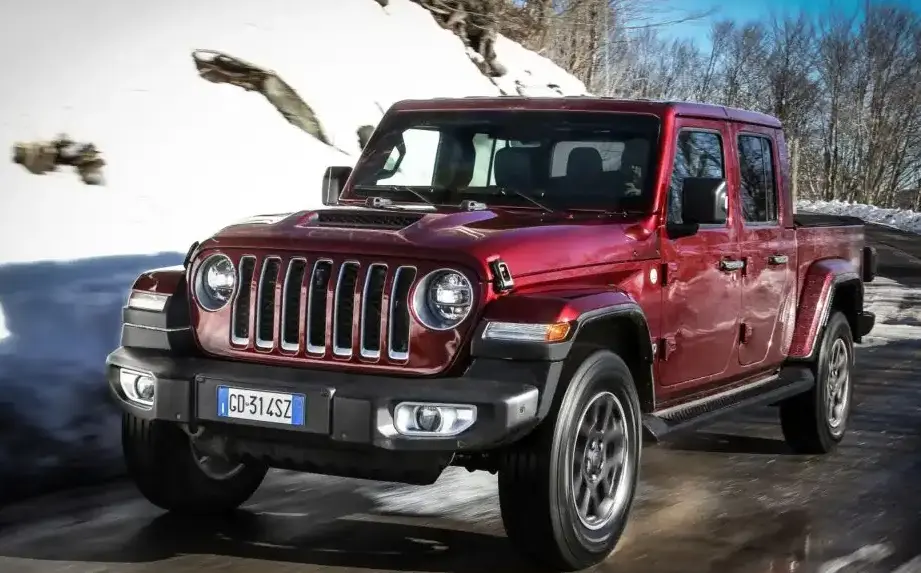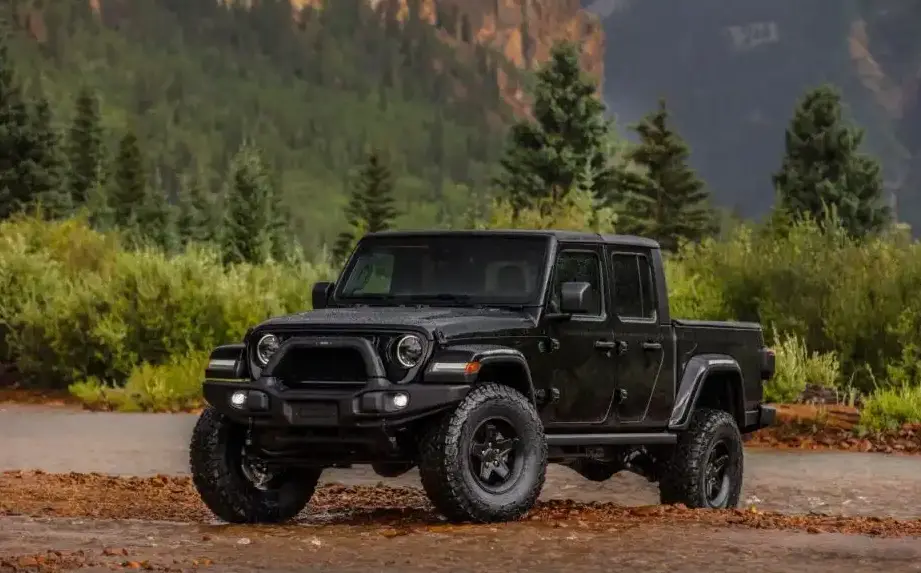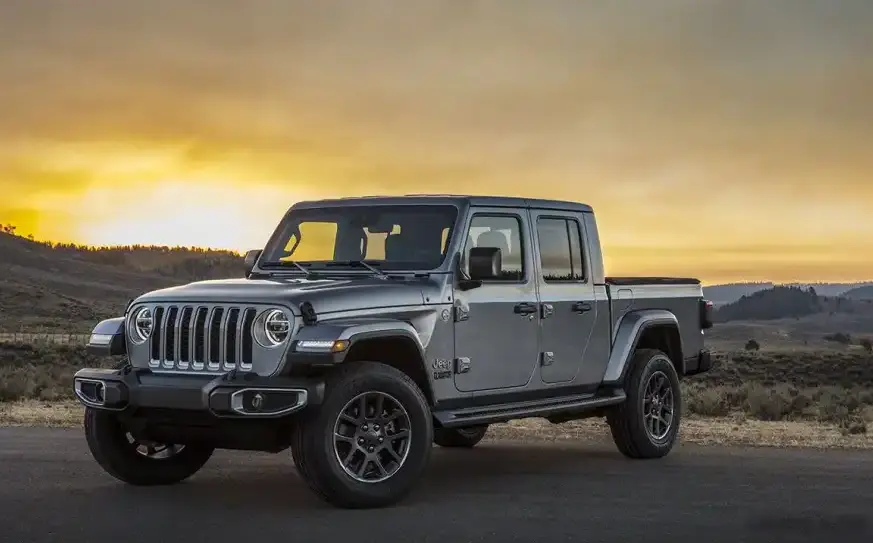
The Jeep Gladiator JT, specifically equipped with the 3.6-liter Pentastar V6 engine producing 285 horsepower and a four-wheel-drive system, represents a significant entry in the mid-size pickup truck market. Introduced for the 2019 model year, it marked the return of the Gladiator nameplate after a 25-year hiatus, aiming to combine Jeep’s renowned off-road capability with the practicality of a pickup truck. This variant served as the standard engine option for the initial launch of the JT generation, positioned as the core offering within the Gladiator lineup, appealing to a broad range of buyers seeking both daily usability and adventure potential. Production of this configuration continued through the 2023 model year, establishing it as a cornerstone of the revived Gladiator family.
Technical Specifications
| Brand | Jeep |
| Model | Gladiator |
| Generation | Gladiator (JT) |
| Type (Engine) | 3.6 Pentastar V6 (285 Hp) 4WD |
| Start of production | 2019 |
| End of production | 2023 |
| Powertrain Architecture | Internal Combustion engine |
| Body type | Pick-up |
| Seats | 5 |
| Doors | 4 |
| Fuel consumption (urban) | 14.7 l/100 km (16 US mpg, 19.2 UK mpg, 6.8 km/l) |
| Fuel consumption (extra urban) | 10.2 l/100 km (23.1 US mpg, 27.7 UK mpg, 9.8 km/l) |
| Fuel consumption (combined) | 12.4 l/100 km (19 US mpg, 22.8 UK mpg, 8.1 km/l) |
| Fuel Type | Petrol (Gasoline) |
| Weight-to-power ratio | 7.4 kg/Hp, 135.1 Hp/tonne |
| Weight-to-torque ratio | 6 kg/Nm, 167.4 Nm/tonne |
| Power | 285 Hp @ 6400 rpm |
| Power per litre | 79.1 Hp/l |
| Torque | 353 Nm @ 4400 rpm (260.36 lb.-ft. @ 4400 rpm) |
| Engine layout | Front, Longitudinal |
| Engine Model/Code | ERC |
| Engine displacement | 3604 cm3 (219.93 cu. in.) |
| Number of cylinders | 6 |
| Engine configuration | V-engine |
| Cylinder Bore | 96 mm (3.78 in.) |
| Piston Stroke | 83 mm (3.27 in.) |
| Compression ratio | 11.3:1 |
| Number of valves per cylinder | 4 |
| Fuel injection system | Multi-port manifold injection |
| Engine aspiration | Naturally aspirated engine |
| Valvetrain | DOHC |
| Engine oil capacity | 4.73 l (5 US qt | 4.16 UK qt) |
| Coolant | 10.6 l (11.2 US qt | 9.33 UK qt) |
| Kerb Weight | 2109-2291 kg (4649.55 – 5050.79 lbs.) |
| Fuel tank capacity | 83 l (21.93 US gal | 18.26 UK gal) |
| Permitted trailer load with brakes (12%) | 2109 kg (4649.55 lbs.) |
| Length | 5539 mm (218.07 in.) |
| Width | 1875 mm (73.82 in.) |
| Height | 1857-1933 mm (73.11 – 76.1 in.) |
| Wheelbase | 3487 mm (137.28 in.) |
| Front track | 1598-1636 mm (62.91 – 64.41 in.) |
| Rear (Back) track | 1598-1636 mm (62.91 – 64.41 in.) |
| Ride height (ground clearance) | 253-283 mm (9.96 – 11.14 in.) |
| Approach angle | 40.8-43.4° |
| Departure angle | 25-26° |
| Ramp-over (brakeover) angle | 18.4-20.3° |
| Drivetrain Architecture | The Internal combustion engine (ICE) drives the rear wheels permanently, and the front wheels are driven through an electrically or mechanically operated clutch if necessary. |
| Drive wheel | All wheel drive (4×4) |
| Number of gears and type of gearbox | 6 gears, manual transmission |
| Front suspension | Dependent spring suspension with anti-roll bar |
| Rear suspension | dependent spring suspension |
| Front brakes | Ventilated discs |
| Rear brakes | Ventilated discs |
| Assisting systems | ABS (Anti-lock braking system) |
| Steering type | Steering rack and pinion |
| Power steering | Electric Steering |
| Tires size | 245/75 R17; 285/70 R17; 255/70 R18 |
| Wheel rims size | 7.5J x 17; 7.5J x 18; |
Powertrain & Engine Architecture
The heart of this Gladiator variant is the 3.6-liter Pentastar V6 engine, a mainstay of the FCA (now Stellantis) powertrain lineup. This engine, designated as the ERC code, is a naturally aspirated, 60-degree V6 featuring a cast iron block and aluminum cylinder heads. It utilizes a multi-port fuel injection system, delivering fuel directly into the intake ports, and a double overhead camshaft (DOHC) valvetrain with four valves per cylinder. This configuration allows for efficient combustion and a broad torque curve. The engine produces 285 horsepower at 6,400 rpm and 260 lb-ft of torque at 4,400 rpm. The standard transmission paired with this engine was a six-speed manual, though an eight-speed automatic transmission was also available as an option. The 4WD system is a part-time system, allowing the driver to switch between 2WD, 4WD High, and 4WD Low for varying terrain conditions.
Driving Characteristics
The 3.6-liter Pentastar V6, while providing adequate power for everyday driving, isn’t known for blistering acceleration in the Gladiator. The vehicle’s substantial weight, ranging from 4,650 to 5,050 pounds, impacts its performance. The six-speed manual transmission offers a more engaging driving experience, allowing for greater control over the engine’s powerband. However, the automatic transmission provides smoother shifts and is preferred by many drivers for daily commuting. Compared to the optional 3.0-liter EcoDiesel engine, the Pentastar V6 offers less torque, resulting in slower towing capacity and a less effortless feel when hauling heavy loads. The gear ratios in the six-speed manual are well-spaced, providing reasonable acceleration in each gear, but require frequent shifting to maintain momentum, especially when climbing hills or carrying a load.
Equipment & Trim Levels
The 3.6-liter Pentastar V6 was offered across a wide range of Gladiator trim levels, including the Sport, Sport S, Overland, and Rubicon. The base Sport model came standard with features like a 7-inch touchscreen infotainment system, rearview camera, and basic cloth upholstery. Higher trim levels, such as the Overland and Rubicon, added features like leather upholstery, larger touchscreen displays, premium audio systems, and advanced safety technologies. Optional extras included a hardtop roof, power-adjustable seats, and various off-road packages. The interior design was functional and durable, reflecting the Gladiator’s rugged character.
Chassis & Braking
The Gladiator JT utilizes a fully boxed, high-strength steel frame, providing a solid foundation for both on-road and off-road performance. The front suspension features a five-link coil spring setup with an anti-roll bar, while the rear suspension employs a solid axle with leaf springs. This configuration provides a good balance of ride comfort and load-carrying capacity. Braking duties are handled by ventilated discs on all four wheels, providing adequate stopping power for the vehicle’s weight. The Rubicon trim level included upgraded brakes and a locking rear differential for enhanced off-road capability.
Market Reception & Comparison
The Jeep Gladiator with the 3.6-liter Pentastar V6 received generally positive reviews, with critics praising its unique combination of off-road capability and pickup truck practicality. However, some reviewers noted the engine’s lack of refinement compared to some competitors and its relatively low fuel economy. Compared to the EcoDiesel variant, the Pentastar V6 offered a lower price point but sacrificed fuel efficiency and towing capacity. Against competitors like the Toyota Tacoma and Ford Ranger, the Gladiator stood out with its removable top and doors, offering a more open-air driving experience.
Legacy
The 3.6-liter Pentastar V6-powered Jeep Gladiator has proven to be a reliable and capable vehicle in the used car market. While not without its quirks, the engine has a generally good reputation for durability, and the Gladiator’s robust construction ensures it can withstand years of use. The JT generation Gladiator successfully revived the iconic nameplate and established a new niche in the mid-size pickup truck segment, appealing to buyers who prioritize adventure and individuality. The combination of Jeep’s legendary 4×4 system and the Pentastar V6’s proven reliability continues to make this variant a popular choice among off-road enthusiasts and everyday drivers alike.