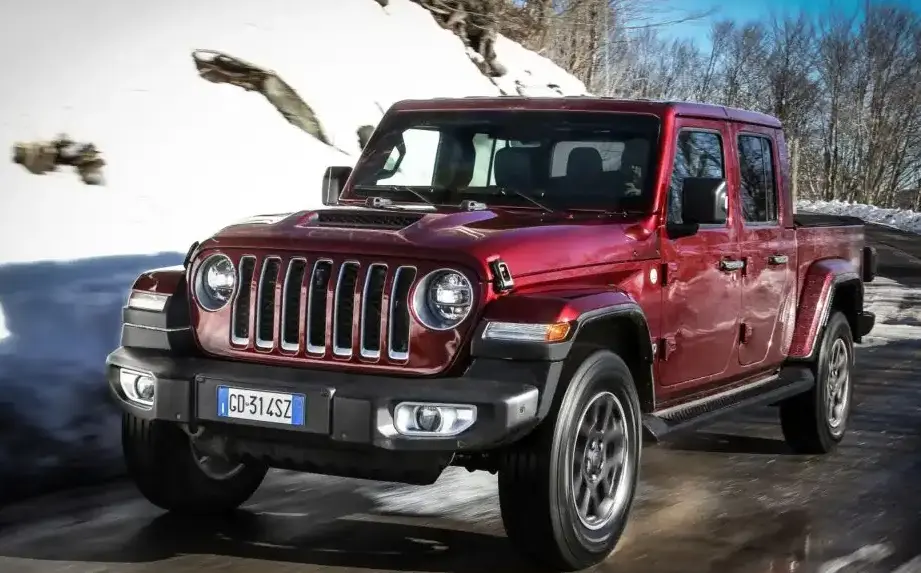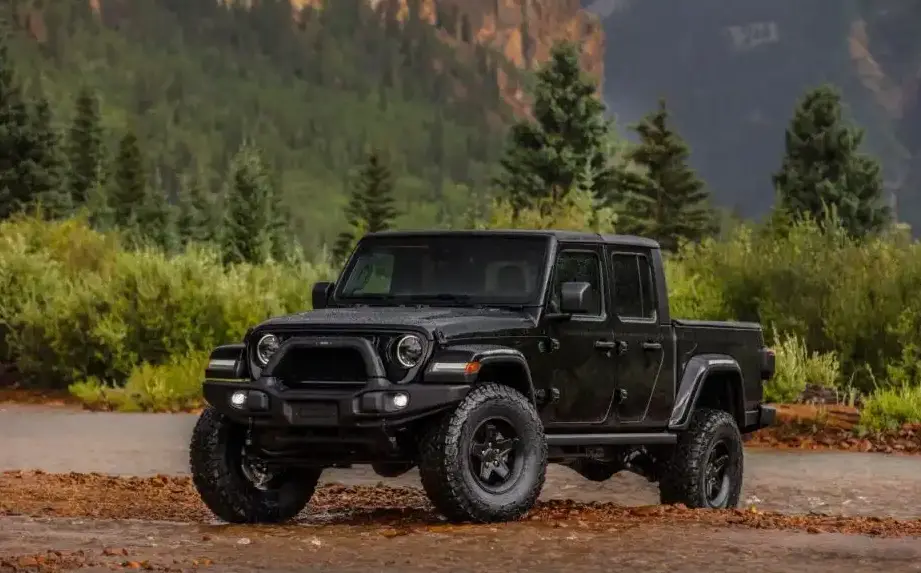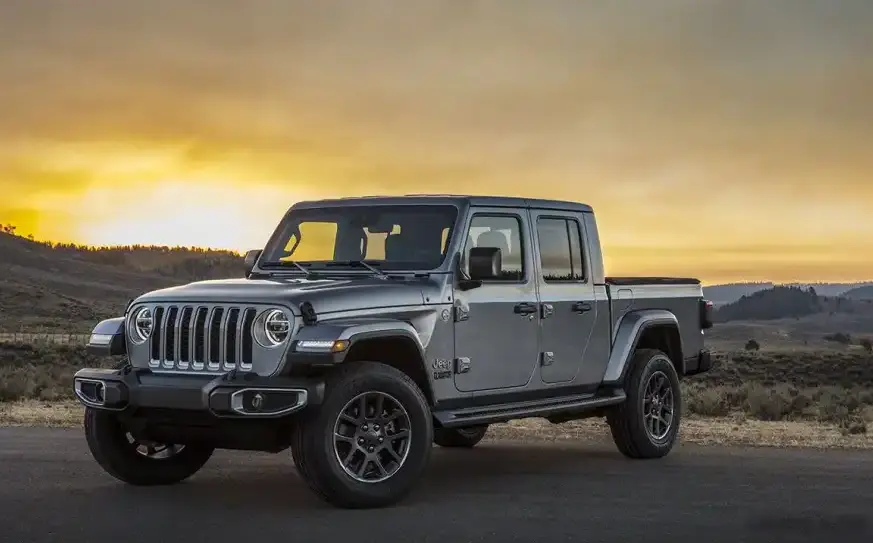
The Jeep Gladiator JT, specifically equipped with the 3.6-liter Pentastar V6 engine paired with a four-wheel drive system and an eight-speed automatic transmission, represents a significant entry point into the modern mid-size pickup truck market. Introduced for the 2019 model year, this configuration was a mainstay throughout the JT’s first generation production run, ending in 2023. It aimed to deliver a balance of capability, comfort, and affordability within the Gladiator lineup, appealing to a broad range of buyers seeking a versatile vehicle for both on- and off-road adventures. This variant positioned itself as the volume seller, offering a compelling alternative to the more specialized trims like the Rubicon.
Technical Specifications
| Brand | Jeep |
| Model | Gladiator |
| Generation | Gladiator (JT) |
| Type (Engine) | 3.6 Pentastar V6 (285 Hp) 4WD Automatic |
| Start of production | 2019 |
| End of production | 2023 |
| Powertrain Architecture | Internal Combustion engine |
| Body type | Pick-up |
| Seats | 5 |
| Doors | 4 |
| Fuel consumption (urban) | 13.8 l/100 km (17 US mpg, 20.5 UK mpg, 7.2 km/l) |
| Fuel consumption (extra urban) | 10.7 l/100 km (22 US mpg, 26.4 UK mpg, 9.3 km/l) |
| Fuel consumption (combined) | 12.4 l/100 km (19 US mpg, 22.8 UK mpg, 8.1 km/l) |
| Fuel Type | Petrol (Gasoline) |
| Weight-to-power ratio | 7.4 kg/Hp, 134.5 Hp/tonne |
| Weight-to-torque ratio | 6 kg/Nm, 166.6 Nm/tonne |
| Power | 285 Hp @ 6400 rpm |
| Power per litre | 79.1 Hp/l |
| Torque | 353 Nm @ 4400 rpm (260.36 lb.-ft. @ 4400 rpm) |
| Engine layout | Front, Longitudinal |
| Engine Model/Code | ERC |
| Engine displacement | 3604 cm3 (219.93 cu. in.) |
| Number of cylinders | 6 |
| Engine configuration | V-engine |
| Cylinder Bore | 96 mm (3.78 in.) |
| Piston Stroke | 83 mm (3.27 in.) |
| Compression ratio | 11.3:1 |
| Number of valves per cylinder | 4 |
| Fuel injection system | Multi-port manifold injection |
| Engine aspiration | Naturally aspirated engine |
| Valvetrain | DOHC |
| Engine oil capacity | 4.73 l (5 US qt | 4.16 UK qt) |
| Coolant | 10.6 l (11.2 US qt | 9.33 UK qt) |
| Kerb Weight | 2119-2301 kg (4671.6 – 5072.84 lbs.) |
| Fuel tank capacity | 83 l (21.93 US gal | 18.26 UK gal) |
| Permitted trailer load with brakes (12%) | 2128 kg (4691.44 lbs.) |
| Length | 5539 mm (218.07 in.) |
| Width | 1875 mm (73.82 in.) |
| Height | 1857-1933 mm (73.11 – 76.1 in.) |
| Wheelbase | 3487 mm (137.28 in.) |
| Front track | 1598-1636 mm (62.91 – 64.41 in.) |
| Rear track | 1598-1636 mm (62.91 – 64.41 in.) |
| Ride height (ground clearance) | 253-283 mm (9.96 – 11.14 in.) |
| Approach angle | 40.8-43.4° |
| Departure angle | 25-26° |
| Ramp-over angle | 18.4-20.3° |
| Drivetrain Architecture | All wheel drive (4×4). ICE drives rear wheels, front engaged via clutch. |
| Number of gears | 8 |
| Gearbox type | Automatic transmission |
| Front suspension | Dependent spring suspension with anti-roll bar |
| Rear suspension | Dependent spring suspension |
| Front brakes | Ventilated discs |
| Rear brakes | Ventilated discs |
| Assisting systems | ABS (Anti-lock braking system) |
| Steering type | Steering rack and pinion |
| Power steering | Electric |
| Tires size | 245/75 R17; 285/70 R17; 255/70 R18 |
| Wheel rims size | 7.5J x 17; 7.5J x 18; |
INTRODUCTION
The Jeep Gladiator JT, reintroduced in 2019 after a nearly 30-year hiatus, marked Jeep’s return to the mid-size pickup truck segment. Built on a modified version of the Wrangler JL platform (the 1HX0/A3 architecture), the Gladiator aimed to combine the legendary off-road prowess of the Wrangler with the practicality of a pickup bed. The 3.6-liter Pentastar V6 with the eight-speed automatic transmission was the standard powertrain for the majority of Gladiator models, serving as the foundation for the lineup. It provided a balance between performance, fuel efficiency, and cost, making it the most accessible Gladiator variant for many buyers. This configuration was available across various trim levels, including the Sport, SLT, Overland, and Denali, with each offering increasing levels of features and refinement.
Powertrain & Engine Architecture
The heart of this Gladiator variant is the 3.6-liter Pentastar V6 engine, designated as the ERC code. This engine is a naturally aspirated, 60-degree V6 featuring a dual overhead camshaft (DOHC) valvetrain with four valves per cylinder. It utilizes a multi-port fuel injection system, delivering fuel directly into the intake ports. The engine boasts a compression ratio of 11.3:1, contributing to its power output. The eight-speed automatic transmission (8HP75) is a key component, providing a wide gear ratio spread for both on-road cruising and off-road crawling. This transmission is known for its smooth shifting and responsiveness. The combination of the Pentastar V6 and the 8HP75 transmission is designed to optimize fuel efficiency and provide adequate power for everyday driving and towing.
Driving Characteristics
The 3.6L Pentastar V6 automatic Gladiator delivers a comfortable and capable driving experience. While not as overtly powerful as the available 3.0L EcoDiesel or the 6.4L Hemi V8, the Pentastar provides sufficient torque for most tasks. Acceleration is adequate, though not brisk, with 0-60 mph times typically around 7.5-8.5 seconds. The eight-speed automatic transmission helps keep the engine in its optimal power band, providing smooth and predictable shifts. The 4WD system, selectable with various modes, enhances traction in off-road conditions. Compared to the manual transmission versions, the automatic offers greater convenience in daily driving, particularly in urban environments. However, some enthusiasts find the manual transmission provides a more engaging driving experience and slightly better fuel economy. The Gladiator’s solid front and rear axles contribute to its off-road capability, but also result in a slightly less refined ride quality on paved roads compared to some competitors with independent front suspensions.
Equipment & Trim Levels
The standard equipment on the 3.6L automatic Gladiator varied depending on the trim level. The base Sport model typically included features like air conditioning, a five-inch touchscreen infotainment system, and basic cloth upholstery. Higher trims, such as the Overland, added features like leather upholstery, a larger touchscreen display (8.4-inch), Apple CarPlay and Android Auto compatibility, and premium audio systems. Optional extras included a removable top, a winch, and various off-road packages. The interior design is functional and durable, reflecting the Gladiator’s rugged character. The dashboard layout is straightforward, with easy-to-use controls.
Chassis & Braking
The Gladiator JT utilizes a robust body-on-frame chassis, providing a solid foundation for its off-road capabilities. The front suspension consists of a solid axle with coil springs and an anti-roll bar. The rear suspension also features a solid axle with coil springs. This setup provides excellent articulation for navigating challenging terrain. Braking duties are handled by ventilated discs on all four wheels, providing ample stopping power. An Anti-lock Braking System (ABS) is standard. The Gladiator’s track width varies slightly depending on the trim level and wheel size, ranging from 1598-1636 mm. The ride height provides a generous ground clearance of 253-283 mm, further enhancing its off-road prowess.
Market Reception & Comparison
The Jeep Gladiator was generally well-received by critics, who praised its unique combination of off-road capability and pickup truck practicality. The 3.6L V6 automatic configuration was often cited as a good all-around choice, offering a balance of performance and fuel economy. However, some reviewers noted that the engine could feel underpowered when fully loaded or towing heavy trailers. Compared to competitors like the Toyota Tacoma and Ford Ranger, the Gladiator offered a more distinctive and rugged aesthetic, but often came with a higher price tag. Fuel economy figures of around 19 US mpg combined were considered average for the segment. Reliability reports have been mixed, with some owners reporting minor issues with the electrical system and infotainment system.
Legacy
The 3.6L Pentastar V6 automatic Gladiator has established itself as a popular choice in the used car market. Its proven powertrain and robust construction contribute to its long-term reliability. While not the most fuel-efficient or powerful option, it remains a capable and versatile vehicle for those seeking a blend of on- and off-road capability. As the first generation of the modern Gladiator, this variant holds a significant place in Jeep’s history, representing a successful return to the mid-size pickup truck segment. Its enduring appeal is a testament to its unique character and proven performance.