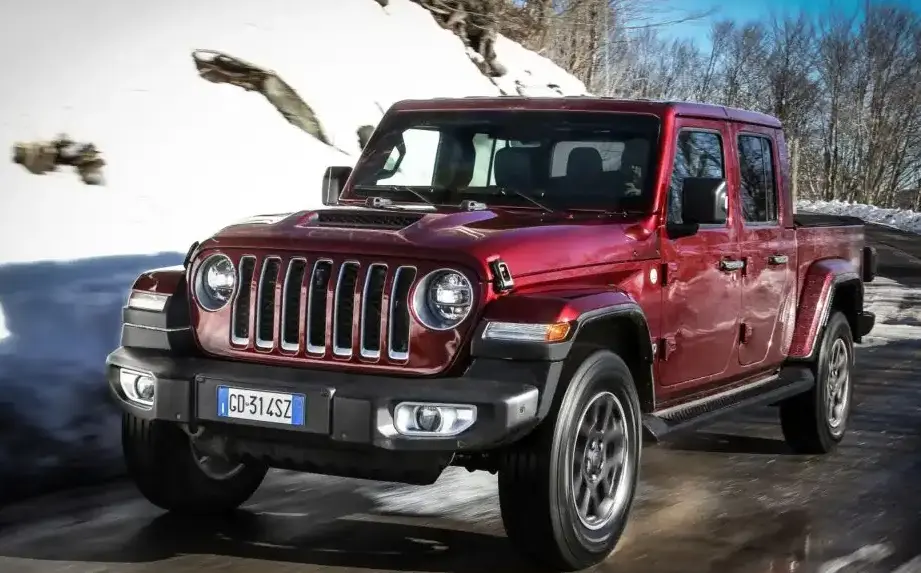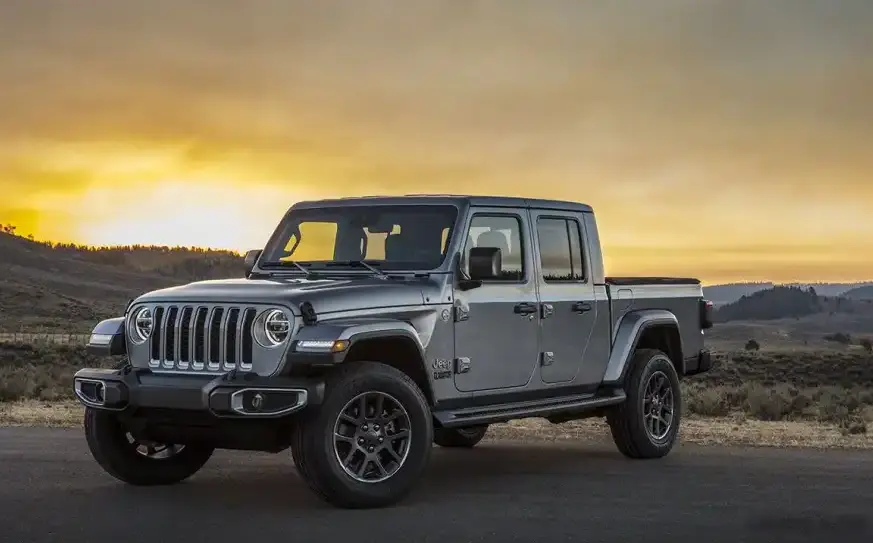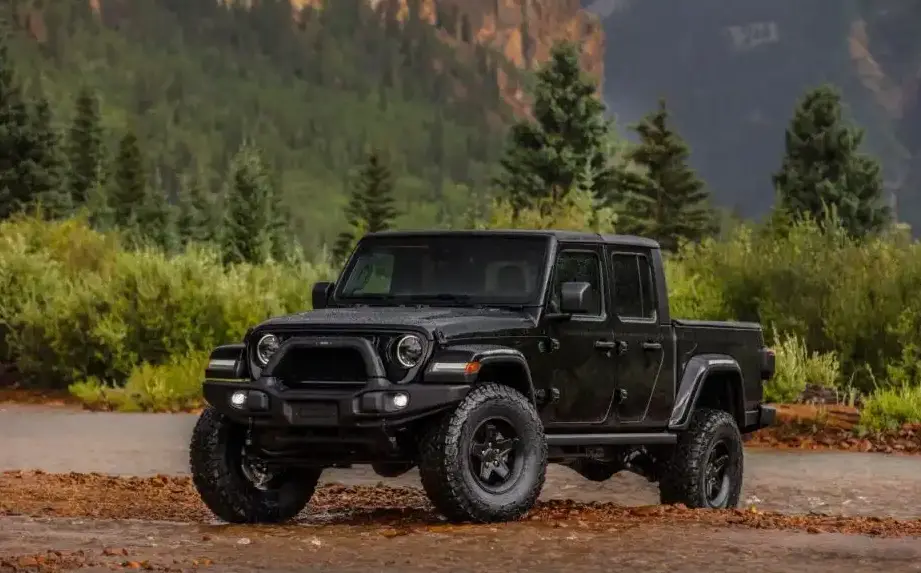
The Jeep Gladiator Willys, equipped with the 3.6-liter Pentastar V6 engine producing 285 horsepower, represents a compelling blend of off-road capability and on-road refinement within the JT Gladiator lineup. Introduced with the 2024 facelift, this variant builds upon the already robust foundation of the Gladiator, offering a specific aesthetic and equipment package geared towards enthusiasts seeking a rugged and capable mid-size pickup. It slots into the Gladiator range as a step up from the base Sport model, offering enhanced styling and features while remaining accessible to a broad range of buyers. The Willys trim is positioned below the more luxurious Overland and Rubicon models, focusing on a balance of value and capability.
Technical Specifications
| Brand | Jeep |
| Model | Gladiator |
| Generation | Gladiator (JT, facelift 2024) |
| Type (Engine) | Willys 3.6 Pentastar V6 (285 Hp) 4×4 |
| Start of production | February, 2024 |
| Powertrain Architecture | Internal Combustion engine |
| Body type | Pick-up |
| Seats | 5 |
| Doors | 4 |
| Fuel consumption (economy) – urban (EPA) | 14.7 l/100 km (16 US mpg, 19.2 UK mpg, 6.8 km/l) |
| Fuel consumption (economy) – extra urban (EPA) | 10.2 l/100 km (23.1 US mpg, 27.7 UK mpg, 9.8 km/l) |
| Fuel consumption (economy) – combined (EPA) | 12.4 l/100 km (19 US mpg, 22.8 UK mpg, 8.1 km/l) |
| Fuel Type | Petrol (Gasoline) |
| Weight-to-power ratio | 7.6 kg/Hp, 130.9 Hp/tonne |
| Weight-to-torque ratio | 6.2 kg/Nm, 162.1 Nm/tonne |
| Power | 285 Hp @ 6400 rpm |
| Power per litre | 79.1 Hp/l |
| Torque | 353 Nm @ 4400 rpm (260.36 lb.-ft. @ 4400 rpm) |
| Maximum engine speed | 6600 rpm |
| Engine layout | Front, Longitudinal |
| Engine Model/Code | Pentastar / ERC |
| Engine displacement | 3604 cm3 (219.93 cu. in.) |
| Number of cylinders | 6 |
| Engine configuration | V-engine |
| Cylinder Bore | 96 mm (3.78 in.) |
| Piston Stroke | 83 mm (3.27 in.) |
| Compression ratio | 11.3:1 |
| Number of valves per cylinder | 4 |
| Fuel injection system | Multi-port manifold injection |
| Engine aspiration | Naturally aspirated engine |
| Valvetrain | DOHC |
| Engine oil capacity | 4.7 l (4.97 US qt | 4.14 UK qt) |
| Coolant | 12.3 l (13 US qt | 10.82 UK qt) |
| Kerb Weight | 2178 kg (4801.67 lbs.) |
| Max. weight | 2622 kg (5780.52 lbs.) |
| Max load | 444 kg (978.85 lbs.) |
| Fuel tank capacity | 83 l (21.93 US gal | 18.26 UK gal) |
| Permitted trailer load with brakes (12%) | 1814 kg (3999.19 lbs.) |
| Length | 5539 mm (218.07 in.) |
| Width | 1875 mm (73.82 in.) |
| Height | 1857-1907 mm (73.11 – 75.08 in.) |
| Wheelbase | 3487 mm (137.28 in.) |
| Front track | 1598 mm (62.91 in.) |
| Rear (Back) track | 1598 mm (62.91 in.) |
| Front overhang | 755 mm (29.72 in.) |
| Rear overhang | 1296 mm (51.02 in.) |
| Ride height (ground clearance) | 254 mm (10 in.) |
| Minimum turning circle (turning diameter) | 13.56 m (44.49 ft.) |
| Approach angle | 40.8° |
| Departure angle | 25° |
| Ramp-over (brakeover) angle | 18.4° |
| Drivetrain Architecture | The Internal combustion engine (ICE) drives the rear wheels permanently, and the front wheels are driven through an electrically or mechanically operated clutch if necessary. |
| Drive wheel | All wheel drive (4×4) |
| Number of gears and type of gearbox | 6 gears, manual transmission |
| Front suspension | Coil spring, Rigid axle suspension, Transverse stabilizer |
| Rear suspension | Rigid axle suspension, Transverse stabilizer, Coil spring |
| Front brakes | Ventilated discs, 330×28 mm |
| Rear brakes | Ventilated discs, 345×22 mm |
| Assisting systems | ABS (Anti-lock braking system) |
| Steering type | Cone worm with recirculation balls |
| Power steering | Electric Steering |
| Tires size | 255/75 R17 |
| Wheel rims size | 7.5J x 17 |
INTRODUCTION
The Jeep Gladiator Willys, launched in February 2024 as part of the JT facelift, represents a significant iteration of Jeep’s return to the mid-size pickup truck segment. Building on the success of the initial JT Gladiator release, the Willys variant specifically targets drivers who desire a vehicle with a strong connection to Jeep’s heritage and a focus on off-road prowess. The “Willys” designation is a nod to the original Willys MB military jeep of World War II, and the trim level aims to capture that spirit of ruggedness and capability. The 3.6-liter Pentastar V6 engine, paired with a six-speed manual transmission, provides a balance of power and efficiency for both daily driving and challenging terrain.
Powertrain & Engine Architecture
At the heart of the Gladiator Willys is the 3.6-liter Pentastar V6 engine, internally designated as the ERC code. This engine is a naturally aspirated, 60-degree V6 featuring a cast iron block and aluminum cylinder heads. It utilizes a multi-port fuel injection system, delivering fuel directly to the intake ports. The engine boasts a dual overhead camshaft (DOHC) valvetrain with four valves per cylinder, optimizing airflow for improved performance. The 6600 rpm redline allows for spirited driving, while the 353 Nm (260.36 lb-ft) of torque at 4400 rpm provides ample pulling power. The six-speed manual transmission is a robust unit designed to handle the engine’s output and the demands of off-road driving. The transmission features a traditional gear lever and a hydraulic clutch system. The engine’s longitudinal mounting allows for a more efficient drivetrain layout, contributing to improved weight distribution.
Driving Characteristics
The 285 horsepower and 353 Nm of torque delivered by the 3.6-liter Pentastar V6, when coupled with the six-speed manual transmission, provide a responsive and engaging driving experience. While not as overtly powerful as some of its competitors or the Gladiator Rubicon’s available engine options, the Willys offers a broad powerband that is well-suited for everyday driving and moderate off-road excursions. The manual transmission allows for precise control over gear selection, enhancing driver involvement. The gear ratios are tuned to provide a balance between acceleration and fuel efficiency. Compared to a hypothetical Gladiator with an automatic transmission, the manual version offers a more direct connection to the engine and a greater sense of control, particularly when navigating challenging terrain. The Willys trim’s suspension tuning provides a comfortable ride on paved roads while maintaining sufficient articulation for off-road obstacles.
Equipment & Trim Levels
The Gladiator Willys trim comes standard with a number of features designed to enhance both its functionality and its aesthetic appeal. These include heavy-duty Dana 44 front and rear axles, a limited-slip rear differential, rock rails, and all-terrain tires. Inside, the Willys features cloth upholstery with unique Willys-branded embroidery. Standard technology includes a Uconnect infotainment system with a 7-inch touchscreen display, Apple CarPlay and Android Auto compatibility, and a rearview camera. Optional extras available for the Willys trim include a larger touchscreen display, a premium audio system, and various off-road accessories such as a winch and upgraded lighting. The interior dashboard configuration is typical of the JT Gladiator, with a focus on durability and functionality.
Chassis & Braking
The Gladiator Willys utilizes a body-on-frame construction, providing a robust and durable chassis. The front suspension consists of a coil spring, rigid axle setup with a transverse stabilizer bar, while the rear suspension also features a coil spring, rigid axle configuration with a transverse stabilizer bar. This suspension setup provides a good balance of ride comfort and off-road capability. The braking system consists of ventilated discs at all four corners, with the front discs measuring 330×28 mm and the rear discs measuring 345×22 mm. An Anti-lock Braking System (ABS) is standard, enhancing braking performance and stability. The steering system is a cone worm with recirculation balls, providing precise and responsive steering feel.
Market Reception & Comparison
The Jeep Gladiator Willys has been well-received by automotive critics and enthusiasts alike. Reviewers have praised its blend of off-road capability, retro styling, and reasonable price point. Compared to other Gladiator trims, the Willys offers a compelling value proposition for buyers who prioritize off-road performance and a rugged aesthetic. Its fuel economy, while not exceptional, is comparable to other mid-size pickup trucks in its class. The manual transmission, while appreciated by driving enthusiasts, may be a deterrent for some buyers who prefer the convenience of an automatic. Reliability reports for the 3.6-liter Pentastar V6 engine have generally been positive, with owners reporting few major issues.
Legacy
The 3.6-liter Pentastar V6 engine has proven to be a reliable and durable powerplant in a variety of Jeep and Chrysler vehicles. Its widespread use and relatively simple design contribute to its longevity and ease of maintenance. The Gladiator Willys, with its combination of the Pentastar V6 and a robust drivetrain, is expected to maintain a strong presence in the used car market for years to come. Its unique styling and off-road capabilities will likely make it a desirable vehicle for Jeep enthusiasts and those seeking a capable and versatile pickup truck. The Willys trim’s connection to Jeep’s heritage further enhances its appeal and ensures its place in the brand’s storied history.