
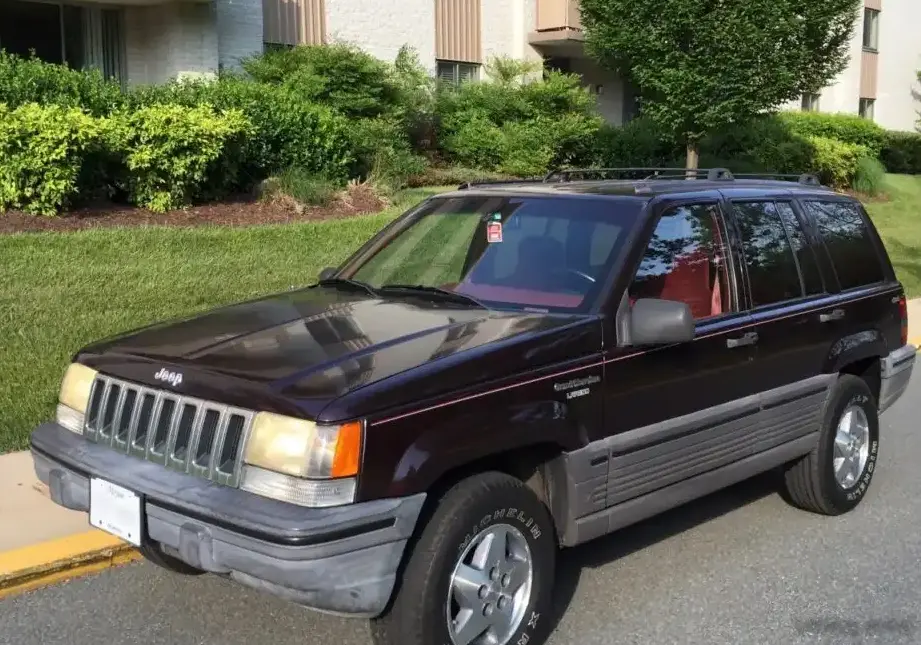
The Jeep Grand Cherokee ZJ 2.5 TD 4×4, produced from 1996 to 1997, represented a relatively uncommon variant within the first generation (ZJ) Grand Cherokee lineup. While the ZJ series established the Grand Cherokee as a capable and luxurious SUV in the American market, the 2.5-liter turbodiesel engine was primarily offered in European and select international markets. This configuration aimed to provide a balance of fuel efficiency and off-road capability, appealing to buyers who prioritized practicality and towing capacity over outright performance. It occupied a lower position in the ZJ range, typically serving as the entry-level four-wheel-drive option.
Technical Specifications
| Brand | Jeep |
| Model | Grand Cherokee |
| Generation | Grand Cherokee I (ZJ) |
| Type (Engine) | 2.5 TD (116 Hp) 4×4 |
| Start of production | 1996 |
| End of production | 1997 |
| Powertrain Architecture | Internal Combustion engine |
| Body type | SUV |
| Seats | 5 |
| Doors | 5 |
| Fuel consumption (urban) | 13.2 l/100 km (17.8 US mpg, 21.4 UK mpg, 7.6 km/l) |
| Fuel consumption (extra urban) | 8.6 l/100 km (27.4 US mpg, 32.8 UK mpg, 11.6 km/l) |
| Fuel consumption (combined) | 10.3 l/100 km (22.8 US mpg, 27.4 UK mpg, 9.7 km/l) |
| Fuel Type | Diesel |
| Acceleration 0 – 100 km/h | 13 sec |
| Acceleration 0 – 62 mph | 13 sec |
| Acceleration 0 – 60 mph | 12.4 sec |
| Maximum speed | 155 km/h (96.31 mph) |
| Weight-to-power ratio | 15.3 kg/Hp, 65.4 Hp/tonne |
| Weight-to-torque ratio | 6.4 kg/Nm, 156.6 Nm/tonne |
| Power | 116 Hp @ 3900 rpm |
| Power per litre | 46.4 Hp/l |
| Torque | 278 Nm @ 1800 rpm (205.04 lb.-ft. @ 1800 rpm) |
| Engine layout | Front, Longitudinal |
| Engine Model/Code | ENC |
| Engine displacement | 2499 cm3 (152.5 cu. in.) |
| Number of cylinders | 4 |
| Engine configuration | Inline |
| Cylinder Bore | 92 mm (3.62 in.) |
| Piston Stroke | 94 mm (3.7 in.) |
| Compression ratio | 20.95:1 |
| Number of valves per cylinder | 2 |
| Fuel injection system | Precombustion chamber injection |
| Engine aspiration | Turbocharger, Intercooler |
| Valvetrain | OHV |
| Engine oil capacity | 6.5 l (6.87 US qt | 5.72 UK qt) |
| Coolant | 9.8 l (10.36 US qt | 8.62 UK qt) |
| Kerb Weight | 1775 kg (3913.21 lbs.) |
| Max. weight | 2400 kg (5291.09 lbs.) |
| Max load | 625 kg (1377.89 lbs.) |
| Trunk (boot) space – minimum | 1136 l (40.12 cu. ft.) |
| Trunk (boot) space – maximum | 2254 l (79.6 cu. ft.) |
| Fuel tank capacity | 87 l (22.98 US gal | 19.14 UK gal) |
| Permitted trailer load with brakes (12%) | 2300 kg (5070.63 lbs.) |
| Length | 4500 mm (177.17 in.) |
| Width | 1800 mm (70.87 in.) |
| Height | 1690 mm (66.54 in.) |
| Wheelbase | 2690 mm (105.91 in.) |
| Front track | 1473 mm (57.99 in.) |
| Rear (Back) track | 1473 mm (57.99 in.) |
| Ride height (ground clearance) | 205 mm (8.07 in.) |
| Drag coefficient (Cd) | 0.44 |
| Minimum turning circle (turning diameter) | 11.43 m (37.5 ft.) |
| Approach angle | 36.8° |
| Departure angle | 29.6° |
| Ramp-over (brakeover) angle | 17° |
| Drive wheel | All wheel drive (4×4) |
| Number of gears and type of gearbox | 5 gears, manual transmission |
| Front brakes | Ventilated discs |
| Rear brakes | Disc |
| Assisting systems | ABS (Anti-lock braking system) |
| Steering type | Steering rack and pinion |
| Power steering | Hydraulic Steering |
| Tires size | 225/75 R15 |
| Wheel rims size | 15 |
Powertrain & Engine Architecture
The heart of this Grand Cherokee variant is the 2.5-liter inline-four cylinder diesel engine, designated ENC. This engine utilized a precombustion chamber injection system, a common technology for diesel engines of the era, offering a balance between efficiency and reduced emissions. The engine was turbocharged and intercooled, boosting power output to 116 horsepower at 3900 rpm and 278 Nm (205 lb-ft) of torque at 1800 rpm. The engine’s OHV valvetrain was a cost-effective and robust design. The 5-speed manual transmission was the only gearbox option available with this engine, chosen for its durability and suitability for towing.
Driving Characteristics
The 2.5 TD 4×4 Grand Cherokee offered a distinctly different driving experience compared to its gasoline-powered siblings. Acceleration was modest, taking around 13 seconds to reach 60 mph. However, the engine’s strong low-end torque made it well-suited for off-road driving and towing. The manual transmission allowed for precise control, but the gear ratios were optimized for fuel economy and tractability rather than outright speed. Compared to the more powerful 4.0L inline-six or the V8 options, the 2.5 TD prioritized fuel efficiency and usability over performance.
Equipment & Trim Levels
The 2.5 TD 4×4 typically represented the base level of Grand Cherokee ownership. Standard equipment generally included air conditioning, power steering, and basic cloth upholstery. Options such as upgraded sound systems, power windows and locks, and a sunroof were available, but often added a significant cost to the vehicle. The interior trim was functional and durable, reflecting the vehicle’s intended use as a practical and capable SUV.
Chassis & Braking
The ZJ Grand Cherokee featured a robust body-on-frame construction, providing excellent durability and off-road capability. The 2.5 TD model utilized a heavy-duty suspension system designed to handle the added weight of the diesel engine and the demands of four-wheel-drive operation. Braking was accomplished via ventilated discs at the front and solid discs at the rear, with ABS as standard equipment. The suspension was tuned for a comfortable ride, but also provided good control and stability when towing or driving off-road.
Market Reception & Comparison
The 2.5 TD 4×4 Grand Cherokee was not widely available in the North American market, and therefore received limited attention from automotive critics. However, in Europe and other regions where diesel engines were more popular, it was generally praised for its fuel efficiency and off-road capability. Compared to the gasoline-powered Grand Cherokees, the 2.5 TD offered significantly better fuel economy, but at the expense of performance. The 4.0L inline-six was often considered a better all-around choice for buyers who wanted a balance of power and efficiency.
Legacy
The 2.5 TD 4×4 Grand Cherokee remains a relatively rare and sought-after vehicle among Jeep enthusiasts. The ENC diesel engine, while not known for its refinement, is generally considered to be durable and reliable if properly maintained. Today, these vehicles are often found in the hands of collectors and off-road enthusiasts who appreciate their unique character and capability. Parts availability can be a challenge, but a dedicated community of owners and suppliers helps to keep these classic SUVs on the road.
