
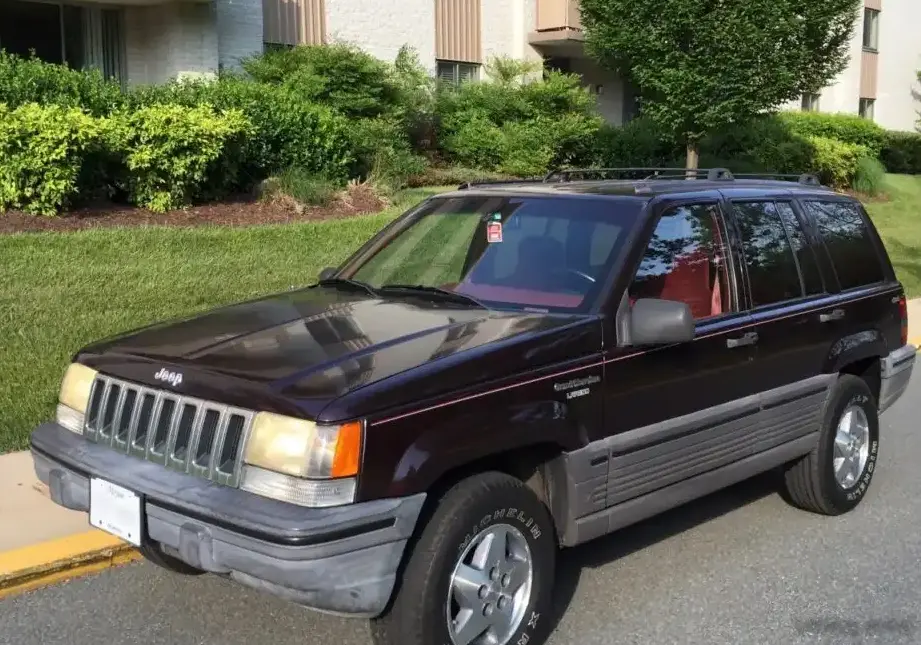
The Jeep Grand Cherokee (ZJ), introduced for the 1993 model year (though initial production began in 1992 as a late-model 1993 offering), represented a significant step forward for the American automaker. It was the first Jeep to be designed with a focus on on-road comfort alongside its renowned off-road capability. The 4.0i 4×4 variant, powered by the 4.0-liter inline-six engine producing 193 horsepower, occupied a sweet spot in the lineup, offering a balance of power, capability, and relative affordability. It served as a popular choice for buyers seeking a versatile SUV capable of both daily driving and weekend adventures. The ZJ platform was a departure from the more utilitarian Cherokee (XJ), aiming for a more refined and luxurious experience.
Technical Specifications
| Brand | Jeep |
| Model | Grand Cherokee |
| Generation | Grand Cherokee I (ZJ) |
| Type (Engine) | 4.0i (193 Hp) 4×4 |
| Start of production | 1992 year |
| End of production | 1993 year |
| Powertrain Architecture | Internal Combustion engine |
| Body type | SUV |
| Seats | 5 |
| Doors | 5 |
| Fuel consumption (economy) – urban | 14.7 l/100 km (16 US mpg, 19.2 UK mpg, 6.8 km/l) |
| Fuel consumption (economy) – extra urban | 11.2 l/100 km (21 US mpg, 25.2 UK mpg, 8.9 km/l) |
| Fuel consumption (economy) – combined | 13.1 l/100 km (18 US mpg, 21.6 UK mpg, 7.6 km/l) |
| Fuel Type | Petrol (Gasoline) |
| Acceleration 0 – 100 km/h | 9.6 sec |
| Acceleration 0 – 62 mph | 9.6 sec |
| Acceleration 0 – 60 mph | 9.1 sec |
| Weight-to-power ratio | 8.8 kg/Hp, 113.5 Hp/tonne |
| Weight-to-torque ratio | 5.6 kg/Nm, 179.4 Nm/tonne |
| Power | 193 Hp @ 4750 rpm |
| Power per litre | 48.8 Hp/l |
| Torque | 305 Nm @ 4000 rpm (224.96 lb.-ft. @ 4000 rpm) |
| Engine layout | Front, Longitudinal |
| Engine Model/Code | ERH |
| Engine displacement | 3956 cm3 (241.41 cu. in.) |
| Number of cylinders | 6 |
| Engine configuration | Inline |
| Cylinder Bore | 98.4 mm (3.87 in.) |
| Piston Stroke | 86.7 mm (3.41 in.) |
| Compression ratio | 8.8:1 |
| Number of valves per cylinder | 2 |
| Fuel injection system | Multi-port manifold injection |
| Engine aspiration | Naturally aspirated engine |
| Valvetrain | OHV |
| Engine oil capacity | 5.7 l (6.02 US qt | 5.02 UK qt) |
| Coolant | 11.4 l (12.05 US qt | 10.03 UK qt) |
| Kerb Weight | 1700 kg (3747.86 lbs.) |
| Fuel tank capacity | 87 l (22.98 US gal | 19.14 UK gal) |
| Length | 4489 mm (176.73 in.) |
| Width | 1758 mm (69.21 in.) |
| Height | 1648 mm (64.88 in.) |
| Wheelbase | 2690 mm (105.91 in.) |
| Front track | 1473 mm (57.99 in.) |
| Rear (Back) track | 1473 mm (57.99 in.) |
| Ride height (ground clearance) | 202 mm (7.95 in.) |
| Drag coefficient (Cd) | 0.45 |
| Minimum turning circle (turning diameter) | 11.7 m (38.39 ft.) |
| Drive wheel | All wheel drive (4×4) |
| Number of gears and type of gearbox | 5 gears, manual transmission |
| Front brakes | Ventilated discs |
| Rear brakes | Disc |
| Assisting systems | ABS (Anti-lock braking system) |
| Steering type | Steering rack and pinion |
| Power steering | Hydraulic Steering |
| Tires size | 225/70 R15 |
| Wheel rims size | 15 |
Powertrain & Engine Architecture
The heart of the 4.0i Grand Cherokee was the 4.0-liter (3956 cc) inline-six cylinder engine, designated the ERH code. This engine was a descendant of the AMC 242 cubic inch inline-six, which had been a mainstay of Jeep vehicles for decades. The ERH featured a cast iron block and aluminum cylinder head, utilizing a multi-port fuel injection system for improved efficiency and power delivery. The overhead valve (OHV) valvetrain, while relatively simple, proved durable and reliable. The engine produced 193 horsepower at 4750 rpm and 225 lb-ft of torque at 4000 rpm. The 5-speed manual transmission was standard, offering a direct connection to the engine’s power. This transmission featured gear ratios designed to balance acceleration and fuel economy.
Driving Characteristics
The 4.0i Grand Cherokee with the manual transmission provided a reasonably engaging driving experience. While not a sports car, the engine delivered adequate power for everyday driving and highway cruising. Acceleration to 60 mph took around 9.1 seconds, which was competitive for an SUV of its size and era. The manual transmission allowed drivers to maintain control over gear selection, maximizing engine braking on descents and providing a more connected feel. Compared to the later 4.7-liter V8, the 4.0i offered better fuel economy, but lacked the V8’s low-end grunt. The 4.0i was also noticeably more nimble than the V8-powered models due to its lighter weight.
Equipment & Trim Levels
The 4.0i Grand Cherokee typically came standard with features like air conditioning, power windows and locks, and an AM/FM stereo. The interior featured cloth upholstery, and the dashboard layout was functional and straightforward. Optional extras included a premium sound system, leather upholstery, a sunroof, and upgraded wheels. The base trim level was fairly spartan, but offered a solid foundation for customization. Higher trim levels added more luxury features, but the 4.0i remained a relatively affordable entry point into the Grand Cherokee lineup.
Chassis & Braking
The ZJ Grand Cherokee utilized a robust body-on-frame construction, providing excellent durability and off-road capability. The front suspension featured independent double wishbones, while the rear suspension employed a solid axle with coil springs. The 4.0i models were equipped with ventilated disc brakes at the front and solid discs at the rear. An anti-lock braking system (ABS) was available as an option, enhancing safety and control. The chassis was designed to handle both on-road comfort and off-road challenges, offering a good balance between ride quality and stability.
Market Reception & Comparison
The 4.0i Grand Cherokee was generally well-received by automotive critics. It was praised for its comfortable ride, spacious interior, and capable four-wheel-drive system. The 4.0-liter engine was considered adequate for most drivers, and its fuel economy was a plus compared to the V8 options. However, some critics noted that the engine could feel strained when towing heavy loads or climbing steep hills. Compared to the V8 models, the 4.0i offered a more affordable price point and better fuel efficiency, making it a popular choice for budget-conscious buyers. The manual transmission was appreciated by enthusiasts who preferred a more engaging driving experience.
Legacy
The 4.0-liter inline-six engine in the ZJ Grand Cherokee is known for its durability and reliability. With proper maintenance, these engines can easily exceed 200,000 miles. The ZJ Grand Cherokee, as a whole, has developed a strong following among off-road enthusiasts and classic SUV collectors. The 4.0i variant, while not as sought-after as the V8 models, remains a viable and affordable option for those seeking a capable and reliable SUV. Today, well-maintained examples of the 4.0i Grand Cherokee can be found on the used car market, offering a nostalgic and practical alternative to modern SUVs.
