
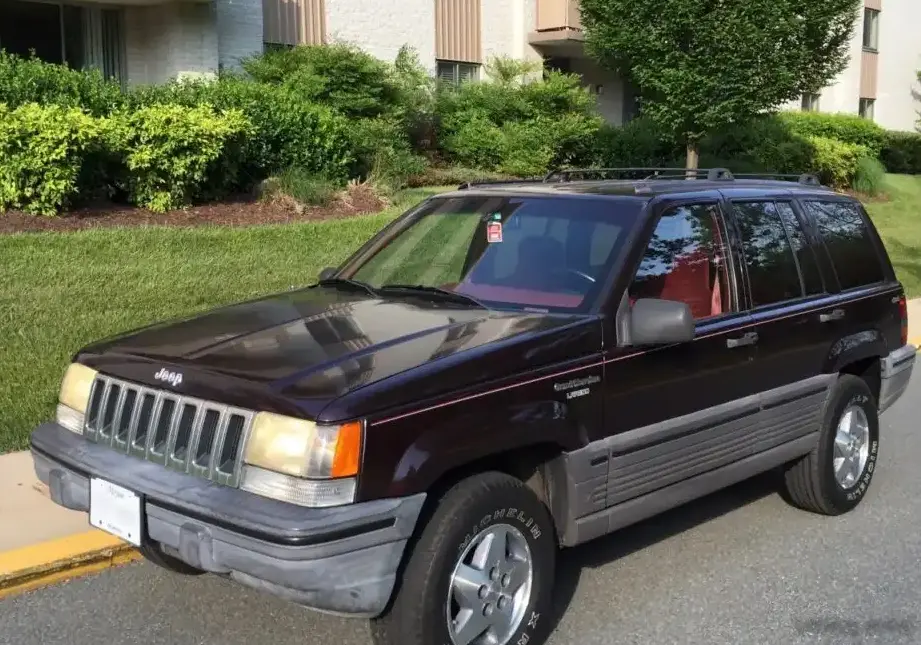
The Jeep Grand Cherokee (ZJ) 4.0i, produced from 1992 to 1993, represented a significant step forward for the Jeep brand, offering a more refined and luxurious SUV experience compared to its Cherokee predecessor. This variant, equipped with the 4.0-liter inline-six engine and a four-speed automatic transmission, occupied a sweet spot in the ZJ lineup, balancing capability with everyday usability. It was positioned as a mid-range offering, appealing to buyers who desired the Grand Cherokee’s comfort and features without the expense of the higher-trim V8 models. The ZJ generation was the first to bear the Grand Cherokee name, signifying a move upmarket for Jeep and establishing a new benchmark in the burgeoning SUV segment.
Technical Specifications
| Brand | Jeep |
| Model | Grand Cherokee |
| Generation | Grand Cherokee I (ZJ) |
| Type (Engine) | 4.0i (193 Hp) 4×4 Automatic |
| Start of production | 1992 |
| End of production | 1993 |
| Powertrain Architecture | Internal Combustion engine |
| Body type | SUV |
| Seats | 5 |
| Doors | 5 |
| Fuel consumption (urban) | 15.7 l/100 km (15 US mpg, 18 UK mpg, 6.4 km/l) |
| Fuel consumption (extra urban) | 11.8 l/100 km (19.9 US mpg, 23.9 UK mpg, 8.5 km/l) |
| Fuel consumption (combined) | 13.8 l/100 km (17 US mpg, 20.5 UK mpg, 7.2 km/l) |
| Fuel Type | Petrol (Gasoline) |
| Acceleration 0 – 100 km/h | 11.1 sec |
| Acceleration 0 – 62 mph | 11.1 sec |
| Acceleration 0 – 60 mph | 10.5 sec |
| Weight-to-power ratio | 8.8 kg/Hp, 113.5 Hp/tonne |
| Weight-to-torque ratio | 5.6 kg/Nm, 179.4 Nm/tonne |
| Power | 193 Hp @ 4750 rpm |
| Power per litre | 48.8 Hp/l |
| Torque | 305 Nm @ 4000 rpm (224.96 lb.-ft. @ 4000 rpm) |
| Engine layout | Front, Longitudinal |
| Engine Model/Code | ERH |
| Engine displacement | 3956 cm3 (241.41 cu. in.) |
| Number of cylinders | 6 |
| Engine configuration | Inline |
| Cylinder Bore | 98.4 mm (3.87 in.) |
| Piston Stroke | 86.7 mm (3.41 in.) |
| Compression ratio | 8.8:1 |
| Number of valves per cylinder | 2 |
| Fuel injection system | Multi-port manifold injection |
| Engine aspiration | Naturally aspirated engine |
| Valvetrain | OHV |
| Engine oil capacity | 5.7 l (6.02 US qt | 5.02 UK qt) |
| Coolant capacity | 11.4 l (12.05 US qt | 10.03 UK qt) |
| Kerb Weight | 1700 kg (3747.86 lbs.) |
| Fuel tank capacity | 87 l (22.98 US gal | 19.14 UK gal) |
| Length | 4489 mm (176.73 in.) |
| Width | 1758 mm (69.21 in.) |
| Height | 1648 mm (64.88 in.) |
| Wheelbase | 2690 mm (105.91 in.) |
| Front track | 1473 mm (57.99 in.) |
| Rear track | 1473 mm (57.99 in.) |
| Ride height (ground clearance) | 202 mm (7.95 in.) |
| Drag coefficient (Cd) | 0.45 |
| Minimum turning circle | 11.7 m (38.39 ft.) |
| Drive wheel | All wheel drive (4×4) |
| Number of gears | 4 |
| Gearbox type | automatic transmission |
| Front brakes | Ventilated discs |
| Rear brakes | Disc |
| Assisting systems | ABS (Anti-lock braking system) |
| Steering type | Steering rack and pinion |
| Power steering | Hydraulic Steering |
| Tires size | 225/70 R15 |
| Wheel rims size | 15 |
Powertrain & Engine Architecture
The heart of the Grand Cherokee 4.0i was the 4.0-liter (3956 cc) inline-six cylinder engine, designated the ERH code. This engine was a descendant of the AMC 242 cubic inch inline-six, refined and updated by Chrysler after their acquisition of AMC. It featured a cast iron block and aluminum cylinder head, employing a multi-port fuel injection system for precise fuel delivery. The overhead valve (OHV) valvetrain, while traditional, proved durable and reliable. The engine produced 193 horsepower at 4750 rpm and 225 lb-ft of torque at 4000 rpm. The four-speed automatic transmission (typically the 42RE) was chosen for its smooth operation and ease of use, catering to a broader audience than the available five-speed manual. This automatic featured a torque converter for smooth launches and a relatively conservative gear ratio spread, prioritizing comfort and fuel economy over outright acceleration.
Driving Characteristics
The 4.0i Grand Cherokee offered a comfortable and capable driving experience. While not a performance machine, the 193 hp engine provided adequate power for everyday driving and moderate towing. Acceleration from 0-60 mph took around 10.5 seconds, which was competitive for the time, but noticeably slower than the V8-powered models. The automatic transmission’s gear ratios were tuned for relaxed cruising, and downshifts were generally prompt when needed. The 4×4 system, typically a part-time system with a 2WD/4WD High/4WD Low selector, provided excellent traction in various conditions. The vehicle’s substantial weight (around 3750 lbs) was noticeable, particularly during braking and cornering, but the suspension provided a reasonably comfortable ride.
Equipment & Trim Levels
The 4.0i Grand Cherokee typically came standard with features like air conditioning, power windows and locks, and an AM/FM stereo. Upholstery was usually cloth, though leather was available as an option. Higher trim levels added features such as upgraded sound systems, power seats, and a sunroof. The base model offered a functional and well-equipped interior, while optional packages allowed buyers to customize their vehicle with more luxury features. Common options included a heavy-duty cooling system for towing, and various wheel and tire upgrades.
Chassis & Braking
The ZJ Grand Cherokee utilized a body-on-frame construction, providing a robust and durable platform. The front suspension featured independent double wishbones with coil springs, while the rear suspension employed a solid axle with coil springs. Brakes were ventilated discs at the front and solid discs at the rear. ABS (Anti-lock Braking System) was standard, enhancing safety. The steering was a hydraulic power-assisted rack-and-pinion system, providing responsive and relatively precise steering feel. The 225/70R15 tires offered a good balance of on-road comfort and off-road capability.
Market Reception & Comparison
The Grand Cherokee 4.0i was generally well-received by automotive critics. It was praised for its comfortable ride, spacious interior, and capable 4×4 system. However, the 4.0-liter engine was sometimes criticized for being underpowered, especially when compared to the V8 options. Fuel economy was also a concern, averaging around 17 mpg in combined driving. Compared to the V6 Cherokee, the Grand Cherokee offered a more refined and luxurious experience, but at a higher price point. Against competitors like the Ford Explorer and Chevrolet Blazer, the Grand Cherokee stood out with its more sophisticated suspension and available features.
Legacy
The 4.0-liter inline-six engine in the ZJ Grand Cherokee is known for its durability and longevity. With proper maintenance, these engines can reliably exceed 200,000 miles. The 42RE automatic transmission is also generally robust, though it can be prone to issues if not regularly serviced. Today, the ZJ Grand Cherokee 4.0i remains a popular choice among enthusiasts and those seeking a classic SUV with a reputation for reliability. Parts availability is generally good, and the vehicle’s relatively simple mechanical design makes it a good candidate for restoration and modification. The 4.0i variant represents a well-rounded and dependable option within the ZJ Grand Cherokee lineup, offering a blend of comfort, capability, and affordability.
