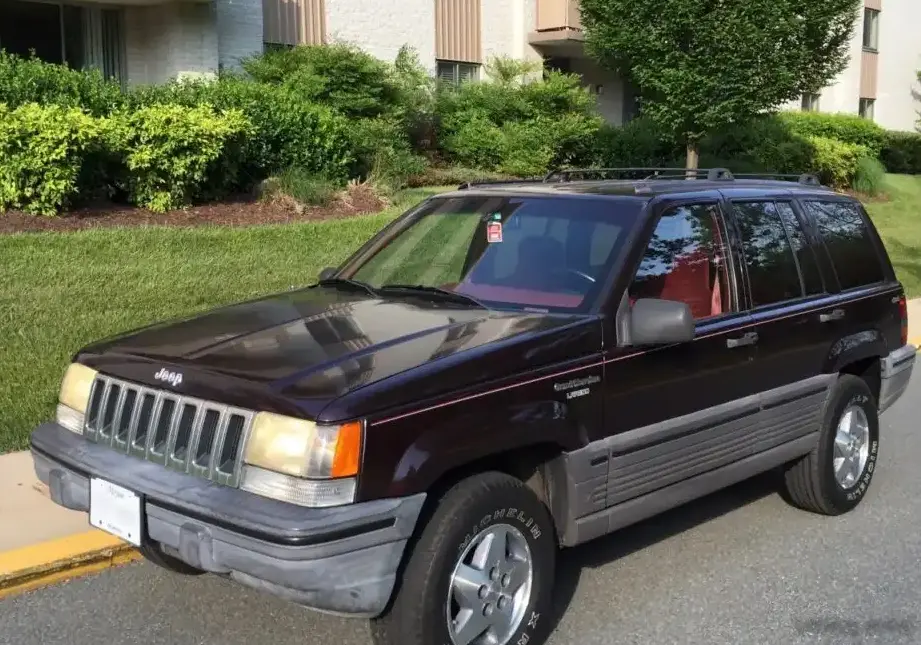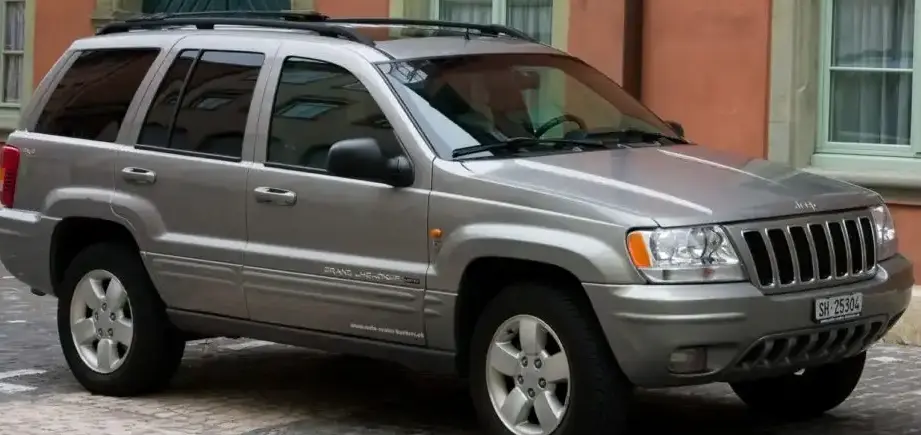
The Jeep Grand Cherokee II (WJ) 3.1 TD 4×4 Automatic, produced between 1999 and 2001, represented a diesel-powered option within the second generation of Jeep’s popular SUV. Positioned as a more fuel-efficient alternative to the gasoline engines offered, this variant aimed to appeal to buyers seeking the Grand Cherokee’s capability with reduced running costs, particularly in European markets where diesel fuel was more prevalent and economically advantageous. It utilized the 5-cylinder EXA diesel engine paired with a four-speed automatic transmission, offering a blend of off-road prowess and on-road comfort. The WJ generation, overall, marked a significant step forward in refinement and capability for the Grand Cherokee, and the 3.1 TD model played a role in broadening its appeal.
Technical Specifications
| Brand | Jeep |
| Model | Grand Cherokee |
| Generation | Grand Cherokee II (WJ) |
| Type (Engine) | 3.1 TD (140 Hp) 4×4 Automatic |
| Start of production | 1999 |
| End of production | 2001 |
| Powertrain Architecture | Internal Combustion engine |
| Body type | SUV |
| Seats | 5 |
| Doors | 5 |
| Fuel consumption (economy) – urban (NEDC) | 14.9 l/100 km (15.8 US mpg, 19 UK mpg, 6.7 km/l) |
| Fuel consumption (economy) – extra urban (NEDC) | 9.7 l/100 km (24.2 US mpg, 29.1 UK mpg, 10.3 km/l) |
| Fuel consumption (economy) – combined (NEDC) | 11.6 l/100 km (20.3 US mpg, 24.4 UK mpg, 8.6 km/l) |
| CO2 emissions (NEDC) | 308 g/km |
| Fuel Type | Diesel |
| Acceleration 0 – 100 km/h | 14 sec |
| Acceleration 0 – 62 mph | 14 sec |
| Acceleration 0 – 60 mph | 13.3 sec |
| Maximum speed | 170 km/h (105.63 mph) |
| Weight-to-power ratio | 13.6 kg/Hp, 73.8 Hp/tonne |
| Weight-to-torque ratio | 4.9 kg/Nm, 202.3 Nm/tonne |
| Power | 140 Hp @ 3600 rpm |
| Power per litre | 44.8 Hp/l |
| Torque | 384 Nm @ 1800 rpm (283.22 lb.-ft. @ 1800 rpm) |
| Engine layout | Front, Longitudinal |
| Engine Model/Code | EXA |
| Engine displacement | 3124 cm3 (190.64 cu. in.) |
| Number of cylinders | 5 |
| Engine configuration | Inline |
| Cylinder Bore | 92 mm (3.62 in.) |
| Piston Stroke | 94 mm (3.7 in.) |
| Compression ratio | 21:1 |
| Number of valves per cylinder | 2 |
| Fuel injection system | Precombustion chamber injection |
| Engine aspiration | Turbocharger, Intercooler |
| Valvetrain | OHV |
| Engine oil capacity | 7.2 l (7.61 US qt | 6.34 UK qt) |
| Coolant | 12 l (12.68 US qt | 10.56 UK qt) |
| Kerb Weight | 1898-1966 kg (4184.37 – 4334.29 lbs.) |
| Max. weight | 2505 kg (5522.58 lbs.) |
| Max load | 539-607 kg (1188.29 – 1338.21 lbs.) |
| Trunk (boot) space – minimum | 1104 l (38.99 cu. ft.) |
| Trunk (boot) space – maximum | 2047 l (72.29 cu. ft.) |
| Fuel tank capacity | 78 l (20.61 US gal | 17.16 UK gal) |
| Max. roof load | 68 kg (149.91 lbs.) |
| Permitted trailer load with brakes (12%) | 3360 kg (7407.53 lbs.) |
| Permitted trailer load without brakes | 750 kg (1653.47 lbs.) |
| Permitted towbar download | 140 kg (308.65 lbs.) |
| Length | 4611 mm (181.54 in.) |
| Width | 1858 mm (73.15 in.) |
| Width including mirrors | 2180 mm (85.83 in.) |
| Height | 1805 mm (71.06 in.) |
| Wheelbase | 2690 mm (105.91 in.) |
| Front track | 1511 mm (59.49 in.) |
| Rear (Back) track | 1511 mm (59.49 in.) |
| Ride height (ground clearance) | 210 mm (8.27 in.) |
| Drag coefficient (Cd) | 0.45 |
| Minimum turning circle (turning diameter) | 11.1 m (36.42 ft.) |
| Approach angle | 36.7° |
| Departure angle | 28.6° |
| Ramp-over (brakeover) angle | 22.6° |
| Drivetrain Architecture | The Internal combustion engine (ICE) drives the rear wheels permanently, and the front wheels are driven through an electrically or mechanically operated clutch if necessary. |
| Drive wheel | All wheel drive (4×4) |
| Number of gears and type of gearbox | 4 gears, automatic transmission |
| Front suspension | Coil spring, Rigid axle suspension, Transverse stabilizer |
| Rear suspension | Rigid axle suspension, Transverse stabilizer, Trailing arm, Coil spring |
| Front brakes | Ventilated discs, 305 mm |
| Rear brakes | Disc, 305 mm |
| Assisting systems | ABS (Anti-lock braking system) |
| Steering type | Cone worm with recirculation balls |
| Power steering | Hydraulic Steering |
| Tires size | 225/75 R16 |
| Wheel rims size | 7J x 16 |
Powertrain & Engine Architecture
The heart of the Grand Cherokee 3.1 TD was the EXA engine, a 3.1-liter inline five-cylinder diesel. This engine utilized a precombustion chamber injection system, a common technology for diesel engines of the era, designed to improve combustion efficiency and reduce noise. A turbocharger with an intercooler was employed to boost power output to 140 horsepower at 3600 rpm and 384 Nm (283 lb-ft) of torque at 1800 rpm. The engine’s longitudinal mounting within the chassis contributed to a balanced weight distribution. The four-speed automatic transmission, while providing convenience, was not known for its particularly quick shifts or fuel efficiency compared to later automatic designs. It was a robust unit, however, and generally reliable when properly maintained.
Driving Characteristics
The 3.1 TD Automatic Grand Cherokee offered a noticeably different driving experience compared to its gasoline-powered siblings. While lacking the outright acceleration of the V6 or V8 models, the diesel engine’s substantial torque provided adequate power for everyday driving and towing. The automatic transmission, with its four gears, meant that the engine often operated at higher RPMs during acceleration, impacting fuel economy. The 0-60 mph time of around 13.3 seconds and a top speed of 170 km/h (105 mph) reflected this. The vehicle felt heavier and less responsive than the gasoline versions, but the diesel’s low-end grunt made it capable off-road, especially when combined with the Grand Cherokee’s four-wheel-drive system.
Equipment & Trim Levels
The 3.1 TD typically came with a moderate level of equipment, falling somewhere in the mid-range of the Grand Cherokee lineup. Standard features generally included air conditioning, power windows and locks, and an AM/FM radio. Interior upholstery was typically cloth, although leather was available as an option. Optional extras could include a premium sound system, sunroof, and upgraded alloy wheels. The dashboard layout was consistent with other WJ Grand Cherokees, featuring a straightforward design with easy-to-read gauges.
Chassis & Braking
The Grand Cherokee WJ utilized a body-on-frame construction, providing a robust and durable platform. The 3.1 TD models featured coil spring suspension with a rigid axle at both the front and rear, along with a transverse stabilizer bar to reduce body roll. Braking duties were handled by ventilated discs at the front and solid discs at the rear. ABS (Anti-lock Braking System) was standard. The suspension was tuned to provide a balance between on-road comfort and off-road capability, although the heavier diesel engine could lead to some body roll during cornering.
Market Reception & Comparison
The 3.1 TD Grand Cherokee was primarily aimed at European markets and other regions where diesel engines were popular. Critics generally praised its fuel efficiency compared to the gasoline models, but noted its slower acceleration and higher initial cost. Compared to the 4.0L inline-six gasoline engine, the diesel offered better fuel economy but less overall power. Against the V6 and V8 gasoline options, the diesel was positioned as a more economical choice for those prioritizing fuel savings over performance. Reliability was generally good, but diesel engines of this era required diligent maintenance, particularly regarding fuel quality and oil changes.
Legacy
The Jeep Grand Cherokee II 3.1 TD, while not as common as its gasoline counterparts, has developed a following among diesel enthusiasts. The EXA engine, when properly maintained, proved to be a durable and reliable powerplant. Today, these vehicles are relatively rare and can be found in the used car market, often appealing to those seeking a classic SUV with diesel efficiency. Parts availability can be a challenge, but a dedicated community of Jeep owners and specialists helps to keep these vehicles on the road. The 3.1 TD represents a unique chapter in the Grand Cherokee’s history, offering a blend of American SUV capability with European diesel technology.