Technical Specifications
| Brand | Jeep |
| Model | Grand Cherokee |
| Generation | Grand Cherokee II (WJ, facelift 2003) |
| Type (Engine) | 2.7 CRD (163 Hp) 4×4 Automatic |
| Start of production | 2003 |
| End of production | 2004 |
| Powertrain Architecture | Internal Combustion engine |
| Body type | SUV |
| Seats | 5 |
| Doors | 5 |
| Fuel consumption (economy) – urban (NEDC) | 12.5 l/100 km (18.8 US mpg, 22.6 UK mpg, 8 km/l) |
| Fuel consumption (economy) – extra urban (NEDC) | 8.1 l/100 km (29 US mpg, 34.9 UK mpg, 12.3 km/l) |
| Fuel consumption (economy) – combined (NEDC) | 9.7 l/100 km (24.2 US mpg, 29.1 UK mpg, 10.3 km/l) |
| CO2 emissions (NEDC) | 255 g/km |
| Fuel Type | Diesel |
| Acceleration 0 – 100 km/h | 11.2 sec |
| Acceleration 0 – 62 mph | 11.2 sec |
| Acceleration 0 – 60 mph | 10.6 sec |
| Maximum speed | 190 km/h (118.06 mph) |
| Emission standard | Euro 3 |
| Weight-to-power ratio | 12.1 kg/Hp, 82.3 Hp/tonne |
| Weight-to-torque ratio | 5 kg/Nm, 202 Nm/tonne |
| Power | 163 Hp @ 4000 rpm |
| Power per litre | 60.7 Hp/l |
| Torque | 400 Nm @ 1800 rpm (295.02 lb.-ft. @ 1800 rpm) |
| Engine layout | Front, Longitudinal |
| Engine Model/Code | ENF |
| Engine displacement | 2685 cm3 (163.85 cu. in.) |
| Number of cylinders | 5 |
| Engine configuration | Inline |
| Cylinder Bore | 88 mm (3.46 in.) |
| Piston Stroke | 88.4 mm (3.48 in.) |
| Compression ratio | 18:1 |
| Number of valves per cylinder | 4 |
| Fuel injection system | Diesel Commonrail |
| Engine aspiration | Turbocharger, Intercooler |
| Valvetrain | DOHC |
| Engine oil capacity | 6.5 l (6.87 US qt | 5.72 UK qt) |
| Coolant | 14 l (14.79 US qt | 12.32 UK qt) |
| Kerb Weight | 1980 kg (4365.15 lbs.) |
| Max. weight | 2375 kg (5235.98 lbs.) |
| Max load | 395 kg (870.83 lbs.) |
| Trunk (boot) space – minimum | 1104 l (38.99 cu. ft.) |
| Trunk (boot) space – maximum | 2047 l (72.29 cu. ft.) |
| Fuel tank capacity | 78 l (20.61 US gal | 17.16 UK gal) |
| Max. roof load | 68 kg (149.91 lbs.) |
| Permitted trailer load with brakes (12%) | 3360 kg (7407.53 lbs.) |
| Permitted trailer load without brakes | 750 kg (1653.47 lbs.) |
| Permitted towbar download | 140 kg (308.65 lbs.) |
| Length | 4611 mm (181.54 in.) |
| Width | 1858 mm (73.15 in.) |
| Width including mirrors | 2180 mm (85.83 in.) |
| Height | 1805 mm (71.06 in.) |
| Wheelbase | 2690 mm (105.91 in.) |
| Front track | 1511 mm (59.49 in.) |
| Rear (Back) track | 1511 mm (59.49 in.) |
| Ride height (ground clearance) | 221 mm (8.7 in.) |
| Drag coefficient (Cd) | 0.45 |
| Minimum turning circle (turning diameter) | 11.1 m (36.42 ft.) |
| Approach angle | 36.7° |
| Departure angle | 28.6° |
| Ramp-over (brakeover) angle | 22.6° |
| Drivetrain Architecture | The Internal combustion engine (ICE) drives the rear wheels permanently, and the front wheels are driven through an electrically or mechanically operated clutch if necessary. |
| Drive wheel | All wheel drive (4×4) |
| Number of gears and type of gearbox | 5 gears, automatic transmission |
| Front suspension | Coil spring, Rigid axle suspension, Transverse stabilizer |
| Rear suspension | Rigid axle suspension, Transverse stabilizer, Trailing arm, Coil spring |
| Front brakes | Ventilated discs, 305 mm |
| Rear brakes | Disc, 305 mm |
| Assisting systems | ABS (Anti-lock braking system) |
| Steering type | Cone worm with recirculation balls |
| Power steering | Hydraulic Steering |
| Tires size | 225/75 R16; 235/65 R17 |
| Wheel rims size | 7J x 16; 7.5J x 17 |
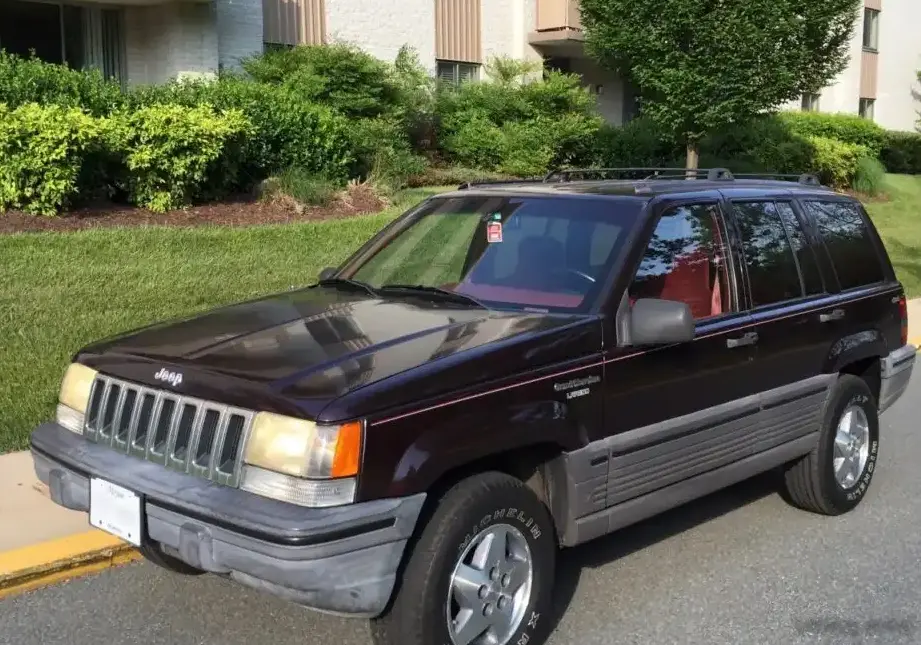
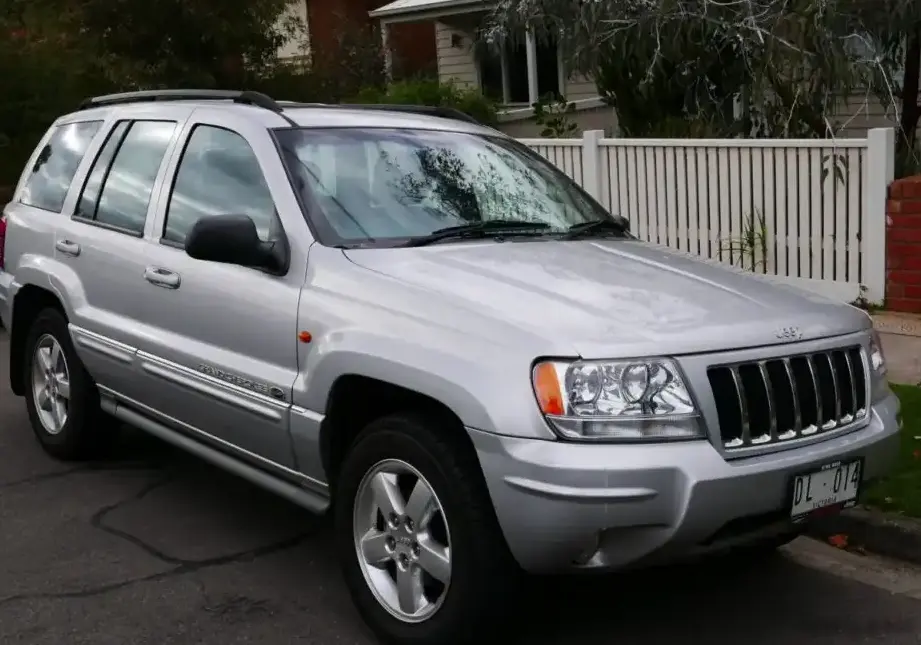
The Jeep Grand Cherokee II (WJ) facelift, produced from 2003-2004, represented a mid-cycle refresh of the popular SUV. The 2.7 CRD 4×4 Automatic model was specifically targeted at European and other markets where diesel engines were preferred for their fuel efficiency and torque characteristics. Utilizing the 5-cylinder ENF engine, this variant offered a compelling alternative to the larger, more expensive V8 options. It was positioned as a practical and capable SUV for both on-road driving and light off-road adventures, appealing to families and individuals seeking a versatile vehicle.
Powertrain & Engine Architecture
The heart of the 2.7 CRD Grand Cherokee is the ENF engine, a 2.7-liter inline-5 cylinder diesel. This engine utilizes a common rail direct injection system, delivering fuel directly into the combustion chamber at extremely high pressure for improved efficiency and reduced emissions. The engine benefits from a turbocharger with an intercooler, boosting power output and torque. The DOHC (Double Overhead Camshaft) valvetrain ensures efficient cylinder filling and exhaust scavenging. The 5-speed automatic transmission was chosen for its ease of use and suitability for both on-road cruising and off-road crawling. This transmission was designed to handle the engine’s torque output and provide smooth gear changes. The engine’s longitudinal mounting allowed for a traditional rear-wheel-drive layout with a part-time four-wheel-drive system engaged via an electronically controlled transfer case. The ENF engine, while not a common configuration in the US market, was a popular choice in Europe for its balance of power and efficiency.
Driving Characteristics
The 2.7 CRD Automatic Grand Cherokee offered a distinctly different driving experience compared to its V8 counterparts. While lacking the outright acceleration of the larger engines, the 2.7 CRD provided ample torque from low engine speeds, making it well-suited for towing and navigating challenging terrain. The automatic transmission, while smooth, wasn’t particularly sporty, prioritizing comfort and fuel efficiency over rapid gear changes. The 0-60 mph time of around 10.6 seconds reflects this focus. The gear ratios were optimized for cruising, and the 4×4 system provided confident traction in slippery conditions. Compared to the manual transmission versions (available in some markets), the automatic offered greater convenience, but at the expense of some driver engagement and fuel economy. The engine’s torque curve was relatively flat, providing consistent power delivery throughout the rev range, which was beneficial for everyday driving and towing.
Equipment & Trim Levels
The 2.7 CRD Automatic trim typically included standard features such as air conditioning, power windows and locks, a basic audio system, and cloth upholstery. Higher trim levels, often denoted by “Limited” or similar designations, added features like leather upholstery, upgraded audio systems, sunroofs, and alloy wheels. Optional extras included a navigation system, premium sound systems, and various off-road packages with features like skid plates and heavy-duty suspension components. The interior design was functional and comfortable, though not particularly luxurious compared to some competitors. The Grand Cherokee WJ offered a good level of standard equipment for its price point, making it an attractive option for buyers seeking a well-equipped SUV without the high cost of a luxury model.
Chassis & Braking
The Grand Cherokee WJ utilized a body-on-frame construction, providing a robust and durable platform. The front suspension featured coil springs and a rigid axle with a transverse stabilizer bar, while the rear suspension employed a similar setup with trailing arms and coil springs. This suspension configuration provided a comfortable ride and good off-road capability. Braking duties were handled by ventilated discs at the front and solid discs at the rear. ABS (Anti-lock Braking System) was standard, enhancing safety during emergency braking situations. The steering system was a recirculating ball type, providing a stable and predictable feel. The chassis was designed to withstand the stresses of both on-road and off-road driving, providing a durable and reliable platform for the vehicle.
Market Reception & Comparison
The 2.7 CRD Grand Cherokee was generally well-received in markets where diesel SUVs were popular. Critics praised its fuel efficiency and torque, but some noted its relatively modest power output compared to the V8 models. Compared to the 4.7L V8, the 2.7 CRD offered significantly better fuel economy (around 24.2 US mpg combined vs. 16-18 mpg for the V8) but lacked the V8’s acceleration and towing capacity. The 2.7 CRD also offered a more affordable price point, making it an attractive option for budget-conscious buyers. Reliability was generally good, though some owners reported issues with the common rail injection system and turbocharger over the long term. The 2.7 CRD filled a niche in the Grand Cherokee lineup, appealing to buyers who prioritized fuel economy and torque over outright performance.
Legacy
The 2.7 CRD Grand Cherokee (WJ) has become a relatively sought-after used vehicle, particularly among those seeking a capable and fuel-efficient SUV. The ENF engine, while not without its potential issues, is generally considered durable when properly maintained. Parts availability is reasonable, though some specific components may be becoming harder to find. Today, these Grand Cherokees represent a good value for those looking for a rugged and reliable SUV with a unique diesel powertrain. The 2.7 CRD variant stands as a testament to Jeep’s ability to adapt to different market demands and offer a diverse range of vehicles to suit various needs. Its blend of capability, fuel efficiency, and affordability has ensured its continued popularity among enthusiasts and practical drivers alike.