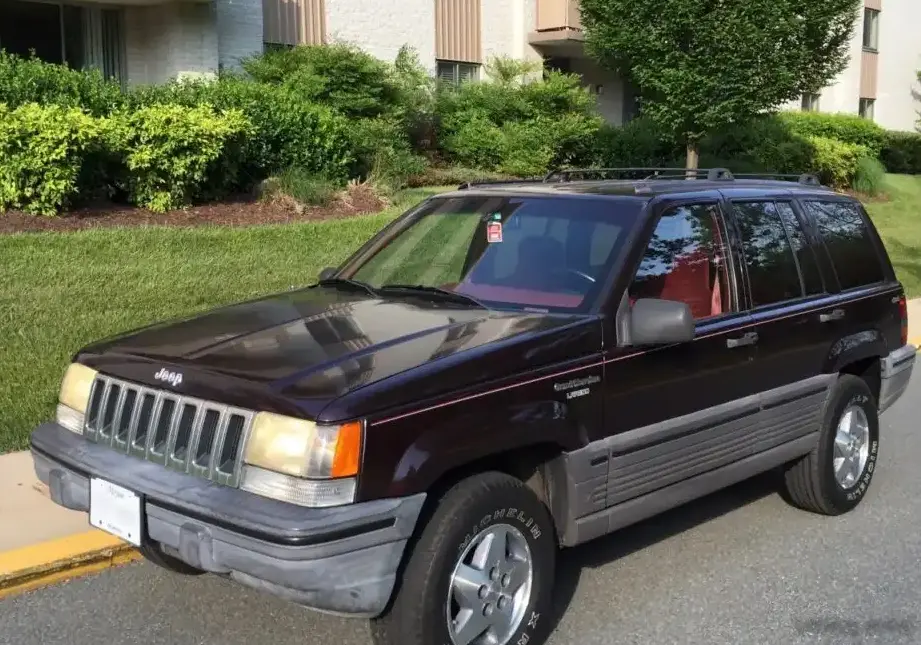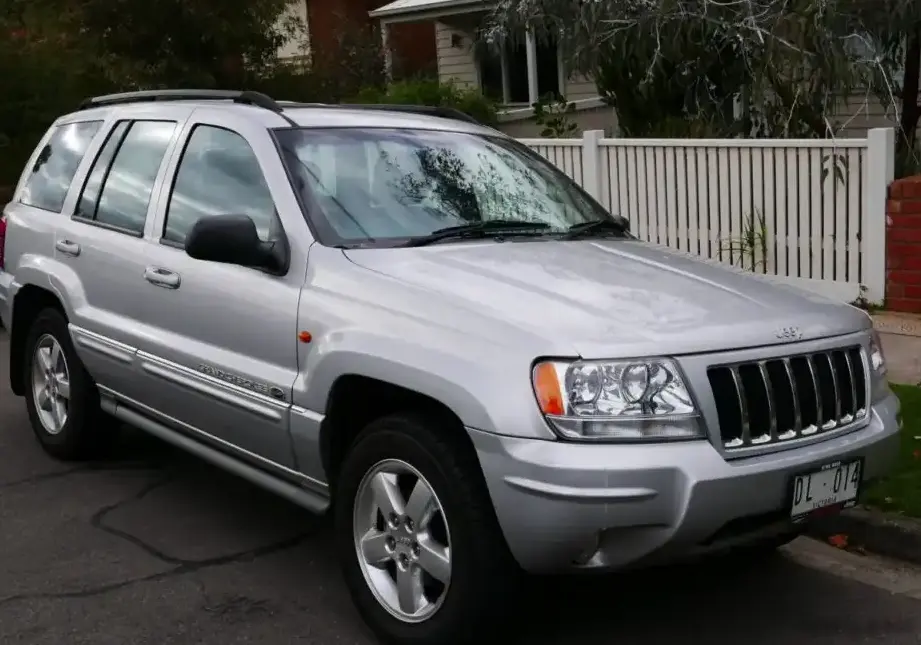
The Jeep Grand Cherokee II (WJ), specifically the facelifted version produced from 2003 to 2004, represented a significant step forward for the iconic American SUV. This generation, internally designated WJ, introduced a more refined driving experience and improved interior quality compared to its predecessor (ZJ). The 4.7 HO V8 4×4 Automatic variant occupied a prominent position in the lineup, offering a balance of power, capability, and relative luxury. It served as a strong contender in the mid-to-upper range of Grand Cherokee trims, appealing to buyers seeking a robust SUV with V8 performance without the added cost of the top-tier models.
Technical Specifications
| Brand | Jeep |
| Model | Grand Cherokee |
| Generation | Grand Cherokee II (WJ, facelift 2003) |
| Type (Engine) | 4.7 HO V8 (258 Hp) 4×4 Automatic |
| Start of production | 2003 |
| End of production | 2004 |
| Powertrain Architecture | Internal Combustion engine |
| Body type | SUV |
| Seats | 5 |
| Doors | 5 |
| Fuel consumption (economy) – urban (NEDC) | 22 l/100 km (10.7 US mpg, 12.8 UK mpg, 4.5 km/l) |
| Fuel consumption (economy) – extra urban (NEDC) | 12 l/100 km (19.6 US mpg, 23.5 UK mpg, 8.3 km/l) |
| Fuel consumption (economy) – combined (NEDC) | 15.9 l/100 km (14.8 US mpg, 17.8 UK mpg, 6.3 km/l) |
| CO2 emissions (NEDC) | 376 g/km |
| Fuel Type | Petrol (Gasoline) |
| Acceleration 0 – 100 km/h | 8.3 sec |
| Acceleration 0 – 62 mph | 8.3 sec |
| Acceleration 0 – 60 mph | 7.9 sec |
| Maximum speed | 206 km/h (128 mph) |
| Emission standard | Euro 3 |
| Weight-to-power ratio | 7.7 kg/Hp, 129.4 Hp/tonne |
| Weight-to-torque ratio | 4.7 kg/Nm, 213.1 Nm/tonne |
| Power | 258 Hp @ 5200 rpm |
| Power per litre | 54.9 Hp/l |
| Torque | 425 Nm @ 3500 rpm (313.46 lb.-ft. @ 3500 rpm) |
| Engine layout | Front, Longitudinal |
| Engine Model/Code | EVC |
| Engine displacement | 4701 cm3 (286.87 cu. in.) |
| Number of cylinders | 8 |
| Engine configuration | V-engine |
| Cylinder Bore | 93 mm (3.66 in.) |
| Piston Stroke | 86.5 mm (3.41 in.) |
| Compression ratio | 10.2:1 |
| Number of valves per cylinder | 2 |
| Fuel injection system | Multi-port manifold injection |
| Engine aspiration | Naturally aspirated engine |
| Valvetrain | SOHC |
| Engine oil capacity | 5.7 l (6.02 US qt | 5.02 UK qt) |
| Coolant | 13.7 l (14.48 US qt | 12.05 UK qt) |
| Kerb Weight | 1994 kg (4396.02 lbs.) |
| Max. weight | 2495 kg (5500.53 lbs.) |
| Max load | 501 kg (1104.52 lbs.) |
| Trunk (boot) space – minimum | 1104 l (38.99 cu. ft.) |
| Trunk (boot) space – maximum | 2047 l (72.29 cu. ft.) |
| Fuel tank capacity | 78 l (20.61 US gal | 17.16 UK gal) |
| Max. roof load | 68 kg (149.91 lbs.) |
| Permitted trailer load with brakes (12%) | 3360 kg (7407.53 lbs.) |
| Permitted trailer load without brakes | 750 kg (1653.47 lbs.) |
| Permitted towbar download | 140 kg (308.65 lbs.) |
| Length | 4611 mm (181.54 in.) |
| Width | 1858 mm (73.15 in.) |
| Width including mirrors | 2180 mm (85.83 in.) |
| Height | 1805 mm (71.06 in.) |
| Wheelbase | 2690 mm (105.91 in.) |
| Front track | 1511 mm (59.49 in.) |
| Rear (Back) track | 1511 mm (59.49 in.) |
| Ride height (ground clearance) | 221 mm (8.7 in.) |
| Drag coefficient (Cd) | 0.45 |
| Minimum turning circle (turning diameter) | 11.1 m (36.42 ft.) |
| Approach angle | 36.7° |
| Departure angle | 28.6° |
| Ramp-over (brakeover) angle | 22.6° |
| Drivetrain Architecture | The Internal combustion engine (ICE) drives the rear wheels permanently, and the front wheels are driven through an electrically or mechanically operated clutch if necessary. |
| Drive wheel | All wheel drive (4×4) |
| Number of gears and type of gearbox | 5 gears, automatic transmission |
| Front suspension | Coil spring, Rigid axle suspension, Transverse stabilizer |
| Rear suspension | Rigid axle suspension, Transverse stabilizer, Trailing arm, Coil spring |
| Front brakes | Ventilated discs, 305 mm |
| Rear brakes | Disc, 305 mm |
| Assisting systems | ABS (Anti-lock braking system) |
| Steering type | Cone worm with recirculation balls |
| Power steering | Hydraulic Steering |
| Tires size | 235/65 R17 |
| Wheel rims size | 7.5J x 17 |
INTRODUCTION
The 2003-2004 Jeep Grand Cherokee II 4.7 HO V8 4×4 Automatic represented a sweet spot in the WJ generation. Following the mid-cycle refresh, this variant offered a significant power upgrade over the base 4.0L inline-six, while remaining more accessible than the high-performance 4.7L or supercharged variants. Built on the 1HX platform, the WJ Grand Cherokee aimed to blend off-road capability with on-road comfort, and the 4.7 HO automatic configuration was a popular choice for buyers prioritizing a smooth driving experience and ample power for towing and everyday use. This model year saw refinements to the interior and exterior styling, further enhancing the Grand Cherokee’s appeal.
Powertrain & Engine Architecture
At the heart of this Grand Cherokee variant lies the 4.7-liter V8 engine, designated EVC. This engine is a member of the Chrysler/Jeep OHV (Overhead Valve) engine family. The “HO” designation signifies a High Output version, featuring improved cylinder heads, a more aggressive camshaft profile, and a higher compression ratio (10.2:1) compared to the standard 4.7L. The engine utilizes a multi-port fuel injection system, delivering fuel directly to each cylinder for optimized combustion. The 4.7L V8 produces 258 horsepower at 5200 rpm and 313 lb-ft of torque at 3500 rpm. Paired with this engine is a 5-speed automatic transmission (42RE/45RFE), known for its durability and smooth shifting characteristics. This transmission features electronic control for optimized shift points and responsiveness. The 4×4 system is a part-time four-wheel drive system, utilizing a transfer case to engage the front axle when needed, providing enhanced traction in off-road or inclement weather conditions.
Driving Characteristics
The 4.7 HO V8 Automatic Grand Cherokee delivers a noticeably more spirited driving experience than the base 4.0L model. Acceleration is brisk, with a 0-60 mph time of around 7.9 seconds. The automatic transmission provides smooth and predictable shifts, making it well-suited for daily commuting and highway cruising. While not as quick as the higher-output versions, the 4.7 HO offers sufficient power for towing trailers or navigating challenging terrain. The automatic transmission’s gear ratios are tuned for a balance of acceleration and fuel efficiency. Compared to the manual transmission equipped 4.7L, the automatic sacrifices some driver engagement but gains in convenience and ease of use. The 4×4 system provides confident traction in various conditions, making it a capable off-road vehicle.
Equipment & Trim Levels
The 4.7 HO 4×4 Automatic typically came standard with features such as air conditioning, power windows and locks, cruise control, and an AM/FM stereo with a CD player. Higher trim levels, such as the Limited, added features like leather upholstery, heated front seats, a premium sound system, and alloy wheels. Optional extras included a sunroof, navigation system, and rear entertainment system. Interior upholstery was typically cloth on the base models, with leather being a popular upgrade. The dashboard layout was functional and straightforward, with easy-to-read gauges and intuitive controls.
Chassis & Braking
The WJ Grand Cherokee utilizes a body-on-frame construction, providing a robust and durable platform. The front suspension consists of a coil spring, rigid axle setup with a transverse stabilizer bar, while the rear suspension features a rigid axle with coil springs and a trailing arm configuration, also with a transverse stabilizer bar. This suspension setup provides a comfortable ride quality while maintaining good off-road capability. Braking duties are handled by ventilated discs at the front and discs at the rear, providing adequate stopping power. An Anti-lock Braking System (ABS) is standard, enhancing safety and control during emergency braking situations.
Market Reception & Comparison
The 4.7 HO V8 Automatic Grand Cherokee was generally well-received by automotive critics. It was praised for its powerful engine, comfortable ride, and capable 4×4 system. However, fuel economy was a common criticism, with the 4.7L V8 consuming a significant amount of gasoline. Compared to the 4.0L inline-six, the 4.7 HO offered a substantial performance upgrade, but at the cost of increased fuel consumption. Compared to the higher-output 4.7L and supercharged variants, the 4.7 HO provided a more affordable and practical option for buyers who didn’t require the ultimate in performance. Reliability was generally good, although some owners reported issues with the cooling system and electrical components.
Legacy
The 2003-2004 Jeep Grand Cherokee II 4.7 HO V8 4×4 Automatic remains a popular choice in the used car market. Its combination of power, capability, and relative affordability makes it an attractive option for buyers seeking a rugged and reliable SUV. The 4.7L V8 engine, while not the most fuel-efficient, is known for its durability and relatively simple maintenance requirements. However, potential buyers should be aware of potential issues with the cooling system and electrical components. Overall, the WJ Grand Cherokee 4.7 HO represents a solid and capable SUV that continues to provide years of reliable service.