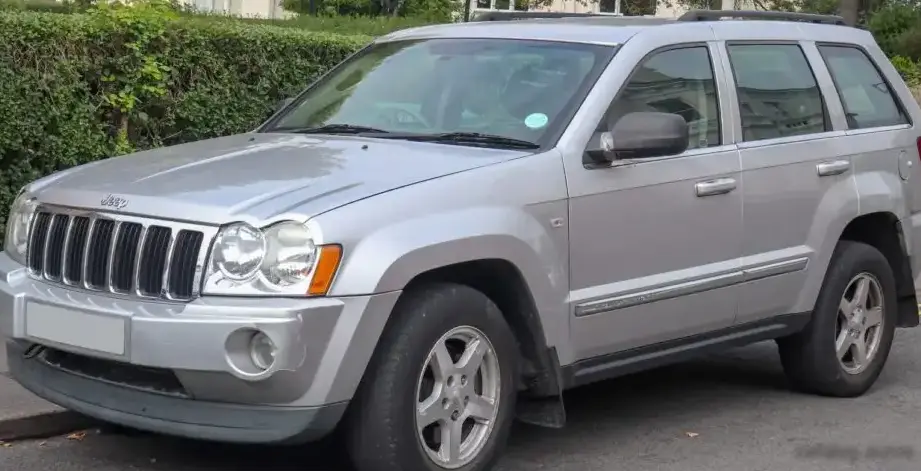
The Jeep Grand Cherokee WK, produced from 2005 to 2010, represented a significant leap forward for the iconic American SUV. Introduced as a more refined and capable alternative to its predecessor, the WJ, the WK generation aimed to blend Jeep’s legendary off-road prowess with a more luxurious and technologically advanced interior. The 3.0 CRD variant, available from 2007 to 2009, was a diesel-powered option primarily aimed at the European market, offering a balance of fuel efficiency and torque. This version positioned itself as a mid-range offering within the Grand Cherokee lineup, slotting below the more powerful gasoline V8 engines but above the base 3.7L V6.
Technical Specifications
| Brand | Jeep |
| Model | Grand Cherokee |
| Generation | Grand Cherokee III (WK) |
| Type (Engine) | 3.0 CRD (218 Hp) Automatic |
| Start of production | 2007 |
| End of production | 2009 |
| Powertrain Architecture | Internal Combustion engine |
| Body type | SUV |
| Seats | 5 |
| Doors | 5 |
| Fuel consumption (urban) | 11.8 l/100 km (19.9 US mpg) |
| Fuel consumption (extra urban) | 9.4 l/100 km (25 US mpg) |
| Fuel consumption (combined) | 10.7 l/100 km (22 US mpg) |
| Fuel Type | Diesel |
| Weight-to-power ratio | 9.3 kg/Hp |
| Weight-to-torque ratio | 4 kg/Nm |
| Power | 218 Hp @ 3800 rpm |
| Power per litre | 73 Hp/l |
| Torque | 510 Nm @ 1600-2800 rpm (376.16 lb.-ft.) |
| Engine layout | Front, Longitudinal |
| Engine Model/Code | EXL |
| Engine displacement | 2987 cm3 (182.28 cu. in.) |
| Number of cylinders | 6 |
| Engine configuration | V-engine |
| Cylinder Bore | 83 mm (3.27 in.) |
| Piston Stroke | 92 mm (3.62 in.) |
| Compression ratio | 18:1 |
| Number of valves per cylinder | 4 |
| Fuel injection system | Diesel Commonrail |
| Engine aspiration | Turbocharger, Intercooler |
| Valvetrain | DOHC |
| Engine oil capacity | 9.5 l (10.04 US qt | 8.36 UK qt) |
| Coolant capacity | 13.2 l (13.95 US qt | 11.61 UK qt) |
| Kerb Weight | 2018 kg (4448.93 lbs.) |
| Max. weight | 2727 kg (6012.01 lbs.) |
| Max load | 709 kg (1563.08 lbs.) |
| Fuel tank capacity | 80 l (21.13 US gal | 17.6 UK gal) |
| Length | 4775 mm (187.99 in.) |
| Width | 1861 mm (73.27 in.) |
| Height | 1749 mm (68.86 in.) |
| Wheelbase | 2781 mm (109.49 in.) |
| Front track | 1575 mm (62.01 in.) |
| Rear track | 1575 mm (62.01 in.) |
| Ride height (ground clearance) | 204 mm (8.03 in.) |
| Drag coefficient (Cd) | 0.41 |
| Minimum turning circle | 11.3 m (37.07 ft.) |
| Approach angle | 32.3° |
| Departure angle | 27.5° |
| Ramp-over angle | 20.4° |
| Drivetrain Architecture | Rear wheel drive |
| Number of gears | 5 |
| Gearbox type | Automatic transmission |
| Front brakes | Ventilated discs |
| Rear brakes | Ventilated discs |
| Assisting systems | ABS (Anti-lock braking system) |
| Steering type | Steering rack and pinion |
| Tires size | 245/65 R17 |
| Wheel rims size | 17 |
Powertrain & Engine Architecture
The heart of the 3.0 CRD Grand Cherokee is the EXL engine, a 2.987-liter V6 diesel. This engine utilizes a common rail direct injection system, delivering fuel at extremely high pressure for optimized combustion. The EXL engine benefits from a variable geometry turbocharger (VGT) and an intercooler, enhancing both power and efficiency. The VGT allows the turbocharger to adjust its turbine geometry based on engine speed and load, providing strong low-end torque and responsive acceleration. The engine features a double overhead camshaft (DOHC) valvetrain with four valves per cylinder, contributing to its breathing efficiency. Paired with the engine is a five-speed automatic transmission, designed to handle the engine’s substantial torque output. This transmission was a Chrysler-built unit, known for its smooth operation but sometimes criticized for its relatively conservative gear ratios.
Driving Characteristics
The 3.0 CRD Grand Cherokee offered a distinctly different driving experience compared to its gasoline-powered siblings. While lacking the outright acceleration of the V8 models, the diesel engine provided a broad, flat torque curve, making it well-suited for towing and off-road driving. The automatic transmission, while smooth, wasn’t particularly sporty. Gear changes were generally seamless, but downshifts could be slow to respond, especially when needing quick acceleration. The 5-speed automatic’s gear ratios were geared more towards fuel economy and relaxed cruising than aggressive performance. The rear-wheel-drive configuration contributed to a more balanced feel on paved roads, although the vehicle’s considerable weight was always noticeable. Compared to the manual transmission versions available in Europe, the automatic offered greater convenience but sacrificed some driver engagement and fuel efficiency.
Equipment & Trim Levels
The 3.0 CRD Grand Cherokee typically came equipped with a respectable level of standard features. Interior appointments generally included cloth upholstery, air conditioning, a CD player with MP3 compatibility, and power windows and locks. Higher trim levels, such as the Limited, added features like leather upholstery, heated front seats, a premium sound system, and automatic climate control. Optional extras included a navigation system, sunroof, and rear-seat entertainment system. The exterior styling remained consistent across the range, with the 3.0 CRD distinguished primarily by its diesel engine badge.
Chassis & Braking
The WK Grand Cherokee utilized a robust body-on-frame construction, providing a solid foundation for both on-road comfort and off-road capability. The suspension system consisted of independent front suspension with coil springs and a multi-link rear suspension. The rear suspension configuration varied depending on the specific model and options selected; some versions featured coil springs while others utilized leaf springs. Braking duties were handled by ventilated disc brakes on all four wheels, providing adequate stopping power for the vehicle’s weight. An Anti-lock Braking System (ABS) was standard equipment. Stabilizer bars were fitted front and rear to reduce body roll during cornering.
Market Reception & Comparison
The 3.0 CRD Grand Cherokee was well-received in Europe, where diesel engines were – and still are – highly popular. Critics praised its fuel efficiency, strong torque output, and comfortable ride. However, some reviewers noted the automatic transmission’s lack of responsiveness and the engine’s relatively modest horsepower compared to the V8 alternatives. Compared to the 3.7L V6, the 3.0 CRD offered significantly more torque and better fuel economy, making it a more practical choice for those who frequently towed or drove long distances. Against the V8 models, the diesel provided a more economical option, albeit with a trade-off in outright performance. Reliability was generally good, although some owners reported issues with the diesel particulate filter (DPF) and the common rail injection system.
Legacy
The 3.0 CRD Grand Cherokee WK remains a popular choice in the used car market, particularly in Europe. The EXL diesel engine, when properly maintained, is known for its durability and longevity. However, potential buyers should be aware of the potential for issues with the DPF and injection system, and regular servicing is crucial. The WK generation Grand Cherokee, including the 3.0 CRD variant, helped to establish Jeep as a serious contender in the luxury SUV segment, offering a compelling combination of off-road capability, on-road comfort, and fuel efficiency. Today, these vehicles are appreciated by enthusiasts for their ruggedness, versatility, and distinctive American character.