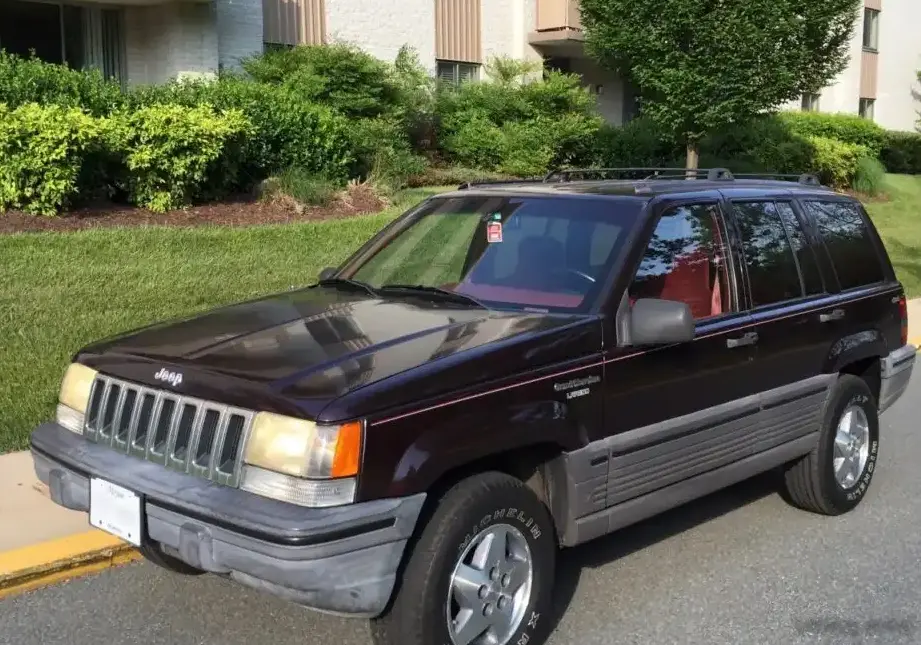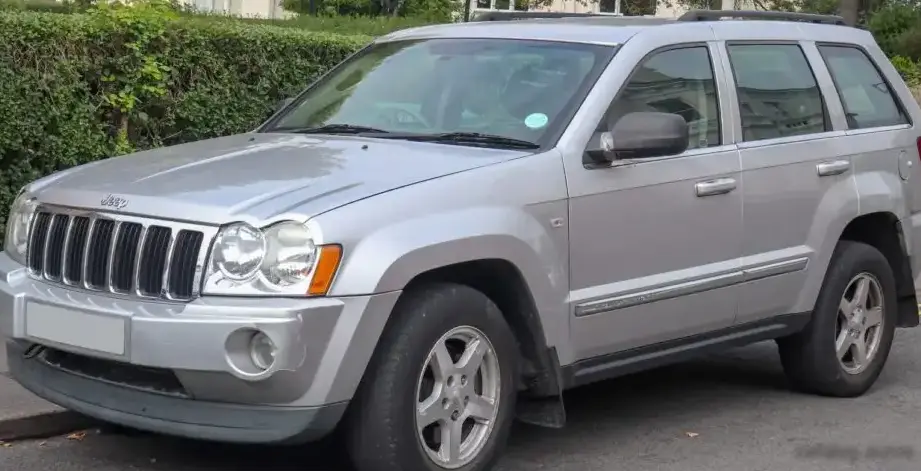
The Jeep Grand Cherokee WK, produced from 2005 to 2010, represented a significant step forward for the iconic American SUV. The 4.7i V8 4×4 Automatic variant, equipped with the 4.7-liter V8 engine producing 231 horsepower, occupied a middle ground in the WK lineup, offering a balance between capability, comfort, and affordability. It served as a popular choice for buyers seeking a robust SUV with V8 power without the premium price tag of the higher-trim models like the 5.7L Hemi. This model played a crucial role in solidifying the Grand Cherokee’s position as a leading SUV in the North American market.
Technical Specifications
| Brand | Jeep |
| Model | Grand Cherokee |
| Generation | Grand Cherokee III (WK) |
| Type (Engine) | 4.7i V8 (231 Hp) 4×4 Automatic |
| Start of production | 2005 |
| End of production | 2010 |
| Powertrain Architecture | Internal Combustion engine |
| Body type | SUV |
| Seats | 5 |
| Doors | 5 |
| Fuel consumption (urban) | 19.7 l/100 km (11.9 US mpg, 14.3 UK mpg, 5.1 km/l) |
| Fuel consumption (extra urban) | 12 l/100 km (19.6 US mpg, 23.5 UK mpg, 8.3 km/l) |
| Fuel consumption (combined) | 14.9 l/100 km (15.8 US mpg, 19 UK mpg, 6.7 km/l) |
| Fuel Type | Petrol (Gasoline) |
| Acceleration 0 – 100 km/h | 9.5 sec |
| Acceleration 0 – 62 mph | 9.5 sec |
| Acceleration 0 – 60 mph | 9 sec |
| Maximum speed | 200 km/h (124.27 mph) |
| Weight-to-power ratio | 9.2 kg/Hp, 108.2 Hp/tonne |
| Weight-to-torque ratio | 5.2 kg/Nm, 192 Nm/tonne |
| Power | 231 Hp @ 4500 rpm |
| Power per litre | 49.1 Hp/l |
| Torque | 410 Nm @ 3600 rpm (302.4 lb.-ft. @ 3600 rpm) |
| Engine layout | Front, Longitudinal |
| Engine Model/Code | EVA |
| Engine displacement | 4701 cm3 (286.87 cu. in.) |
| Number of cylinders | 8 |
| Engine configuration | V-engine |
| Cylinder Bore | 93 mm (3.66 in.) |
| Piston Stroke | 86.5 mm (3.41 in.) |
| Compression ratio | 9:1 |
| Number of valves per cylinder | 2 |
| Fuel injection system | Multi-port manifold injection |
| Engine aspiration | Naturally aspirated engine |
| Valvetrain | SOHC |
| Engine oil capacity | 5.7 l (6.02 US qt | 5.02 UK qt) |
| Coolant capacity | 11.8 l (12.47 US qt | 10.38 UK qt) |
| Kerb Weight | 2135 kg (4706.87 lbs.) |
| Max. weight | 2750 kg (6062.71 lbs.) |
| Max load | 615 kg (1355.84 lbs.) |
| Fuel tank capacity | 78 l (20.61 US gal | 17.16 UK gal) |
| Length | 4750 mm (187.01 in.) |
| Width | 1870 mm (73.62 in.) |
| Height | 1740 mm (68.5 in.) |
| Wheelbase | 2781 mm (109.49 in.) |
| Front track | 1575 mm (62.01 in.) |
| Rear track | 1575 mm (62.01 in.) |
| Drag coefficient (Cd) | 0.41 |
| Minimum turning circle | 11.3 m (37.07 ft.) |
| Drive wheel | All wheel drive (4×4) |
| Number of gears | 5 |
| Gearbox type | Automatic transmission |
| Front brakes | Ventilated discs |
| Rear brakes | Ventilated discs |
| Assisting systems | ABS (Anti-lock braking system) |
| Steering type | Steering rack and pinion |
| Power steering | Hydraulic Steering |
| Tires size | 245/65 R17 |
| Wheel rims size | 17 |
INTRODUCTION
The Jeep Grand Cherokee WK, launched in 2005, marked a significant departure from its predecessor, the WJ. Built on a new platform, the WK offered improved refinement, a more modern interior, and enhanced off-road capability. The 4.7i V8 4×4 Automatic model, produced throughout the WK’s lifespan (2005-2010), was positioned as a solid, dependable option for buyers who desired the prestige of a Grand Cherokee with the added benefit of a V8 engine. It was a step up from the base 3.7L V6, offering more power and towing capacity, but remained more accessible than the performance-oriented 5.7L Hemi V8.
Powertrain & Engine Architecture
At the heart of the 4.7i variant lies the 4.7-liter (4701 cc) V8 engine, internally designated as the EVA engine code. This engine is a third-generation design, building upon earlier Jeep V8s. It features a cast-iron block with aluminum cylinder heads, and a single overhead camshaft (SOHC) valvetrain operating two valves per cylinder. Fuel delivery is managed by a multi-port fuel injection system, providing precise fuel metering for optimal combustion. The 4.7L V8 produces 231 horsepower at 4500 rpm and 302 lb-ft of torque at 3600 rpm. The engine is longitudinally mounted in the chassis. Paired with this engine is a five-speed automatic transmission, providing smooth and relatively efficient gear changes. This transmission was chosen for its balance of performance and drivability, offering a comfortable driving experience for everyday use.
Driving Characteristics
The 4.7L V8 Automatic Grand Cherokee delivers a comfortable and capable driving experience. While not as quick as the Hemi-equipped models, the 4.7L provides adequate power for merging onto highways and passing other vehicles. The automatic transmission is tuned for smooth shifts, prioritizing comfort over aggressive performance. Acceleration from 0-60 mph takes approximately 9 seconds. The 4×4 system provides excellent traction in various conditions, making it a capable off-road vehicle. However, the relatively high curb weight of around 4700 lbs does impact handling, making it feel less nimble than lighter SUVs. The gear ratios are optimized for cruising, providing relaxed highway driving, but may require downshifting for more spirited acceleration.
Equipment & Trim Levels
The 4.7i V8 Automatic trim typically included standard features such as air conditioning, power windows and locks, a CD player, and cloth upholstery. Higher sub-trims within the 4.7L range often added features like leather seats, a premium sound system, power-adjustable front seats, and a sunroof. Optional extras included a navigation system, rear-seat entertainment system, and upgraded wheels. The interior design was a significant improvement over the previous generation, offering a more modern and refined aesthetic. Safety features included anti-lock brakes (ABS) and multiple airbags.
Chassis & Braking
The WK Grand Cherokee utilized an independent front suspension with coil springs and a multi-link rear suspension. This setup provided a comfortable ride and good handling characteristics. The 4.7i model typically featured ventilated disc brakes on all four wheels, providing adequate stopping power. The braking system was enhanced by ABS, preventing wheel lockup during hard braking. The chassis was designed to be robust and durable, capable of handling both on-road and off-road driving conditions. Stabilizer bars were included to reduce body roll during cornering.
Market Reception & Comparison
The 4.7i V8 Automatic Grand Cherokee was generally well-received by critics and consumers. It was praised for its comfortable ride, spacious interior, and capable 4×4 system. However, some reviewers noted that the 4.7L engine lacked the punch of the 5.7L Hemi. Fuel economy was also a common criticism, with the 4.7L V8 averaging around 15.8 mpg in combined driving. Compared to the V6 models, the 4.7L offered a noticeable increase in power and towing capacity. Compared to the Hemi, it provided a more affordable entry point into the V8 Grand Cherokee experience. Reliability was generally good, although some owners reported issues with the automatic transmission and cooling system.
Legacy
The Jeep Grand Cherokee WK 4.7i V8 Automatic remains a popular choice in the used car market today. Its combination of affordability, capability, and comfort makes it an attractive option for buyers seeking a reliable and versatile SUV. While the 4.7L engine is not known for its exceptional fuel economy, its robust design and relatively simple mechanics contribute to its long-term reliability. Parts availability is generally good, making maintenance and repairs relatively straightforward. The WK generation Grand Cherokee, and particularly the 4.7L variant, helped to solidify the Grand Cherokee’s reputation as a premium and capable SUV, paving the way for future generations.