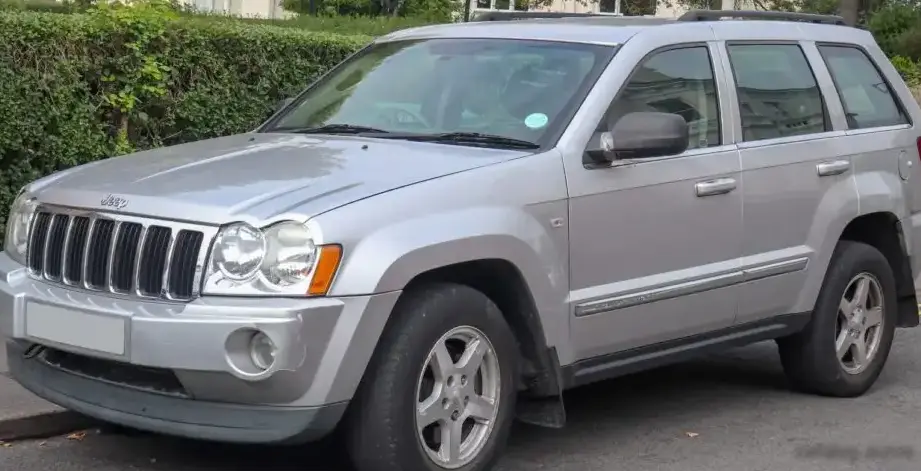
The Jeep Grand Cherokee WK, produced from 2006 to 2008, marked a significant evolution for the iconic American SUV. The 5.7i V8 variant, paired with a five-speed automatic transmission, represented the premium offering within the WK lineup, delivering a compelling combination of substantial power and relative luxury. This model year initiated the third generation of the Grand Cherokee, internally designated as the WK, and was a pivotal period for Jeep as it sought to enhance its competitiveness in the increasingly crowded SUV market. The WK transitioned from the unibody construction of its predecessor to a body-on-frame design, improving both off-road capability and towing capacity. The 5.7L V8 was positioned as the top-tier engine choice, catering to buyers who prioritized performance and a more refined driving experience.
Technical Specifications
| Brand | Jeep |
| Model | Grand Cherokee |
| Generation | Grand Cherokee III (WK) |
| Type (Engine) | 5.7i V8 (335 Hp) Automatic |
| Start of production | 2006 |
| End of production | 2008 |
| Powertrain Architecture | Internal Combustion engine |
| Body type | SUV |
| Seats | 5 |
| Doors | 5 |
| Fuel consumption (urban) | 15.7 l/100 km (15 US mpg, 18 UK mpg, 6.4 km/l) |
| Fuel consumption (extra urban) | 11.8 l/100 km (19.9 US mpg, 23.9 UK mpg, 8.5 km/l) |
| Fuel consumption (combined) | 13.8 l/100 km (17 US mpg, 20.5 UK mpg, 7.2 km/l) |
| Fuel Type | Petrol (Gasoline) |
| Weight-to-power ratio | 6.2 kg/Hp, 160.8 Hp/tonne |
| Weight-to-torque ratio | 4.1 kg/Nm, 244.4 Nm/tonne |
| Power | 335 Hp @ 5000 rpm |
| Power per litre | 59.3 Hp/l |
| Torque | 509 Nm @ 4000 rpm (375.42 lb.-ft. @ 4000 rpm) |
| Engine layout | Front, Longitudinal |
| Engine Model/Code | EZB |
| Engine displacement | 5654 cm3 (345.03 cu. in.) |
| Number of cylinders | 8 |
| Engine configuration | V-engine |
| Cylinder Bore | 99.5 mm (3.92 in.) |
| Piston Stroke | 90.9 mm (3.58 in.) |
| Compression ratio | 9.6:1 |
| Number of valves per cylinder | 2 |
| Fuel injection system | Multi-port manifold injection |
| Engine aspiration | Naturally aspirated engine |
| Valvetrain | SOHC |
| Engine oil capacity | 6.6 l (6.97 US qt | 5.81 UK qt) |
| Coolant capacity | 14.4 l (15.22 US qt | 12.67 UK qt) |
| Kerb Weight | 2083 kg (4592.23 lbs.) |
| Max. weight | 2726 kg (6009.8 lbs.) |
| Max load | 643 kg (1417.57 lbs.) |
| Fuel tank capacity | 79 l (20.87 US gal | 17.38 UK gal) |
| Length | 4775 mm (187.99 in.) |
| Width | 1861 mm (73.27 in.) |
| Height | 1749 mm (68.86 in.) |
| Wheelbase | 2781 mm (109.49 in.) |
| Front track | 1575 mm (62.01 in.) |
| Rear track | 1575 mm (62.01 in.) |
| Ride height (ground clearance) | 204 mm (8.03 in.) |
| Drag coefficient (Cd) | 0.41 |
| Minimum turning circle | 11.3 m (37.07 ft.) |
| Approach angle | 32.3° |
| Departure angle | 27.5° |
| Ramp-over angle | 20.4° |
| Drivetrain Architecture | Rear wheel drive |
| Number of gears | 5 |
| Gearbox type | Automatic transmission |
| Front suspension | Coil spring |
| Rear suspension | Coil spring |
| Front brakes | Ventilated discs |
| Rear brakes | Ventilated discs |
| Assisting systems | ABS (Anti-lock braking system) |
| Steering type | Steering rack and pinion |
| Tires size | 245/65 R17 |
| Wheel rims size | 17 |
Powertrain & Engine Architecture
The 5.7i Grand Cherokee’s powertrain centers around the EZB engine, a 5.7-liter (345 cubic inch) V8. This engine employs a cast iron block paired with aluminum cylinder heads, a common design choice for American V8s aiming for a balance between durability and weight savings. The EZB features a single overhead camshaft (SOHC) valvetrain operating two valves per cylinder. Fuel delivery is managed by a multi-port fuel injection system, ensuring precise fuel metering for optimal combustion efficiency. The 5.7L V8 generates 335 horsepower at 5000 rpm and 375 lb-ft of torque at 4000 rpm. This power is transmitted through a five-speed automatic transmission, a Chrysler-built unit recognized for its smooth shifting characteristics and overall reliability. The transmission’s calibration prioritized a balance between acceleration and fuel economy, although the latter remained a secondary consideration given the engine’s substantial displacement.
Driving Characteristics
The combination of the 5.7L V8 and the automatic transmission delivered a distinctly different driving experience compared to the lower-trim Grand Cherokees. Acceleration was brisk, providing confident merging and overtaking capabilities. While not a performance-oriented vehicle, the 5.7i offered ample power for towing and navigating diverse terrains. The automatic transmission, while smooth, wasn’t particularly quick to downshift, occasionally requiring drivers to anticipate passing situations. The gear ratios were optimized for highway cruising, but could feel somewhat tall during off-road excursions or when ascending steep inclines. In comparison to the manual transmission options, the automatic sacrificed some driver engagement but offered increased convenience, particularly in urban driving conditions.
Equipment & Trim Levels
The 5.7i Grand Cherokee was typically well-equipped, positioning it as the luxury trim in the lineup. Standard features included leather upholstery, heated front seats, a premium sound system, and automatic climate control. Optional extras encompassed a navigation system, a sunroof, and upgraded wheel options. The interior trim generally featured woodgrain accents and a more refined aesthetic compared to the base models. The 5.7i was frequently paired with the Limited trim level, which added further enhancements such as power-adjustable pedals and a rear entertainment system.
Chassis & Braking
The WK Grand Cherokee utilized a traditional body-on-frame construction, providing a robust platform for both on-road comfort and off-road performance. The suspension system consisted of coil springs at all four corners, complemented by stabilizer bars to minimize body roll. The 5.7i models typically featured heavier-duty suspension components to accommodate the increased weight and power. Braking was handled by ventilated discs at all four wheels, providing adequate stopping power. An Anti-lock Braking System (ABS) was standard, enhancing safety and control during emergency braking maneuvers. The rear brakes were also ventilated discs, representing an upgrade over the drum brakes found on some of the lower trim levels.
Market Reception & Comparison
Automotive critics generally lauded the 5.7i Grand Cherokee for its powerful engine and comfortable ride quality. However, fuel economy was a frequent point of criticism, as expected with a large-displacement V8. Compared to the 3.7L V6 and 4.7L V8 options, the 5.7i delivered significantly more performance but at the expense of increased fuel consumption. The 5.7i also carried a higher price tag, making it a less accessible option for budget-conscious buyers. Reliability was generally considered good, although the complexity of the engine and transmission meant that maintenance costs could be higher compared to the simpler engine options.
Legacy
The 5.7i V8-powered Grand Cherokee WK continues to be a sought-after choice among enthusiasts seeking a capable and comfortable SUV. The EZB engine is well-regarded for its durability and relatively straightforward maintenance requirements. While fuel economy isn’t a strong suit, the engine’s robust construction and readily available parts make it a viable option for those willing to accept that trade-off. In the used car market, these models generally maintain their value reasonably well, particularly those in good condition with a comprehensive maintenance history. The WK generation Grand Cherokee, and specifically the 5.7i variant, solidified the model’s reputation as a capable and luxurious SUV, laying the groundwork for subsequent generations.