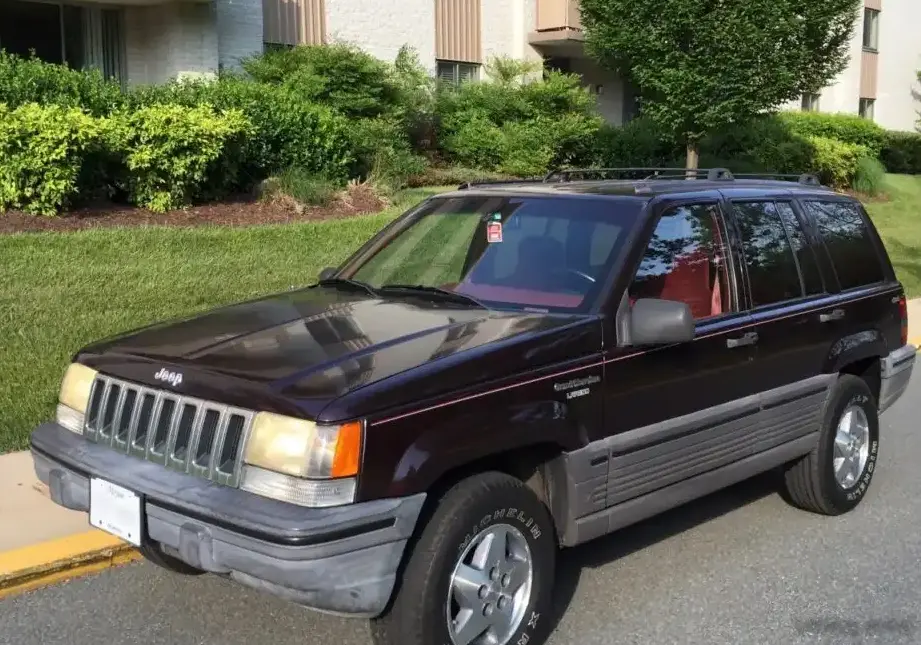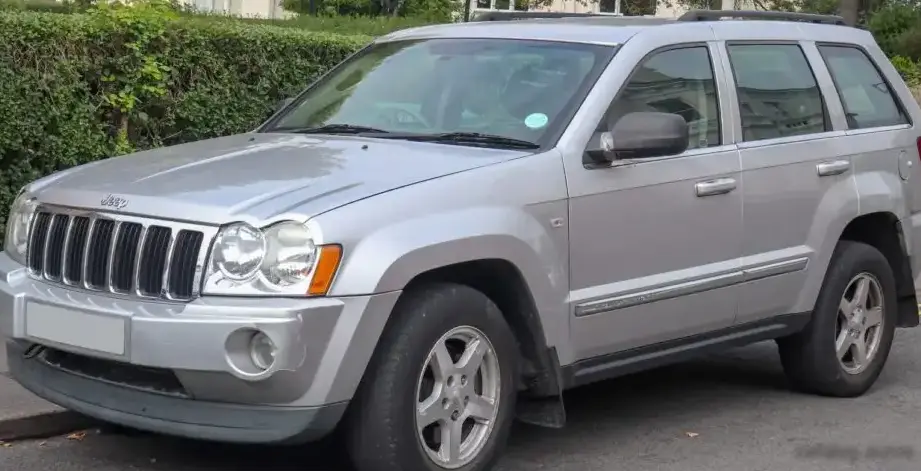
The Jeep Grand Cherokee III (WK) 5.7i V8 4×4 Automatic, produced from 2009 to 2010, represented the high-performance end of the WK generation Grand Cherokee lineup. Positioned as the flagship trim, it offered a substantial increase in power and capability compared to the V6 models. The WK series, launched in 2004, aimed to elevate the Grand Cherokee into a more refined and luxurious SUV while maintaining its renowned off-road prowess. This particular variant catered to buyers seeking a powerful and capable SUV with a focus on towing and spirited driving. It was a key offering in the North American market, where large SUVs with powerful V8 engines remained highly popular.
Technical Specifications
| Brand | Jeep |
| Model | Grand Cherokee |
| Generation | Grand Cherokee III (WK) |
| Type (Engine) | 5.7i V8 (362 Hp) 4×4 Automatic |
| Start of production | 2009 |
| End of production | 2010 |
| Powertrain Architecture | Internal Combustion engine |
| Body type | SUV |
| Seats | 5 |
| Doors | 5 |
| Fuel consumption (urban) | 18.1 l/100 km (13 US mpg, 15.6 UK mpg, 5.5 km/l) |
| Fuel consumption (extra urban) | 12.4 l/100 km (19 US mpg, 22.8 UK mpg, 8.1 km/l) |
| Fuel consumption (combined) | 15.7 l/100 km (15 US mpg, 18 UK mpg, 6.4 km/l) |
| Fuel Type | Petrol (Gasoline) |
| Weight-to-power ratio | 6 kg/Hp, 167.1 Hp/tonne |
| Weight-to-torque ratio | 4.1 kg/Nm, 243.2 Nm/tonne |
| Power | 362 Hp @ 5200 rpm |
| Power per litre | 64 Hp/l |
| Torque | 527 Nm @ 4350 rpm (388.7 lb.-ft. @ 4350 rpm) |
| Engine layout | Front, Longitudinal |
| Engine Model/Code | EZD |
| Engine displacement | 5654 cm3 (345.03 cu. in.) |
| Number of cylinders | 8 |
| Engine configuration | V-engine |
| Cylinder Bore | 99.5 mm (3.92 in.) |
| Piston Stroke | 90.9 mm (3.58 in.) |
| Compression ratio | 10.5:1 |
| Number of valves per cylinder | 2 |
| Fuel injection system | Multi-port manifold injection |
| Engine aspiration | Naturally aspirated engine |
| Valvetrain | OHV |
| Engine oil capacity | 6.6 l (6.97 US qt | 5.81 UK qt) |
| Coolant capacity | 14.4 l (15.22 US qt | 12.67 UK qt) |
| Kerb Weight | 2167 kg (4777.42 lbs.) |
| Max. weight | 2790 kg (6150.9 lbs.) |
| Max load | 623 kg (1373.48 lbs.) |
| Fuel tank capacity | 80 l (21.13 US gal | 17.6 UK gal) |
| Length | 4775 mm (187.99 in.) |
| Width | 1861 mm (73.27 in.) |
| Height | 1749 mm (68.86 in.) |
| Wheelbase | 2781 mm (109.49 in.) |
| Front track | 1575 mm (62.01 in.) |
| Rear track | 1575 mm (62.01 in.) |
| Ride height (ground clearance) | 210 mm (8.27 in.) |
| Drag coefficient (Cd) | 0.41 |
| Minimum turning circle | 11.3 m (37.07 ft.) |
| Approach angle | 32.3° |
| Departure angle | 27.5° |
| Ramp-over angle | 20.4° |
| Drive wheel | All wheel drive (4×4) |
| Number of gears | 5 |
| Gearbox type | Automatic transmission |
| Front brakes | Ventilated discs |
| Rear brakes | Ventilated discs |
| Assisting systems | ABS (Anti-lock braking system) |
| Steering type | Steering rack and pinion |
| Tires size | 245/65 R17 |
| Wheel rims size | 17 |
Powertrain & Engine Architecture
The heart of the Grand Cherokee 5.7i was the EZD engine, a 5.7-liter (345 cubic inch) V8. This engine utilized a cast iron block with aluminum cylinder heads, a configuration common in American V8s for balancing durability and weight. The engine employed a multi-point fuel injection system, delivering fuel directly to each cylinder for optimized combustion. The overhead valve (OHV) valvetrain, while a more traditional design compared to overhead cam engines, was known for its simplicity and reliability. The 5.7L V8 produced 362 horsepower at 5200 rpm and 388 lb-ft of torque at 4350 rpm. This power was channeled through a five-speed automatic transmission, specifically the 545RFE, known for its durability and smooth shifting. The transmission was designed to handle the substantial torque output of the V8 and provide adequate gearing for both on-road cruising and off-road crawling.
Driving Characteristics
The 5.7i Grand Cherokee offered a markedly different driving experience compared to the V6 models. The substantial torque output provided strong acceleration, particularly at lower and mid-range engine speeds. While not a sports car, the V8 delivered confident passing power and made towing trailers or boats effortless. The automatic transmission, while smooth, wasn’t particularly quick to downshift, but it was well-suited for relaxed cruising. Compared to a manual transmission equipped Grand Cherokee (which wasn’t commonly offered with the V8), the automatic prioritized comfort and ease of use over outright performance. The 5-speed automatic’s gear ratios were optimized for a balance between fuel economy and towing capacity, rather than maximizing acceleration.
Equipment & Trim Levels
The 5.7i trim typically included a generous array of standard features. Leather upholstery, heated front seats, dual-zone automatic climate control, and a premium sound system were common. Optional extras included a navigation system, rear-seat entertainment system, and a sunroof. The interior trim generally featured woodgrain accents and chrome detailing, enhancing the luxurious feel. The 5.7i also often included upgraded suspension components and larger brakes compared to the lower trims.
Chassis & Braking
The WK Grand Cherokee utilized an independent front suspension and a multi-link rear suspension, providing a comfortable ride and good handling characteristics for a vehicle of its size. The 5.7i models often featured heavier-duty suspension components to cope with the increased weight and power. Braking duties were handled by ventilated discs on all four wheels, providing ample stopping power. An Anti-lock Braking System (ABS) was standard, enhancing safety and control during emergency braking situations. The 4×4 system offered various modes, including 4-High and 4-Low, allowing drivers to adapt to different terrain conditions.
Market Reception & Comparison
The Grand Cherokee 5.7i was generally well-received by automotive critics, who praised its powerful engine, comfortable ride, and luxurious interior. However, its fuel economy was a common criticism, as expected with a large V8 engine. Compared to the V6 models, the 5.7i offered significantly more performance but at a higher price point and with reduced fuel efficiency. Against competitors like the Chevrolet Tahoe and Ford Expedition, the Grand Cherokee 5.7i offered a more refined driving experience and a more upscale interior, but often at a slightly higher cost.
Legacy
The 5.7L V8 engine, in general, proved to be a relatively reliable powertrain when properly maintained. Common issues included oil leaks and occasional sensor failures, but major engine failures were not widespread. Today, the WK Grand Cherokee 5.7i remains a popular choice in the used car market, particularly among buyers seeking a capable and comfortable SUV with a powerful engine. Its robust construction and readily available parts contribute to its continued appeal. While fuel economy remains a concern, the 5.7i’s combination of power, luxury, and capability ensures its place as a desirable classic SUV.