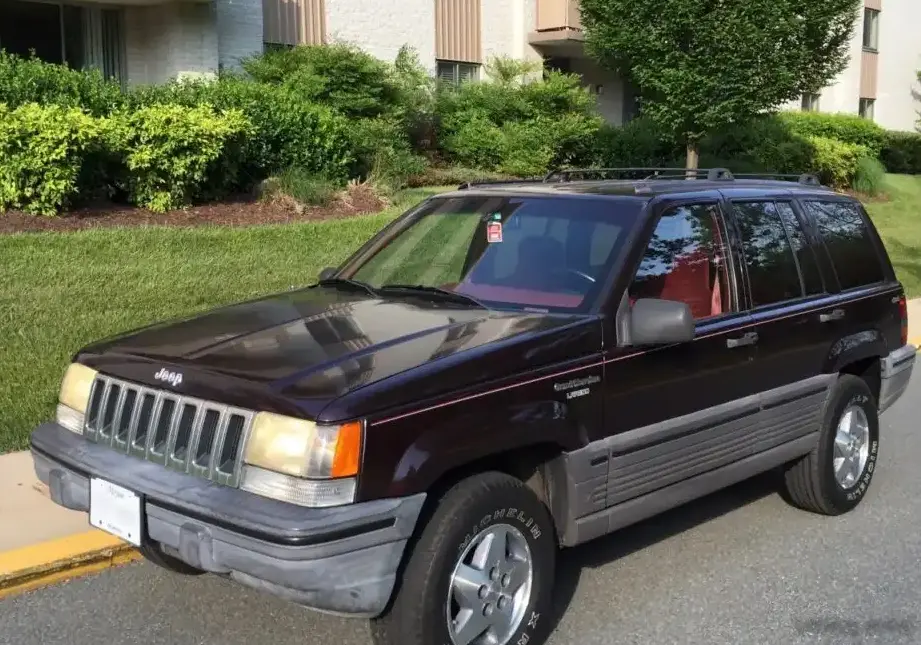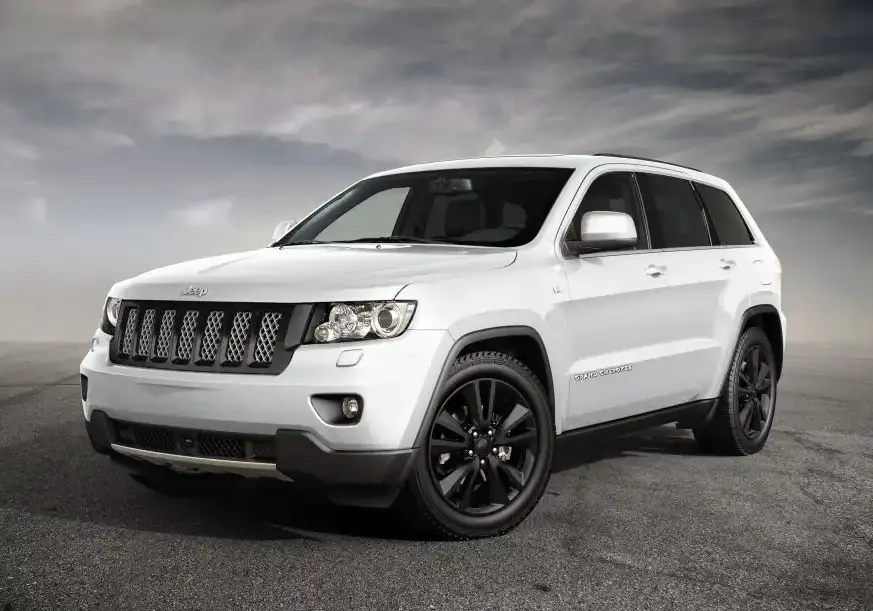
The Jeep Grand Cherokee IV (WK2) 3.6L V6 4×4 Automatic, produced from 2011 to 2013, represents a significant iteration in the Grand Cherokee lineage. Positioned as a mainstream offering within the WK2 generation, which spanned 2011-2021, this variant aimed to balance capability, comfort, and affordability for the American SUV market. It served as a popular choice for buyers seeking a versatile vehicle suitable for both daily commuting and off-road adventures. The WK2 platform marked a substantial improvement over its predecessor, offering a more refined driving experience and a more luxurious interior.
Technical Specifications
| Brand | Jeep |
| Model | Grand Cherokee |
| Generation | Grand Cherokee IV (WK2) |
| Type (Engine) | 3.6 V6 (294 Hp) 4×4 Automatic |
| Start of production | 2011 year |
| End of production | 2013 year |
| Powertrain Architecture | Internal Combustion engine |
| Body type | SUV |
| Seats | 5 |
| Doors | 5 |
| Fuel consumption (economy) – urban | 14.7 l/100 km (16 US mpg, 19.2 UK mpg, 6.8 km/l) |
| Fuel consumption (economy) – extra urban | 10.7 l/100 km (22 US mpg, 26.4 UK mpg, 9.3 km/l) |
| Fuel consumption (economy) – combined | 13.1 l/100 km (18 US mpg, 21.6 UK mpg, 7.6 km/l) |
| Fuel Type | Petrol (Gasoline) |
| Weight-to-power ratio | 7.2 kg/Hp, 139.1 Hp/tonne |
| Weight-to-torque ratio | 6 kg/Nm, 167 Nm/tonne |
| Power | 294 Hp @ 6400 rpm |
| Power per litre | 81.6 Hp/l |
| Torque | 353 Nm @ 4800 rpm (260.36 lb.-ft. @ 4800 rpm) |
| Engine layout | Front, Longitudinal |
| Engine Model/Code | ERB |
| Engine displacement | 3604 cm3 (219.93 cu. in.) |
| Number of cylinders | 6 |
| Engine configuration | V-engine |
| Cylinder Bore | 96 mm (3.78 in.) |
| Piston Stroke | 83 mm (3.27 in.) |
| Compression ratio | 9.6:1 |
| Number of valves per cylinder | 4 |
| Fuel injection system | Multi-port manifold injection |
| Engine aspiration | Naturally aspirated engine |
| Valvetrain | DOHC |
| Engine oil capacity | 5.6 l (5.92 US qt | 4.93 UK qt) |
| Coolant | 9.9 l (10.46 US qt | 8.71 UK qt) |
| Kerb Weight | 2114 kg (4660.57 lbs.) |
| Max. weight | 2948 kg (6499.23 lbs.) |
| Max load | 834 kg (1838.66 lbs.) |
| Trunk (boot) space – minimum | 782 l (27.62 cu. ft.) |
| Trunk (boot) space – maximum | 1554 l (54.88 cu. ft.) |
| Fuel tank capacity | 93 l (24.57 US gal | 20.46 UK gal) |
| Permitted trailer load with brakes (12%) | 2269 kg (5002.29 lbs.) |
| Length | 4822 mm (189.84 in.) |
| Width | 1938 mm (76.3 in.) |
| Height | 1761 mm (69.33 in.) |
| Wheelbase | 2915 mm (114.76 in.) |
| Front track | 1623 mm (63.9 in.) |
| Rear (Back) track | 1628 mm (64.09 in.) |
| Ride height (ground clearance) | 218 mm (8.58 in.) |
| Drag coefficient (Cd) | 0.37 |
| Minimum turning circle (turning diameter) | 11.3 m (37.07 ft.) |
| Approach angle | 26.3° |
| Departure angle | 26.5° |
| Ramp-over (brakeover) angle | 18.8° |
| Drive wheel | All wheel drive (4×4) |
| Number of gears and type of gearbox | 5 gears, automatic transmission |
| Front suspension | Double wishbone |
| Rear suspension | Independent multi-link suspension |
| Front brakes | Ventilated discs |
| Rear brakes | Disc |
| Assisting systems | ABS (Anti-lock braking system) |
| Steering type | Steering rack and pinion |
| Tires size | 245/70 R17 |
| Wheel rims size | 17 |
Powertrain & Engine Architecture
The heart of this Grand Cherokee variant is the 3.6-liter Pentastar V6 engine, designated as the ERB code. This engine is a naturally aspirated, 60-degree V6 featuring a dual overhead camshaft (DOHC) valvetrain with four valves per cylinder. The Pentastar engine utilizes a multi-port fuel injection system, delivering fuel directly into the intake ports. This engine was a significant departure from the previous generation’s V6 offerings, providing improved power and efficiency. The 3.6L engine produces 294 horsepower at 6,400 rpm and 260 lb-ft of torque at 4,800 rpm. Paired with this engine is a five-speed automatic transmission, designed to provide smooth and responsive shifting. This transmission was a workhorse unit, known for its durability, but not necessarily its cutting-edge efficiency compared to later six and eight-speed automatics.
Driving Characteristics
The 3.6L V6 with the five-speed automatic delivers adequate performance for everyday driving. Acceleration is respectable, but not particularly brisk. The automatic transmission is tuned for comfort and smoothness, prioritizing ease of use over sporty responsiveness. Compared to the available 5.7L Hemi V8, the 3.6L offers significantly less power and acceleration. However, it provides a noticeable improvement in fuel economy. The gear ratios in the five-speed automatic are spaced to provide reasonable acceleration in lower gears and comfortable cruising at highway speeds. The 4×4 system provides enhanced traction in various conditions, making it suitable for light off-roading and inclement weather. The overall driving experience is comfortable and refined, typical of the Grand Cherokee lineage.
Equipment & Trim Levels
The 3.6L V6 4×4 Automatic typically came standard with features such as air conditioning, power windows and locks, a basic audio system, and cloth upholstery. Higher trim levels, such as the Limited, added features like leather upholstery, heated front seats, a premium audio system, and additional convenience features. Optional extras included a navigation system, a sunroof, and advanced safety features. The Laredo trim was the base model, offering a more affordable entry point into the Grand Cherokee lineup, while the Limited trim provided a more luxurious experience.
Chassis & Braking
The WK2 Grand Cherokee utilizes a robust chassis with independent front and rear suspension. The front suspension employs a double wishbone design, while the rear features an independent multi-link setup. This suspension configuration provides a comfortable ride and good handling characteristics. Braking duties are handled by ventilated discs at the front and solid discs at the rear. An Anti-lock Braking System (ABS) is standard, enhancing safety and control during braking. The suspension was tuned to balance on-road comfort with off-road capability, providing a versatile driving experience.
Market Reception & Comparison
The 3.6L V6 Grand Cherokee was generally well-received by critics as a practical and capable SUV. It was praised for its comfortable ride, spacious interior, and available features. However, some critics noted that the five-speed automatic transmission felt dated compared to newer transmissions with more gears. Fuel economy was considered average for its class. Compared to the Hemi V8 models, the 3.6L offered a more affordable price point and better fuel efficiency, making it an attractive option for buyers who didn’t require the extra power. The 3.6L also proved to be a reliable powertrain, with relatively few reported issues.
Legacy
The 3.6L Pentastar V6 engine has proven to be a durable and reliable powertrain. Used examples of the 2011-2013 Grand Cherokee with this engine are readily available on the used car market. While the five-speed automatic transmission is not as efficient as newer transmissions, it has also proven to be relatively trouble-free. The WK2 Grand Cherokee, in general, has established a reputation for being a well-built and capable SUV, and the 3.6L V6 variant remains a popular choice for buyers seeking a versatile and affordable vehicle.