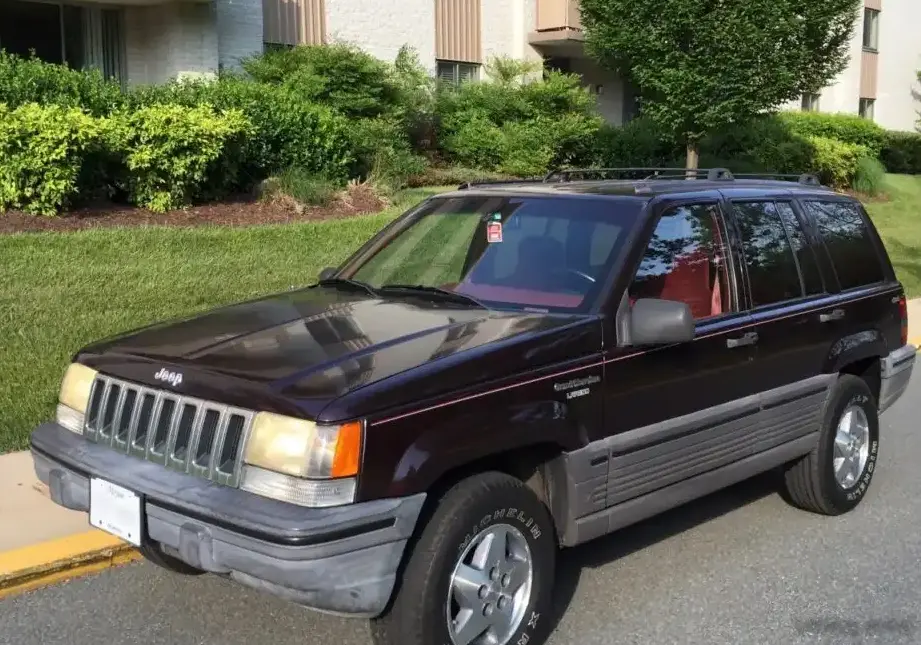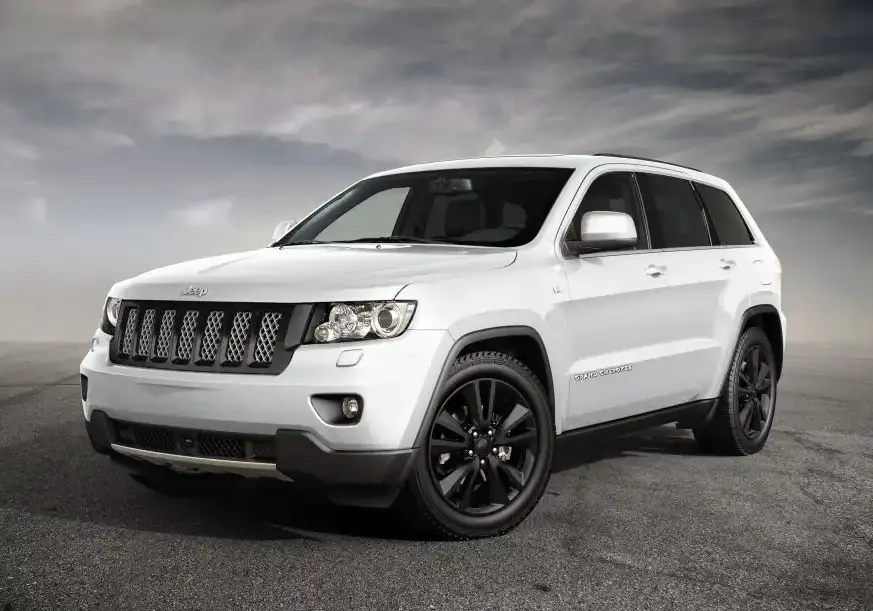
The Jeep Grand Cherokee IV (WK2) 3.6L V6 with an automatic transmission, produced from 2011 to 2013, represented a significant entry point into the fourth generation of Jeep’s flagship SUV. Positioned as a core offering within the WK2 lineup, it provided a balance between capability, comfort, and affordability. The WK2 generation, launched for the 2011 model year, marked a substantial leap forward in refinement and on-road manners compared to its predecessor, the WJ/WK models. This variant, powered by the Pentastar V6, aimed to appeal to a broader customer base seeking a capable SUV without the higher price tag and fuel consumption associated with the larger V8 engines.
Technical Specifications
| Brand | Jeep |
| Model | Grand Cherokee |
| Generation | Grand Cherokee IV (WK2) |
| Type (Engine) | 3.6 V6 (294 Hp) Automatic |
| Start of production | 2011 |
| End of production | 2013 |
| Powertrain Architecture | Internal Combustion engine |
| Body type | SUV |
| Seats | 5 |
| Doors | 5 |
| Fuel consumption (urban) | 14.7 l/100 km (16 US mpg, 19.2 UK mpg, 6.8 km/l) |
| Fuel consumption (extra urban) | 10.2 l/100 km (23.1 US mpg, 27.7 UK mpg, 9.8 km/l) |
| Fuel consumption (combined) | 13.1 l/100 km (18 US mpg, 21.6 UK mpg, 7.6 km/l) |
| Fuel Type | Petrol (Gasoline) |
| Weight-to-power ratio | 6.9 kg/Hp, 145 Hp/tonne |
| Weight-to-torque ratio | 5.7 kg/Nm, 174.1 Nm/tonne |
| Power | 294 Hp @ 6400 rpm |
| Power per litre | 81.6 Hp/l |
| Torque | 353 Nm @ 4800 rpm (260.36 lb.-ft. @ 4800 rpm) |
| Engine layout | Front, Longitudinal |
| Engine Model/Code | ERB |
| Engine displacement | 3604 cm3 (219.93 cu. in.) |
| Number of cylinders | 6 |
| Engine configuration | V-engine |
| Cylinder Bore | 96 mm (3.78 in.) |
| Piston Stroke | 83 mm (3.27 in.) |
| Compression ratio | 9.6:1 |
| Number of valves per cylinder | 4 |
| Fuel injection system | Multi-port manifold injection |
| Engine aspiration | Naturally aspirated engine |
| Valvetrain | DOHC |
| Engine oil capacity | 5.6 l (5.92 US qt | 4.93 UK qt) |
| Coolant | 9.9 l (10.46 US qt | 8.71 UK qt) |
| Kerb Weight | 2028 kg (4470.97 lbs.) |
| Max. weight | 2948 kg (6499.23 lbs.) |
| Max load | 920 kg (2028.25 lbs.) |
| Trunk (boot) space – minimum | 782 l (27.62 cu. ft.) |
| Trunk (boot) space – maximum | 1554 l (54.88 cu. ft.) |
| Fuel tank capacity | 93 l (24.57 US gal | 20.46 UK gal) |
| Permitted trailer load with brakes (12%) | 2269 kg (5002.29 lbs.) |
| Length | 4822 mm (189.84 in.) |
| Width | 1938 mm (76.3 in.) |
| Height | 1761 mm (69.33 in.) |
| Wheelbase | 2915 mm (114.76 in.) |
| Front track | 1623 mm (63.9 in.) |
| Rear (Back) track | 1628 mm (64.09 in.) |
| Ride height (ground clearance) | 218 mm (8.58 in.) |
| Drag coefficient (Cd) | 0.37 |
| Minimum turning circle (turning diameter) | 11.3 m (37.07 ft.) |
| Approach angle | 26.3° |
| Departure angle | 26.5° |
| Ramp-over (brakeover) angle | 18.8° |
| Drivetrain Architecture | The Internal combustion engine (ICE) drives the rear wheels of the vehicle. |
| Drive wheel | Rear wheel drive |
| Number of gears and type of gearbox | 5 gears, automatic transmission |
| Front suspension | Double wishbone |
| Rear suspension | Independent multi-link suspension |
| Front brakes | Ventilated discs |
| Rear brakes | Disc |
| Assisting systems | ABS (Anti-lock braking system) |
| Steering type | Steering rack and pinion |
| Tires size | 245/70 R17 |
| Wheel rims size | 17 |
Powertrain & Engine Architecture
The heart of this Grand Cherokee variant is the 3.6-liter Pentastar V6 engine, designated as the ERB code. This engine represented a significant upgrade over the previous 3.7L V6 offered in earlier models. The Pentastar features a 60-degree V-angle, a lightweight aluminum block and cylinder heads, and dual overhead camshafts (DOHC) with four valves per cylinder. Fuel delivery is managed by a multi-port fuel injection system, providing precise fuel metering for optimal combustion. The engine’s design prioritizes both power and efficiency. The 5-speed automatic transmission, a Chrysler 545RFE unit, was specifically tuned to complement the V6’s power characteristics. This transmission offered smooth shifts and a reasonable balance between acceleration and fuel economy. While not as sophisticated as some of the newer 8 or 9-speed automatics, it proved to be a reliable and durable unit.
Driving Characteristics
The 3.6L V6 automatic Grand Cherokee offered a comfortable and capable driving experience. With 294 horsepower and 260 lb-ft of torque, acceleration was adequate for everyday driving, though not particularly sporty. The automatic transmission’s gear ratios were optimized for cruising, providing relaxed highway performance. Compared to the 5.7L Hemi V8, the V6 felt noticeably less powerful, especially when fully loaded or towing. However, the V6 offered a significant advantage in fuel economy. The rear-wheel-drive configuration contributed to a more engaging driving feel than the available four-wheel-drive systems, though it limited traction in inclement weather. The suspension, tuned for comfort, absorbed bumps and irregularities well, providing a smooth ride.
Equipment & Trim Levels
The 3.6L V6 Grand Cherokee typically came standard with features such as air conditioning, power windows and locks, a basic audio system, and cloth upholstery. Higher trim levels, like the Limited, added features such as leather upholstery, heated front seats, a premium audio system, and a navigation system. Optional extras included a sunroof, rear-seat entertainment system, and various driver-assistance technologies. The Laredo trim was the most common entry-level configuration for this engine, while the Limited offered a more luxurious experience.
Chassis & Braking
The WK2 Grand Cherokee utilized a robust unibody construction, providing a solid and stable platform. The front suspension featured an independent double wishbone design, while the rear suspension employed an independent multi-link setup. This configuration delivered a good balance between ride comfort and handling. Braking duties were handled by ventilated discs at the front and solid discs at the rear. Anti-lock brakes (ABS) were standard, enhancing safety and control during emergency braking situations. The standard tire size was 245/70R17, providing a good compromise between comfort and grip.
Market Reception & Comparison
The 3.6L V6 Grand Cherokee was generally well-received by critics as a sensible and practical choice for buyers who didn’t require the extra power of the V8. It was praised for its comfortable ride, spacious interior, and improved fuel economy compared to the V8 models. However, some reviewers noted that the V6 felt underpowered when towing or carrying a full load. Compared to competitors like the Ford Explorer and Chevrolet Traverse, the Grand Cherokee offered a more refined driving experience and a more upscale interior. The V6’s fuel economy was competitive within its class, but not class-leading.
Legacy
The 3.6L Pentastar V6 and 545RFE automatic transmission pairing proved to be a reliable and durable combination. While not without its minor issues (such as occasional oil consumption in some engines), the powertrain generally held up well over time. In the used car market, these Grand Cherokees represent a good value proposition, offering a capable and comfortable SUV at an affordable price. Regular maintenance, including timely oil changes and transmission fluid services, is crucial for ensuring the long-term reliability of this powertrain. The WK2 generation Grand Cherokee, and particularly the 3.6L V6 variant, helped solidify Jeep’s reputation for building capable and comfortable SUVs.