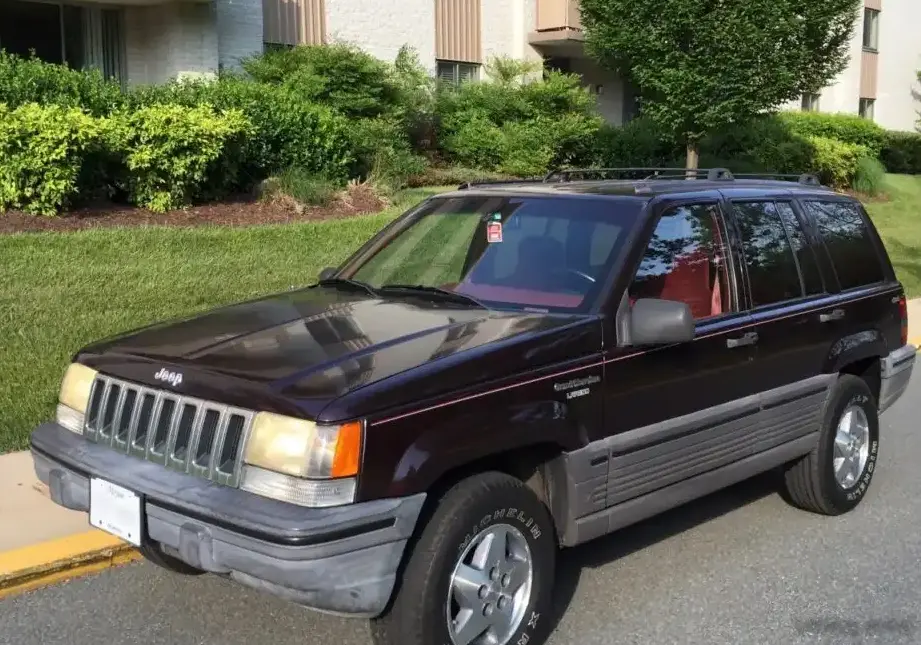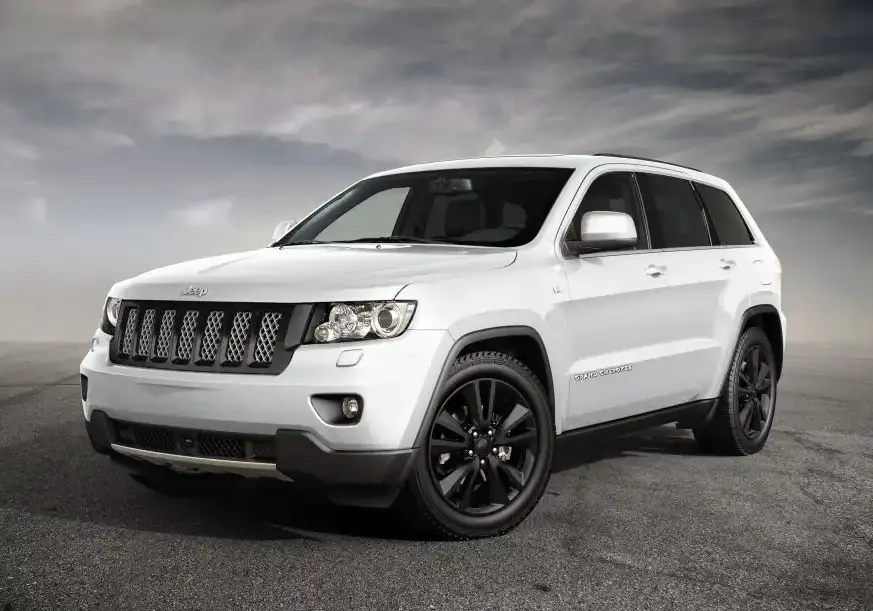
The Jeep Grand Cherokee IV (WK2) 5.7 V8 4×4 Automatic, produced from 2011 to 2013, represented a significant step forward for the iconic American SUV. Positioned as a premium offering within the WK2 generation, which spanned from 2011-2021, this variant catered to buyers seeking a blend of luxury, capability, and substantial power. It sat at the top of the engine lineup for the early years of the WK2, offering a considerable performance advantage over the base 3.6L V6 models. The WK2 platform itself was a major overhaul, moving the Grand Cherokee towards a more refined and technologically advanced vehicle, aiming to compete more effectively with European luxury SUVs.
Technical Specifications
| Brand | Jeep |
| Model | Grand Cherokee |
| Generation | Grand Cherokee IV (WK2) |
| Type (Engine) | 5.7 V8 (364 Hp) 4×4 Automatic |
| Start of production | 2011 |
| End of production | 2013 |
| Powertrain Architecture | Internal Combustion engine |
| Body type | SUV |
| Seats | 5 |
| Doors | 5 |
| Fuel consumption (urban) | 18.1 l/100 km (13 US mpg, 15.6 UK mpg, 5.5 km/l) |
| Fuel consumption (extra urban) | 12.4 l/100 km (19 US mpg, 22.8 UK mpg, 8.1 km/l) |
| Fuel consumption (combined) | 15.7 l/100 km (15 US mpg, 18 UK mpg, 6.4 km/l) |
| Fuel Type | Petrol (Gasoline) |
| Weight-to-power ratio | 6.3 kg/Hp, 159.8 Hp/tonne |
| Weight-to-torque ratio | 4.3 kg/Nm, 232.2 Nm/tonne |
| Power | 364 Hp @ 5150 rpm |
| Power per litre | 64.4 Hp/l |
| Torque | 529 Nm @ 4250 rpm (390.17 lb.-ft. @ 4250 rpm) |
| Engine layout | Front, Longitudinal |
| Engine Model/Code | EZH |
| Engine displacement | 5654 cm3 (345.03 cu. in.) |
| Number of cylinders | 8 |
| Engine configuration | V-engine |
| Cylinder Bore | 99.5 mm (3.92 in.) |
| Piston Stroke | 90.9 mm (3.58 in.) |
| Compression ratio | 10.5:1 |
| Number of valves per cylinder | 2 |
| Fuel injection system | Multi-port manifold injection |
| Engine aspiration | Naturally aspirated engine |
| Valvetrain | OHV |
| Engine oil capacity | 6.6 l (6.97 US qt | 5.81 UK qt) |
| Coolant capacity | 14.6 l (15.43 US qt | 12.85 UK qt) |
| Kerb Weight | 2278 kg (5022.13 lbs.) |
| Max. weight | 2948 kg (6499.23 lbs.) |
| Max load | 670 kg (1477.1 lbs.) |
| Trunk (boot) space – minimum | 457 l (16.14 cu. ft.) |
| Trunk (boot) space – maximum | 1554 l (54.88 cu. ft.) |
| Fuel tank capacity | 93 l (24.57 US gal | 20.46 UK gal) |
| Permitted trailer load with brakes (12%) | 3400 kg (7495.72 lbs.) |
| Length | 4822 mm (189.84 in.) |
| Width | 1938 mm (76.3 in.) |
| Height | 1761 mm (69.33 in.) |
| Wheelbase | 2915 mm (114.76 in.) |
| Front track | 1623 mm (63.9 in.) |
| Rear (Back) track | 1628 mm (64.09 in.) |
| Ride height (ground clearance) | 218 mm (8.58 in.) |
| Drag coefficient (Cd) | 0.37 |
| Minimum turning circle (turning diameter) | 11.3 m (37.07 ft.) |
| Approach angle | 26.3° |
| Departure angle | 26.5° |
| Ramp-over (brakeover) angle | 18.8° |
| Drive wheel | All wheel drive (4×4) |
| Number of gears and type of gearbox | 5 gears, automatic transmission |
| Front suspension | Double wishbone |
| Rear suspension | Independent multi-link suspension |
| Front brakes | Ventilated discs |
| Rear brakes | Disc |
| Assisting systems | ABS (Anti-lock braking system) |
| Steering type | Steering rack and pinion |
| Tires size | 265/60 R18 |
| Wheel rims size | 18 |
Powertrain & Engine Architecture
The heart of this Grand Cherokee variant is the 5.7-liter HEMI V8 engine, internally designated as the EZH. This engine is a naturally aspirated, overhead valve (OHV) design, utilizing a cast iron block and aluminum cylinder heads. It features multi-port fuel injection, delivering fuel directly into the intake ports. The 5.7L HEMI is known for its robust construction and relatively simple design, contributing to its longevity. The engine produces 364 horsepower at 5,150 rpm and 390 lb-ft of torque at 4,250 rpm. Paired with this engine is a five-speed automatic transmission, providing smooth shifts and adequate gear ratios for both on-road cruising and off-road crawling. The transmission was designed to handle the substantial torque output of the HEMI V8, and while not as technologically advanced as some newer automatic transmissions, it proved to be reliable.
Driving Characteristics
The 5.7L V8 and five-speed automatic combination delivers a distinctly American driving experience. Acceleration is brisk, with the Grand Cherokee capable of reaching 60 mph in around 7.5 seconds. The automatic transmission provides smooth, if not particularly quick, shifts. Compared to the 3.6L V6, the V8 offers significantly more low-end torque, making it easier to tow and navigate challenging terrain. However, it lacks the responsiveness of the manual transmission options available with the V6. The gear ratios are tuned for a balance between fuel economy and performance, but the vehicle’s weight and engine displacement inevitably lead to relatively high fuel consumption. The 4×4 system provides excellent traction in various conditions, making it a capable off-roader.
Equipment & Trim Levels
The 5.7L V8 was typically offered in higher trim levels, such as the Limited and Overland. Standard features included leather upholstery, heated front seats, a premium sound system, and a rear parking assist system. Optional extras included a navigation system, a dual-pane sunroof, and advanced safety features like adaptive cruise control and blind-spot monitoring. The Overland trim added even more luxury features, such as ventilated front seats, premium leather, and wood trim accents. Interior color options typically included black, light frost beige, and saddle brown.
Chassis & Braking
The WK2 Grand Cherokee features a fully independent suspension system, with a double wishbone setup at the front and a multi-link setup at the rear. This provides a comfortable ride and good handling characteristics. The 5.7L V8 models typically came equipped with larger brakes than the V6 models, featuring ventilated discs at all four corners. An Anti-lock Braking System (ABS) was standard. The suspension was tuned to balance on-road comfort with off-road capability, providing a stable and controlled ride in various conditions.
Market Reception & Comparison
The 5.7L V8 Grand Cherokee was generally well-received by critics, who praised its powerful engine, comfortable ride, and luxurious interior. However, its fuel economy was a common criticism. Compared to the 3.6L V6, the V8 offered a significant performance upgrade but came at the cost of increased fuel consumption and a higher price tag. The V8 was also more expensive to maintain, due to the higher cost of parts and the increased complexity of the engine. Against competitors like the BMW X5 and Mercedes-Benz ML-Class, the Grand Cherokee offered a more affordable option with comparable levels of luxury and capability.
Legacy
The 5.7L HEMI V8 in the WK2 Grand Cherokee has proven to be a relatively reliable powertrain. While some common issues, such as oil leaks and sensor failures, have been reported, the engine is generally considered durable and long-lasting. On the used car market, these models hold their value reasonably well, particularly those in good condition with low mileage. The combination of power, luxury, and capability continues to make the 5.7L V8 Grand Cherokee a desirable SUV for buyers seeking a robust and capable vehicle.