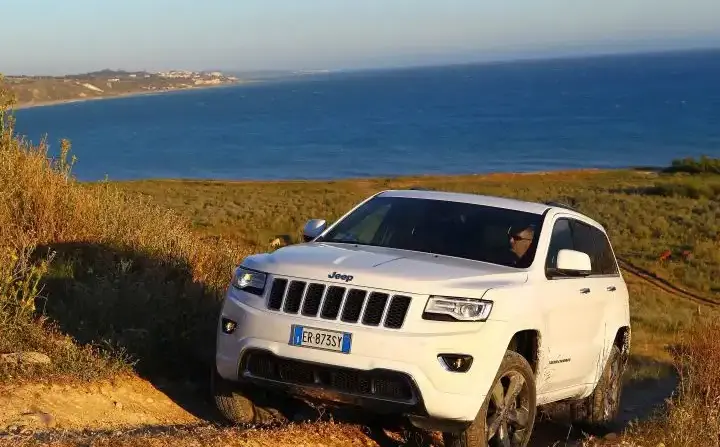
The Jeep Grand Cherokee IV (WK2), specifically the facelifted version produced from 2013 to 2017, offered a 3.0-liter EcoDiesel engine paired with an eight-speed automatic transmission. This variant represented a significant offering for Jeep buyers seeking a balance of capability, fuel efficiency, and refined power in a full-size SUV. Introduced to cater to the growing demand for diesel engines in the North American market, the EcoDiesel Grand Cherokee aimed to provide superior towing capacity and long-distance cruising range compared to its gasoline-powered siblings. This model year saw updates to the exterior styling, interior technology, and powertrain options, solidifying the WK2’s position as a competitive player in the luxury SUV segment.
Technical Specifications
| Brand | Jeep |
| Model | Grand Cherokee |
| Generation | Grand Cherokee IV (WK2, facelift 2013) |
| Type (Engine) | 3.0 EcoDiesel (243 Hp) Automatic |
| Start of production | 2014 |
| End of production | 2017 |
| Powertrain Architecture | Internal Combustion engine |
| Body type | SUV |
| Seats | 5 |
| Doors | 5 |
| Fuel consumption (urban) | 10.7 l/100 km (22 US mpg, 26.4 UK mpg, 9.3 km/l) |
| Fuel consumption (extra urban) | 7.8 l/100 km (30.2 US mpg, 36.2 UK mpg, 12.8 km/l) |
| Fuel consumption (combined) | 9.4 l/100 km (25 US mpg, 30.1 UK mpg, 10.6 km/l) |
| Fuel Type | Diesel |
| Weight-to-power ratio | 9.5 kg/Hp, 105.8 Hp/tonne |
| Weight-to-torque ratio | 4 kg/Nm, 247.7 Nm/tonne |
| Power | 243 Hp @ 4000 rpm |
| Power per litre | 81.4 Hp/l |
| Torque | 569 Nm @ 2000 rpm (419.67 lb.-ft. @ 2000 rpm) |
| Engine layout | Front, Longitudinal |
| Engine Model/Code | EXN |
| Engine displacement | 2987 cm3 (182.28 cu. in.) |
| Number of cylinders | 6 |
| Engine configuration | V-engine |
| Cylinder Bore | 83 mm (3.27 in.) |
| Piston Stroke | 92 mm (3.62 in.) |
| Compression ratio | 15.5:1 |
| Number of valves per cylinder | 4 |
| Fuel injection system | Diesel Commonrail |
| Engine aspiration | Turbocharger, Intercooler |
| Valvetrain | DOHC |
| Engine oil capacity | 8.4 l (8.88 US qt | 7.39 UK qt) |
| Coolant capacity | 13.2 l (13.95 US qt | 11.61 UK qt) |
| Kerb Weight | 2297 kg (5064.02 lbs.) |
| Max. weight | 2948 kg (6499.23 lbs.) |
| Max load | 651 kg (1435.21 lbs.) |
| Fuel tank capacity | 93 l (24.57 US gal | 20.46 UK gal) |
| Permitted trailer load with brakes (12%) | 3357 kg (7400.92 lbs.) |
| Length | 4822 mm (189.84 in.) |
| Width | 1943 mm (76.5 in.) |
| Height | 1761 mm (69.33 in.) |
| Wheelbase | 2915 mm (114.76 in.) |
| Front track | 1623 mm (63.9 in.) |
| Rear track | 1627 mm (64.06 in.) |
| Ride height (ground clearance) | 218 mm (8.58 in.) |
| Drag coefficient (Cd) | 0.37 |
| Minimum turning circle | 11.3 m (37.07 ft.) |
| Approach angle | 26.3° |
| Departure angle | 26.5° |
| Ramp-over angle | 18.8° |
| Drivetrain Architecture | Rear wheel drive |
| Number of gears | 8 |
| Gearbox type | Automatic transmission |
| Front brakes | Ventilated discs |
| Rear brakes | Ventilated discs |
| Assisting systems | ABS (Anti-lock braking system) |
| Steering type | Steering rack and pinion |
| Power steering | Electric |
| Tires size | 265/60 R18 |
| Wheel rims size | 18 |
Powertrain & Engine Architecture
The heart of this Grand Cherokee variant is the 3.0-liter EcoDiesel V6 engine, internally designated as the EXN. This engine is a member of the VM Motori family, an Italian diesel engine manufacturer acquired by Fiat (and subsequently Stellantis). The EXN features a cast iron block, aluminum cylinder heads, and a sophisticated turbocharging system with an intercooler. The engine utilizes a common-rail direct injection system, delivering fuel at extremely high pressures for optimized combustion. The valvetrain employs a Dual Overhead Camshaft (DOHC) design with four valves per cylinder, enhancing volumetric efficiency. The eight-speed automatic transmission, sourced from ZF, was a key component in maximizing fuel economy and providing smooth shifts. This transmission offered a wide gear ratio spread, allowing the engine to operate in its most efficient range across a variety of driving conditions.
Driving Characteristics
The 3.0-liter EcoDiesel Grand Cherokee offered a distinctly different driving experience compared to the gasoline-powered models. While not as overtly powerful as the 5.7L Hemi V8, the EcoDiesel delivered a substantial 569 Nm (419.67 lb-ft) of torque, providing ample pulling power for towing and confident acceleration. The eight-speed automatic transmission was well-tuned, offering smooth and responsive shifts. The gear ratios were optimized for both fuel efficiency and towing capability. In real-world driving, the EcoDiesel Grand Cherokee felt composed and capable, particularly on the highway. The torque curve was relatively flat, providing strong acceleration across a wide RPM range. Compared to the manual transmission options available on other Grand Cherokee trims, the automatic offered a more relaxed and convenient driving experience, albeit with a slight trade-off in driver engagement.
Equipment & Trim Levels
The 3.0 EcoDiesel engine was typically offered on higher trim levels of the Grand Cherokee, such as the Limited and Overland. Standard features included leather upholstery, dual-zone automatic climate control, a touchscreen infotainment system with navigation, and a premium sound system. The Overland trim added features like heated and ventilated front seats, a panoramic sunroof, and advanced safety technologies. Optional extras included air suspension, a rear entertainment system, and various appearance packages. The interior design was generally upscale and well-appointed, reflecting the Grand Cherokee’s positioning as a luxury SUV.
Chassis & Braking
The Grand Cherokee IV (WK2) featured an independent front suspension with coil springs and stabilizer bar, and a multi-link rear suspension. The EcoDiesel models, due to their increased weight, often received slightly stiffer suspension tuning compared to the gasoline-powered versions. Braking duties were handled by ventilated discs on all four wheels, providing ample stopping power. An Anti-lock Braking System (ABS) was standard, enhancing safety and control during emergency braking situations. The steering system utilized an electric power steering rack and pinion, offering precise and responsive steering feel.
Market Reception & Comparison
The 3.0 EcoDiesel Grand Cherokee was generally well-received by critics and consumers alike. It was praised for its fuel efficiency, towing capacity, and refined driving experience. Compared to the gasoline-powered Grand Cherokee models, the EcoDiesel offered significantly better fuel economy, particularly on the highway. However, it was also noted that the EcoDiesel engine was more expensive than the base gasoline engines. In terms of reliability, the EcoDiesel engine initially faced some issues with emissions systems, leading to recalls and warranty repairs. However, these issues were largely addressed in later model years.
Legacy
The 3.0 EcoDiesel engine played a significant role in expanding the Grand Cherokee’s appeal to buyers seeking a fuel-efficient and capable SUV. While the diesel engine option was eventually discontinued in the Grand Cherokee lineup, the EcoDiesel variants remain popular on the used car market. The powertrain, when properly maintained, has proven to be relatively durable, and the combination of fuel efficiency and towing capacity continues to attract buyers. The EcoDiesel Grand Cherokee represents a unique and compelling offering in the full-size SUV segment, blending American capability with European diesel technology.