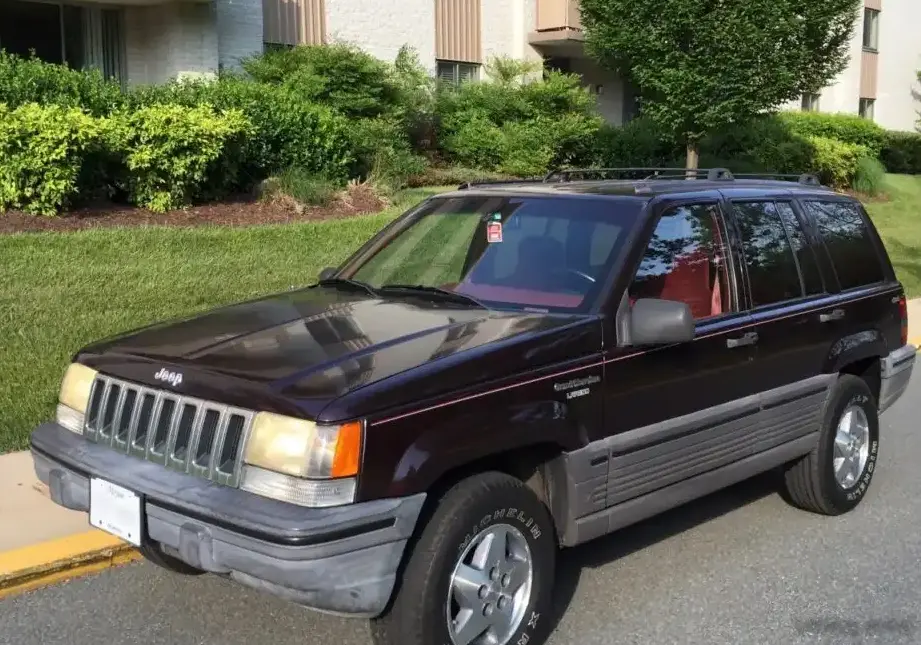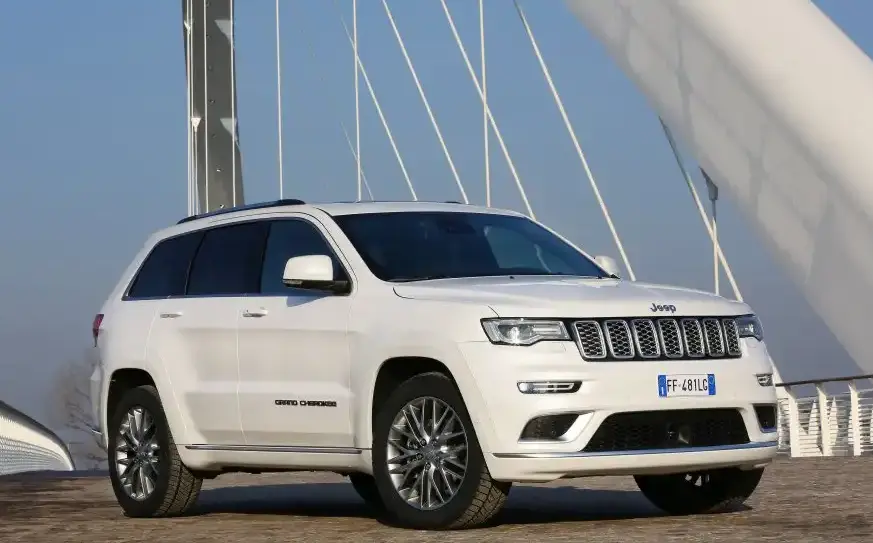
The Jeep Grand Cherokee Trackhawk, specifically the variant produced from 2017 to 2021, represents a high-performance iteration of the fourth-generation Grand Cherokee (WK2) following its facelift. Positioned as the apex predator within the WK2 lineup, the Trackhawk aimed to deliver supercar-level acceleration and off-road capability in a luxury SUV package. It distinguished itself significantly from other Grand Cherokee trims, such as the Limited, Overland, and Summit, and even the SRT model, through its substantially more powerful engine and performance-focused chassis enhancements. The Trackhawk was primarily marketed in North America, with limited availability in other markets.
Technical Specifications
| Brand | Jeep |
| Model | Grand Cherokee |
| Generation | Grand Cherokee IV (WK2, facelift 2017) |
| Type (Engine) | Trackhawk 6.2 V8 (710 Hp) 4×4 Automatic |
| Start of production | 2017 |
| End of production | 2021 |
| Powertrain Architecture | Internal Combustion engine |
| Body type | SUV |
| Seats | 5 |
| Doors | 5 |
| Fuel consumption (economy) – urban (NEDC) | 25.4 l/100 km (9.3 US mpg, 11.1 UK mpg, 3.9 km/l) |
| Fuel consumption (economy) – extra urban (NEDC) | 12.3 l/100 km (19.1 US mpg, 23 UK mpg, 8.1 km/l) |
| Fuel consumption (economy) – combined (NEDC) | 17.1 l/100 km (13.8 US mpg, 16.5 UK mpg, 5.8 km/l) |
| CO2 emissions (NEDC) | 395 g/km |
| Fuel Type | Petrol (Gasoline) |
| Acceleration 0 – 100 km/h | 3.7 sec |
| Acceleration 0 – 62 mph | 3.7 sec |
| Acceleration 0 – 60 mph | 3.5 sec |
| Maximum speed | 289 km/h (179.58 mph) |
| Emission standard | Euro 6d-TEMP |
| Weight-to-power ratio | 3.5 kg/Hp, 289.1 Hp/tonne |
| Weight-to-torque ratio | 2.8 kg/Nm, 353.4 Nm/tonne |
| Power | 710 Hp @ 6000 rpm |
| Power per litre | 115.1 Hp/l |
| Torque | 868 Nm @ 4800 rpm (640.2 lb.-ft. @ 4800 rpm) |
| Engine layout | Front, Longitudinal |
| Engine Model/Code | HEMI / ESD |
| Engine displacement | 6166 cm3 (376.27 cu. in.) |
| Number of cylinders | 8 |
| Engine configuration | V-engine |
| Cylinder Bore | 103.9 mm (4.09 in.) |
| Piston Stroke | 90.9 mm (3.58 in.) |
| Compression ratio | 9.5:1 |
| Number of valves per cylinder | 2 |
| Fuel injection system | Multi-port manifold injection |
| Engine aspiration | Supercharger, Intercooler |
| Valvetrain | OHV |
| Engine oil capacity | 7.8 l (8.24 US qt | 6.86 UK qt) |
| Coolant | 13.9 l (14.69 US qt | 12.23 UK qt) |
| Kerb Weight | 2456-2483 kg (5414.55 – 5474.08 lbs.) |
| Max. weight | 2993 kg (6598.44 lbs.) |
| Max load | 510-537 kg (1124.36 – 1183.88 lbs.) |
| Trunk (boot) space – minimum | 800 l (28.25 cu. ft.) |
| Trunk (boot) space – maximum | 1689 l (59.65 cu. ft.) |
| Fuel tank capacity | 93.1 l (24.59 US gal | 20.48 UK gal) |
| Permitted trailer load with brakes (12%) | 2949 kg (6501.43 lbs.) |
| Permitted trailer load without brakes | 750 kg (1653.47 lbs.) |
| Length | 4846 mm (190.79 in.) |
| Width | 1954 mm (76.93 in.) |
| Width including mirrors | 2154 mm (84.8 in.) |
| Height | 1749 mm (68.86 in.) |
| Wheelbase | 2915 mm (114.76 in.) |
| Front track | 1669 mm (65.71 in.) |
| Rear (Back) track | 1661 mm (65.39 in.) |
| Ride height (ground clearance) | 210 mm (8.27 in.) |
| Drag coefficient (Cd) | 0.37 |
| Minimum turning circle (turning diameter) | 11.6 m (38.06 ft.) |
| Approach angle | 18° |
| Departure angle | 22° |
| Ramp-over (brakeover) angle | 17° |
| Wading depth | 508 mm (20 in.) |
| Drivetrain Architecture | The Internal combustion engine (ICE) drives permanently the four wheels of the vehicle. |
| Drive wheel | All wheel drive (4×4) |
| Number of gears and type of gearbox | 8 gears, automatic transmission |
| Front suspension | Coil spring, Double wishbone, Transverse stabilizer |
| Rear suspension | Independent multi-link spring suspension with stabilizer |
| Front brakes | Ventilated discs, 400×36 mm |
| Rear brakes | Ventilated discs, 350×28 mm |
| Assisting systems | ABS (Anti-lock braking system) |
| Steering type | Steering rack and pinion |
| Power steering | Electric Steering |
| Tires size | 295/45 R20 |
| Wheel rims size | 10J x 20 |
Powertrain & Engine Architecture
The heart of the Trackhawk is the 6.2-liter supercharged HEMI V8 engine, internally designated as the ESD code. This engine produces 710 horsepower at 6,000 rpm and 640 lb.-ft. of torque at 4,800 rpm. The engine utilizes a roots-type supercharger with an integrated intercooler to force air into the cylinders, significantly boosting power output. Fuel delivery is managed by a multi-port fuel injection system. The engine features a cast iron block, forged steel crankshaft, and strengthened connecting rods to handle the increased stresses. The Trackhawk employs an eight-speed automatic transmission, specifically tuned for performance and durability. This transmission features quicker shift times and a lower crawl ratio compared to other Grand Cherokee models.
Driving Characteristics
The Trackhawk delivers astonishing acceleration for a vehicle of its size and weight. Its 0-60 mph time of around 3.5 seconds places it in the same league as many sports cars. The supercharger provides instant throttle response and a broad torque curve, making the vehicle feel incredibly powerful at any speed. While capable on-road, the Trackhawk’s substantial weight and off-road focused suspension tuning result in a less agile feel compared to the SRT model. The eight-speed automatic transmission is generally smooth and responsive, but can occasionally exhibit some hunting for the right gear in certain driving situations.
Equipment & Trim Levels
The Trackhawk came standard with a comprehensive list of features, including leather upholstery, heated and ventilated front seats, a premium sound system, a large touchscreen infotainment system with navigation, and a suite of advanced safety technologies. Unique Trackhawk-specific interior touches included performance-inspired badging and distinctive interior trim. Optional extras included a dual-pane panoramic sunroof, rear-seat entertainment system, and various appearance packages.
Chassis & Braking
The Trackhawk’s chassis was heavily modified to handle the increased power. It features upgraded suspension components, including stiffer springs, adaptive damping, and reinforced sway bars. The braking system was also significantly enhanced, featuring massive Brembo six-piston front calipers and four-piston rear calipers, paired with large ventilated rotors (400x36mm front, 350x28mm rear). These brakes provide exceptional stopping power and resistance to fade. The Trackhawk also features a selectable terrain management system, allowing drivers to optimize the vehicle’s settings for various driving conditions, including snow, sand, and mud.
Market Reception & Comparison
The Jeep Grand Cherokee Trackhawk received generally positive reviews from automotive critics. It was praised for its incredible performance, luxurious interior, and surprising off-road capability. However, its high fuel consumption and substantial weight were also noted as drawbacks. Compared to the Grand Cherokee SRT, the Trackhawk offered significantly more power and a more aggressive performance character. Compared to other high-performance SUVs, such as the Porsche Cayenne Turbo, the Trackhawk offered a unique combination of performance, luxury, and off-road capability at a competitive price point.
Legacy
The Jeep Grand Cherokee Trackhawk remains a highly sought-after vehicle in the used car market. Its limited production run and unique performance characteristics have made it a collector’s item. While the supercharged 6.2-liter HEMI engine is generally reliable, regular maintenance is crucial to ensure its longevity. Common issues reported by owners include occasional sensor failures and potential oil leaks. The Trackhawk’s robust drivetrain and braking system have proven to be durable, even under demanding conditions. The Trackhawk paved the way for future high-performance Jeep models and solidified the Grand Cherokee’s reputation as a capable and versatile SUV.