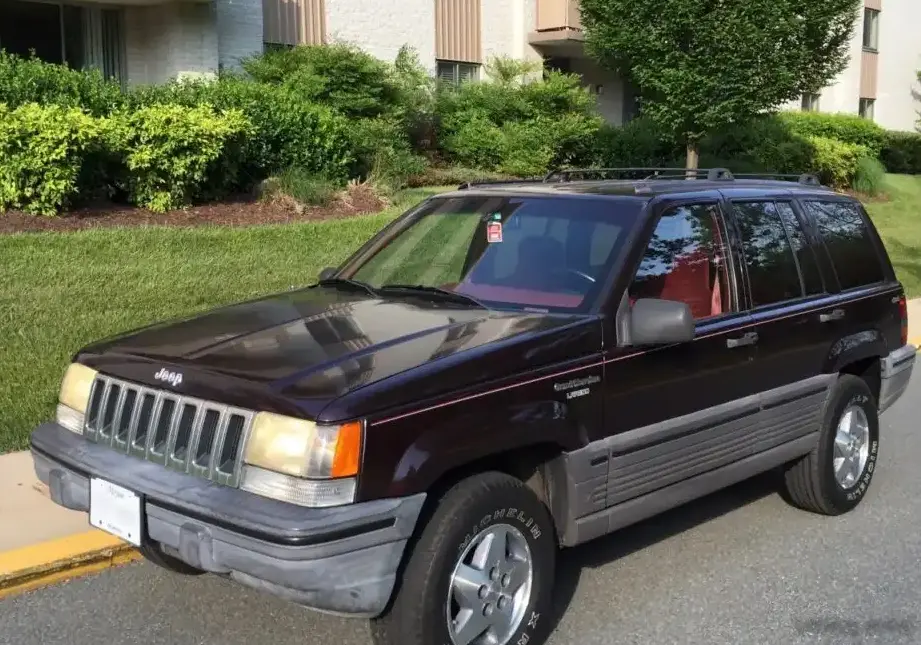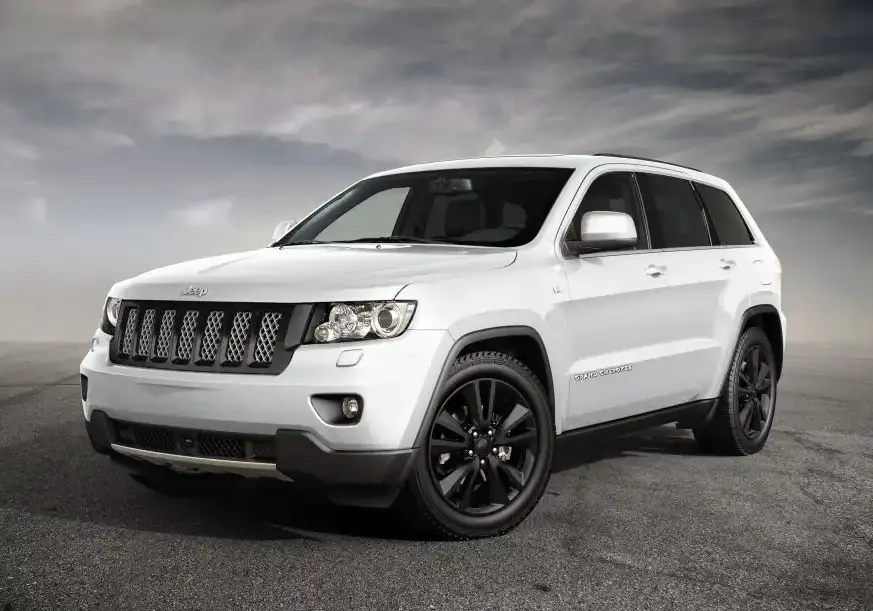
The Jeep Grand Cherokee SRT8, produced between 2011 and 2013 as part of the WK2 generation, represented the high-performance variant of the popular SUV. Positioned as the flagship model, it aimed to blend the Grand Cherokee’s practicality and luxury with the performance characteristics of a muscle car. This specific configuration featured a 6.4-liter HEMI V8 engine paired with a five-speed automatic transmission and a full-time four-wheel-drive system. The SRT8 filled the gap between the more mainstream Grand Cherokee trims and the even more focused Trackhawk model that would arrive later.
Technical Specifications
| Brand | Jeep |
| Model | Grand Cherokee |
| Generation | Grand Cherokee IV (WK2) |
| Type | SRT8 6.4 V8 (472 Hp) 4×4 Automatic |
| Start of production | 2011 |
| End of production | 2013 |
| Powertrain Architecture | Internal Combustion engine |
| Body type | SUV |
| Seats | 5 |
| Doors | 5 |
| Fuel consumption (urban) | 19.6 l/100 km (12 US mpg, 14.4 UK mpg, 5.1 km/l) |
| Fuel consumption (extra urban) | 13.1 l/100 km (18 US mpg, 21.6 UK mpg, 7.6 km/l) |
| Fuel consumption (combined) | 16.8 l/100 km (14 US mpg, 16.8 UK mpg, 6 km/l) |
| Fuel Type | Petrol (Gasoline) |
| Acceleration 0 – 100 km/h | 5 sec |
| Acceleration 0 – 62 mph | 5 sec |
| Acceleration 0 – 60 mph | 4.8 sec |
| Maximum speed | 257 km/h (159.69 mph) |
| Emission standard | Euro 5 |
| Weight-to-power ratio | 4.9 kg/Hp, 202.1 Hp/tonne |
| Weight-to-torque ratio | 3.7 kg/Nm, 267.1 Nm/tonne |
| Power | 472 Hp @ 6000 rpm |
| Power per litre | 73.6 Hp/l |
| Torque | 624 Nm @ 4200 rpm (460.24 lb.-ft. @ 4200 rpm) |
| Engine layout | Front, Longitudinal |
| Engine Model/Code | ESG |
| Engine displacement | 6417 cm3 (391.59 cu. in.) |
| Number of cylinders | 8 |
| Engine configuration | V-engine |
| Cylinder Bore | 103.9 mm (4.09 in.) |
| Piston Stroke | 94.5 mm (3.72 in.) |
| Compression ratio | 10.9:1 |
| Number of valves per cylinder | 2 |
| Fuel injection system | Multi-port manifold injection |
| Engine aspiration | Naturally aspirated engine |
| Valvetrain | OHV |
| Engine oil capacity | 6.6 l (6.97 US qt | 5.81 UK qt) |
| Coolant | 15.5 l (16.38 US qt | 13.64 UK qt) |
| Kerb Weight | 2336 kg (5150 lbs.) |
| Max. weight | 2948 kg (6499.23 lbs.) |
| Max load | 612 kg (1349.23 lbs.) |
| Fuel tank capacity | 93 l (24.57 US gal | 20.46 UK gal) |
| Length | 4859 mm (191.3 in.) |
| Width | 1958 mm (77.09 in.) |
| Width including mirrors | 2156 mm (84.88 in.) |
| Height | 1756 mm (69.13 in.) |
| Wheelbase | 2915 mm (114.76 in.) |
| Front track | 1617 mm (63.66 in.) |
| Rear track | 1633 mm (64.29 in.) |
| Ride height (ground clearance) | 211 mm (8.31 in.) |
| Drag coefficient (Cd) | 0.39 |
| Minimum turning circle | 11.3 m (37.07 ft.) |
| Approach angle | 18.45° |
| Departure angle | 21.9° |
| Ramp-over angle | 17.84° |
| Drive wheel | All wheel drive (4×4) |
| Number of gears | 5 |
| Gearbox type | automatic transmission |
| Front brakes | Ventilated discs |
| Rear brakes | Ventilated discs |
| Assisting systems | ABS (Anti-lock braking system) |
| Steering type | Steering rack and pinion |
| Tires size | 295/45 R20 |
| Wheel rims size | 20 |
INTRODUCTION
The 2011-2013 Jeep Grand Cherokee SRT8 (WK2) was a performance-oriented version of the fourth-generation Grand Cherokee. Built on the 1HX0/A3 platform, it aimed to deliver a compelling combination of luxury, capability, and outright speed. It was a significant step up from the standard Grand Cherokee models, offering a more aggressive aesthetic and substantially increased performance. The SRT8 was positioned as a competitor to high-performance SUVs from European manufacturers, such as the Porsche Cayenne and BMW X5 M.
Powertrain & Engine Architecture
At the heart of the SRT8 was the 6.4-liter (392 cubic inch) HEMI V8 engine, internally designated as the ESG. This engine featured a cast iron block, aluminum cylinder heads, and a multi-point fuel injection system. The engine produced 472 horsepower at 6,000 rpm and 460 lb-ft of torque at 4,200 rpm. The valvetrain utilized an overhead valve (OHV) configuration with two valves per cylinder. The engine’s design prioritized low-end torque for strong acceleration. The five-speed automatic transmission (545RFE) was specifically tuned for performance, with quicker shift times and a more aggressive shift strategy. The transmission was designed to handle the engine’s substantial output and deliver power effectively to all four wheels through Jeep’s Quadra-Trac II four-wheel-drive system.
Driving Characteristics
The SRT8 offered a noticeably different driving experience compared to other Grand Cherokee trims. The 6.4-liter V8 provided strong and immediate acceleration, allowing for a 0-60 mph time of around 4.8 seconds. The five-speed automatic transmission, while not as sophisticated as some newer transmissions with more gears, was well-matched to the engine’s characteristics. Gear ratios were optimized for both acceleration and highway cruising. The Quadra-Trac II system provided excellent traction in various conditions, and the SRT8’s suspension was tuned for improved handling and reduced body roll. While comfortable enough for daily driving, the SRT8’s suspension was firmer than that of the standard Grand Cherokee, resulting in a more connected feel to the road. Compared to the later Trackhawk model with its supercharged engine, the SRT8 offered a more linear power delivery and a slightly more refined driving experience.
Equipment & Trim Levels
The SRT8 came standard with a comprehensive list of features, including leather upholstery, heated and ventilated front seats, a premium sound system, and a navigation system. Exterior features included unique SRT badging, a distinctive front fascia with a black mesh grille, and 20-inch alloy wheels. Optional extras included a dual-pane sunroof, adaptive cruise control, and a rear entertainment system. The interior typically featured a combination of black and red leather, emphasizing the vehicle’s performance-oriented nature. The SRT8 trim was essentially fully loaded, with few standalone options available.
Chassis & Braking
The SRT8 featured a modified chassis with stiffer springs and dampers compared to other Grand Cherokee models. The suspension geometry was also tweaked to improve handling. Brakes consisted of ventilated discs at all four corners, with larger rotors and upgraded calipers compared to the standard Grand Cherokee. An Anti-lock Braking System (ABS) was standard. The SRT8 also featured a slightly lowered ride height, further contributing to its improved handling characteristics. Stabilizer bars were thicker than those found on other trims, reducing body roll during cornering.
Market Reception & Comparison
The Jeep Grand Cherokee SRT8 was generally well-received by automotive critics. It was praised for its powerful engine, comfortable interior, and surprisingly agile handling for a large SUV. However, some critics noted that the five-speed automatic transmission felt dated compared to newer transmissions with more gears. Fuel economy was also a common criticism, with the SRT8 achieving relatively low mpg figures. Compared to the 1.8L automatic Grand Cherokees, the SRT8 was in a completely different league in terms of performance and price. The 1.8L models were aimed at budget-conscious buyers prioritizing fuel efficiency and practicality, while the SRT8 targeted enthusiasts seeking a high-performance SUV. The SRT8 also offered a more luxurious and well-equipped interior than the base models.
Legacy
The 2011-2013 Jeep Grand Cherokee SRT8 remains a popular choice among enthusiasts seeking a powerful and capable SUV. The 6.4-liter HEMI V8 engine is known for its reliability and durability, although regular maintenance is essential. The five-speed automatic transmission has proven to be generally reliable as well. On the used car market, SRT8 models typically command a premium price compared to other Grand Cherokee trims. The SRT8 paved the way for the even more extreme Trackhawk model, solidifying Jeep’s position in the high-performance SUV segment. Its blend of power, luxury, and capability continues to appeal to a wide range of buyers.