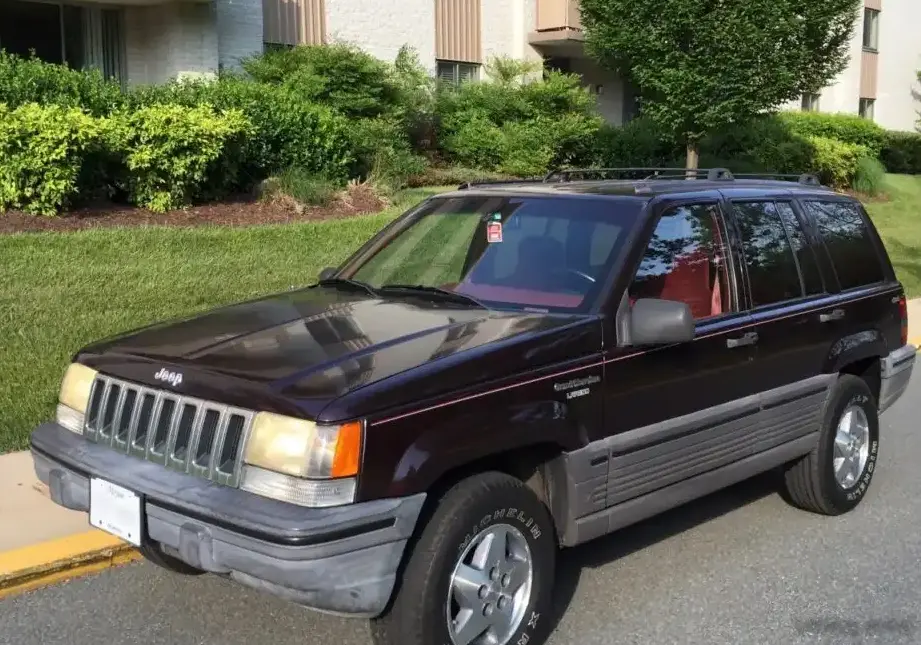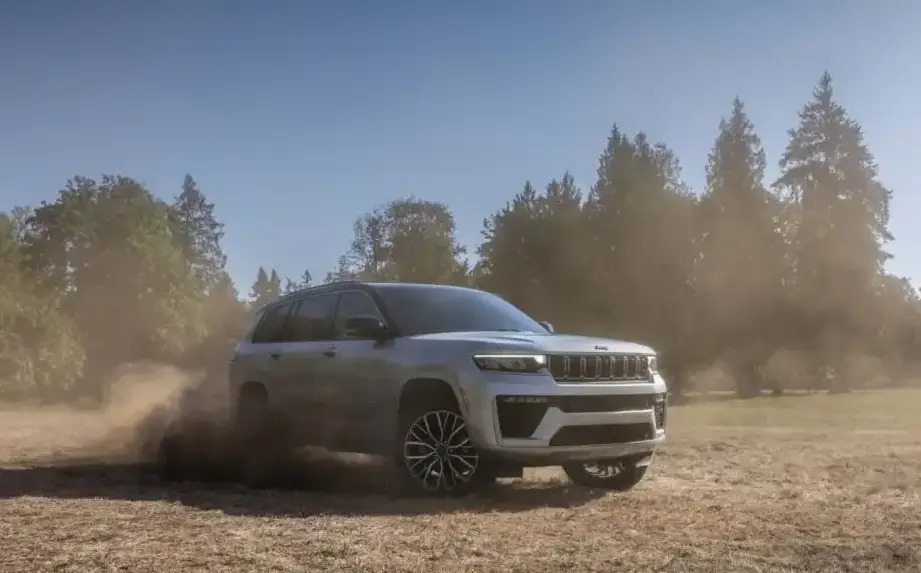
The Jeep Grand Cherokee L V (WL), specifically the facelift model introduced in late 2025, represents the latest iteration of Jeep’s flagship three-row SUV. This variant, powered by a 2.0-liter turbocharged inline-four engine producing 324 horsepower and paired with a TorqueFlite eight-speed automatic transmission, occupies a key position in the Grand Cherokee L lineup, offering a balance between performance, fuel efficiency, and capability. Production commenced in October 2025, aiming to cater to buyers seeking a more economical option within the premium SUV segment while retaining the Grand Cherokee’s renowned off-road heritage.
Technical Specifications
| Brand | Jeep |
| Model | Grand Cherokee |
| Generation | Grand Cherokee L V (WL, facelift 2025) |
| Type (Engine) | 2.0 Turbo (324 Hp) TorqueFlite |
| Start of production | October, 2025 |
| Powertrain Architecture | Internal Combustion engine |
| Body type | SUV |
| Seats | 7 |
| Doors | 5 |
| Fuel Type | Petrol (Gasoline) |
| Power | 324 Hp @ 6000 rpm |
| Power per litre | 162.4 Hp/l |
| Torque | 450 Nm @ 3000-4500 rpm |
| Torque (lb-ft) | 331.9 lb.-ft. @ 3000-4500 rpm |
| Maximum engine speed | 6500 rpm |
| Engine layout | Front, Longitudinal |
| Engine Model/Code | Hurricane |
| Engine displacement | 1995 cm3 |
| Engine displacement (cu. in.) | 121.74 cu. in. |
| Number of cylinders | 4 |
| Engine configuration | Inline |
| Cylinder Bore | 84 mm |
| Cylinder Bore (in.) | 3.31 in. |
| Piston Stroke | 90 mm |
| Piston Stroke (in.) | 3.54 in. |
| Compression ratio | 12:1 |
| Number of valves per cylinder | 4 |
| Fuel injection system | Direct injection and Multi-port manifold injection |
| Engine aspiration | Turbocharger, Intercooler |
| Valvetrain | DOHC |
| Engine oil capacity | 4.7 l |
| Engine oil capacity (US qt/UK qt) | 4.97 US qt | 4.14 UK qt |
| Coolant capacity | 10 l |
| Coolant capacity (US qt/UK qt) | 10.57 US qt | 8.8 UK qt |
| Trunk (boot) space – minimum | 487 l |
| Trunk (boot) space – minimum (cu. ft.) | 17.2 cu. ft. |
| Trunk (boot) space – maximum | 2396 l |
| Trunk (boot) space – maximum (cu. ft.) | 84.61 cu. ft. |
| Fuel tank capacity | 87 l |
| Fuel tank capacity (US gal/UK gal) | 22.98 US gal | 19.14 UK gal |
| Permitted trailer load with brakes (12%) | 2818 kg |
| Permitted trailer load with brakes (lbs) | 6212.63 lbs. |
| Length | 5204 mm |
| Length (in.) | 204.88 in. |
| Width | 1968 mm |
| Width (in.) | 77.48 in. |
| Width with mirrors folded | 1968 mm |
| Width with mirrors folded (in.) | 77.48 in. |
| Width including mirrors | 2149 mm |
| Width including mirrors (in.) | 84.61 in. |
| Height | 1815-1817 mm |
| Height (in.) | 71.46 – 71.54 in. |
| Wheelbase | 3091 mm |
| Wheelbase (in.) | 121.69 in. |
| Front track | 1660 mm |
| Front track (in.) | 65.35 in. |
| Rear (Back) track | 1660 mm |
| Rear (Back) track (in.) | 65.35 in. |
| Drag coefficient (Cd) | 0.357 |
| Minimum turning circle (turning diameter) | 12.1 m |
| Minimum turning circle (turning diameter) (ft) | 39.7 ft. |
| Approach angle | 20.6-28.2° |
| Departure angle | 21.5-23.6° |
| Ramp-over (brakeover) angle | 18.2-22.6° |
| Drivetrain Architecture | The Internal combustion engine (ICE) drives the rear wheels of the vehicle. |
| Drive wheel | Rear wheel drive |
| Number of gears and type of gearbox | 8 gears, automatic transmission TorqueFlite |
| Front suspension | Coil spring, Independent multi-link suspension, Transverse stabilizer, Air Suspension – Optional |
| Rear suspension | Independent multi-link spring suspension with stabilizer, Air Suspension – Optional |
| Front brakes | Ventilated discs, 354×28 mm |
| Rear brakes | Ventilated discs, 350×22 mm |
| Assisting systems | ABS (Anti-lock braking system) |
| Steering type | Steering rack and pinion |
| Power steering | Electric Steering |
| Tires size | 265/60 R18; 265/50 R20; 275/45 R21 |
| Wheel rims size | 8J x 18; 8.5J x 20; 9J x 21 |
Powertrain & Engine Architecture
The heart of this Grand Cherokee L variant is the Hurricane 2.0-liter turbocharged inline-four engine. This engine utilizes a combination of direct injection and multi-port fuel injection, optimizing both power delivery and fuel efficiency. The engine boasts a relatively high compression ratio of 12:1, contributing to its thermal efficiency. The turbocharger, coupled with an intercooler, provides increased air density for enhanced combustion. The engine is longitudinally mounted within the chassis, driving the rear wheels through the TorqueFlite eight-speed automatic transmission. This transmission is known for its smooth shifts and optimized gear ratios for both acceleration and highway cruising. The TorqueFlite transmission is a staple in Chrysler/Jeep vehicles, known for its durability and responsiveness.
Driving Characteristics
The 2.0-liter turbo engine delivers a respectable 324 horsepower, providing adequate acceleration for everyday driving and highway merging. While not as potent as the V6 or V8 options available in the Grand Cherokee L lineup, this variant offers a more refined and fuel-efficient driving experience. The eight-speed automatic transmission is well-tuned, providing smooth and timely gear changes. The gear ratios are optimized for both acceleration and fuel economy, with a taller final drive ratio contributing to lower engine speeds at highway speeds. Compared to manual transmission options (not offered with this engine), the automatic provides convenience and ease of use, particularly in urban environments. The rear-wheel-drive configuration contributes to a balanced feel, although all-wheel drive is available as an option for enhanced traction.
Equipment & Trim Levels
The 2.0-liter Turbo TorqueFlite trim typically falls within the mid-range of the Grand Cherokee L lineup. Standard features generally include premium cloth upholstery, a user-friendly infotainment system with a large touchscreen display, Apple CarPlay and Android Auto compatibility, and a suite of advanced driver-assistance systems (ADAS) such as adaptive cruise control, lane departure warning, and automatic emergency braking. Optional extras often include leather upholstery, a panoramic sunroof, a premium sound system, and upgraded wheels. The interior design emphasizes comfort and functionality, with ample space for passengers and cargo.
Chassis & Braking
The Grand Cherokee L features a robust chassis designed to handle the vehicle’s weight and provide a comfortable ride. The front suspension utilizes an independent multi-link setup with coil springs and a transverse stabilizer bar. The rear suspension also employs an independent multi-link design with coil springs and a stabilizer bar. Air suspension is available as an optional upgrade, providing adjustable ride height and enhanced comfort. The braking system consists of ventilated discs on all four wheels, with larger front discs (354×28 mm) compared to the rear (350×22 mm). The anti-lock braking system (ABS) is standard, ensuring optimal braking performance in various conditions.
Market Reception & Comparison
The 2.0-liter Turbo TorqueFlite Grand Cherokee L has been generally well-received by critics as a practical and efficient option within the luxury SUV segment. It offers a compelling alternative to competitors with similar powertrains, such as the Acura MDX or the BMW X5. Fuel economy is a key advantage, typically exceeding that of V6-powered rivals. Reliability has been generally good, with the Hurricane engine proving to be a durable and dependable unit. However, some reviewers have noted that the 2.0-liter engine may feel underpowered when fully loaded or when towing. Compared to the V6 and V8 options, this variant offers a more affordable entry point into the Grand Cherokee L family.
Legacy
The 2.0-liter Hurricane engine and TorqueFlite transmission combination represents a significant step towards greater fuel efficiency and reduced emissions in the large SUV segment. While still relatively new to the market, early indications suggest that this powertrain is proving to be reliable and durable. As the Grand Cherokee L continues to evolve, this variant is likely to remain a popular choice for buyers seeking a balance between performance, efficiency, and capability. On the used car market, these models are expected to hold their value well, particularly those with well-maintained service records and low mileage.