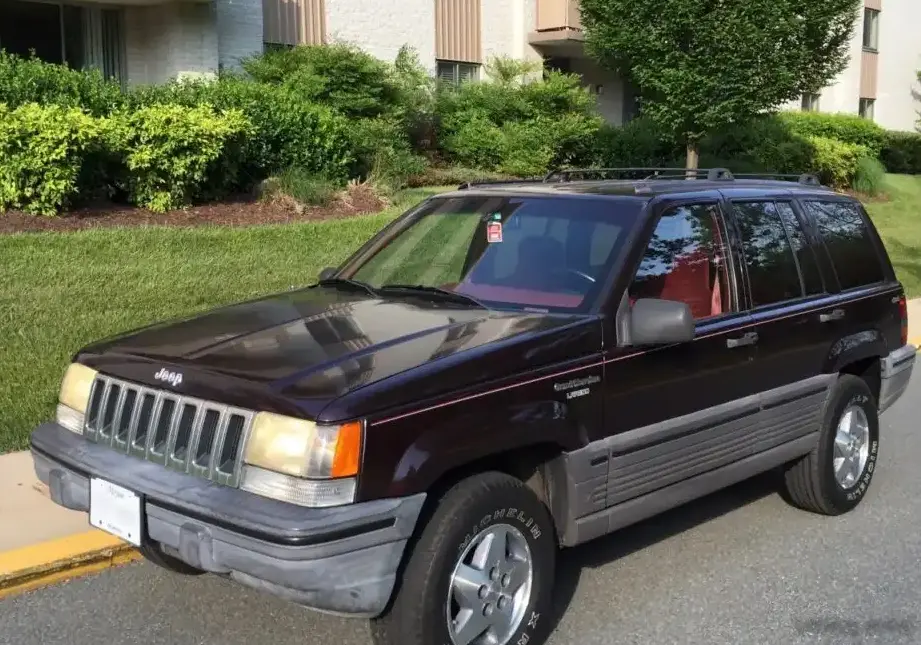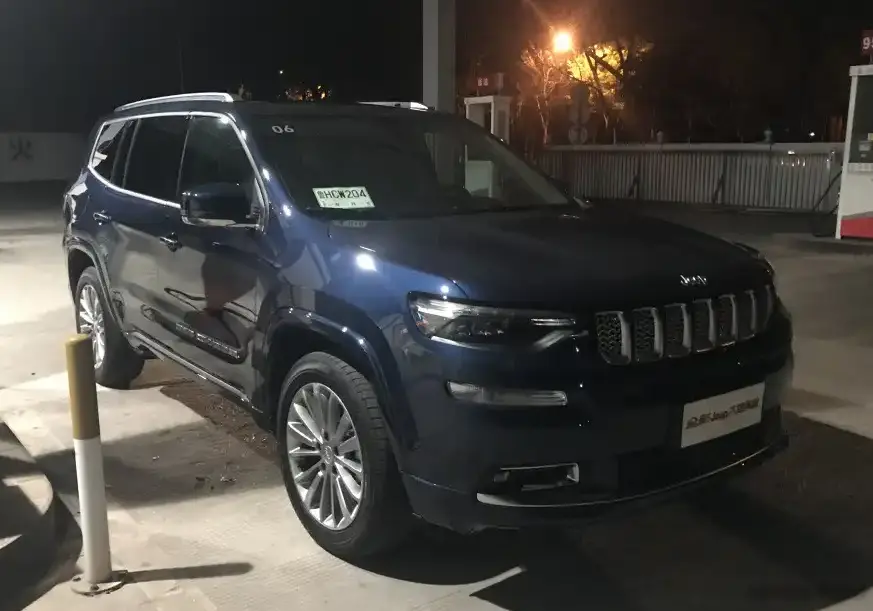
The Jeep Grand Commander 2.0T AWD Automatic, produced from April 2018 to February 2022, represents Jeep’s entry into the three-row mid-size SUV segment, primarily targeted towards markets outside of North America. This variant, equipped with a turbocharged 2.0-liter inline-four engine and a nine-speed automatic transmission, served as a key offering within the Grand Commander lineup, positioned as a balance between performance, fuel efficiency, and affordability. It aimed to provide a more accessible price point compared to larger, more powerful Jeep models while still delivering the brand’s renowned off-road capability and spacious interior.
Technical Specifications
| Brand | Jeep |
| Model | Grand Commander |
| Generation | Grand Commander |
| Type (Engine) | 2.0 T (234 Hp) AWD Automatic |
| Start of production | April, 2018 |
| End of production | February, 2022 |
| Powertrain Architecture | Internal Combustion engine |
| Body type | SUV |
| Seats | 7 |
| Doors | 5 |
| Fuel consumption (economy) – combined | 8.4 l/100 km |
| Fuel consumption (economy) – combined (US mpg) | 28 US mpg |
| Fuel consumption (economy) – combined (UK mpg) | 33.6 UK mpg |
| Fuel consumption (economy) – combined (km/l) | 11.9 km/l |
| Fuel Type | Petrol (Gasoline) |
| Weight-to-power ratio | 8.1 kg/Hp |
| Weight-to-power ratio (alternative) | 124.1 Hp/tonne |
| Weight-to-torque ratio | 5.4 kg/Nm |
| Weight-to-torque ratio (alternative) | 185.7 Nm/tonne |
| Power | 234 Hp @ 5000 rpm |
| Power per litre | 117.3 Hp/l |
| Torque | 350 Nm @ 2500-4500 rpm |
| Torque (lb.-ft.) | 258.15 lb.-ft. @ 2500-4500 rpm |
| Engine displacement | 1995 cm3 |
| Engine displacement (cu. in.) | 121.74 cu. in. |
| Number of cylinders | 4 |
| Engine configuration | Inline |
| Compression ratio | 10:1 |
| Fuel injection system | Direct injection |
| Engine aspiration | Turbocharger, Intercooler |
| Valvetrain | DOHC |
| Kerb Weight | 1885 kg |
| Kerb Weight (lbs.) | 4155.71 lbs. |
| Fuel tank capacity | 70 l |
| Fuel tank capacity (US gal) | 18.49 US gal |
| Fuel tank capacity (UK gal) | 15.4 UK gal |
| Length | 4873 mm |
| Length (in.) | 191.85 in. |
| Width | 1892 mm |
| Width (in.) | 74.49 in. |
| Height | 1738 mm |
| Height (in.) | 68.43 in. |
| Wheelbase | 2800 mm |
| Wheelbase (in.) | 110.24 in. |
| Drive wheel | All wheel drive (4×4) |
| Number of gears and type of gearbox | 9 gears, automatic transmission tiptronic |
| Front suspension | Independent type McPherson |
| Rear suspension | Independent multi-link suspension |
| Front brakes | Disc |
| Rear brakes | Disc |
| Assisting systems | ABS (Anti-lock braking system) |
| Tires size | 235/60 R18 |
| Wheel rims size | 18 |
Powertrain & Engine Architecture
The heart of the Grand Commander 2.0T is the GDE (Global Diesel Engines) 2.0-liter turbocharged inline-four engine. While originally developed for diesel applications, this engine family was adapted for gasoline use. The engine utilizes direct fuel injection, a single-scroll turbocharger with an intercooler, and a dual overhead camshaft (DOHC) valvetrain with variable valve timing. This configuration allows for a broad torque curve and responsive power delivery. The engine code is often associated with variations like the 270, depending on specific market calibrations. The nine-speed automatic transmission, sourced from ZF (9HP48), is a crucial component of this powertrain. It offers a wide gear ratio spread, contributing to both fuel efficiency and acceleration. The ‘tiptronic’ function allows for manual gear selection, providing drivers with more control when desired.
Driving Characteristics
The 234 horsepower and 350 Nm (258 lb-ft) of torque delivered by the 2.0T engine provide adequate performance for everyday driving and highway cruising. While not as quick as the V6 options available in some markets, the 2.0T offers a smooth and refined driving experience. The nine-speed automatic transmission generally shifts smoothly, although some drivers have reported occasional hesitation at lower speeds. The all-wheel-drive system provides enhanced traction in various weather conditions and on moderately challenging terrain. The gear ratios are tuned for a balance between acceleration and fuel economy, with taller gears for highway efficiency and shorter gears for quicker response. Compared to potential higher-output versions, this variant prioritizes fuel efficiency and a more relaxed driving experience.
Equipment & Trim Levels
The Grand Commander 2.0T typically came equipped with a respectable level of standard features. These generally included automatic climate control, a touchscreen infotainment system with Apple CarPlay and Android Auto compatibility, keyless entry, and a rearview camera. Higher trim levels added features such as leather upholstery, a panoramic sunroof, heated and ventilated front seats, and advanced driver-assistance systems (ADAS) like adaptive cruise control and lane departure warning. Interior upholstery options ranged from cloth to leather, and dashboard configurations varied depending on the trim level. Optional extras often included a premium sound system, navigation, and various cosmetic enhancements.
Chassis & Braking
The Grand Commander utilizes an independent suspension setup at all four corners, with McPherson struts at the front and a multi-link suspension at the rear. This configuration provides a comfortable ride and good handling characteristics. The braking system consists of disc brakes on all four wheels, providing adequate stopping power. Anti-lock braking system (ABS) is standard. Stabilizer bars are fitted to both the front and rear axles to reduce body roll during cornering. The suspension tuning is geared towards comfort and stability, rather than outright sportiness.
Market Reception & Comparison
The Jeep Grand Commander 2.0T was generally well-received in markets where it was offered, particularly as a more affordable alternative to larger SUVs. Critics praised its spacious interior, comfortable ride, and available features. However, some reviewers noted that the 2.0-liter engine could feel underpowered when fully loaded or when tackling steep inclines. Compared to other trims in the lineup, the 2.0T offered a better fuel economy figure, making it an attractive option for drivers prioritizing efficiency. Reliability reports have been generally positive, with no major recurring issues reported specifically for this powertrain.
Legacy
The Jeep Grand Commander 2.0T AWD Automatic, while not widely available in all markets, established itself as a capable and practical mid-size SUV. The 2.0-liter turbocharged engine, coupled with the nine-speed automatic transmission, proved to be a reliable and efficient powertrain. In the used car market, these models represent a good value proposition, offering a spacious interior, all-wheel-drive capability, and a reasonable level of features at a competitive price point. Its long-term reliability appears solid, making it a viable option for buyers seeking a dependable family SUV.