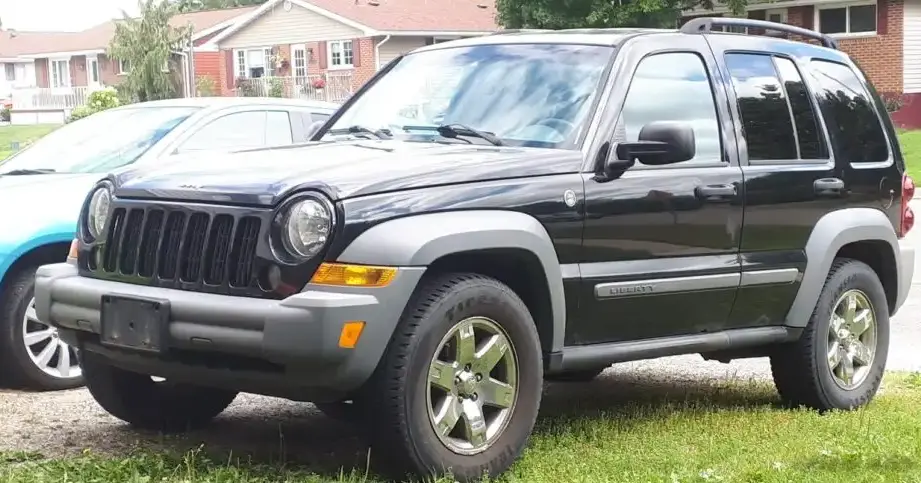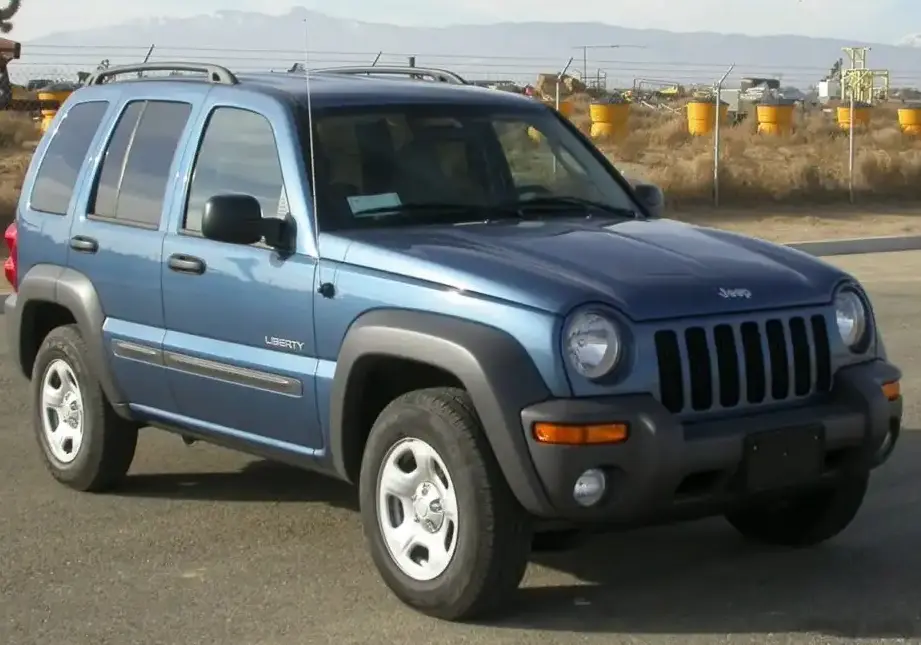
The Jeep Liberty I 2.4 16V 4WD, produced from 2001 to 2004, represented Jeep’s entry into the increasingly popular compact sport utility vehicle (SUV) segment. Positioned as a more affordable and accessible alternative to the larger Jeep Cherokee, the Liberty aimed to attract buyers seeking a blend of off-road capability and on-road comfort. This particular variant, equipped with the 2.4-liter inline-four engine and a six-speed manual transmission, served as the base model for the Liberty lineup in many markets, offering a balance between fuel efficiency and reasonable performance. It was part of the first generation (KJ) Liberty, built on the Jeep’s shared platform with the Dodge Nitro.
Technical Specifications
| Brand | Jeep |
| Model | Liberty |
| Generation | Liberty I |
| Type (Engine) | 2.4 16V (150 Hp) 4WD |
| Start of production | 2001 |
| End of production | 2004 |
| Powertrain Architecture | Internal Combustion engine |
| Body type | SUV |
| Seats | 5 |
| Doors | 5 |
| Fuel Type | Petrol (Gasoline) |
| Weight-to-power ratio | 11.2 kg/Hp, 89.6 Hp/tonne |
| Weight-to-torque ratio | 7.5 kg/Nm, 133.7 Nm/tonne |
| Power | 150 Hp @ 5200 rpm |
| Power per litre | 61.8 Hp/l |
| Torque | 224 Nm @ 4000 rpm (165.21 lb.-ft. @ 4000 rpm) |
| Engine layout | Front, Longitudinal |
| Engine Model/Code | ED1 |
| Engine displacement | 2429 cm3 (148.23 cu. in.) |
| Number of cylinders | 4 |
| Engine configuration | Inline |
| Cylinder Bore | 87.5 mm (3.44 in.) |
| Piston Stroke | 101 mm (3.98 in.) |
| Compression ratio | 9.4:1 |
| Number of valves per cylinder | 4 |
| Fuel injection system | Multi-port manifold injection |
| Engine aspiration | Naturally aspirated engine |
| Valvetrain | DOHC |
| Engine oil capacity | 4.7 l (4.97 US qt | 4.14 UK qt) |
| Coolant | 9.5 l (10.04 US qt | 8.36 UK qt) |
| Kerb Weight | 1675 kg (3692.74 lbs.) |
| Max. weight | 2359 kg (5200.7 lbs.) |
| Max load | 684 kg (1507.96 lbs.) |
| Trunk (boot) space – minimum | 821 l (28.99 cu. ft.) |
| Trunk (boot) space – maximum | 1954 l (69 cu. ft.) |
| Fuel tank capacity | 74 l (19.55 US gal | 16.28 UK gal) |
| Permitted trailer load with brakes (12%) | 907 kg (1999.59 lbs.) |
| Length | 4437 mm (174.69 in.) |
| Width | 1819 mm (71.61 in.) |
| Height | 1783 mm (70.2 in.) |
| Wheelbase | 2647 mm (104.21 in.) |
| Front track | 1524 mm (60 in.) |
| Rear (Back) track | 1516 mm (59.69 in.) |
| Front overhang | 734 mm (28.9 in.) |
| Rear overhang | 1052 mm (41.42 in.) |
| Ride height (ground clearance) | 226 mm (8.9 in.) |
| Minimum turning circle (turning diameter) | 10.9 m (35.76 ft.) |
| Approach angle | 35.3° |
| Departure angle | 31° |
| Ramp-over (brakeover) angle | 21° |
| Drivetrain Architecture | The Internal combustion engine (ICE) drives the rear wheels permanently, and the front wheels are driven through an electrically or mechanically operated clutch if necessary. |
| Drive wheel | All wheel drive (4×4) |
| Number of gears and type of gearbox | 6 gears, manual transmission |
| Front suspension | Independent coil spring, Transverse stabilizer |
| Rear suspension | Rigid axle suspension, Transverse stabilizer, Coil spring |
| Front brakes | Ventilated discs, 287.02 mm |
| Rear brakes | Disc, 284.48×12.7 mm |
| Steering type | Steering rack and pinion |
| Tires size | 235/70 R16 |
| Wheel rims size | 7J x 16 |
Powertrain & Engine Architecture
The heart of this Liberty variant is the ED1 engine, a 2.4-liter inline-four cylinder gasoline engine. This engine utilized a multi-port fuel injection system, delivering fuel directly into the intake ports just before the intake valves. The engine featured a double overhead camshaft (DOHC) valvetrain, operating four valves per cylinder, which helped optimize airflow and improve volumetric efficiency. The 9.4:1 compression ratio was a compromise between performance and the ability to run on readily available fuel grades. The six-speed manual transmission provided a wider range of gear ratios compared to the available automatic options, allowing for better control and potentially improved fuel economy. The 4WD system was a part-time system, engaging the front wheels when traction was needed, offering a true four-wheel-drive capability for off-road situations.
Driving Characteristics
The 150 horsepower and 224 Nm (165 lb-ft) of torque produced by the 2.4-liter engine, coupled with the six-speed manual transmission, resulted in adequate, but not exhilarating, performance. Acceleration was modest, with a 0-60 mph time estimated around 10-11 seconds. The manual transmission allowed drivers to keep the engine in its optimal power band, improving responsiveness. Compared to the optional 3.7-liter V6 engine, the 2.4-liter offered significantly less power, but also better fuel economy. The six-speed manual transmission provided a more engaging driving experience than the available automatic, offering greater control and allowing the driver to maximize the engine’s potential. The 4WD system provided enhanced traction in slippery conditions, making it suitable for light off-roading and inclement weather.
Equipment & Trim Levels
The base 2.4-liter Liberty typically came standard with features such as air conditioning, power windows and locks, and an AM/FM radio. Interior upholstery was typically cloth, and the dashboard featured a relatively simple design. Optional extras included a CD player, upgraded sound system, cruise control, and alloy wheels. Higher trim levels, such as the Limited, added features like leather upholstery, heated seats, and a premium sound system. The 2.4L trim was generally considered the most basic offering, appealing to budget-conscious buyers.
Chassis & Braking
The Liberty I utilized an independent coil spring suspension in the front, providing a comfortable ride and good handling characteristics. The rear suspension employed a rigid axle setup with coil springs and a transverse stabilizer bar, offering a balance between ride comfort and load-carrying capacity. The braking system consisted of ventilated discs in the front and solid discs in the rear. The relatively lightweight nature of the 2.4-liter model, compared to the V6 versions, contributed to its braking performance. The 235/70 R16 tires provided adequate grip for both on-road and off-road driving.
Market Reception & Comparison
Critics generally viewed the 2.4-liter Liberty as a competent, but unremarkable, SUV. The engine was considered adequate for everyday driving, but lacked the power and refinement of the optional V6. Fuel economy was a strong point, making it an attractive option for buyers prioritizing efficiency. Compared to competitors like the Honda CR-V and Toyota RAV4, the Liberty offered more rugged styling and a more capable 4WD system, but lacked the same level of refinement and fuel efficiency. The manual transmission was praised by some for its engaging driving experience, but others found it less convenient than an automatic.
Legacy
The Jeep Liberty I 2.4 16V 4WD, while not a standout performer, remains a relatively affordable and capable used SUV. The ED1 engine is generally considered reliable, although regular maintenance is crucial. Common issues include oil leaks and sensor failures. The six-speed manual transmission is known for its durability. Today, these Liberties are often found in the hands of enthusiasts who appreciate their rugged styling and off-road capability. Parts availability is generally good, and the relatively simple mechanical design makes them relatively easy to maintain and repair. However, potential buyers should be aware of potential rust issues, particularly in areas with harsh winters.