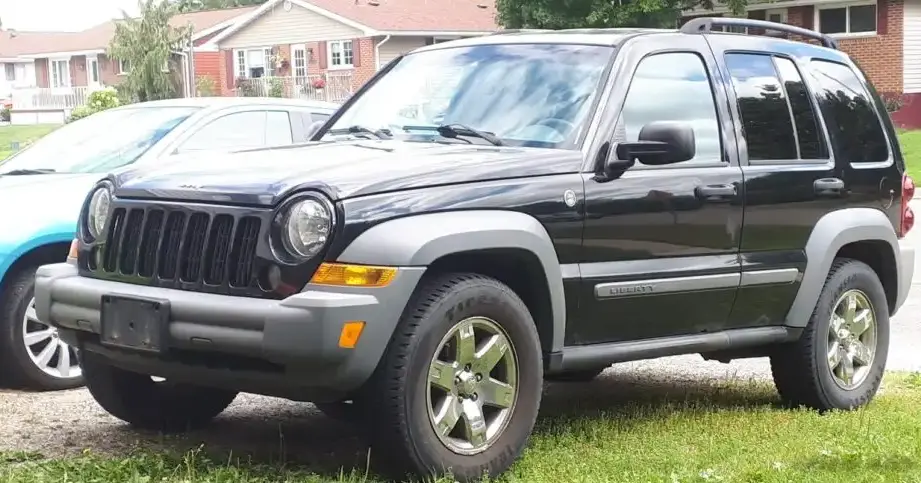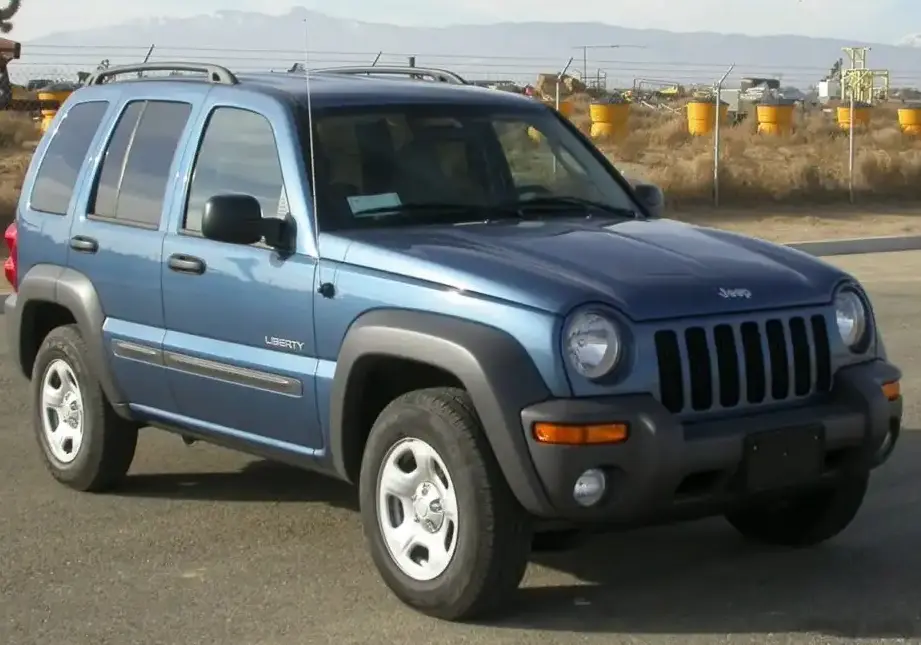
The Jeep Liberty I 3.7 i V6 12V (210 Hp) Automatic, produced between 2001 and 2004, represented Jeep’s entry into the mid-size SUV market, aiming to bridge the gap between the compact Cherokee and the larger Grand Cherokee. This variant, powered by the 3.7-liter V6 engine paired with a four-speed automatic transmission, was positioned as a mainstream offering within the Liberty lineup, prioritizing affordability and ease of use over outright performance. It was a key model for Jeep during a period of significant SUV growth in the North American market, offering a blend of off-road capability and on-road comfort. The Liberty (codenamed KJ) was a departure from the unibody construction of the Cherokee, utilizing a traditional body-on-frame design for increased durability and towing capacity.
Technical Specifications
| Brand | Jeep |
| Model | Liberty |
| Generation | Liberty I |
| Type (Engine) | 3.7 i V6 12V (210 Hp) Automatic |
| Start of production | 2001 |
| End of production | 2004 |
| Powertrain Architecture | Internal Combustion engine |
| Body type | SUV |
| Seats | 5 |
| Doors | 5 |
| Fuel consumption (urban) | 13.1 l/100 km (18 US mpg, 21.6 UK mpg, 7.6 km/l) |
| Fuel consumption (extra urban) | 10.7 l/100 km (22 US mpg, 26.4 UK mpg, 9.3 km/l) |
| Fuel Type | Petrol (Gasoline) |
| Acceleration 0 – 100 km/h | 8.8 sec |
| Acceleration 0 – 62 mph | 8.8 sec |
| Acceleration 0 – 60 mph | 8.4 sec |
| Maximum speed | 180 km/h (111.85 mph) |
| Weight-to-power ratio | 7.9 kg/Hp, 126.3 Hp/tonne |
| Weight-to-torque ratio | 5.2 kg/Nm, 191.2 Nm/tonne |
| Power | 210 Hp @ 5200 rpm |
| Power per litre | 56.7 Hp/l |
| Torque | 318 Nm @ 4000 rpm (234.54 lb.-ft. @ 4000 rpm) |
| Engine layout | Front, Longitudinal |
| Engine Model/Code | EKG |
| Engine displacement | 3701 cm3 (225.85 cu. in.) |
| Number of cylinders | 6 |
| Engine configuration | V-engine |
| Cylinder Bore | 93 mm (3.66 in.) |
| Piston Stroke | 90.8 mm (3.57 in.) |
| Compression ratio | 9.1:1 |
| Number of valves per cylinder | 2 |
| Fuel injection system | Multi-port manifold injection |
| Engine aspiration | Naturally aspirated engine |
| Engine oil capacity | 4.7 l (4.97 US qt | 4.14 UK qt) |
| Coolant capacity | 13.2 l (13.95 US qt | 11.61 UK qt) |
| Kerb Weight | 1663 kg (3666.29 lbs.) |
| Max. weight | 2427 kg (5350.62 lbs.) |
| Max load | 764 kg (1684.33 lbs.) |
| Trunk (boot) space – minimum | 821 l (28.99 cu. ft.) |
| Trunk (boot) space – maximum | 1950 l (68.86 cu. ft.) |
| Fuel tank capacity | 74 l (19.55 US gal | 16.28 UK gal) |
| Permitted trailer load with brakes (12%) | 2268 kg (5000.08 lbs.) |
| Length | 4437 mm (174.69 in.) |
| Width | 1819 mm (71.61 in.) |
| Height | 1785 mm (70.28 in.) |
| Wheelbase | 2649 mm (104.29 in.) |
| Front track | 1524 mm (60 in.) |
| Rear (Back) track | 1518 mm (59.76 in.) |
| Minimum turning circle | 10.9 m (35.76 ft.) |
| Front suspension | Independent, type McPherson with coil spring and anti-roll bar |
| Rear suspension | Rigid axle suspension, Transverse stabilizer, Coil spring |
| Front brakes | Ventilated discs, 287.02 mm |
| Rear brakes | Disc, 284.48×12.7 mm |
| Assisting systems | ABS (Anti-lock braking system) |
| Steering type | Steering rack and pinion |
| Tires size | 225/75 R16 |
| Wheel rims size | 7J x 16 |
Powertrain & Engine Architecture
The heart of this Liberty variant is the 3.7-liter EKG V6 engine. This engine, a member of Chrysler’s third-generation V6 family, featured a 90-degree V-angle and a 12-valve configuration (two valves per cylinder). It utilized a multi-port fuel injection system, delivering fuel directly into the intake ports. The engine’s design prioritized low-end torque for everyday drivability, rather than peak horsepower. The four-speed 42RE automatic transmission was the sole transmission option for this trim. This transmission, while reliable, was somewhat dated by the early 2000s, lacking the efficiency and smoothness of newer five or six-speed automatics. It featured a conventional torque converter and electronic control for shift scheduling. The engine’s longitudinal mounting and rear-wheel-drive configuration were typical for body-on-frame SUVs of the era.
Driving Characteristics
The 210 horsepower and 234 lb-ft of torque provided by the 3.7L V6 and 4-speed automatic resulted in adequate, but not exhilarating, performance. Acceleration from 0-60 mph took around 8.4 to 8.8 seconds. The automatic transmission’s gear ratios were tuned for comfortable cruising and towing, rather than aggressive acceleration. Compared to the optional 3.7L manual transmission, the automatic offered smoother operation but at the expense of responsiveness. The Liberty I 3.7L Automatic wasn’t designed to compete with sportier SUVs; instead, it focused on providing a comfortable and capable driving experience for everyday use and light off-roading. The relatively low gearing and torque converter slip did impact fuel economy.
Equipment & Trim Levels
The 3.7L Automatic Liberty typically came standard with features like air conditioning, power windows and locks, an AM/FM radio with a CD player, and cloth upholstery. Higher trim levels, such as the Limited, added features like leather upholstery, alloy wheels, a premium sound system, and power-adjustable seats. Optional extras included a sunroof, a navigation system, and a tow package. The interior design was functional and straightforward, prioritizing durability and ease of use over luxury. The dashboard layout was typical of Jeep vehicles of the time, with large, easy-to-read gauges and clearly labeled controls.
Chassis & Braking
The Liberty I utilized a traditional body-on-frame construction, providing a robust and durable platform. The front suspension featured an independent McPherson strut design with coil springs and an anti-roll bar, while the rear suspension employed a solid axle with coil springs and a transverse stabilizer bar. This setup provided a good balance of ride comfort and off-road capability. Braking duties were handled by ventilated discs at the front and solid discs at the rear. An Anti-lock Braking System (ABS) was standard equipment. The Liberty’s chassis was designed to handle moderate off-road conditions, with a respectable approach, departure, and breakover angles.
Market Reception & Comparison
The Jeep Liberty I 3.7L Automatic received mixed reviews from automotive critics. While praised for its off-road capability and comfortable ride, it was often criticized for its lackluster performance and dated four-speed automatic transmission. Compared to the more powerful 3.7L manual transmission version, the automatic offered less engaging driving experience. Fuel economy was also a concern, falling short of some competitors in the mid-size SUV segment. However, the Liberty’s affordability and Jeep’s brand reputation helped it achieve reasonable sales figures.
Legacy
The 3.7L V6 engine and 42RE automatic transmission combination proved to be relatively reliable, although regular maintenance is crucial. Common issues include oil leaks, sensor failures, and transmission slipping. Today, the Liberty I 3.7L Automatic can be found on the used car market at affordable prices. It remains a viable option for buyers seeking a capable and durable SUV for light off-roading and everyday transportation. However, potential buyers should be aware of the engine and transmission’s limitations and factor in the cost of potential repairs. The Liberty I laid the groundwork for future Jeep SUV models, establishing a reputation for off-road prowess and rugged dependability.