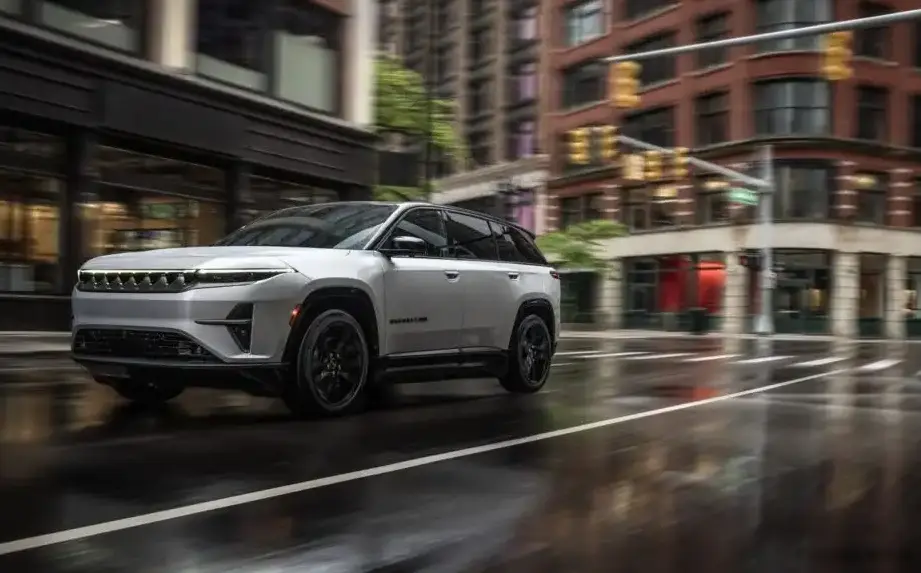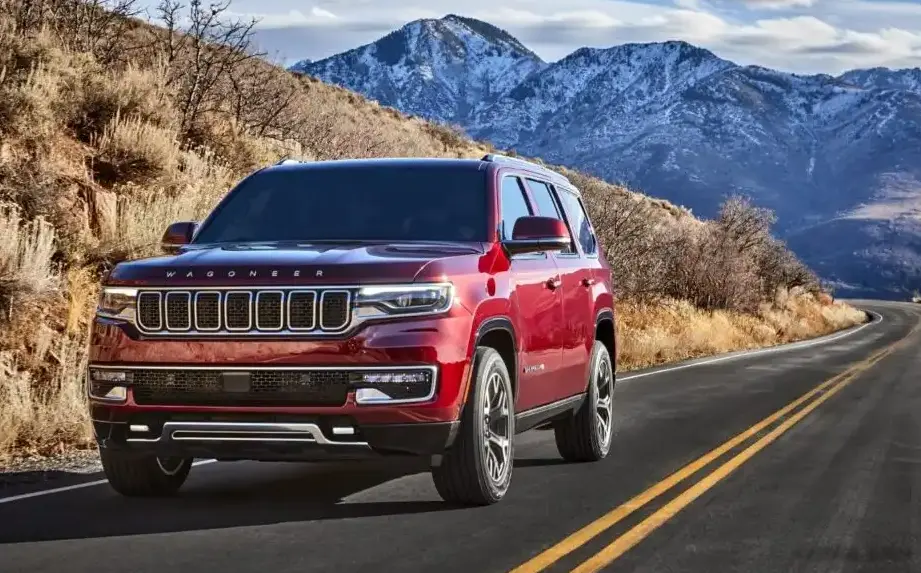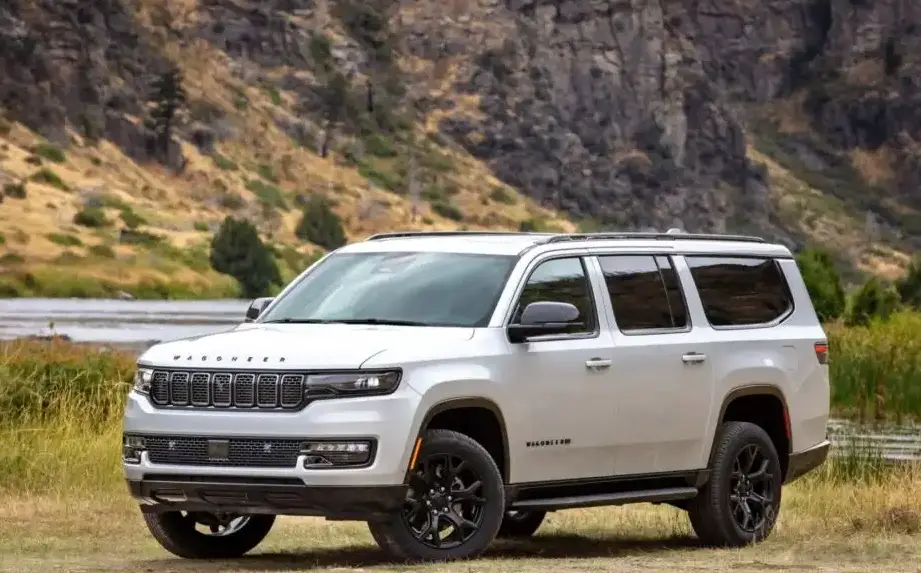
The Jeep Wagoneer L (WS) 3.0, producing 420 horsepower, represents the top-tier engine option for the extended-length Wagoneer L model, introduced in April 2022. Positioned as the premium offering within the Wagoneer lineup, it caters to buyers seeking substantial towing capacity and a refined driving experience in a full-size SUV. The “L” designation signifies a significant increase in overall length compared to the standard Wagoneer, primarily benefiting third-row passenger space and cargo volume. This variant builds upon the revival of the Wagoneer nameplate, aiming to recapture the legacy of the original full-size Wagoneer while incorporating modern technology and luxury features. It competes directly with other large SUVs like the Chevrolet Suburban, GMC Yukon XL, and Cadillac Escalade ESV.
Technical Specifications
| Brand | Jeep |
| Model | Wagoneer |
| Generation | Wagoneer L (WS) |
| Type (Engine) | 3.0 (420 Hp) 4WD TorqueFlite |
| Start of production | April, 2022 |
| Powertrain Architecture | Internal Combustion engine |
| Body type | SUV |
| Seats | 7-8 |
| Doors | 5 |
| Fuel consumption (economy) – urban (EPA) | 14.7 l/100 km (16 US mpg, 19.2 UK mpg, 6.8 km/l) |
| Fuel consumption (economy) – extra urban (EPA) | 10.2 l/100 km (23.1 US mpg, 27.7 UK mpg, 9.8 km/l) |
| Fuel consumption (economy) – combined (EPA) | 12.4 l/100 km (19 US mpg, 22.8 UK mpg, 8.1 km/l) |
| Fuel Type | Petrol (Gasoline) |
| Weight-to-power ratio | 6.8 kg/Hp, 147.1 Hp/tonne |
| Weight-to-torque ratio | 4.5 kg/Nm, 222.3 Nm/tonne |
| Power | 420 Hp @ 5200 rpm |
| Power per litre | 140.3 Hp/l |
| Torque | 635 Nm @ 3500 rpm (468.35 lb.-ft. @ 3500 rpm) |
| Maximum engine speed | 5800 rpm |
| Engine layout | Front, Longitudinal |
| Engine Model/Code | Hurricane |
| Engine displacement | 2993 cm3 (182.64 cu. in.) |
| Number of cylinders | 6 |
| Engine configuration | Inline |
| Cylinder Bore | 84 mm (3.31 in.) |
| Piston Stroke | 90 mm (3.54 in.) |
| Compression ratio | 10.4:1 |
| Number of valves per cylinder | 4 |
| Fuel injection system | Direct injection |
| Engine aspiration | Twin-Turbo, Intercooler |
| Valvetrain | DOHC |
| Engine oil capacity | 7.1 l (7.5 US qt | 6.25 UK qt) |
| Coolant | 15.7 l (16.59 US qt | 13.81 UK qt) |
| Kerb Weight | 2856-2874 kg (6296.4 – 6336.09 lbs.) |
| Max. weight | 3447-3538 kg (7599.33 – 7799.95 lbs.) |
| Max load | 591-664 kg (1302.93 – 1463.87 lbs.) |
| Trunk (boot) space – minimum | 1192 l (42.1 cu. ft.) |
| Trunk (boot) space – maximum | 3707 l (130.91 cu. ft.) |
| Fuel tank capacity | 115.4 l (30.49 US gal | 25.38 UK gal) |
| Permitted trailer load with brakes (12%) | 4468 kg (9850.25 lbs.) |
| Length | 5759 mm (226.73 in.) |
| Width | 2124 mm (83.62 in.) |
| Width including mirrors | 2388 mm (94.02 in.) |
| Height | 1963 mm (77.28 in.) |
| Wheelbase | 3303 mm (130.04 in.) |
| Front track | 1738 mm (68.43 in.) |
| Rear (Back) track | 1734 mm (68.27 in.) |
| Ride height (ground clearance) | 210-253 mm (8.27 – 9.96 in.) |
| Drag coefficient (Cd) | 0.352 |
| Minimum turning circle (turning diameter) | 12.9 m (42.32 ft.) |
| Approach angle | 21.5-25° |
| Departure angle | 18.8-21.3° |
| Ramp-over (brakeover) angle | 17.8-20.4° |
| Drivetrain Architecture | The Internal combustion engine (ICE) drives permanently the four wheels of the vehicle. |
| Drive wheel | All wheel drive (4×4) |
| Number of gears and type of gearbox | 8 gears, automatic transmission TorqueFlite |
| Front suspension | Coil spring, Double wishbone, Transverse stabilizer, Air Suspension – Optional |
| Rear suspension | Independent multi-link spring suspension with stabilizer, Air Suspension – Optional |
| Front brakes | Ventilated discs, 378×30 mm |
| Rear brakes | Disc, 375×22 mm |
| Assisting systems | ABS (Anti-lock braking system) |
| Steering type | Steering rack and pinion |
| Power steering | Electric Steering |
| Tires size | 275/65 R18; 275/55 R20; 285/45 R22 |
| Wheel rims size | 8J x 18; 9J x 20; 9J x 22 |
INTRODUCTION
The Jeep Wagoneer L 3.0 4WD represents a significant step in Jeep’s return to the full-size SUV segment. Introduced for the 2022 model year, the Wagoneer L expands upon the standard Wagoneer by adding approximately 7 inches to the wheelbase and overall length. This extension primarily benefits the third-row seating and cargo capacity, making it a more competitive option for families requiring substantial space. The 3.0-liter Hurricane engine is the top-of-the-line powertrain offering, providing a substantial increase in power and torque compared to the base 3.6-liter V6. The Wagoneer L aims to blend Jeep’s traditional off-road capability with a premium interior and a host of modern technology features.
Powertrain & Engine Architecture
At the heart of the Wagoneer L 3.0 lies the Hurricane Twin Turbo 3.0-liter inline-six engine. This engine, internally designated as the Hurricane, is a significant departure from Jeep’s traditional V6 and V8 offerings. It utilizes a direct injection fuel system and twin-turbochargers with an intercooler to deliver 420 horsepower and 635 lb-ft of torque. The engine features a double overhead camshaft (DOHC) valvetrain with four valves per cylinder, optimizing airflow for increased efficiency and power. The engine is longitudinally mounted in the chassis. The engine is paired exclusively with the TorqueFlite eight-speed automatic transmission, known for its smooth shifting and durability. This transmission is electronically controlled and features a wide gear ratio spread to optimize both fuel economy and performance.
Driving Characteristics
The Wagoneer L 3.0 4WD delivers a confident and capable driving experience. The substantial torque output of the Hurricane engine provides effortless acceleration, even when fully loaded or towing. The eight-speed automatic transmission shifts smoothly and responsively, contributing to a refined driving feel. While the Wagoneer L is a large vehicle, the powerful engine and well-tuned suspension help to mask its size. Compared to the base V6 engine, the 3.0-liter offers a noticeable improvement in acceleration and overall responsiveness. The 4WD system provides enhanced traction in various conditions, making it suitable for both on-road and light off-road driving. The gear ratios are optimized for both highway cruising and towing, providing ample power across a wide range of speeds.
Equipment & Trim Levels
The Wagoneer L 3.0 typically comes standard with a high level of equipment, reflecting its position as the premium trim. Standard features often include leather upholstery, heated and ventilated front seats, a premium sound system, a large touchscreen infotainment system with navigation, and a suite of advanced driver-assistance systems (ADAS). Optional extras can include a panoramic sunroof, rear-seat entertainment system, and upgraded interior trim materials. The interior design emphasizes luxury and comfort, with spacious seating and high-quality materials throughout. Trim levels beyond the base 3.0 often add further refinements, such as unique exterior styling cues and additional technology features.
Chassis & Braking
The Wagoneer L utilizes a robust body-on-frame construction, providing a solid foundation for its size and weight. The front suspension features a coil spring, double wishbone setup with a transverse stabilizer bar. The rear suspension employs an independent multi-link spring suspension, also with a stabilizer bar. Air suspension is available as an option, providing adjustable ride height and improved ride comfort. The braking system consists of ventilated discs at all four corners, with larger rotors at the front. An anti-lock braking system (ABS) is standard, along with electronic stability control and traction control. The steering system is a rack-and-pinion setup with electric power steering.
Market Reception & Comparison
The Wagoneer L 3.0 has been generally well-received by automotive critics, who praise its powerful engine, spacious interior, and comfortable ride. However, its fuel economy is a common criticism, as expected for a vehicle of its size and weight. Compared to the base V6 Wagoneer L, the 3.0-liter offers a significant performance upgrade, but at a higher price point. In terms of reliability, the Hurricane engine is relatively new, and long-term data is still being collected. However, Jeep has a generally good reputation for powertrain durability. Compared to competitors like the Chevrolet Suburban and GMC Yukon XL, the Wagoneer L offers a unique blend of American heritage and modern luxury.
Legacy
The long-term reliability of the Hurricane engine remains to be seen, but early indications suggest it is a durable and capable powertrain. The Wagoneer L 3.0 is likely to hold its value reasonably well in the used car market, particularly among buyers seeking a spacious and powerful SUV with towing capability. As Jeep continues to refine the Wagoneer lineup, the 3.0-liter engine is expected to remain a key component, offering a compelling combination of performance, luxury, and capability.