
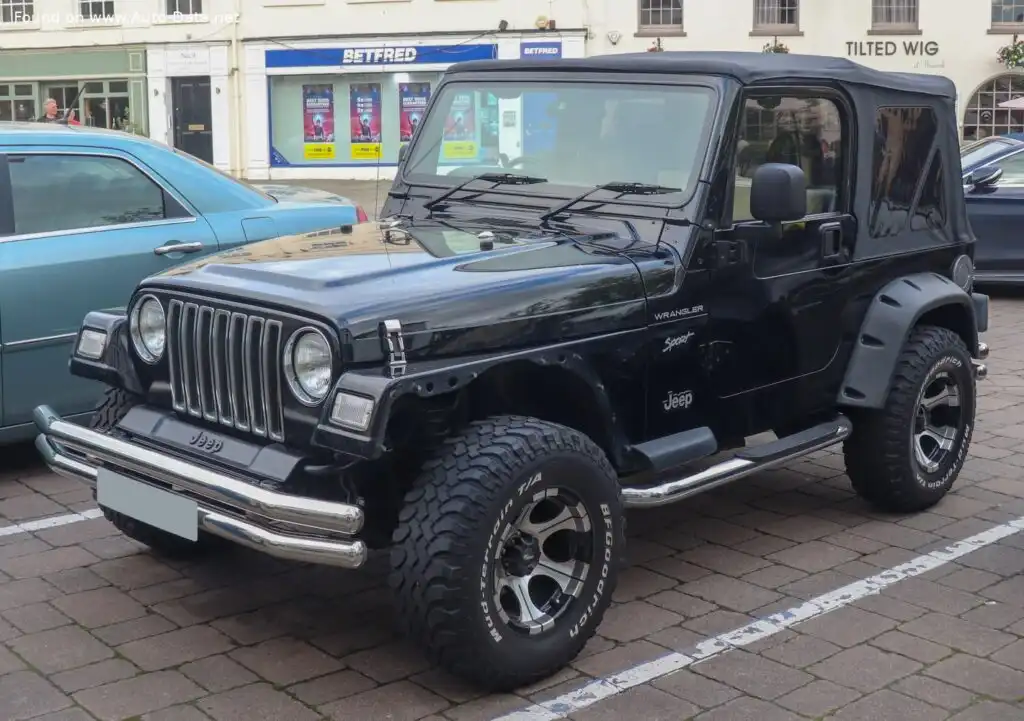
The Jeep Wrangler TJ, produced from 1997 to 2006, represented a significant leap forward for the iconic off-road vehicle. The 2.4-liter inline-four cylinder variant, introduced in 2003 and continuing through 2006, offered a more fuel-efficient alternative to the larger engines available, though with a noticeable trade-off in outright power. This engine, designated the ED1, was primarily aimed at buyers seeking a more economical Wrangler for daily driving while still retaining the vehicle’s legendary off-road capability. It occupied the entry-level position in the TJ lineup, positioned below the 4.0-liter inline-six and the later 2.5-liter engine options.
Technical Specifications
| Brand | Jeep |
| Model | Wrangler |
| Generation | Wrangler II (TJ) |
| Type (Engine) | 2.4 i 16V (147 Hp) |
| Start of production | 2003 |
| End of production | 2006 |
| Powertrain Architecture | Internal Combustion engine |
| Body type | Off-road vehicle |
| Seats | 5 |
| Doors | 2 |
| Fuel consumption (urban) | 14 l/100 km (16.8 US mpg, 20.2 UK mpg, 7.1 km/l) |
| Fuel consumption (extra urban) | 8.3 l/100 km (28.3 US mpg, 34 UK mpg, 12 km/l) |
| Fuel consumption (combined) | 10.4 l/100 km (22.6 US mpg, 27.2 UK mpg, 9.6 km/l) |
| Fuel Type | Petrol (Gasoline) |
| Acceleration 0 – 100 km/h | 13 sec |
| Acceleration 0 – 62 mph | 13 sec |
| Acceleration 0 – 60 mph | 12.4 sec |
| Maximum speed | 155 km/h (96.31 mph) |
| Weight-to-power ratio | 10.9 kg/Hp, 91.6 Hp/tonne |
| Weight-to-torque ratio | 7.2 kg/Nm, 139.6 Nm/tonne |
| Power | 147 Hp @ 5200 rpm |
| Power per litre | 60.5 Hp/l |
| Torque | 224 Nm @ 4000 rpm (165.21 lb.-ft. @ 4000 rpm) |
| Engine layout | Front, Longitudinal |
| Engine Model/Code | ED1 |
| Engine displacement | 2429 cm3 (148.23 cu. in.) |
| Number of cylinders | 4 |
| Engine configuration | Inline |
| Cylinder Bore | 87.5 mm (3.44 in.) |
| Piston Stroke | 101 mm (3.98 in.) |
| Compression ratio | 9.5:1 |
| Number of valves per cylinder | 4 |
| Fuel injection system | Multi-port manifold injection |
| Engine aspiration | Naturally aspirated engine |
| Engine oil capacity | 4.7 l (4.97 US qt | 4.14 UK qt) |
| Coolant | 8.5 l (8.98 US qt | 7.48 UK qt) |
| Kerb Weight | 1605 kg (3538.42 lbs.) |
| Max. weight | 2000 kg (4409.25 lbs.) |
| Max load | 395 kg (870.83 lbs.) |
| Trunk (boot) space – minimum | 320 l (11.3 cu. ft.) |
| Trunk (boot) space – maximum | 1045 l (36.9 cu. ft.) |
| Fuel tank capacity | 57 l (15.06 US gal | 12.54 UK gal) |
| Length | 3883 mm (152.87 in.) |
| Width | 1694 mm (66.69 in.) |
| Height | 1750 mm (68.9 in.) |
| Wheelbase | 2373 mm (93.43 in.) |
| Front track | 1473 mm (57.99 in.) |
| Rear (Back) track | 1473 mm (57.99 in.) |
| Drive wheel | All wheel drive (4×4) |
| Number of gears and type of gearbox | 5 gears, manual transmission |
| Front suspension | Coil spring |
| Rear suspension | Coil spring |
| Front brakes | Ventilated discs |
| Rear brakes | Drum |
| Power steering | Hydraulic Steering |
| Tires size | 215/75 R15 |
Powertrain & Engine Architecture
The 2.4-liter ED1 engine is a naturally aspirated, inline-four cylinder powerplant. It utilizes a single overhead camshaft (SOHC) design with four valves per cylinder, contributing to its relatively efficient operation. Fuel delivery is managed by a multi-port fuel injection system, providing precise fuel metering for improved combustion. The engine’s 9.5:1 compression ratio strikes a balance between performance and fuel economy. The 2.4L engine was paired with a standard five-speed manual transmission. While an automatic transmission was offered, it was a three-speed unit, which significantly impacted performance and fuel efficiency compared to the manual.
Driving Characteristics
The 2.4-liter Wrangler TJ delivers a modest 147 horsepower and 165 lb-ft of torque. Acceleration is noticeably slower than the 4.0-liter inline-six, taking approximately 13 seconds to reach 60 mph. The three-speed automatic transmission further diminishes acceleration, and the wider gear ratios can feel sluggish during overtaking maneuvers. However, the engine provides adequate power for everyday driving and moderate off-road trails. The lower engine weight compared to the 4.0L does contribute to a slightly more nimble feel on paved roads. The manual transmission version offers a more engaging driving experience and better control, particularly when navigating challenging terrain.
Equipment & Trim Levels
The 2.4-liter Wrangler TJ typically came equipped with basic features, reflecting its entry-level positioning. Standard amenities included air conditioning, a basic audio system, and manually adjustable seats. The interior featured durable, washable materials designed to withstand the rigors of off-road use. Optional extras included power windows and locks, upgraded audio systems, and a removable hardtop. The SE trim level offered a few more comfort features, such as upgraded upholstery and a premium sound system. The Sahara trim, while typically equipped with the 4.0L engine, could occasionally be found with the 2.4L, adding features like alloy wheels and a color-matched hardtop.
Chassis & Braking
The Wrangler TJ utilizes a robust body-on-frame construction, providing excellent durability and off-road capability. The suspension consists of coil springs at all four corners, offering a comfortable ride both on and off-road. Front brakes are ventilated discs, providing adequate stopping power, while rear brakes are drums. The hydraulic power steering system offers precise control, especially when navigating tight trails. The 2.4L models generally featured a slightly softer suspension setup compared to the heavier 4.0L versions, contributing to a more compliant ride on paved surfaces.
Market Reception & Comparison
The 2.4-liter Wrangler TJ received mixed reviews. Critics praised its improved fuel economy compared to the 4.0-liter engine, but many found its performance lacking, especially when paired with the three-speed automatic transmission. The manual transmission version was generally better received, offering a more engaging driving experience. Compared to the 4.0-liter, the 2.4L offered a more affordable entry point into Wrangler ownership, appealing to buyers who prioritized fuel efficiency and daily usability over outright power. The 2.5L engine, introduced later in the TJ’s production run, offered a similar balance of fuel economy and performance, becoming a more popular choice.
Legacy
The 2.4-liter ED1 engine, while not known for its blistering performance, proved to be a relatively reliable powerplant. Common issues include oil leaks and occasional sensor failures, but these are generally straightforward to address. Today, the 2.4-liter Wrangler TJ represents an affordable entry point into the world of Jeep ownership. While not as desirable as the 4.0-liter models, it remains a capable off-road vehicle and a popular choice for those seeking a classic Jeep experience without breaking the bank. Its simplicity and relatively low maintenance costs make it an attractive option for enthusiasts and weekend warriors alike. The availability of aftermarket parts and upgrades ensures that these Wranglers can continue to provide years of enjoyment.
