
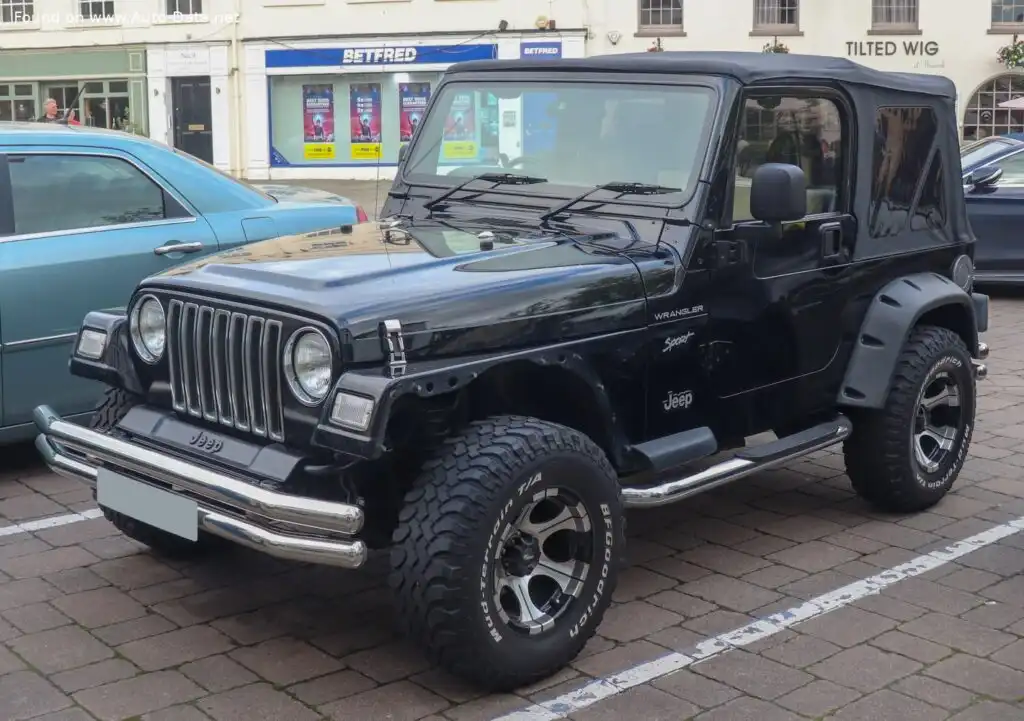
The Jeep Wrangler TJ, produced from 1997 to 2006, represented a significant leap forward for the iconic off-road vehicle. The 4.0i variant, powered by the 4.0-liter inline-six engine producing 183 horsepower, was a mainstay of the TJ lineup from 2000 through 2006. This model occupied a sweet spot in the range, offering a balance of capability, affordability, and everyday usability. It served as a popular choice for those seeking a rugged, open-air vehicle without the added cost and complexity of the Rubicon trim or the reduced power of the 2.5-liter four-cylinder base model. The TJ generation marked the return to a more traditional round headlight design, a nod to the original Wrangler (YJ), and introduced coil spring suspension for improved on-road ride quality.
Technical Specifications
| Brand | Jeep |
| Model | Wrangler |
| Generation | Wrangler II (TJ) |
| Type (Engine) | 4.0 i (183 Hp) |
| Start of production | 2000 year |
| End of production | 2006 year |
| Powertrain Architecture | Internal Combustion engine |
| Body type | Off-road vehicle |
| Seats | 4 |
| Doors | 2 |
| Fuel consumption (urban) | 13.8 l/100 km (17 US mpg, 20.5 UK mpg) |
| Fuel consumption (extra urban) | 11.2 l/100 km (21 US mpg, 25.2 UK mpg) |
| Fuel Type | Petrol (Gasoline) |
| Acceleration 0 – 100 km/h | 9.1 sec |
| Acceleration 0 – 62 mph | 9.1 sec |
| Acceleration 0 – 60 mph | 8.6 sec |
| Maximum speed | 170 km/h (105.63 mph) |
| Weight-to-power ratio | 8.2 kg/Hp, 122.4 Hp/tonne |
| Weight-to-torque ratio | 5 kg/Nm, 201.3 Nm/tonne |
| Power | 183 Hp @ 4600 rpm |
| Power per litre | 46.3 Hp/l |
| Torque | 301 Nm @ 2800 rpm (222.01 lb.-ft. @ 2800 rpm) |
| Engine layout | Front, Longitudinal |
| Engine Model/Code | ERH |
| Engine displacement | 3956 cm3 (241.41 cu. in.) |
| Number of cylinders | 6 |
| Engine configuration | Inline |
| Cylinder Bore | 98.4 mm (3.87 in.) |
| Piston Stroke | 86.7 mm (3.41 in.) |
| Compression ratio | 8.8:1 |
| Number of valves per cylinder | 2 |
| Fuel injection system | Multi-port manifold injection |
| Engine aspiration | Naturally aspirated engine |
| Engine oil capacity | 5.7 l (6.02 US qt | 5.02 UK qt) |
| Coolant | 9.9 l (10.46 US qt | 8.71 UK qt) |
| Kerb Weight | 1495 kg (3295.91 lbs.) |
| Max. weight | 1965 kg (4332.08 lbs.) |
| Max load | 470 kg (1036.17 lbs.) |
| Trunk (boot) space – minimum | 315 l (11.12 cu. ft.) |
| Trunk (boot) space – maximum | 1515 l (53.5 cu. ft.) |
| Fuel tank capacity | 57 l (15.06 US gal | 12.54 UK gal) |
| Length | 3886 mm (152.99 in.) |
| Width | 1693 mm (66.65 in.) |
| Height | 1767 mm (69.57 in.) |
| Wheelbase | 2373 mm (93.43 in.) |
| Front track | 1473 mm (57.99 in.) |
| Rear (Back) track | 1473 mm (57.99 in.) |
| Drive wheel | All wheel drive (4×4) |
| Number of gears and type of gearbox | 5 gears, manual transmission |
| Front suspension | Coil spring |
| Rear suspension | Coil spring |
| Front brakes | Ventilated discs |
| Rear brakes | Drum |
| Power steering | Hydraulic Steering |
| Tires size | 215/75 R15 |
Powertrain & Engine Architecture
The heart of the 4.0i Wrangler TJ is the 4.0-liter (3956 cc) inline-six cylinder engine, designated the ERH code. This engine, a descendant of the AMC 199 engine family, had been a staple of Jeep vehicles for decades. It features a cast iron block and cylinder head, a relatively simple design known for its durability and ease of maintenance. The engine utilizes a multi-port fuel injection system, providing adequate fuel delivery for its power output. The valvetrain consists of two valves per cylinder, operated by a single overhead camshaft. The 4.0-liter engine produced 183 horsepower at 4,600 rpm and 222 lb-ft of torque at 2,800 rpm. The five-speed manual transmission was the standard offering, providing a direct connection to the engine’s power. The transmission’s gear ratios were tuned for both on-road cruising and low-speed off-road crawling.
Driving Characteristics
The 4.0i Wrangler TJ offered a noticeable step up in performance compared to the base 2.5-liter model. While not a sports car, the 4.0-liter engine provided sufficient power for highway driving and tackling moderate off-road trails. The manual transmission allowed for precise control, and the engine’s torque curve made it relatively easy to maintain momentum in challenging terrain. Acceleration from 0-60 mph took around 8.6 seconds, respectable for a body-on-frame SUV of its era. The coil spring suspension, a significant improvement over the leaf springs of previous Wranglers, provided a more comfortable ride on paved roads. However, the Wrangler TJ still retained its characteristic ruggedness, and body roll was noticeable in corners.
Equipment & Trim Levels
The 4.0i Wrangler TJ typically came standard with features such as air conditioning, a tilt steering wheel, and a basic sound system. The interior was utilitarian, with durable cloth upholstery and easy-to-clean surfaces. Optional extras included power windows and locks, upgraded sound systems, and a premium interior trim package. The Sport trim level, the most common, added features like full metal doors, color-matched fender flares, and upgraded interior appointments. The Sahara trim offered even more luxury, with features like alloy wheels, air conditioning, and a premium sound system. The removable hardtop and fold-down windshield were standard features, contributing to the Wrangler’s open-air experience.
Chassis & Braking
The Wrangler TJ utilized a traditional body-on-frame construction, providing a robust and durable platform for off-road adventures. The chassis was reinforced compared to previous generations, improving rigidity and handling. The front suspension featured coil springs and track bars, while the rear suspension also utilized coil springs and a multi-link design. The braking system consisted of ventilated discs at the front and drum brakes at the rear. Hydraulic power steering was standard, providing assistance for maneuvering the vehicle both on and off-road. The tires, typically 215/75 R15, were chosen for a balance of on-road comfort and off-road traction.
Market Reception & Comparison
The 4.0i Wrangler TJ was well-received by critics and consumers alike. It was praised for its improved ride quality, increased power, and rugged capability. Compared to the 2.5-liter four-cylinder model, the 4.0i offered a significant performance boost, making it a more enjoyable vehicle to drive in all conditions. While the Rubicon trim offered even greater off-road prowess, the 4.0i provided a more affordable and practical option for those who wanted a capable off-roader without the added expense. Fuel economy was typical for a vehicle of its type, averaging around 17 mpg in the city and 21 mpg on the highway. Reliability was generally good, although regular maintenance was essential to keep the engine and drivetrain in top condition.
Legacy
The Jeep Wrangler TJ 4.0i remains a popular choice among off-road enthusiasts and classic Jeep collectors. The 4.0-liter inline-six engine is known for its longevity and relatively simple maintenance requirements. While some components may require attention due to age, the engine is generally considered to be very reliable. The TJ generation is often regarded as the sweet spot in the Wrangler lineage, offering a blend of classic Jeep styling, modern features, and proven mechanicals. Today, well-maintained examples of the 4.0i Wrangler TJ command a strong following in the used car market, and continue to be enjoyed on trails and roads across the country.
