
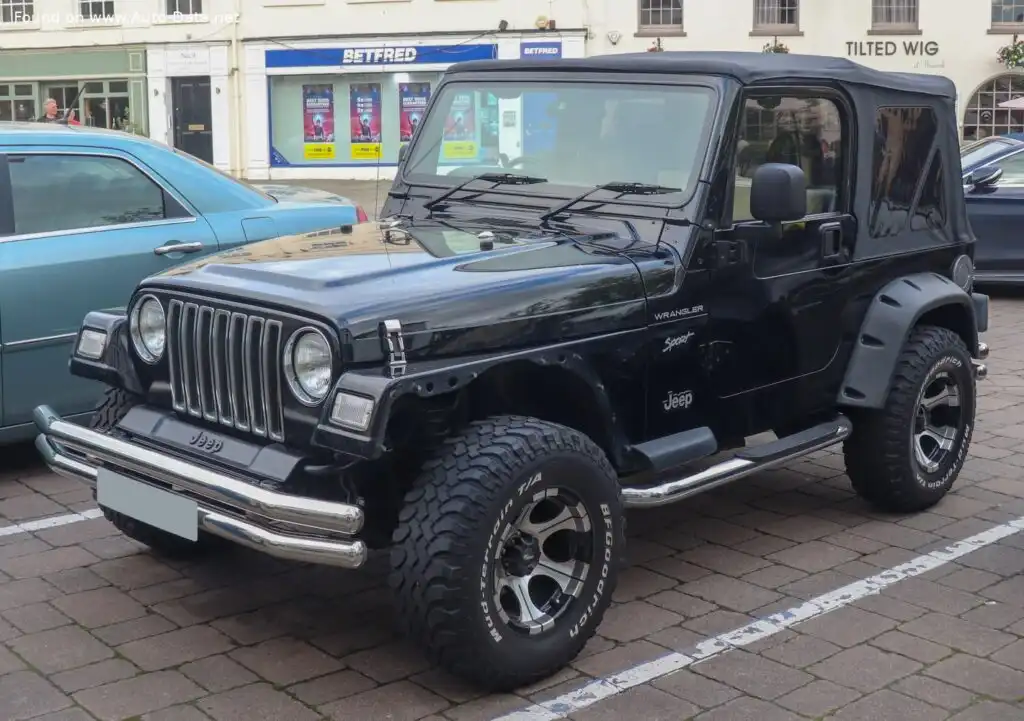
The Jeep Wrangler TJ Rubicon 4.0i Automatic, produced between 2003 and 2006, represents a significant evolution of the iconic Wrangler lineage. Falling within the TJ (second generation) Wrangler platform – internally designated as the WJ – the Rubicon trim was specifically engineered to deliver unparalleled off-road capability. This variant, equipped with the 4.0-liter inline-six engine and a four-speed automatic transmission, occupied a premium position in the Wrangler lineup, bridging the gap between the base models and the more specialized, often aftermarket-modified, versions. It catered to enthusiasts seeking a factory-built, highly capable 4×4 without the need for extensive customization.
Technical Specifications
| Brand | Jeep |
| Model | Wrangler |
| Generation | Wrangler II (TJ) |
| Type | Rubicon 4.0i (193 Hp) Automatic |
| Start of production | 2003 |
| End of production | 2006 |
| Powertrain Architecture | Internal Combustion engine |
| Body type | Off-road vehicle |
| Seats | 5 |
| Doors | 2 |
| Fuel consumption (urban) | 16.8 l/100 km (14 US mpg, 16.8 UK mpg) |
| Fuel consumption (extra urban) | 13.1 l/100 km (18 US mpg, 21.6 UK mpg) |
| Fuel Type | Petrol (Gasoline) |
| Acceleration 0 – 100 km/h | 9.4 sec |
| Acceleration 0 – 62 mph | 9.4 sec |
| Acceleration 0 – 60 mph | 8.9 sec |
| Maximum speed | 170 km/h (105.63 mph) |
| Weight-to-power ratio | 8.9 kg/Hp |
| Weight-to-torque ratio | 5.4 kg/Nm |
| Power | 193 Hp @ 4600 rpm |
| Torque | 319 Nm @ 3200 rpm (235.28 lb.-ft. @ 3200 rpm) |
| Engine layout | Front, Longitudinal |
| Engine Model/Code | ERH |
| Engine displacement | 3956 cm3 (241.41 cu. in.) |
| Number of cylinders | 6 |
| Engine configuration | Inline |
| Cylinder Bore | 98.4 mm (3.87 in.) |
| Piston Stroke | 86.7 mm (3.41 in.) |
| Compression ratio | 8.8:1 |
| Number of valves per cylinder | 2 |
| Fuel injection system | Multi-port manifold injection |
| Engine aspiration | Naturally aspirated |
| Engine oil capacity | 5.7 l (6.02 US qt | 5.02 UK qt) |
| Coolant capacity | 9.9 l (10.46 US qt | 8.71 UK qt) |
| Kerb Weight | 1725 kg (3802.97 lbs.) |
| Max. weight | 2064 kg (4550.34 lbs.) |
| Max load | 339 kg (747.37 lbs.) |
| Trunk (boot) space – minimum | 252 l (8.9 cu. ft.) |
| Trunk (boot) space – maximum | 1303 l (46.02 cu. ft.) |
| Fuel tank capacity | 72 l (19.02 US gal | 15.84 UK gal) |
| Length | 3947 mm (155.39 in.) |
| Width | 1693 mm (66.65 in.) |
| Height | 1764 mm (69.45 in.) |
| Wheelbase | 2373 mm (93.43 in.) |
| Front track | 1474 mm (58.03 in.) |
| Rear track | 1473 mm (57.99 in.) |
| Drive wheel | All wheel drive (4×4) |
| Number of gears | 4 |
| Gearbox type | Automatic transmission |
| Front suspension | Coil spring |
| Rear suspension | Coil spring |
| Front brakes | Ventilated discs |
| Rear brakes | Drum |
| Power steering | Hydraulic |
| Tires size | 245/75 R16 |
| Wheel rims size | 16 |
Powertrain & Engine Architecture
The heart of the TJ Rubicon 4.0i Automatic is the 4.0-liter (3956 cc) inline-six cylinder engine, designated as the ERH code. This engine, a mainstay of the Jeep Wrangler for many years, is known for its robust construction and ample low-end torque. It utilizes a cast iron block and cylinder head, contributing to its durability. The engine employs a multi-port fuel injection system, delivering fuel directly into the intake ports, and a two-valve per cylinder configuration. The 4.0L engine produces 193 horsepower at 4600 rpm and 235 lb-ft of torque at 3200 rpm. Paired with this engine is a 42RE four-speed automatic transmission. This transmission, while not known for its fuel efficiency by modern standards, was chosen for its durability and ability to handle the demands of off-road driving. The automatic transmission features a torque converter that multiplies engine torque, particularly useful for crawling over obstacles.
Driving Characteristics
The combination of the 4.0-liter engine and the four-speed automatic transmission delivers a driving experience geared towards off-road prowess rather than outright speed. Acceleration from 0-60 mph takes approximately 8.9 seconds, and top speed is limited to around 105 mph. The automatic transmission provides smooth shifts, but can feel somewhat sluggish compared to the available manual transmission. The gear ratios are optimized for low-speed torque, making it ideal for rock crawling and navigating challenging terrain. However, this comes at the expense of higher engine speeds during highway cruising, resulting in increased noise and potentially lower fuel economy. Compared to the manual transmission versions, the automatic Rubicon sacrifices some responsiveness for ease of use, appealing to drivers who prioritize convenience over ultimate control.
Equipment & Trim Levels
The Rubicon trim level, even in its automatic configuration, came generously equipped. Standard features included heavy-duty axles with locking differentials (front and rear), rock rails for protecting the body, and a reinforced skid plate package. Interior appointments typically included cloth upholstery, air conditioning, and a basic sound system. Optional extras included a premium sound system, power windows and locks, and upgraded seating. The Rubicon’s interior, while functional, prioritized durability over luxury. The dashboard layout is straightforward, with easily accessible controls for the 4×4 system and other essential functions.
Chassis & Braking
The TJ Rubicon’s chassis is built on a robust ladder frame, providing a solid foundation for off-road adventures. The suspension utilizes coil springs at all four corners, offering a good balance of ride comfort and articulation. The Rubicon featured a slightly lifted suspension compared to standard TJ models, increasing ground clearance. Braking duties are handled by ventilated discs at the front and drum brakes at the rear. While adequate for most situations, the rear drum brakes were a point of criticism, as they offered less stopping power and were more prone to fading under heavy use. The Rubicon also featured hydraulic power steering, providing ample assistance for maneuvering over rough terrain.
Market Reception & Comparison
The TJ Rubicon was widely praised by automotive journalists and off-road enthusiasts alike. Its factory-built off-road capability set it apart from other Wranglers and competitors. Critics noted the Rubicon’s impressive traction, articulation, and durability. The automatic transmission was generally well-received, although some reviewers preferred the greater control offered by the manual transmission. Fuel economy, averaging around 16 mpg in the city and 18 mpg on the highway, was considered average for a vehicle of its type. Compared to the base Wrangler models, the Rubicon commanded a significant price premium, but the added capability justified the cost for serious off-roaders. Compared to higher-output engine options (which weren’t available with the automatic transmission during these years), the 4.0L automatic offered a more balanced approach, prioritizing reliability and low-end torque over outright horsepower.
Legacy
The TJ Rubicon 4.0i Automatic has established a strong following in the used car market. Its reputation for durability and off-road capability ensures continued demand. The 4.0-liter engine and 42RE transmission are known to be relatively reliable, although regular maintenance is essential. Common issues include oil leaks, corrosion, and wear on suspension components. Today, these Rubicons are often sought after by enthusiasts looking for a capable and iconic off-road vehicle that doesn’t require extensive modifications. The TJ Rubicon remains a testament to Jeep’s commitment to building vehicles that can conquer any terrain, and the 4.0i Automatic variant continues to be a popular choice for those seeking a blend of capability, reliability, and ease of use.
