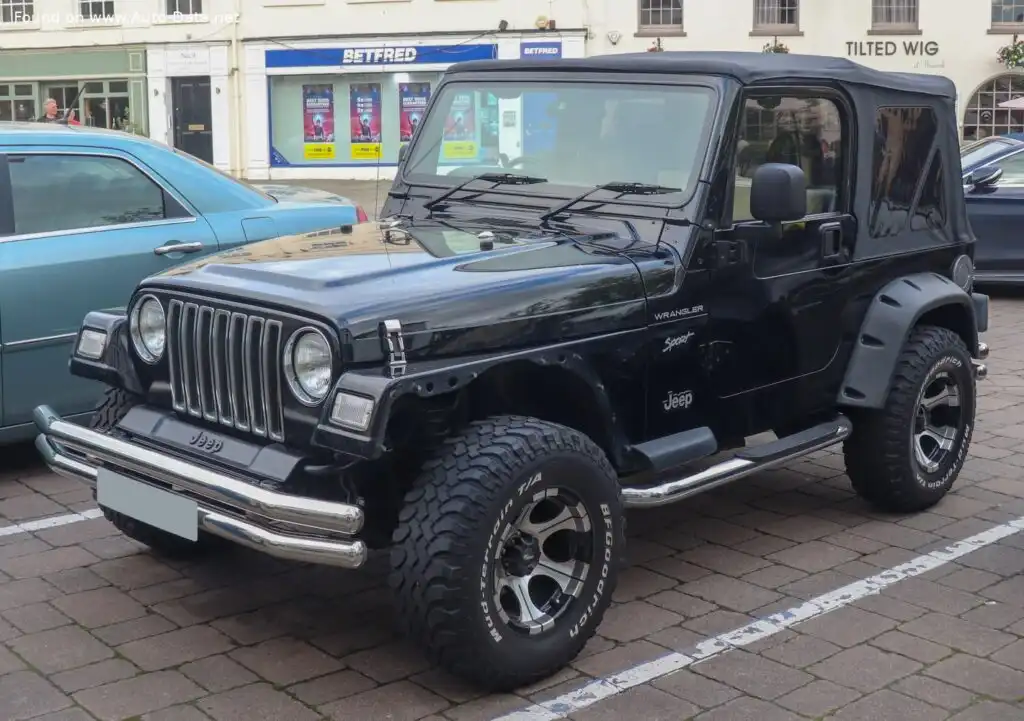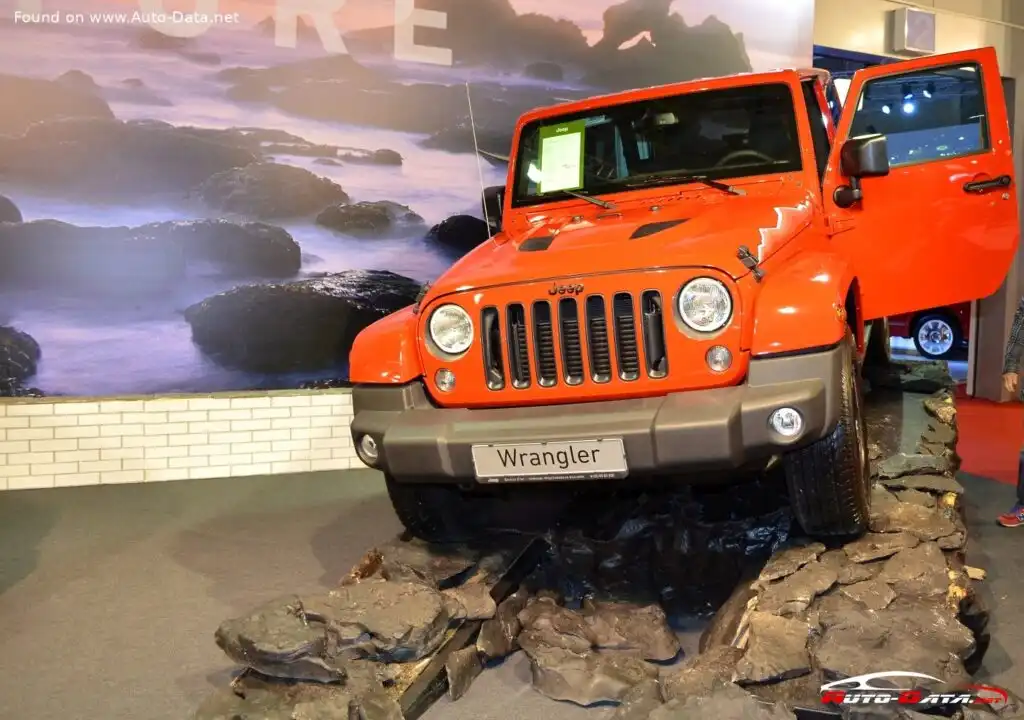
The Jeep Wrangler JK Sahara 3.8i V6 4×4, produced from 2006 to 2007, represents the initial offering of the third-generation (JK) Wrangler. This model marked a significant departure from its predecessor, the TJ, with a focus on improved on-road refinement while retaining the Wrangler’s legendary off-road capability. The Sahara trim, positioned as the more luxurious option in the JK lineup, aimed to broaden the Wrangler’s appeal beyond hardcore enthusiasts. It served as the entry point into the JK range, offering a balance of features and affordability, and was a key model in re-establishing the Wrangler as a competitive force in the growing SUV market.
Technical Specifications
| Brand | Jeep |
| Model | Wrangler |
| Generation | Wrangler III (JK) |
| Type | Sahara 3.8i V6 (202 Hp) 4×4 |
| Start of production | 2006 |
| End of production | 2007 |
| Powertrain Architecture | Internal Combustion engine |
| Body type | Off-road vehicle |
| Seats | 4 |
| Doors | 2 |
| Fuel consumption (urban) | 13.8 l/100 km (17 US mpg, 20.5 UK mpg, 7.2 km/l) |
| Fuel consumption (extra urban) | 12.4 l/100 km (19 US mpg, 22.8 UK mpg, 8.1 km/l) |
| Fuel consumption (combined) | 13.1 l/100 km (18 US mpg, 21.6 UK mpg, 7.6 km/l) |
| Fuel Type | Petrol (Gasoline) |
| Weight-to-power ratio | 8.9 kg/Hp, 112.7 Hp/tonne |
| Weight-to-torque ratio | 5.6 kg/Nm, 179.1 Nm/tonne |
| Power | 202 Hp @ 5000 rpm |
| Power per litre | 53.5 Hp/l |
| Torque | 321 Nm @ 4000 rpm (236.76 lb.-ft. @ 4000 rpm) |
| Engine layout | Front, Longitudinal |
| Engine Model/Code | EGT |
| Engine displacement | 3778 cm3 (230.55 cu. in.) |
| Number of cylinders | 6 |
| Engine configuration | V-engine |
| Cylinder Bore | 96 mm (3.78 in.) |
| Piston Stroke | 87 mm (3.43 in.) |
| Compression ratio | 9.6:1 |
| Number of valves per cylinder | 2 |
| Fuel injection system | Multi-port manifold injection |
| Engine aspiration | Naturally aspirated engine |
| Valvetrain | OHV |
| Engine oil capacity | 5.7 l (6.02 US qt | 5.02 UK qt) |
| Coolant capacity | 12 l (12.68 US qt | 10.56 UK qt) |
| Kerb Weight | 1792 kg (3950.68 lbs.) |
| Max. weight | 2246 kg (4951.58 lbs.) |
| Max load | 454 kg (1000.9 lbs.) |
| Trunk (boot) space – minimum | 142 l (5.01 cu. ft.) |
| Trunk (boot) space – maximum | 430 l (15.19 cu. ft.) |
| Fuel tank capacity | 70 l (18.49 US gal | 15.4 UK gal) |
| Length | 3881 mm (152.8 in.) |
| Width | 1873 mm (73.74 in.) |
| Height | 1833 mm (72.17 in.) |
| Wheelbase | 2424 mm (95.43 in.) |
| Front track | 1572 mm (61.89 in.) |
| Rear track | 1572 mm (61.89 in.) |
| Ride height (ground clearance) | 256 mm (10.08 in.) |
| Drag coefficient (Cd) | 0.495 |
| Minimum turning circle | 10.62 m (34.84 ft.) |
| Approach angle | 43.8° |
| Departure angle | 40.3° |
| Ramp-over angle | 24.9° |
| Wading depth | 762 mm (30 in.) |
| Drive wheel | All wheel drive (4×4) |
| Number of gears | 6 |
| Gearbox type | Manual transmission |
| Front suspension | Rigid axle suspension |
| Rear suspension | Rigid axle suspension |
| Front brakes | Ventilated discs |
| Rear brakes | Disc |
| Assisting systems | ABS (Anti-lock braking system) |
| Tires size | 255/75 R17 |
| Wheel rims size | 17 |
INTRODUCTION
The Jeep Wrangler JK, launched in 2006, represented a significant leap forward for the iconic off-road vehicle. Moving away from the solid front axle of the TJ generation, the JK introduced an independent front suspension, dramatically improving on-road handling and ride comfort. The Sahara trim, specifically, aimed to attract buyers seeking a more refined Wrangler experience without sacrificing off-road prowess. It was positioned above the base Sport model, offering additional comfort and convenience features. The 3.8i V6 engine, paired with a six-speed manual transmission in this configuration, provided a balance of power and fuel efficiency, though it was often criticized for feeling underpowered when fully loaded or tackling challenging terrain.
Powertrain & Engine Architecture
The heart of the JK Sahara 3.8i is the 3.8-liter (3778 cc) EGT V6 engine. This engine, a descendant of the AMC 199 inline-six, featured a 90-degree V-configuration and an overhead valve (OHV) valvetrain. It utilized a multi-port fuel injection system, delivering fuel directly into the intake ports. The engine produced 202 horsepower at 5000 rpm and 236.76 lb-ft of torque at 4000 rpm. The six-speed manual transmission (NSG370) offered a wider gear spread than previous Wrangler transmissions, improving both fuel economy and highway cruising. The transmission’s gear ratios were optimized for both on-road comfort and off-road crawling, providing a good balance for the intended use case. The engine’s longitudinal mounting and rear-wheel-drive bias, coupled with the selectable four-wheel-drive system, contributed to the Wrangler’s off-road capabilities.
Driving Characteristics
The 3.8L V6 with the six-speed manual transmission in the JK Sahara offered a reasonably engaging driving experience, though it wasn’t known for blistering acceleration. The engine felt adequate for everyday driving, but struggled when faced with steep inclines or when carrying a heavy load. The manual transmission allowed for greater control in off-road situations, enabling drivers to select the optimal gear for challenging terrain. Compared to the later 3.6L Pentastar V6, the 3.8L felt less refined and produced less power across the rev range. The gear ratios in the six-speed manual were well-suited to both on-road and off-road driving, providing a good balance between fuel efficiency and low-end torque. However, the clutch engagement could be somewhat abrupt, requiring a practiced foot for smooth shifting.
Equipment & Trim Levels
The Sahara trim level included several features not found on the base Sport model. Standard equipment included air conditioning, power windows and locks, cruise control, and a premium sound system. The interior featured upgraded cloth upholstery and a leather-wrapped steering wheel. Optional extras included a power-sliding sunroof, upgraded audio systems, and various off-road packages. The Sahara also featured unique exterior styling cues, such as body-colored fender flares and a chrome grille. The dashboard layout was relatively simple and functional, prioritizing durability and ease of use over luxury.
Chassis & Braking
The JK Wrangler featured a fully boxed frame, providing a solid foundation for both on-road and off-road performance. The independent front suspension, a key upgrade over the TJ, utilized coil springs and control arms, improving ride quality and handling. The rear suspension retained a solid axle design with coil springs, providing excellent articulation for off-road use. The braking system consisted of ventilated discs at the front and discs at the rear, providing adequate stopping power for the vehicle’s weight. Anti-lock brakes (ABS) were standard equipment. The JK’s relatively high ground clearance (10.08 inches) and robust suspension allowed it to navigate challenging terrain with ease.
Market Reception & Comparison
The JK Wrangler was generally well-received by critics, who praised its improved on-road manners and enhanced interior. However, the 3.8L V6 engine was often criticized for its lack of power, particularly when compared to competitors. Fuel economy was also a concern, with the 3.8L engine returning relatively poor gas mileage. Compared to the later 3.6L Pentastar V6, the 3.8L offered less refinement and lower overall performance. The manual transmission was appreciated by enthusiasts for its control and engagement, but some found it to be notchy and difficult to shift smoothly. The Sahara trim level was seen as a good value, offering a balance of features and affordability.
Legacy
The JK Wrangler, including the 3.8i Sahara variant, proved to be a successful model for Jeep, revitalizing the Wrangler lineup and attracting a wider range of buyers. While the 3.8L engine eventually gave way to the more powerful and efficient 3.6L Pentastar V6, the early JK models remain popular among enthusiasts. The 3.8L engine, while not known for its longevity, is generally reliable with proper maintenance. Used JK Wranglers, particularly those in good condition, hold their value well, reflecting the enduring appeal of the Wrangler brand and its off-road capabilities. The JK platform laid the groundwork for future Wrangler generations, continuing the legacy of the iconic off-road vehicle.