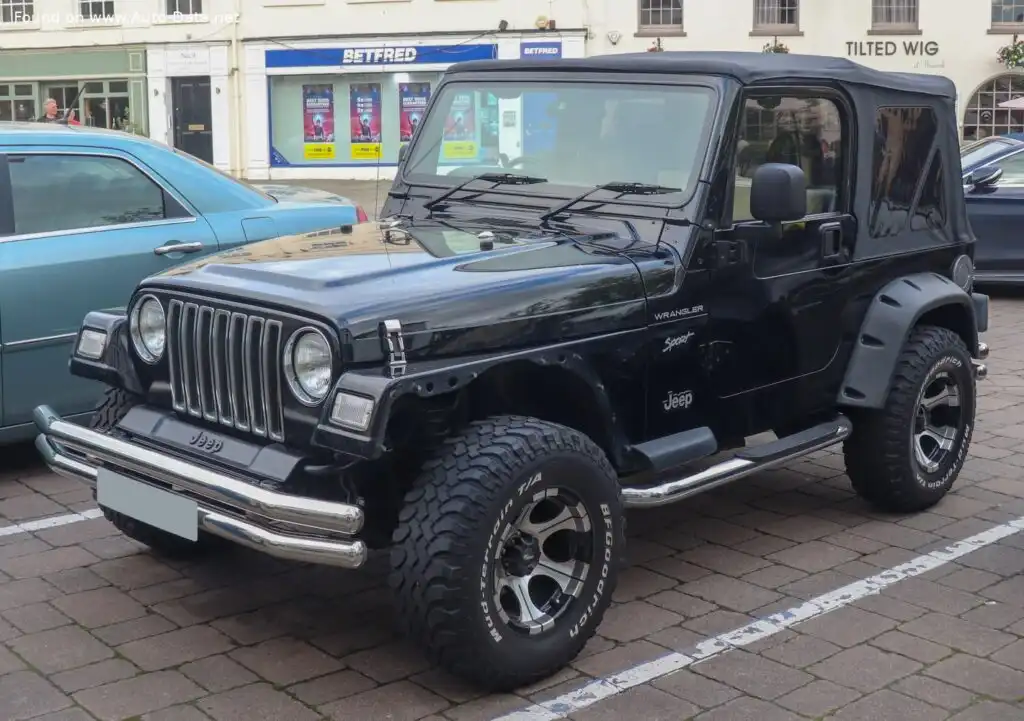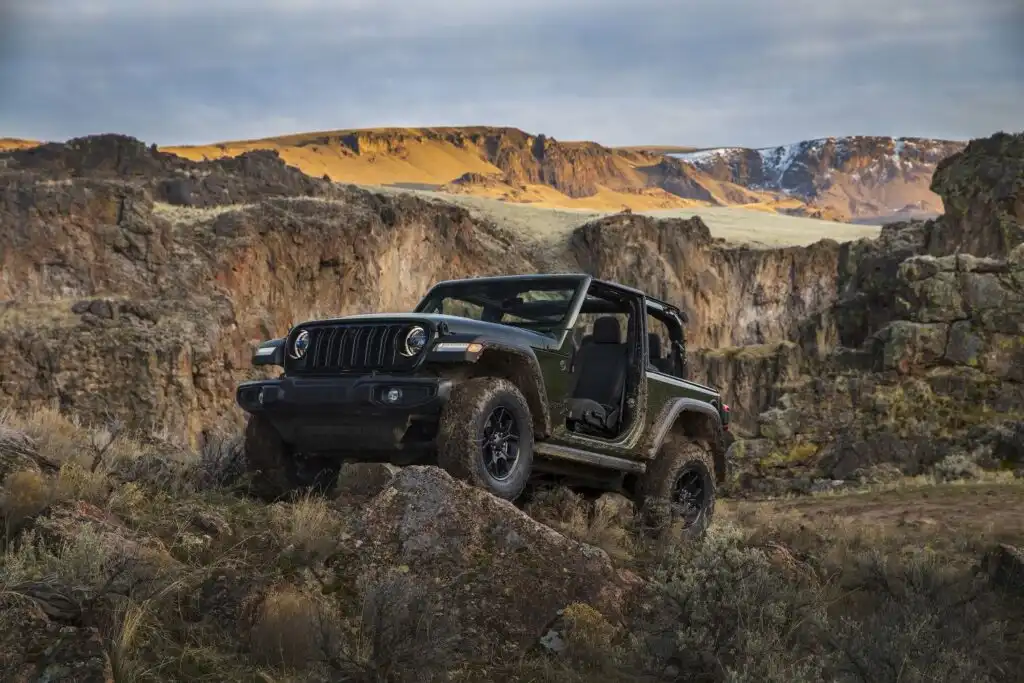
The Jeep Wrangler JL Rubicon 2.0 Turbo, introduced in April 2023 as part of the JL facelift, represents a significant shift in powertrain options for the iconic off-road vehicle. This variant, equipped with the Hurricane four-cylinder engine producing 272 horsepower and paired with an eight-speed automatic transmission, aimed to deliver a balance of modern performance, improved fuel efficiency, and the legendary Wrangler capability. It occupies a mid-range position within the JL Rubicon lineup, offering a compelling alternative to the traditional V6 engine while maintaining the Rubicon’s core off-road features.
Technical Specifications
| Brand | Jeep |
| Model | Wrangler |
| Generation | Wrangler IV (JL, facelift 2023) |
| Type | Rubicon 2.0 Turbo (272 Hp) 4×4 Automatic |
| Start of production | April, 2023 |
| Powertrain Architecture | Internal Combustion engine |
| Body type | Off-road vehicle |
| Seats | 4 |
| Doors | 2 |
| Fuel Type | Petrol (Gasoline) |
| Weight-to-power ratio | 7.1 kg/Hp, 140.1 Hp/tonne |
| Weight-to-torque ratio | 4.9 kg/Nm, 206.1 Nm/tonne |
| Power | 272 Hp @ 5250 rpm |
| Power per litre | 136.3 Hp/l |
| Torque | 400 Nm @ 3000 rpm (295.02 lb.-ft. @ 3000 rpm) |
| Maximum engine speed | 5800 rpm |
| Engine layout | Front, Longitudinal |
| Engine Model/Code | Hurricane |
| Engine displacement | 1995 cm3 (121.74 cu. in.) |
| Number of cylinders | 4 |
| Engine configuration | Inline |
| Cylinder Bore | 84 mm (3.31 in.) |
| Piston Stroke | 90 mm (3.54 in.) |
| Compression ratio | 10:1 |
| Number of valves per cylinder | 4 |
| Fuel injection system | Direct injection |
| Engine aspiration | Turbocharger, Intercooler |
| Valvetrain | DOHC |
| Engine oil capacity | 4.7 l (4.97 US qt | 4.14 UK qt) |
| Coolant | 9.4 l (9.93 US qt | 8.27 UK qt) |
| Kerb Weight | 1941 kg (4279.17 lbs.) |
| Fuel tank capacity | 66 l (17.44 US gal | 14.52 UK gal) |
| Permitted trailer load with brakes (12%) | 907 kg (1999.59 lbs.) |
| Length | 4237 mm (166.81 in.) |
| Width | 1877 mm (73.9 in.) |
| Height | 1868 mm (73.54 in.) |
| Wheelbase | 2460 mm (96.85 in.) |
| Front track | 1636 mm (64.41 in.) |
| Rear track | 1636 mm (64.41 in.) |
| Front overhang | 742 mm (29.21 in.) |
| Rear overhang | 1036 mm (40.79 in.) |
| Ride height (ground clearance) | 274 mm (10.79 in.) |
| Minimum turning circle | 10 m (32.81 ft.) |
| Approach angle | 44° |
| Departure angle | 37° |
| Ramp-over angle | 27.8° |
| Wading depth | 762 mm (30 in.) |
| Drivetrain Architecture | All wheel drive (4×4). ICE drives rear wheels, front wheels engaged via clutch. |
| Number of gears | 8 |
| Gearbox type | Automatic transmission |
| Front suspension | Spring Strut, Coil spring, Rigid axle |
| Rear suspension | Spring Strut, Rigid axle, Transverse stabilizer, Coil spring |
| Front brakes | Ventilated discs, 330×28 mm |
| Rear brakes | Disc, 342×14 mm |
| Assisting systems | ABS (Anti-lock braking system) |
| Steering type | Steering rack and pinion |
| Power steering | Electric |
| Tires size | LT285/70 R17 |
| Wheel rims size | 7.5J x 17 |
INTRODUCTION
The Jeep Wrangler JL Rubicon 2.0 Turbo, launched in 2023, marked a significant step in the evolution of the Wrangler. Built on the JL platform (the fourth generation Wrangler), this variant aimed to broaden the appeal of the Rubicon model by offering a more fuel-efficient and technologically advanced powertrain option. The 2.0-liter Hurricane engine was designed to deliver comparable performance to the traditional 3.6-liter Pentastar V6, while also reducing emissions and improving overall efficiency. The Rubicon trim, known for its extreme off-road capability, retained its core features such as the Rock-Trac 4×4 system, electronic sway bar disconnect, and heavy-duty axles.
Powertrain & Engine Architecture
At the heart of the Rubicon 2.0 Turbo lies the Hurricane four-cylinder engine. This engine, internally designated as the 2.0L GME, is a direct-injected, turbocharged powerplant. It utilizes a twin-scroll turbocharger and sophisticated engine management software to produce 272 horsepower and 400 Nm (295 lb-ft) of torque. The direct injection system allows for precise fuel delivery, optimizing combustion efficiency and power output. The engine features a double overhead camshaft (DOHC) valvetrain with four valves per cylinder, contributing to its responsive nature. The eight-speed automatic transmission, sourced from ZF, is a crucial component of this powertrain. It provides a wide gear ratio spread, optimizing both on-road cruising and low-speed off-road crawling. The transmission is electronically controlled and features a torque converter lock-up clutch for improved fuel economy at highway speeds. The Start & Stop system further enhances fuel efficiency by automatically shutting off the engine when the vehicle is stationary.
Driving Characteristics
The 2.0-liter Turbo engine delivers a noticeably different driving experience compared to the V6. While the V6 offers a more traditional, linear power delivery, the Hurricane engine provides a more immediate and responsive feel thanks to the turbocharger. The eight-speed automatic transmission is well-tuned, providing smooth and timely shifts. In real-world conditions, the 2.0T Rubicon feels adequately powered for both on-road driving and moderate off-road trails. However, when compared to the V6 or even the 3.0L diesel options, it may feel slightly less effortless when climbing steep inclines or carrying heavy loads. The gear ratios are optimized for both low-speed rock crawling and highway cruising, providing a versatile driving experience. The turbo lag is minimal, but noticeable, especially at lower RPMs.
Equipment & Trim Levels
The Rubicon 2.0 Turbo came standard with a comprehensive list of features befitting its off-road focused designation. These included the Rock-Trac 4×4 system with a 4:1 low-range gear ratio, electronic front and rear locking differentials, electronic sway bar disconnect, heavy-duty Dana 44 axles, and 33-inch all-terrain tires. Interior features typically included cloth upholstery, a Uconnect infotainment system with a 7-inch touchscreen, Apple CarPlay and Android Auto compatibility, and a premium sound system. Optional extras included leather upholstery, heated seats, a larger touchscreen display, a forward-facing camera, and various off-road accessories such as a winch and rock rails.
Chassis & Braking
The JL Rubicon utilizes a robust chassis designed to withstand the rigors of off-road driving. It features a high-strength steel frame and a solid front and rear axle suspension. The front suspension utilizes a multi-link coil spring setup, while the rear suspension employs a solid axle with coil springs and a transverse stabilizer bar. The braking system consists of ventilated discs at all four corners, providing ample stopping power. The front brakes measure 330x28mm, while the rear brakes are 342x14mm. An Anti-lock Braking System (ABS) is standard, enhancing safety and control during emergency braking situations.
Market Reception & Comparison
The Rubicon 2.0 Turbo received mixed reviews from automotive critics. While many praised its improved fuel economy and responsive engine, some noted that it lacked the raw power and character of the V6. Compared to the V6 Rubicon, the 2.0T offered slightly better fuel economy (around 22 mpg combined) but a marginally slower 0-60 mph time. The 2.0T was positioned as a more accessible and efficient option for buyers who prioritized fuel economy and on-road comfort without sacrificing too much off-road capability. It appealed to a different segment of Wrangler buyers than the traditional V6-powered Rubicon.
Legacy
The 2.0-liter Hurricane engine represents a significant step towards modernizing the Jeep Wrangler powertrain lineup. While it hasn’t completely replaced the V6, it has established itself as a viable and popular alternative. The long-term reliability of the Hurricane engine appears to be solid, with few widespread issues reported. In the used car market, the Rubicon 2.0 Turbo offers a compelling value proposition, providing a capable and efficient off-road vehicle at a potentially lower price point than its V6 counterpart. Its continued presence in the Wrangler lineup demonstrates Jeep’s commitment to offering a diverse range of powertrain options to meet the needs of its customers.