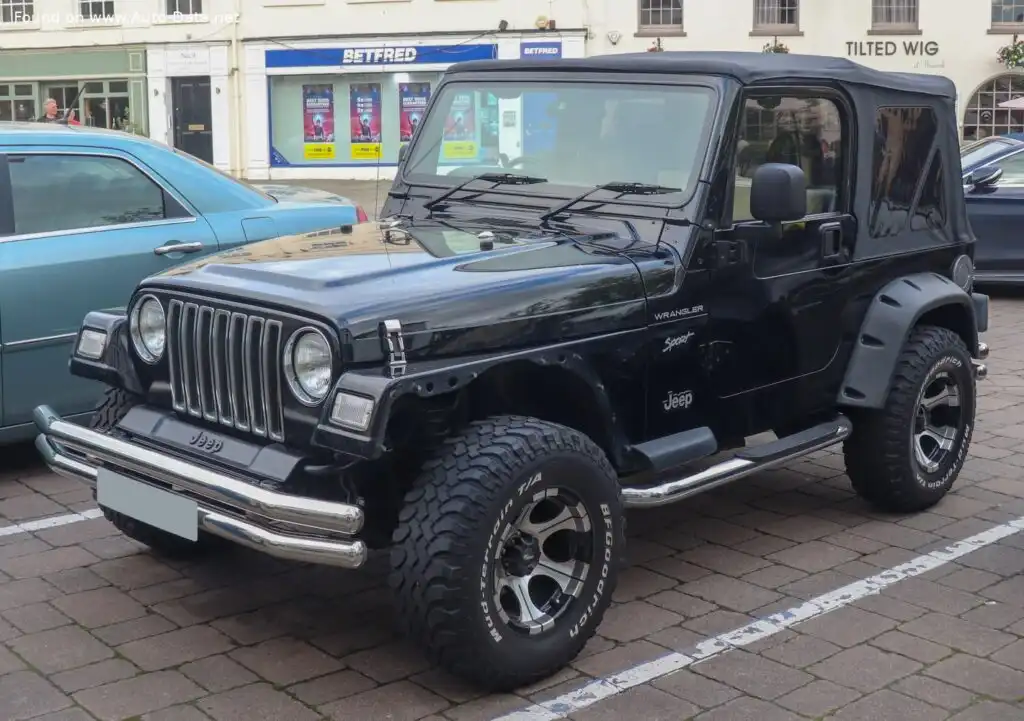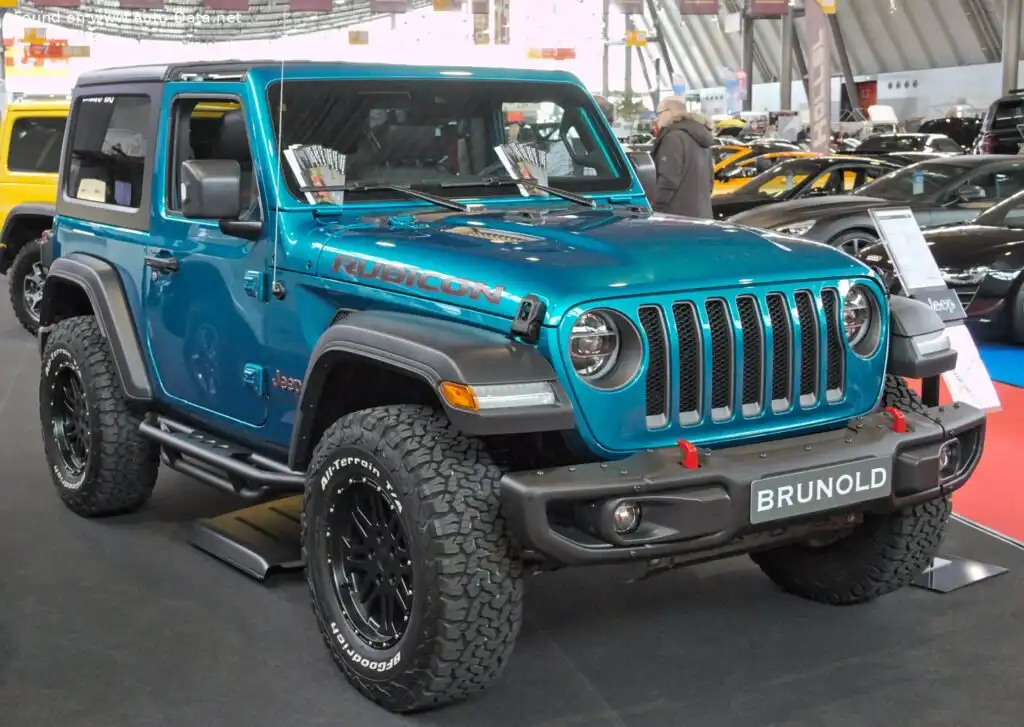
The Jeep Wrangler JL Rubicon 2.0 Turbo, produced from November 2017 through August 2019, represents a significant step in the evolution of the iconic Wrangler. This variant, part of the fourth-generation (JL) Wrangler lineup, introduced a turbocharged four-cylinder engine with mild-hybrid technology (eTorque) to the Rubicon trim, traditionally known for its robust off-road capabilities. Positioned as a more fuel-efficient alternative to the 3.6L V6, the 2.0L Turbo aimed to broaden the Wrangler’s appeal without sacrificing its core identity. It was primarily sold in the North American market, catering to buyers seeking a blend of performance, efficiency, and the legendary Wrangler experience.
Technical Specifications
| Brand | Jeep |
| Model | Wrangler |
| Generation | Wrangler IV (JL) |
| Type | Rubicon 2.0 Turbo (270 Hp) eTorque Mild Hybrid 4×4 Automatic |
| Start of production | November, 2017 |
| End of production | August, 2019 |
| Powertrain Architecture | MHEV (Mild Hybrid Electric Vehicle) |
| Body type | Off-road vehicle |
| Seats | 4 |
| Doors | 2 |
| Fuel consumption (urban) | 10.2 l/100 km (23.1 US mpg) |
| Fuel consumption (extra urban) | 9.4 l/100 km (25 US mpg) |
| Fuel consumption (combined) | 9.8 l/100 km (24 US mpg) |
| Fuel Type | Petrol (Gasoline) |
| Weight-to-power ratio | 7 kg/Hp |
| Weight-to-torque ratio | 4.7 kg/Nm |
| Gross battery capacity | 0.43 kWh |
| Battery voltage | 48 V |
| Battery technology | Lithium-ion (Li-Ion) |
| Power | 270 Hp @ 5250 rpm |
| Torque | 400 Nm @ 3000 rpm (295.02 lb.-ft. @ 3000 rpm) |
| Maximum engine speed | 5800 rpm |
| Engine layout | Front, Longitudinal |
| Engine Model/Code | Hurricane / EC3 |
| Engine displacement | 1995 cm3 (121.74 cu. in.) |
| Number of cylinders | 4 |
| Engine configuration | Inline |
| Cylinder Bore | 84 mm (3.31 in.) |
| Piston Stroke | 90 mm (3.54 in.) |
| Compression ratio | 10:1 |
| Number of valves per cylinder | 4 |
| Fuel injection system | Direct injection |
| Engine aspiration | Twin-scroll turbo, Intercooler |
| Valvetrain | DOHC |
| Engine oil capacity | 4.73 l (5 US qt | 4.16 UK qt) |
| Coolant capacity | 9.4 l (9.93 US qt | 8.27 UK qt) |
| Kerb Weight | 1894 kg (4175.56 lbs.) |
| Trunk space (min) | 203 l (7.17 cu. ft.) |
| Trunk space (max) | 508 l (17.94 cu. ft.) |
| Fuel tank capacity | 70 l (18.49 US gal | 15.4 UK gal) |
| Permitted trailer load (12%) | 907 kg (1999.59 lbs.) |
| Length | 4237 mm (166.81 in.) |
| Width | 1875 mm (73.82 in.) |
| Height | 1868 mm (73.54 in.) |
| Wheelbase | 2460 mm (96.85 in.) |
| Front track | 1598 mm (62.91 in.) |
| Rear track | 1598 mm (62.91 in.) |
| Front overhang | 742 mm (29.21 in.) |
| Rear overhang | 1036 mm (40.79 in.) |
| Ride height (ground clearance) | 274 mm (10.79 in.) |
| Minimum turning circle | 10.5 m (34.45 ft.) |
| Approach angle | 44° |
| Departure angle | 37° |
| Ramp-over angle | 27.8° |
| Drivetrain Architecture | ICE and electric motor drive rear wheels, front wheels engaged via clutch |
| Drive wheel | All wheel drive (4×4) |
| Number of gears | 8 |
| Gearbox type | Automatic transmission |
| Front suspension | Coil spring, Rigid axle, Transverse stabilizer |
| Rear suspension | Rigid axle, Transverse stabilizer, Coil spring |
| Front brakes | Ventilated discs, 330×28 mm |
| Rear brakes | Disc, 342×14 mm |
| Assisting systems | ABS (Anti-lock braking system) |
| Steering type | Cone worm with recirculation balls |
| Power steering | Electric |
| Tires size | 285/70 R17 |
| Wheel rims size | 7.5J x 17 |
INTRODUCTION
The Jeep Wrangler JL Rubicon 2.0 Turbo, launched in late 2017, marked a significant shift for the Wrangler line. The JL generation represented the first complete redesign of the Wrangler since 2006, and the introduction of the 2.0L turbocharged engine was a key component of this modernization. Built on the 1HX0 platform (shared with the Gladiator pickup), the JL aimed to improve on-road refinement and fuel economy while retaining the Wrangler’s legendary off-road prowess. The 2.0L Turbo Rubicon specifically targeted buyers who wanted a more efficient and technologically advanced Wrangler without compromising its off-road capabilities. It served as an alternative to the established 3.6L Pentastar V6, offering a different driving experience and a lower price point in some configurations.
Powertrain & Engine Architecture
At the heart of the Rubicon 2.0 Turbo lies the “Hurricane” engine, internally designated as the EC3. This 1995cc inline-four cylinder engine utilizes direct injection and a twin-scroll turbocharger to produce 270 horsepower at 5250 rpm and 400 Nm (295 lb-ft) of torque at 3000 rpm. The engine’s design incorporates several features aimed at maximizing efficiency and responsiveness, including a low-inertia turbocharger and a sophisticated engine management system. The eTorque mild-hybrid system, a 48-volt system, utilizes a belt-driven motor generator unit (BSG) to provide start-stop functionality, assist during acceleration, and enable regenerative braking. This system contributes to improved fuel economy and a smoother driving experience. The engine is paired with an 8-speed automatic transmission, specifically the ZF 8HP75, known for its smooth shifting and wide gear ratio spread. This transmission is calibrated to work seamlessly with the engine’s torque curve, providing adequate power delivery for both on-road cruising and off-road crawling.
Driving Characteristics
The 2.0L Turbo automatic Wrangler Rubicon delivers a noticeably different driving experience compared to its V6 counterpart. While the V6 offers more raw power, the 2.0L Turbo provides a more refined and responsive feel, particularly at lower RPMs. The turbocharger provides a surge of torque, making it feel surprisingly capable in everyday driving situations. The 8-speed automatic transmission contributes to this smoothness, offering quick and precise shifts. However, the 2.0L Turbo does require slightly more driver input to maintain speed when climbing steep hills or towing, as its peak torque is lower than the V6. The eTorque system provides a subtle boost during acceleration, but it’s not as dramatic as a full hybrid system. Off-road, the 2.0L Turbo Rubicon performs admirably, benefiting from the Rubicon’s robust four-wheel-drive system, locking differentials, and disconnecting sway bar. The lower weight of the four-cylinder engine compared to the V6 can also contribute to improved articulation and maneuverability on challenging terrain.
Equipment & Trim Levels
The Rubicon trim level, even with the 2.0L Turbo engine, came standard with a comprehensive suite of off-road features. These included heavy-duty Dana 44 axles, a Rock-Trac 4×4 system with a 4:1 low-range gear ratio, electronic locking front and rear differentials, and a disconnecting front sway bar. Standard interior features included cloth upholstery, air conditioning, a Uconnect infotainment system with a 7-inch touchscreen, and a rearview camera. Optional extras included leather upholstery, heated seats, a premium audio system, navigation, and various off-road accessories such as a winch and rock rails. The 2.0L Turbo Rubicon was often positioned as a slightly more affordable entry point into the Rubicon trim, making it accessible to a wider range of buyers.
Chassis & Braking
The JL Wrangler Rubicon utilizes a robust body-on-frame chassis, providing excellent durability and off-road capability. The front suspension features a coil spring setup with a solid axle and a transverse stabilizer bar. The rear suspension also utilizes a coil spring setup with a solid axle and a transverse stabilizer bar. Braking duties are handled by ventilated discs at the front (330x28mm) and solid discs at the rear (342x14mm). The braking system is assisted by an Anti-lock Braking System (ABS). The Rubicon trim benefits from a slightly heavier-duty suspension setup compared to lower trims, designed to withstand the rigors of off-road use. The tires, typically 285/70 R17, are specifically chosen for their off-road traction and durability.
Market Reception & Comparison
The 2.0L Turbo Wrangler Rubicon received mixed reviews from automotive critics. While praised for its improved fuel economy and refined driving experience, some reviewers found it lacking the raw power of the 3.6L V6. Compared to the V6 Rubicon, the 2.0L Turbo offered slightly better fuel economy (around 24 mpg combined versus 21 mpg for the V6) and a lower starting price. However, the V6 Rubicon remained the more popular choice, particularly among buyers who prioritized maximum towing capacity and off-road performance. The 2.0L Turbo appealed to a different segment of the market – those who wanted a more efficient and comfortable Wrangler for daily driving, while still retaining its off-road capabilities.
Legacy
The 2.0L Turbo engine proved to be a reliable and durable powertrain in the Wrangler JL. While early production models experienced some minor software glitches, these were addressed through software updates. On the used car market, the 2.0L Turbo Rubicon represents a good value proposition, offering a well-equipped and capable Wrangler at a potentially lower price than its V6 counterpart. The eTorque mild-hybrid system has also proven to be relatively trouble-free, adding to the engine’s overall reliability. The introduction of the 2.0L Turbo engine signaled Jeep’s commitment to improving the Wrangler’s fuel efficiency and embracing new technologies, paving the way for future hybrid and electric Wrangler models.