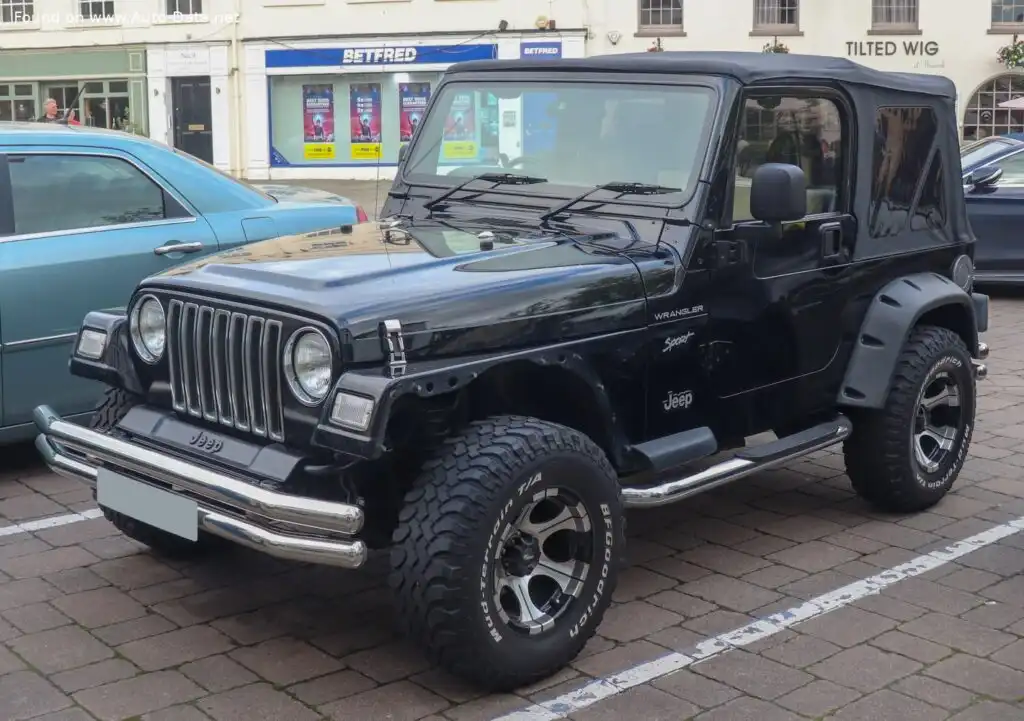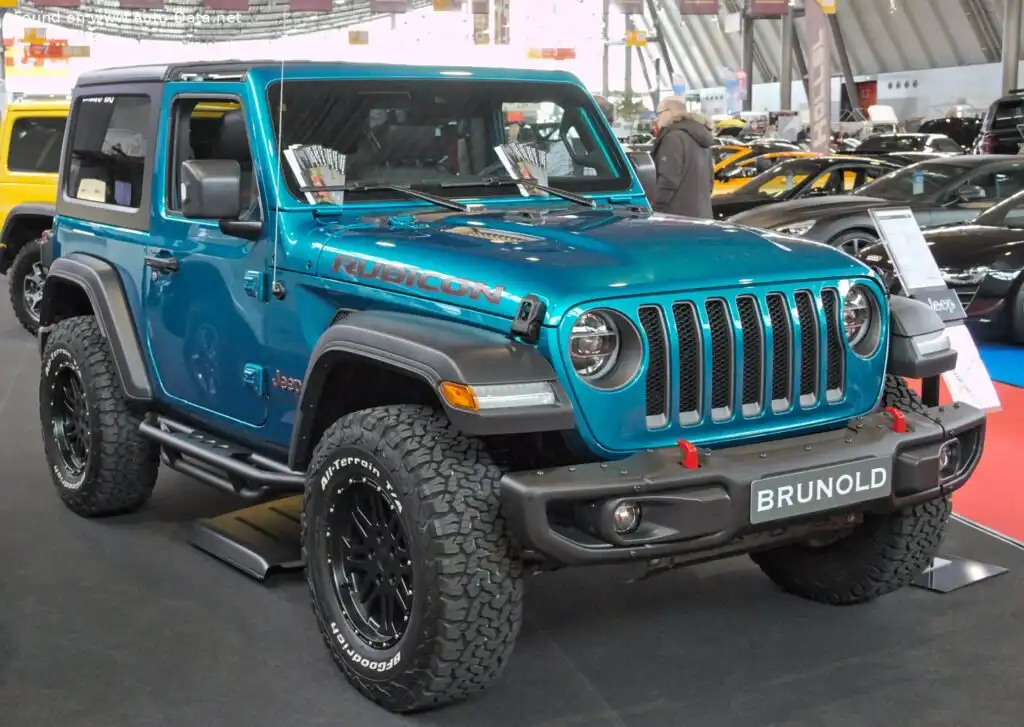
The Jeep Wrangler JL Sport 2.0 Turbo, produced from November 2017 through August 2019, represents a significant step in the evolution of the iconic Wrangler. This variant, part of the fourth-generation (JL) Wrangler lineup, introduced a turbocharged four-cylinder engine with mild-hybrid eTorque technology, offering a blend of improved fuel efficiency and respectable performance within the Wrangler’s traditionally rugged framework. Positioned as a mid-range offering, it aimed to broaden the Wrangler’s appeal beyond the traditional V6-focused buyer. The JL generation marked a departure from the previous TJ and JK models, incorporating independent front suspension for enhanced on-road comfort while retaining the solid rear axle crucial for off-road capability.
Technical Specifications
| Brand | Jeep |
| Model | Wrangler |
| Generation | Wrangler IV (JL) |
| Type | Sport 2.0 Turbo (270 Hp) eTorque Mild Hybrid 4×4 Automatic |
| Start of production | November, 2017 |
| End of production | August, 2019 |
| Powertrain Architecture | MHEV (Mild Hybrid Electric Vehicle) |
| Body type | Off-road vehicle |
| Seats | 4 |
| Doors | 2 |
| Fuel consumption (urban) | 10.2 l/100 km (23.1 US mpg) |
| Fuel consumption (extra urban) | 9.4 l/100 km (25 US mpg) |
| Fuel consumption (combined) | 9.8 l/100 km (24 US mpg) |
| Fuel Type | Petrol (Gasoline) |
| Weight-to-power ratio | 6.7 kg/Hp |
| Weight-to-torque ratio | 4.5 kg/Nm |
| Gross battery capacity | 0.43 kWh |
| Battery voltage | 48 V |
| Battery technology | Lithium-ion (Li-Ion) |
| Power | 270 Hp @ 5250 rpm |
| Torque | 400 Nm @ 3000 rpm (295.02 lb.-ft. @ 3000 rpm) |
| Maximum engine speed | 5800 rpm |
| Engine layout | Front, Longitudinal |
| Engine Model/Code | Hurricane / EC3 |
| Engine displacement | 1995 cm3 (121.74 cu. in.) |
| Number of cylinders | 4 |
| Engine configuration | Inline |
| Cylinder Bore | 84 mm (3.31 in.) |
| Piston Stroke | 90 mm (3.54 in.) |
| Compression ratio | 10:1 |
| Number of valves per cylinder | 4 |
| Fuel injection system | Direct injection |
| Engine aspiration | Twin-scroll turbo, Intercooler |
| Valvetrain | DOHC |
| Engine oil capacity | 4.73 l (5 US qt | 4.16 UK qt) |
| Coolant capacity | 9.4 l (9.93 US qt | 8.27 UK qt) |
| Kerb Weight | 1819 kg (4010.21 lbs.) |
| Trunk space (min) | 203 l (7.17 cu. ft.) |
| Trunk space (max) | 508 l (17.94 cu. ft.) |
| Fuel tank capacity | 70 l (18.49 US gal | 15.4 UK gal) |
| Permitted trailer load (12%) | 907 kg (1999.59 lbs.) |
| Length | 4237 mm (166.81 in.) |
| Width | 1875 mm (73.82 in.) |
| Height | 1868 mm (73.54 in.) |
| Wheelbase | 2460 mm (96.85 in.) |
| Front track | 1598 mm (62.91 in.) |
| Rear track | 1598 mm (62.91 in.) |
| Ride height (ground clearance) | 246 mm (9.69 in.) |
| Minimum turning circle | 10.5 m (34.45 ft.) |
| Approach angle | 41.4° |
| Departure angle | 35.9° |
| Ramp-over angle | 25° |
| Drivetrain Architecture | ICE and electric motor drive rear wheels, front wheels engaged via clutch |
| Drive wheel | All wheel drive (4×4) |
| Number of gears | 8 |
| Gearbox type | Automatic transmission |
| Front suspension | Coil spring, Rigid axle, Transverse stabilizer |
| Rear suspension | Rigid axle, Transverse stabilizer, Coil spring |
| Front brakes | Ventilated discs, 330×24 mm |
| Rear brakes | Disc, 342×14 mm |
| Steering type | Cone worm with recirculation balls |
| Power steering | Electric |
| Tires size | 245/75 R17 |
| Wheel rims size | 7.5J x 17 |
Powertrain & Engine Architecture
The heart of the JL Wrangler Sport 2.0 Turbo is the “Hurricane” engine, internally designated as the EC3. This 1.995-liter inline-four cylinder engine utilizes direct fuel injection and a twin-scroll turbocharger to produce 270 horsepower at 5250 rpm and 295 lb-ft of torque at 3000 rpm. The twin-scroll turbo design minimizes turbo lag, providing a more responsive driving experience. The engine also incorporates the eTorque mild-hybrid system. This system employs a 48-volt battery pack and a belt-driven motor-generator unit to provide start-stop functionality, assist during acceleration, and enable regenerative braking. The 8-speed automatic transmission, sourced from ZF, is a key component of the powertrain. Its wide gear ratio spread helps to optimize both fuel economy and off-road performance. The transmission features a torque converter lock-up clutch that engages early in each gear to improve efficiency.
Driving Characteristics
The 2.0-liter turbo engine, paired with the 8-speed automatic, delivers a noticeably different driving experience compared to the traditional 3.6-liter Pentastar V6 Wrangler. While the V6 offers more raw power, the 2.0T provides a broader, more accessible torque curve. The eTorque system contributes to smoother starts and a slight boost during initial acceleration. However, the automatic transmission, while refined, can sometimes feel hesitant during quick downshifts. Compared to a manual transmission equipped Wrangler, the automatic prioritizes ease of use over outright performance. The 8-speed’s gear ratios are well-suited for both highway cruising and low-speed rock crawling, providing adequate power in various terrains. The overall driving experience is more refined than previous Wrangler generations, thanks to the independent front suspension, but it still retains the Wrangler’s characteristic ruggedness.
Equipment & Trim Levels
The JL Wrangler Sport trim, even with the 2.0T engine, offered a respectable level of standard equipment. Key features included air conditioning, a five-inch touchscreen infotainment system with Bluetooth connectivity, a rearview camera, and basic cloth upholstery. Optional extras included larger infotainment screens with Apple CarPlay and Android Auto compatibility, upgraded sound systems, power windows and locks, and various off-road packages that added features like rock rails and heavy-duty axles. Interior materials were durable and utilitarian, reflecting the Wrangler’s focus on functionality over luxury. The dashboard layout was straightforward and easy to use, with large, clearly marked controls.
Chassis & Braking
The JL Wrangler utilizes a body-on-frame construction, providing a robust and durable platform for off-road adventures. The front suspension features independent double wishbones with coil springs and a stabilizer bar, a significant upgrade over the solid axle setup of previous generations. The rear suspension retains a solid axle with coil springs and a stabilizer bar. Braking duties are handled by ventilated discs at the front and solid discs at the rear. The anti-lock braking system (ABS) is standard. The Wrangler’s relatively high center of gravity and off-road-oriented tires contribute to a slightly less precise on-road handling feel compared to more car-like SUVs.
Market Reception & Comparison
The introduction of the 2.0-liter turbo engine was met with mixed reactions. Some critics praised the improved fuel economy and responsive power delivery, while others lamented the lack of the V6’s traditional rumble and overall power. Compared to the 3.6-liter V6 Wrangler, the 2.0T offered slightly better fuel economy in real-world driving conditions, averaging around 21-23 mpg combined. The 2.0T was generally considered a more appealing option for daily drivers who prioritize fuel efficiency and on-road comfort, while the V6 remained the preferred choice for serious off-road enthusiasts. Reliability reports have been generally positive, with the 2.0T engine proving to be a durable and dependable powerplant.
Legacy
The JL Wrangler Sport 2.0 Turbo represents a pivotal moment in the Wrangler’s history, demonstrating Jeep’s commitment to improving fuel efficiency and embracing new technologies without sacrificing the vehicle’s core off-road capabilities. The eTorque mild-hybrid system paved the way for more advanced hybrid powertrains in later Wrangler models. On the used car market, these models hold their value reasonably well, particularly those in good condition with low mileage. The 2.0T engine’s proven reliability and relatively low maintenance costs make it an attractive option for buyers seeking a capable and efficient off-road vehicle.