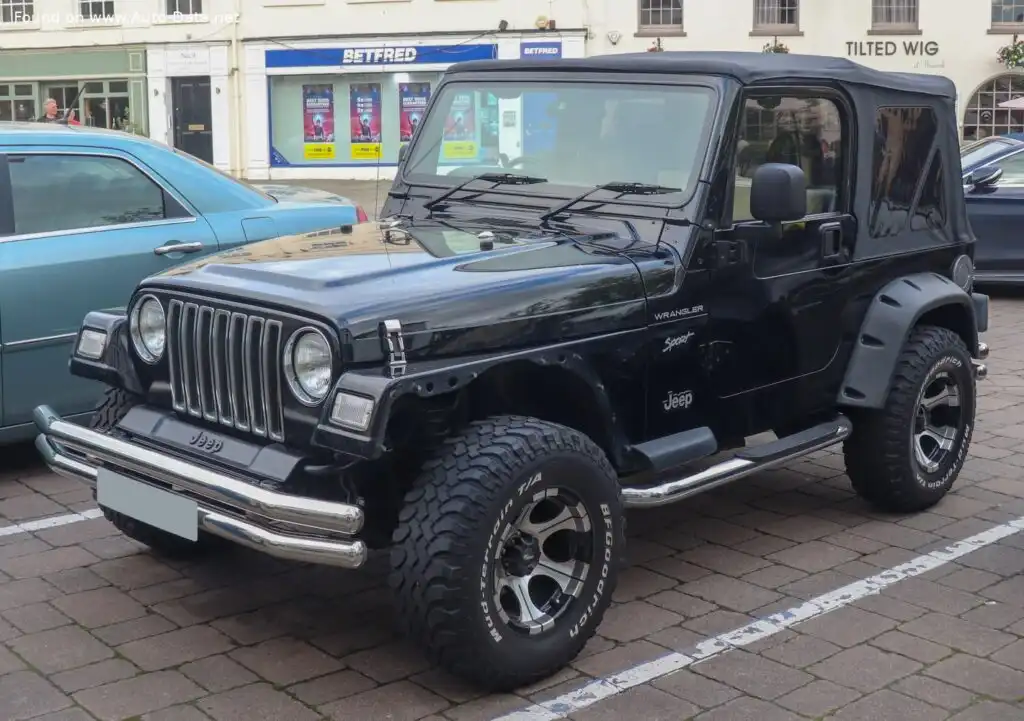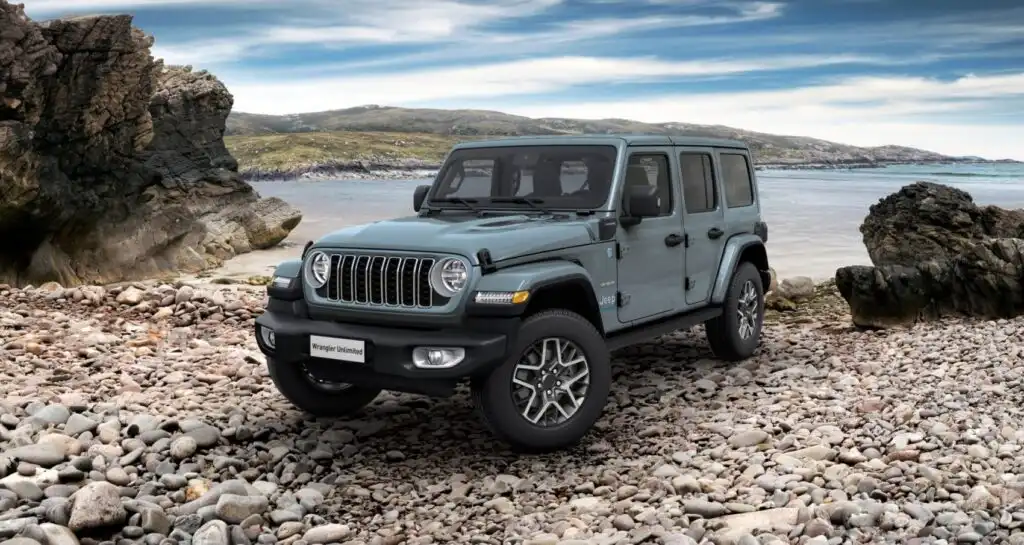
The Jeep Wrangler IV Unlimited (JL) Rubicon 2.0 T-GDI 4×4 Automatic, introduced in October 2023 as part of the JL facelift, represents a significant evolution in the iconic Wrangler lineage. This variant slots into the high-end Rubicon trim level, offering a blend of off-road capability and modern powertrain technology. It builds upon the established strengths of the JL platform – known for its robust construction and open-air freedom – while introducing a turbocharged four-cylinder engine as an alternative to the traditional V6 options. The “Unlimited” designation signifies the four-door body style, providing increased passenger and cargo space compared to the two-door Wrangler.
Technical Specifications
| Brand | Jeep |
| Model | Wrangler |
| Generation | Wrangler IV Unlimited (JL, facelift 2023) |
| Type | Rubicon 2.0 T-GDI (272 Hp) 4×4 Automatic |
| Start of production | October, 2023 |
| Powertrain Architecture | Internal Combustion engine |
| Body type | Off-road vehicle |
| Seats | 5 |
| Doors | 4 |
| Fuel consumption at Low speed (WLTP) | 14.2 l/100 km (16.6 US mpg, 19.9 UK mpg, 7 km/l) |
| Fuel consumption at Medium speed (WLTP) | 10.5 l/100 km (22.4 US mpg, 26.9 UK mpg, 9.5 km/l) |
| Fuel consumption at high speed (WLTP) | 9.7 l/100 km (24.2 US mpg, 29.1 UK mpg, 10.3 km/l) |
| Fuel consumption at very high speed (WLTP) | 12.2 l/100 km (19.3 US mpg, 23.2 UK mpg, 8.2 km/l) |
| Combined fuel consumption (WLTP) | 11.4 l/100 km (20.6 US mpg, 24.8 UK mpg, 8.8 km/l) |
| CO2 emissions (WLTP) | 278 g/km |
| Fuel Type | Petrol (Gasoline) |
| Maximum speed | 159 km/h (98.8 mph) |
| Emission standard | Euro 6d |
| Weight-to-power ratio | 7.5 kg/Hp, 134.1 Hp/tonne |
| Weight-to-torque ratio | 5.1 kg/Nm, 197.2 Nm/tonne |
| Power | 272 Hp @ 5250 rpm |
| Power per litre | 136.3 Hp/l |
| Torque | 400 Nm @ 3000 rpm (295.02 lb.-ft. @ 3000 rpm) |
| Engine layout | Front, Longitudinal |
| Engine Model/Code | N |
| Engine displacement | 1995 cm3 (121.74 cu. in.) |
| Number of cylinders | 4 |
| Engine configuration | Inline |
| Number of valves per cylinder | 4 |
| Fuel injection system | Direct injection |
| Engine aspiration | Turbocharger, Intercooler |
| Engine oil capacity | 4.73 l (5 US qt | 4.16 UK qt) |
| Coolant | 11.5 l (12.15 US qt | 10.12 UK qt) |
| Kerb Weight | 2028 kg (4470.97 lbs.) |
| Max. weight | 2574 kg (5674.7 lbs.) |
| Max load | 546 kg (1203.72 lbs.) |
| Trunk (boot) space – minimum | 548 l (19.35 cu. ft.) |
| Trunk (boot) space – maximum | 1059 l (37.4 cu. ft.) |
| Fuel tank capacity | 81 l (21.4 US gal | 17.82 UK gal) |
| Permitted trailer load with brakes (12%) | 2495 kg (5500.53 lbs.) |
| Permitted trailer load without brakes | 750 kg (1653.47 lbs.) |
| Length | 4882 mm (192.2 in.) |
| Width | 1894 mm (74.57 in.) |
| Height | 1848-1901 mm (72.76 – 74.84 in.) |
| Wheelbase | 3008 mm (118.43 in.) |
| Ride height (ground clearance) | 252 mm (9.92 in.) |
| Minimum turning circle (turning diameter) | 12.3 m (40.35 ft.) |
| Approach angle | 36° |
| Departure angle | 31.4° |
| Ramp-over (brakeover) angle | 20.8° |
| Wading depth | 762 mm (30 in.) |
| Drivetrain Architecture | The Internal combustion engine (ICE) drives the rear wheels permanently, and the front wheels are driven through an electrically or mechanically operated clutch if necessary. |
| Drive wheel | All wheel drive (4×4) |
| Number of gears and type of gearbox | 8 gears, automatic transmission |
| Front brakes | Ventilated discs |
| Rear brakes | Disc |
| Assisting systems | ABS (Anti-lock braking system) |
| Tires size | 255/75 R17 |
| Wheel rims size | 17 |
Powertrain & Engine Architecture
At the heart of the Rubicon 2.0 T-GDI lies the “Hurricane” engine, a 2.0-liter turbocharged inline-four cylinder. This engine, internally designated as the ‘N’ engine code, represents a departure from the traditional V6 offerings in the Wrangler. It utilizes direct fuel injection and a twin-scroll turbocharger to deliver 272 horsepower at 5250 rpm and 400 Nm (295 lb-ft) of torque at 3000 rpm. The engine’s design prioritizes low-end torque for enhanced off-road crawling ability. The eight-speed automatic transmission, sourced from ZF, is specifically tuned to complement the engine’s characteristics, providing smooth shifts and a wide gear ratio spread. This transmission is known for its responsiveness and durability, crucial for handling the demands of off-road driving. The engine also incorporates a start/stop system and a particulate filter to meet stringent emissions standards.
Driving Characteristics
The 2.0T engine, paired with the eight-speed automatic, delivers a noticeably different driving experience compared to the 3.6L V6 Wrangler. While the V6 offers a more traditional, linear power delivery, the 2.0T provides a stronger surge of torque at lower RPMs, making it particularly adept at rock crawling and navigating challenging terrain. The automatic transmission’s gear ratios are optimized for both on-road cruising and off-road maneuvering. However, some drivers may find the 2.0T slightly less refined than the V6 in terms of overall smoothness, particularly during highway driving. The weight distribution remains similar to other JL Wranglers, contributing to predictable handling, although the vehicle’s inherent high center of gravity is still noticeable.
Equipment & Trim Levels
The Rubicon trim level is the most off-road focused in the Wrangler lineup. Standard features on the 2.0 T-GDI Rubicon include heavy-duty Dana 44 axles, a Rock-Trac 4×4 system with a 4:1 low-range gear ratio, electronic sway bar disconnect, and 33-inch all-terrain tires. Interior features typically include cloth or leather upholstery, a Uconnect infotainment system with a touchscreen display, and available features like navigation, premium audio systems, and heated seats. Optional extras often include a hardtop roof, power windows and locks, and various off-road accessories such as a winch and rock rails.
Chassis & Braking
The Wrangler JL utilizes a robust body-on-frame construction, providing exceptional durability and off-road capability. The Rubicon variant features a specifically tuned suspension designed to maximize articulation and absorb impacts on rough terrain. The front suspension utilizes a multi-link design, while the rear suspension employs a solid axle with coil springs. Braking duties are handled by ventilated discs at all four corners, providing ample stopping power. The anti-lock braking system (ABS) is standard, enhancing safety in various driving conditions.
Market Reception & Comparison
The introduction of the 2.0T engine in the Wrangler was met with mixed reactions. Some critics praised its fuel efficiency and low-end torque, while others expressed concerns about its refinement and overall performance compared to the V6. Fuel economy figures, while improved over the V6, are still relatively modest for a four-cylinder engine, reflecting the Wrangler’s aerodynamic inefficiencies and substantial weight. In terms of reliability, the 2.0T engine has shown to be generally dependable, although some early models experienced minor issues with the turbocharger and fuel system. Compared to the 3.6L V6, the 2.0T Rubicon often commands a slightly lower price on the used market.
Legacy
The Jeep Wrangler JL Rubicon 2.0 T-GDI represents a significant step in the evolution of the Wrangler, offering a more fuel-efficient and technologically advanced option for off-road enthusiasts. While it may not have completely replaced the V6 in the hearts of all Wrangler fans, it has proven to be a capable and reliable powertrain. On the used car market, these models are becoming increasingly sought after by buyers looking for a blend of off-road prowess and modern features. The long-term durability of the “Hurricane” engine remains to be fully assessed, but early indications suggest it is a robust and dependable unit.