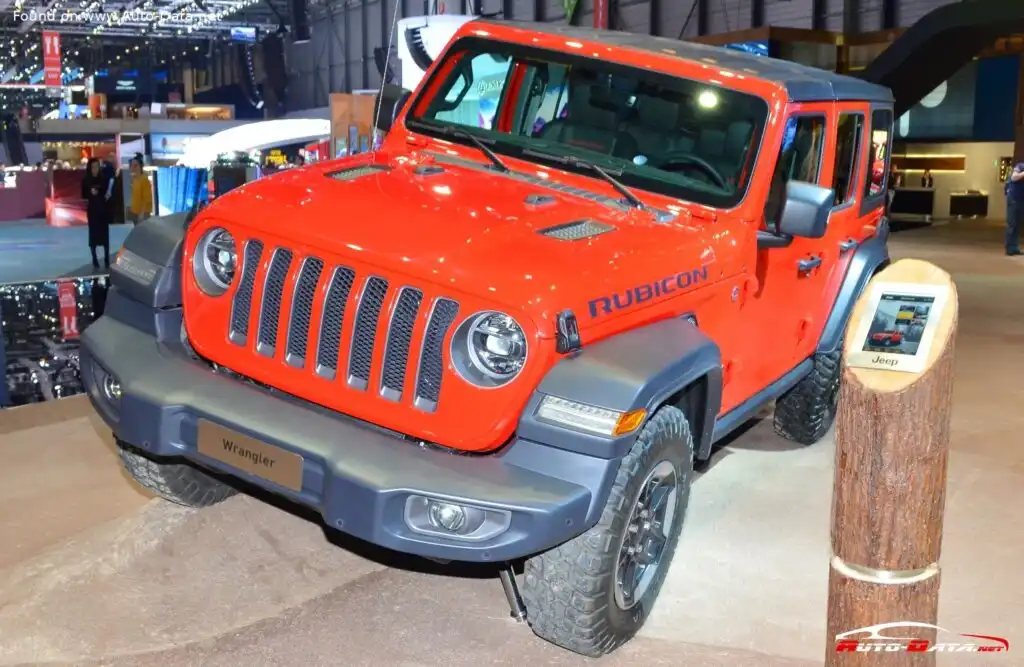
The Jeep Wrangler IV Unlimited (JL) Sahara 3.6 Pentastar V6 with eTorque mild-hybrid technology and an 8-speed automatic transmission represents a significant evolution in the iconic Wrangler lineage. Introduced for the 2019 model year and continuing through 2023, this variant occupied a sweet spot in the JL lineup, offering a blend of on-road refinement and the legendary off-road capability Jeep is known for. It catered to buyers seeking a comfortable daily driver that didn’t compromise on the Wrangler’s core attributes. This configuration was positioned as a mid-to-upper trim level, offering more features and a more powerful engine than the base models, but stopping short of the more specialized Rubicon trims.
Technical Specifications
| Brand | Jeep |
| Model | Wrangler |
| Generation | Wrangler IV Unlimited (JL) |
| Type | Sahara 3.6 Pentastar V6 (285 Hp) eTorque Mild Hybrid 4×4 Automatic |
| Start of production | August, 2019 |
| End of production | April, 2023 |
| Powertrain Architecture | MHEV (Mild Hybrid Electric Vehicle) |
| Body type | Off-road vehicle |
| Seats | 5 |
| Doors | 4 |
| Fuel consumption (urban) | 12.4 l/100 km (19 US mpg) |
| Fuel consumption (extra urban) | 10.7 l/100 km (22 US mpg) |
| Fuel consumption (combined) | 11.8 l/100 km (19.9 US mpg) |
| Fuel Type | Petrol (Gasoline) |
| Weight-to-power ratio | 7 kg/Hp |
| Weight-to-torque ratio | 5.7 kg/Nm |
| Gross battery capacity | 0.43 kWh |
| Battery voltage | 48 V |
| Battery technology | Lithium-ion (Li-Ion) |
| Power | 285 Hp @ 6400 rpm |
| Torque | 353 Nm @ 4800 rpm (260.36 lb.-ft. @ 4800 rpm) |
| Maximum engine speed | 6600 rpm |
| Engine displacement | 3604 cm3 (219.93 cu. in.) |
| Number of cylinders | 6 |
| Engine configuration | V-engine |
| Cylinder Bore | 96 mm (3.78 in.) |
| Piston Stroke | 83 mm (3.27 in.) |
| Compression ratio | 11.3:1 |
| Fuel injection system | Multi-port manifold injection |
| Engine aspiration | Naturally aspirated |
| Engine oil capacity | 4.73 l (5 US qt | 4.16 UK qt) |
| Kerb Weight | 1999 kg (4407.04 lbs.) |
| Max. weight | 2546 kg (5612.97 lbs.) |
| Trunk (boot) space (min) | 548 l (19.35 cu. ft.) |
| Trunk (boot) space (max) | 1059 l (37.4 cu. ft.) |
| Fuel tank capacity | 81 l (21.4 US gal | 17.82 UK gal) |
| Length | 4785 mm (188.39 in.) |
| Width | 1875 mm (73.82 in.) |
| Height | 1868 mm (73.54 in.) |
| Wheelbase | 3008 mm (118.43 in.) |
| Gears/Transmission | 8-speed automatic |
Powertrain & Engine Architecture
At the heart of the JL Sahara is the 3.6-liter Pentastar V6 engine, designated as the ERG engine code. This engine is a naturally aspirated, 24-valve DOHC powerplant featuring multi-port fuel injection. The Pentastar is renowned for its smooth operation and robust reliability. The “eTorque” mild-hybrid system adds a 48-volt belt-drive integrated starter/generator (BSG) unit. This system allows for quicker, smoother starts and stops, as well as regenerative braking to recapture energy during deceleration. The BSG also provides a small amount of electric assist during acceleration, improving fuel economy. The 8-speed automatic transmission (8HP75) is a sophisticated unit known for its smooth shifts and wide gear ratio spread. It contributes to both fuel efficiency and performance, offering a balance between responsiveness and relaxed cruising.
Driving Characteristics
The 285 horsepower and 260 lb-ft of torque delivered by the 3.6L Pentastar, coupled with the 8-speed automatic, provide adequate, though not exhilarating, performance. Acceleration from 0 to 60 mph typically takes around 7.5-8.0 seconds. The automatic transmission is well-tuned for everyday driving, offering smooth gear changes and a responsive feel. Compared to the manual transmission versions, the automatic sacrifices some driver engagement but gains convenience. Against the higher-output 3.0L EcoDiesel or the 2.0L Turbo engines available in the JL range, the 3.6L feels less powerful, particularly when fully loaded or tackling steep inclines. However, the eTorque system helps mitigate some of this difference by providing a small boost during initial acceleration. The automatic transmission’s gear ratios are optimized for a balance of fuel economy and towing capacity.
Equipment & Trim Levels
The Sahara trim level, as standard, included features like air conditioning, power windows and locks, a touchscreen infotainment system with Apple CarPlay and Android Auto compatibility, and a rearview camera. Upholstery typically consisted of cloth seats, though leather was available as an option. Common optional extras included a premium sound system, navigation, heated seats and steering wheel, and various off-road packages adding features like rock rails and upgraded suspension components. The Sahara trim aimed for a balance of comfort and capability, making it a popular choice for those wanting a well-equipped Wrangler without the extreme off-road focus of the Rubicon.
Chassis & Braking
The JL Wrangler utilizes a fully boxed frame, providing a solid foundation for both on- and off-road performance. The front suspension consists of a coil-spring, rigid axle setup with a transverse stabilizer bar. The rear suspension also employs a coil-spring, rigid axle configuration with a stabilizer bar. This setup provides excellent articulation for off-road obstacles. Braking duties are handled by ventilated discs at the front (330x28mm) and discs at the rear (342x14mm). Anti-lock brakes (ABS) are standard. The Sahara trim generally featured slightly less aggressive tires than the Rubicon, prioritizing on-road comfort and noise levels.
Market Reception & Comparison
The JL Wrangler Sahara 3.6 eTorque was generally well-received by automotive critics. It was praised for its improved ride quality compared to previous Wrangler generations, its user-friendly technology, and its iconic styling. Fuel economy, while not exceptional, was considered reasonable for a vehicle of its type. Compared to the diesel and turbo-four engine options, the 3.6L V6 offered a more familiar and arguably more reliable powertrain. However, some reviewers noted that the engine could feel strained when pushed hard, and the fuel economy wasn’t as competitive as some of the more modern engine options. The Sahara trim struck a good balance between price and features, making it a popular choice among buyers.
Legacy
The 3.6L Pentastar V6 with eTorque in the JL Wrangler has proven to be a relatively reliable powertrain. While some minor issues have been reported, such as water pump failures and oil consumption, these are not widespread. The 8-speed automatic transmission has also demonstrated good durability. On the used car market, these Wranglers hold their value well, due to the vehicle’s enduring popularity and reputation for off-road capability. The eTorque mild-hybrid system, while not a revolutionary technology, adds a degree of efficiency and refinement that enhances the overall driving experience. This variant continues to be a sought-after option for those looking for a capable and comfortable Wrangler.