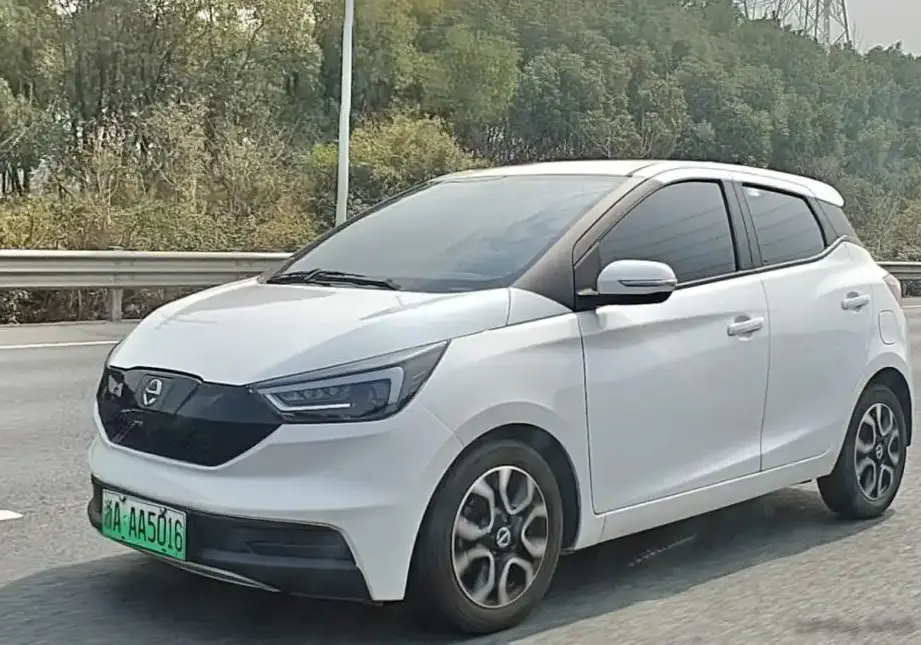
The JMEV EV3 31.9 kWh (48 hp) is a fully electric hatchback produced by the Chinese manufacturer JMEV from March 2019 to October 2023. Positioned as an entry-level electric vehicle, the EV3 aimed to provide affordable personal transportation within urban environments. It represents JMEV’s initial foray into the burgeoning electric vehicle market, capitalizing on government incentives for electric vehicle adoption in China. The EV3 is based on a dedicated electric vehicle platform, prioritizing efficiency and practicality over outright performance. It served as a foundational model for JMEV, paving the way for subsequent electric vehicle offerings.
Technical Specifications
| Brand | JMEV |
| Model | EV3 |
| Generation | EV3 |
| Type (Engine) | 31.9 kWh (48 Hp) Electric |
| Start of production | March, 2019 |
| End of production | October, 2023 |
| Powertrain Architecture | BEV (Electric Vehicle) |
| Body type | Hatchback |
| Seats | 4 |
| Doors | 5 |
| Fuel Type | Electricity |
| Maximum speed | 102 km/h (63.38 mph) |
| Weight-to-power ratio | 23.2 kg/Hp, 43 Hp/tonne |
| Weight-to-torque ratio | 7.4 kg/Nm, 134.5 Nm/tonne |
| Gross battery capacity | 31.9 kWh |
| Battery technology | Lithium nickel manganese cobalt oxides (Li-NMC) |
| Battery location | Below the floor |
| All-electric range (NEDC) | 302 km (187.65 mi) |
| Electric motor power | 48 Hp |
| Electric motor Torque | 150 Nm (110.63 lb.-ft.) |
| Electric motor location | Front axle, Transverse |
| Electric motor type | Synchronous |
| System power | 48 Hp |
| System torque | 150 Nm (110.63 lb.-ft.) |
| Kerb Weight | 1115 kg (2458.15 lbs.) |
| Length | 3720 mm (146.46 in.) |
| Width | 1640 mm (64.57 in.) |
| Height | 1485-1494 mm (58.46 – 58.82 in.) |
| Wheelbase | 2390 mm (94.09 in.) |
| Front track | 1420 mm (55.91 in.) |
| Rear (Back) track | 1420 mm (55.91 in.) |
| Ride height (ground clearance) | 110 mm (4.33 in.) |
| Drivetrain Architecture | One electric motor drives the front wheels. |
| Drive wheel | Front wheel drive |
| Number of gears and type of gearbox | 1 gears, automatic transmission |
| Front suspension | Independent type McPherson |
| Rear suspension | Torsion |
| Front brakes | Ventilated discs |
| Rear brakes | Drum |
| Assisting systems | ABS (Anti-lock braking system) |
| Steering type | Steering rack and pinion |
| Power steering | Electric Steering |
| Tires size | 175/60 R15 |
| Wheel rims size | 15 |
Powertrain & Engine Architecture
The JMEV EV3 utilizes a fully Battery Electric Vehicle (BEV) powertrain. At its heart is a single synchronous electric motor, transversely mounted on the front axle, producing 48 horsepower and 150 Nm (110.63 lb.-ft.) of torque. The motor is powered by a 31.9 kWh Lithium Nickel Manganese Cobalt Oxide (Li-NMC) battery pack located under the vehicle floor, contributing to a lower center of gravity. The EV3 employs a single-speed automatic transmission, typical of most electric vehicles, simplifying the driving experience. The vehicle’s electronic control unit (ECU) manages power delivery, regenerative braking, and battery management systems. The charging port location is not publicly available.
Driving Characteristics
The EV3’s 48 hp output and 150 Nm of torque result in modest acceleration. While not designed for rapid acceleration, the instant torque delivery characteristic of electric motors provides adequate responsiveness for urban driving conditions. The single-speed automatic transmission offers seamless acceleration, but lacks the gear ratios found in conventional vehicles. Top speed is limited to 102 km/h (63.38 mph). The relatively low curb weight of 1115 kg (2458.15 lbs.) helps to mitigate the limited power output. The regenerative braking system allows for increased efficiency and reduced brake wear, but its effectiveness is limited compared to more advanced systems found in higher-end EVs.
Equipment & Trim Levels
The JMEV EV3 was generally offered with a basic level of standard equipment, reflecting its position as an affordable electric vehicle. Standard features typically included air conditioning, power windows, and a basic audio system. Interior upholstery was typically cloth. The dashboard layout was functional and straightforward, prioritizing ease of use. Optional extras were limited, but may have included upgrades to the audio system or the addition of a rearview camera. Trim levels were not extensively differentiated, with most variations stemming from optional equipment packages.
Chassis & Braking
The EV3 utilizes a McPherson strut independent suspension system at the front, providing a reasonable level of ride comfort. The rear suspension employs a torsion beam setup, a cost-effective solution commonly found in compact vehicles. The braking system consists of ventilated discs at the front and drum brakes at the rear. An Anti-lock Braking System (ABS) is standard, enhancing safety. The steering system is a rack and pinion type with electric power steering, providing light and responsive steering feel. The vehicle rides on 15-inch wheels with 175/60 R15 tires.
Market Reception & Comparison
The JMEV EV3 was primarily targeted at the Chinese domestic market, where it benefited from government subsidies and incentives for electric vehicle purchases. Reviews generally highlighted its affordability and practicality as key strengths. However, critics also noted its limited range, modest performance, and basic interior. Compared to other entry-level EVs in China, the EV3 offered a competitive price point, but lacked the refinement and features of some rivals. Fuel economy, expressed as energy consumption, was a key selling point, offering significantly lower running costs compared to gasoline-powered vehicles. Reliability reports are limited, but the relatively simple powertrain suggests a potentially robust and reliable design.
Legacy
The JMEV EV3 served as an important stepping stone for JMEV in establishing itself as an electric vehicle manufacturer. While no longer in production, the EV3 remains a relatively common sight on Chinese roads. Its affordability and practicality made it a popular choice for first-time EV buyers and urban commuters. The EV3’s legacy lies in its contribution to the growing adoption of electric vehicles in China and its role in paving the way for JMEV’s subsequent EV models. On the used car market, the EV3 represents an affordable entry point into electric vehicle ownership, but potential buyers should carefully assess the condition of the battery pack, as battery degradation can significantly impact range and performance.