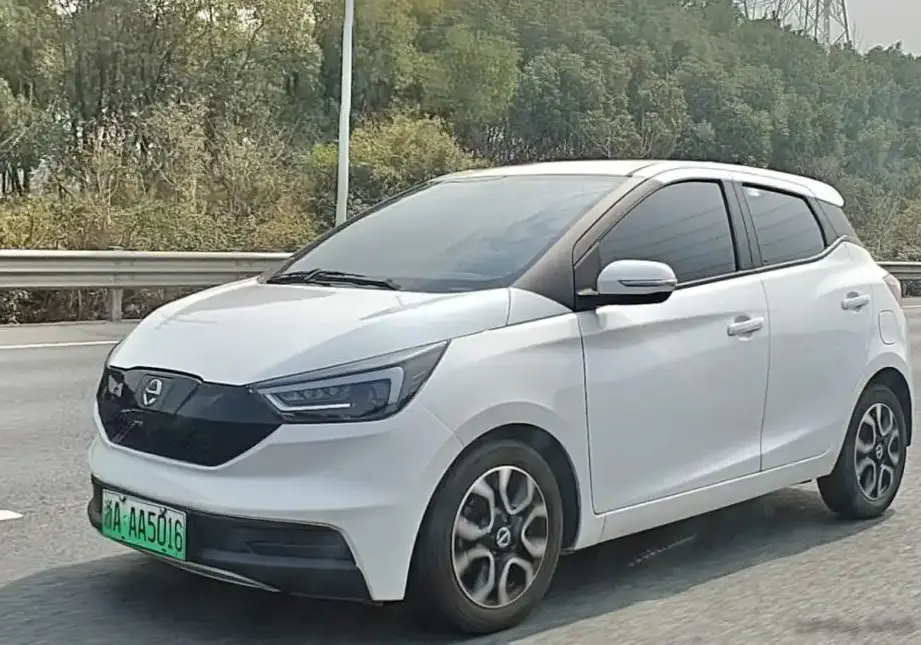
The JMEV EV3 (facelift 2025) 30.24 kWh (68 Hp) Electric represents a significant entry point into the burgeoning electric vehicle market, particularly within its intended market segment. Introduced in January 2025, this facelifted version of the EV3 builds upon the foundation laid by the original model, aiming to provide an affordable and practical all-electric hatchback option. It’s positioned as a city-focused vehicle, designed for short to medium-range commutes and urban driving. The EV3 falls within the compact hatchback category, competing with other entry-level EVs and traditional gasoline-powered vehicles in terms of price and practicality. It utilizes a Battery Electric Vehicle (BEV) powertrain and is characterized by its relatively small battery capacity and modest power output.
Technical Specifications
| Brand | JMEV |
| Model | EV3 |
| Generation | EV3 (facelift 2025) |
| Type (Engine) | 30.24 kWh (68 Hp) Electric |
| Start of production | January, 2025 |
| Powertrain Architecture | BEV (Electric Vehicle) |
| Body type | Hatchback |
| Seats | 4 |
| Doors | 5 |
| Fuel Type | Electricity |
| Maximum speed | 102 km/h (63.38 mph) |
| Weight-to-power ratio | 15.6 kg/Hp, 64.2 Hp/tonne |
| Weight-to-torque ratio | 8.5 kg/Nm, 117.9 Nm/tonne |
| Gross battery capacity | 30.24 kWh |
| Battery technology | Lithium iron phosphate (LiFePO4) |
| Battery location | Below the floor |
| All-electric range (CLTC) | 330 km (205.05 mi) |
| Average Energy consumption (CLTC) | 10.8 kWh/100 km (17.38 kWh/100 mi) |
| MPGe | 194 |
| km/kWh | 9.3 |
| mi/kWh | 5.8 |
| Electric motor power | 68 Hp |
| Electric motor Torque | 125 Nm (92.2 lb.-ft.) |
| Electric motor location | Front axle, Transverse |
| Electric motor type | Synchronous |
| System power | 68 Hp |
| System torque | 125 Nm (92.2 lb.-ft.) |
| Kerb Weight | 1060 kg (2336.9 lbs.) |
| Trunk (boot) space – maximum | 1000 l (35.31 cu. ft.) |
| Length | 3720 mm (146.46 in.) |
| Width | 1640 mm (64.57 in.) |
| Height | 1535 mm (60.43 in.) |
| Wheelbase | 2390 mm (94.09 in.) |
| Front track | 1420 mm (55.91 in.) |
| Rear (Back) track | 1420 mm (55.91 in.) |
| Ride height (ground clearance) | 170 mm (6.69 in.) |
| Drivetrain Architecture | One electric motor drives the front wheels. |
| Drive wheel | Front wheel drive |
| Number of gears and type of gearbox | 1 gears, automatic transmission |
| Front suspension | Independent type McPherson |
| Rear suspension | Torsion |
| Front brakes | Ventilated discs |
| Rear brakes | Disc |
| Assisting systems | ABS (Anti-lock braking system) |
| Steering type | Steering rack and pinion |
| Power steering | Electric Steering |
| Tires size | 165/65 R15 |
| Wheel rims size | 15 |
Powertrain & Engine Architecture
The JMEV EV3 utilizes a single synchronous electric motor, producing 68 horsepower and 125 Nm (92.2 lb.-ft.) of torque. This motor is mounted transversely on the front axle, driving the front wheels. The vehicle employs a single-speed automatic transmission, typical of most electric vehicles, simplifying the driving experience. The heart of the EV3 is its 30.24 kWh Lithium Iron Phosphate (LiFePO4) battery pack, positioned under the floor of the vehicle to optimize space and lower the center of gravity. LiFePO4 batteries are known for their thermal stability and longer lifespan compared to some other lithium-ion chemistries, although they generally offer a lower energy density. The EV3’s powertrain is a relatively simple design, prioritizing affordability and reliability over outright performance.
Driving Characteristics
The 68 horsepower output and single-speed automatic transmission result in modest, but adequate, performance for urban driving. Acceleration is linear and predictable, sufficient for merging into traffic and navigating city streets. Top speed is limited to 102 km/h (63.38 mph). The single-gear ratio provides instant torque delivery, a characteristic of electric motors, but lacks the gear changes found in traditional internal combustion engine vehicles. Compared to potential higher-powered variants (if offered), this 68 hp version prioritizes efficiency and range over spirited driving. The weight-to-power ratio of 15.6 kg/Hp indicates a relatively low power-to-weight ratio, contributing to the vehicle’s relaxed driving experience.
Equipment & Trim Levels
The JMEV EV3 (facelift 2025) 30.24 kWh variant is typically offered as a base trim level, focusing on essential features. Standard equipment generally includes air conditioning, power windows, a basic infotainment system (likely with Bluetooth connectivity), and ABS brakes. Interior upholstery is typically cloth, and the dashboard design is functional rather than luxurious. Optional extras may include a rearview camera, upgraded infotainment with a larger touchscreen, and different exterior color options. The trim level is geared towards budget-conscious buyers seeking a practical and affordable electric vehicle.
Chassis & Braking
The EV3 utilizes a McPherson strut independent suspension system at the front, providing a comfortable ride quality. The rear suspension employs a torsion beam setup, a cost-effective solution commonly found in compact hatchbacks. The braking system consists of ventilated discs at the front and solid discs at the rear, coupled with an Anti-lock Braking System (ABS) for enhanced safety. The vehicle’s relatively low weight (1060 kg / 2336.9 lbs.) contributes to its manageable handling characteristics. Tire size is 165/65 R15, mounted on 15-inch wheel rims.
Market Reception & Comparison
The JMEV EV3, particularly this 68 hp variant, is generally viewed as a value-oriented electric vehicle. Critics often highlight its affordability and practicality as key strengths. However, the limited range (330 km / 205.05 mi CLTC) and modest performance are often cited as drawbacks. Compared to other trims within the EV3 lineup (if available), this version offers the lowest price point but sacrifices performance and potentially some features. Its energy consumption of 10.8 kWh/100 km (17.38 kWh/100 mi) is competitive within its class, and the LiFePO4 battery technology is seen as a positive for long-term durability.
Legacy
The long-term reliability of the JMEV EV3’s powertrain remains to be fully established, as it is a relatively new model. However, the use of LiFePO4 battery technology suggests good longevity. In the used car market, this variant is likely to appeal to buyers seeking an affordable and efficient electric vehicle for city commuting. Its simplicity and relatively low maintenance requirements could make it an attractive option for those new to electric vehicle ownership. As the electric vehicle market matures, the EV3’s role will likely be as a stepping stone for consumers transitioning to electric mobility.