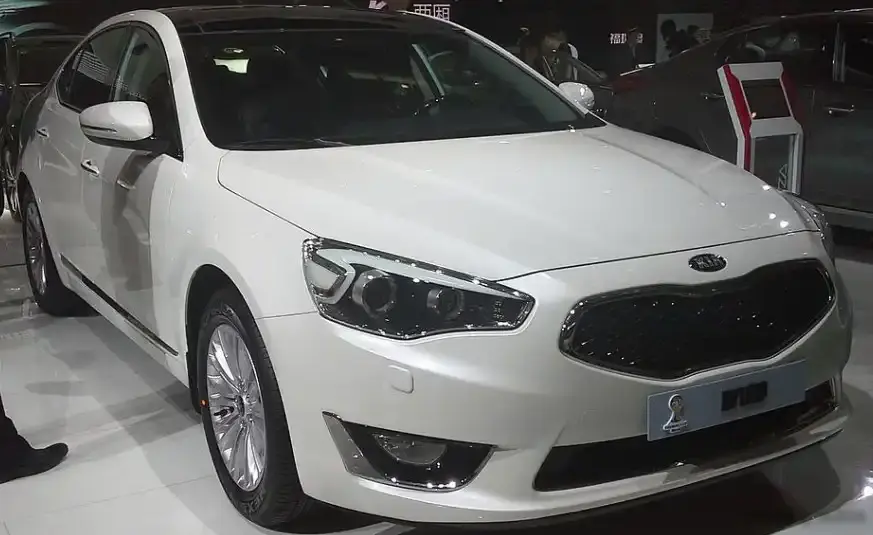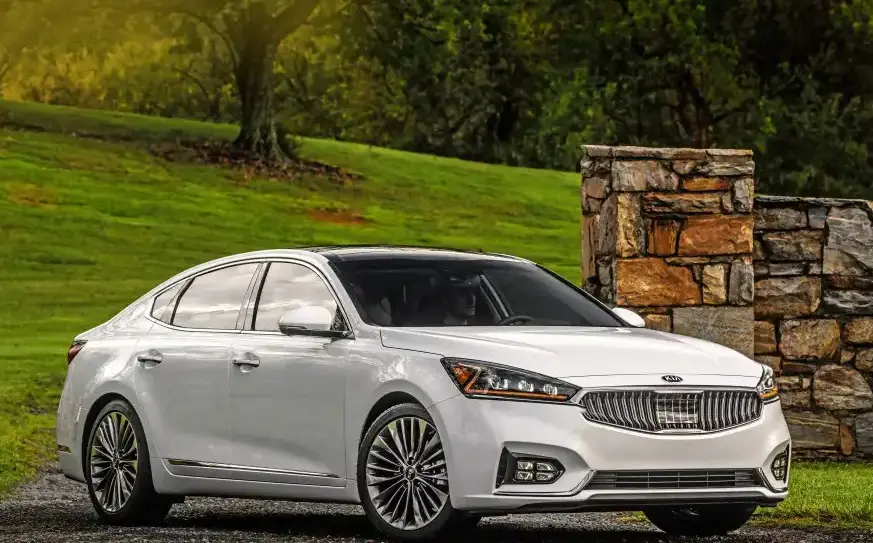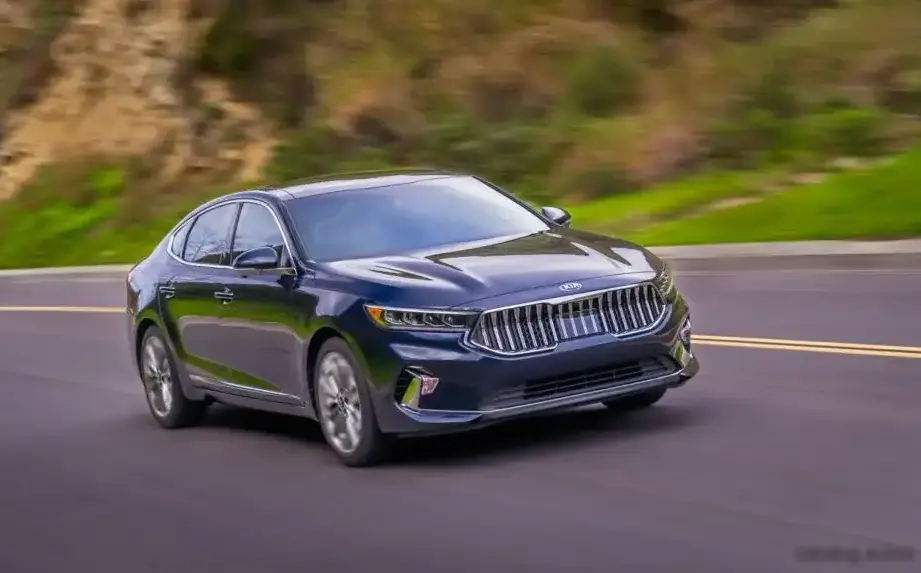
The Kia Cadenza, launched in 2009, represented Kia’s ambitious foray into the full-size sedan segment, aiming to compete with established players like the Toyota Avalon and Honda Accord. The first generation, designated the Cadenza I (VG), was produced from 2009 to 2013 and offered a single engine option in most markets – a 2.7-liter V6 paired with a six-speed automatic transmission. This configuration was positioned as the standard offering, providing a balance of comfort, features, and performance for the target buyer. While not a performance flagship, the 2.7L V6 Automatic Cadenza aimed to deliver a refined driving experience and a generous level of equipment at a competitive price point.
Technical Specifications
| Brand | Kia |
| Model | Cadenza |
| Generation | Cadenza I |
| Type (Engine) | 2.7 V6 (200 Hp) Automatic |
| Start of production | 2009 |
| End of production | 2013 |
| Powertrain Architecture | Internal Combustion engine |
| Body type | Sedan |
| Seats | 5 |
| Doors | 4 |
| CO2 emissions | 212 g/km |
| Fuel Type | Petrol (Gasoline) |
| Weight-to-power ratio | 7.8 kg/Hp, 128.9 Hp/tonne |
| Weight-to-torque ratio | 6.1 kg/Nm, 163.8 Nm/tonne |
| Power | 200 Hp @ 6000 rpm |
| Power per litre | 75.3 Hp/l |
| Torque | 254 Nm @ 4500 rpm, 187.34 lb.-ft. @ 4500 rpm |
| Engine layout | Front, Longitudinal |
| Engine Model/Code | Mu / G6EA |
| Engine displacement | 2657 cm3, 162.14 cu. in. |
| Number of cylinders | 6 |
| Engine configuration | V-engine |
| Cylinder Bore | 86.7 mm, 3.41 in. |
| Piston Stroke | 75 mm, 2.95 in. |
| Number of valves per cylinder | 4 |
| Fuel injection system | Multi-port manifold injection |
| Engine aspiration | Naturally aspirated engine |
| Valvetrain | DOHC |
| Engine oil capacity | 4.5 l, 4.76 US qt | 3.96 UK qt |
| Kerb Weight | 1551 kg, 3419.37 lbs |
| Trunk (boot) space – minimum | 451 l, 15.93 cu. ft |
| Fuel tank capacity | 70 l, 18.49 US gal | 15.4 UK gal |
| Length | 4965 mm, 195.47 in |
| Width | 1850 mm, 72.83 in |
| Height | 1475 mm, 58.07 in |
| Wheelbase | 2845 mm, 112.01 in |
| Front track | 1613 mm, 63.5 in |
| Rear (Back) track | 1611 mm, 63.43 in |
| Ride height (ground clearance) | 145 mm, 5.71 in |
| Drag coefficient (Cd) | 0.29 |
| Minimum turning circle (turning diameter) | 11.08 m, 36.35 ft |
| Drivetrain Architecture | The Internal combustion engine (ICE) drives the front wheels of the vehicle. |
| Drive wheel | Front wheel drive |
| Number of gears and type of gearbox | 6 gears, automatic transmission |
| Front brakes | Ventilated discs |
| Rear brakes | Disc |
| Assisting systems | ABS (Anti-lock braking system) |
| Steering type | Steering rack and pinion |
| Tires size | 215/65 R16 |
| Wheel rims size | 6.5J x 16 |
Powertrain & Engine Architecture
The heart of the Cadenza I 2.7 V6 Automatic is the Mu/G6EA engine, a 2.7-liter, naturally aspirated V6. This engine utilizes a cast iron block with an aluminum cylinder head, a common configuration for balancing durability and weight. The engine employs multi-port fuel injection, delivering fuel directly into the intake ports, and a double overhead camshaft (DOHC) valvetrain for optimized airflow and efficient combustion. The 60-degree V-angle contributes to a smoother engine operation and reduced vibrations. The six-speed automatic transmission, sourced from Hyundai (Kia’s parent company), was chosen for its smooth shifting characteristics and contribution to fuel efficiency. While not a particularly advanced transmission by modern standards, it provided adequate performance for the intended use case.
Driving Characteristics
The 200 horsepower and 187 lb-ft of torque produced by the 2.7L V6, when coupled with the six-speed automatic, resulted in a comfortable, but not particularly sporty, driving experience. Acceleration was adequate for everyday driving, with a 0-60 mph time estimated around 9-10 seconds. The automatic transmission was tuned for smoothness and fuel economy, meaning it wasn’t overly aggressive in its shift points. Compared to potential higher-trim levels (had they been offered in the US market with a V8), the 2.7L felt less powerful, especially when fully loaded with passengers and cargo. The gear ratios were optimized for cruising, making it a pleasant highway companion, but less responsive in situations requiring quick acceleration. The front-wheel-drive configuration contributed to predictable handling, but lacked the dynamic capabilities of rear-wheel-drive alternatives.
Equipment & Trim Levels
The Cadenza I 2.7 V6 Automatic typically came well-equipped, even in its base trim. Standard features generally included air conditioning, power windows and locks, a CD player with MP3 compatibility, and alloy wheels. Higher trim levels added features like leather upholstery, a sunroof, a premium sound system, and navigation. Interior upholstery was typically cloth on the base model, with leather available as an upgrade. The dashboard layout was straightforward and functional, prioritizing ease of use over flashy design. Optional extras included a rear-view camera, heated seats, and automatic climate control.
Chassis & Braking
The Cadenza I utilized a front-wheel-drive platform with an independent suspension setup in the front (typically MacPherson struts) and a multi-link suspension in the rear. This configuration aimed to provide a comfortable ride and reasonable handling. The braking system consisted of ventilated discs on the front wheels and solid discs on the rear. Anti-lock braking system (ABS) was standard. The suspension tuning was geared towards comfort, resulting in a softer ride quality. Stabilizer bars were included to reduce body roll during cornering, but the overall handling characteristics were more focused on stability than agility.
Market Reception & Comparison
The Kia Cadenza I 2.7 V6 Automatic received generally positive reviews for its value proposition. Critics praised its spacious interior, comfortable ride, and generous list of standard features. However, some reviewers noted that the engine lacked the refinement and power of some of its competitors. Fuel economy was considered average for the segment, at around 19 mpg city and 26 mpg highway. Compared to other trims, the 2.7L Automatic was the most accessible option, appealing to buyers prioritizing affordability and comfort over performance. Reliability was generally good, with few widespread mechanical issues reported.
Legacy
The Kia Cadenza I 2.7 V6 Automatic played a significant role in establishing Kia as a credible competitor in the full-size sedan market. While the powertrain isn’t known for exceptional longevity or high performance, it has proven to be reasonably reliable in the used car market. Today, these Cadenzas are often found as affordable and comfortable transportation options. Maintenance costs are generally moderate, and parts availability is good. The 2.7L V6 Automatic Cadenza represents a solid, if unspectacular, entry point into the world of full-size Korean sedans, offering a blend of practicality, comfort, and value.