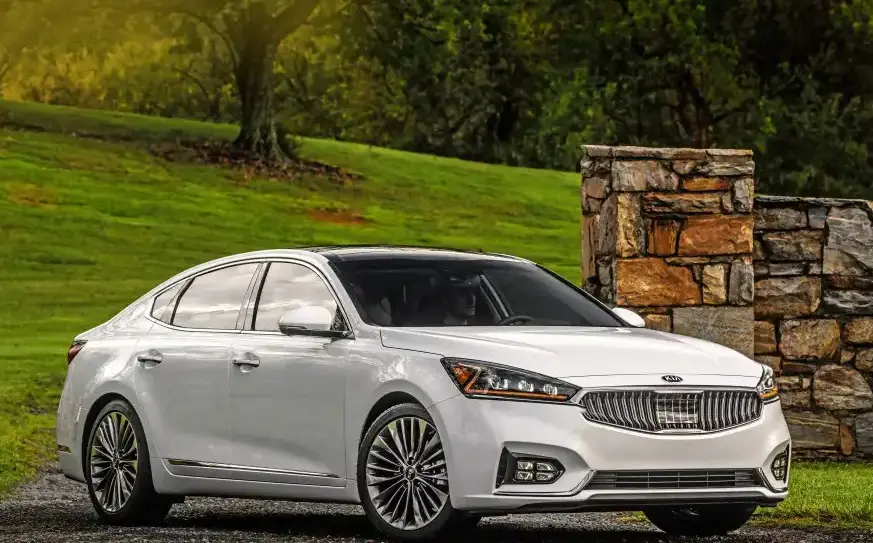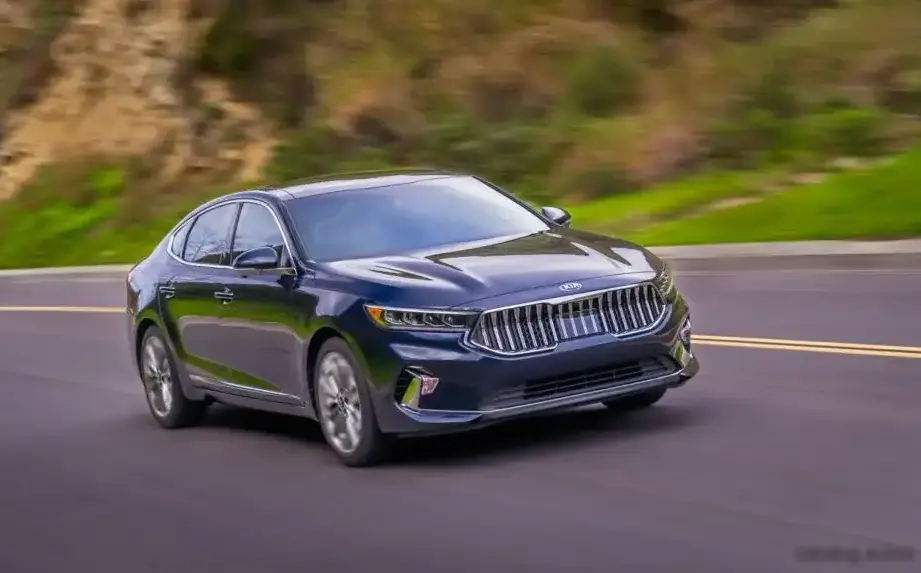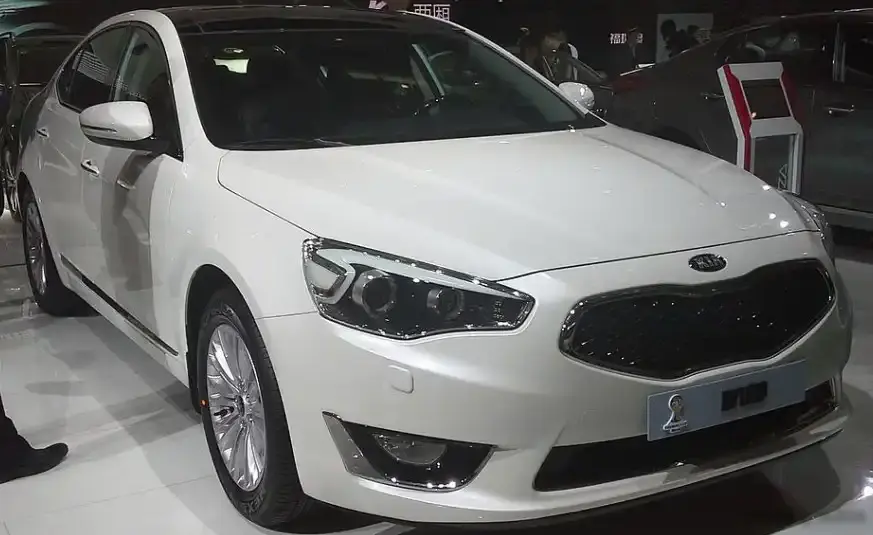
The Kia Cadenza, launched in 2013 as a mid-size sedan, represented Kia’s ambition to move further upmarket and compete with established Japanese and American brands. The first generation, internally designated VG, underwent a significant facelift in 2013, introducing a more refined exterior and interior, along with updated technology. The 3.3 GDI V6 Sportmatic variant, produced from 2013 to 2016, was positioned as the premium offering within the Cadenza lineup, boasting a powerful engine and a six-speed automatic transmission with a manual shift mode. This model aimed to deliver a blend of luxury, performance, and value in the competitive full-size sedan segment.
Technical Specifications
| Brand | Kia |
| Model | Cadenza |
| Generation | Cadenza I (facelift 2013) |
| Type (Engine) | 3.3 GDI V6 (297 Hp) Sportmatic |
| Start of production | 2013 |
| End of production | 2016 |
| Powertrain Architecture | Internal Combustion engine |
| Body type | Sedan |
| Seats | 5 |
| Doors | 4 |
| Fuel Type | Petrol (Gasoline) |
| Weight-to-power ratio | 5.8 kg/Hp, 173 Hp/tonne |
| Weight-to-torque ratio | 5 kg/Nm, 201.5 Nm/tonne |
| Power | 297 Hp @ 6800 rpm |
| Power per litre | 88.9 Hp/l |
| Torque | 346 Nm @ 5200 rpm, 255.2 lb.-ft. @ 5200 rpm |
| Engine layout | Middle, Transverse |
| Engine Model/Code | Lambda II / G6DH |
| Engine displacement | 3342 cm3, 203.94 cu. in. |
| Number of cylinders | 6 |
| Engine configuration | V-engine |
| Cylinder Bore | 92 mm, 3.62 in. |
| Piston Stroke | 83.8 mm, 3.3 in. |
| Compression ratio | 12:1 |
| Number of valves per cylinder | 4 |
| Fuel injection system | Direct injection |
| Engine oil capacity | 5.7 l, 6.02 US qt | 5.02 UK qt |
| Coolant | 8.4 l, 8.88 US qt | 7.39 UK qt |
| Kerb Weight | 1717 kg, 3785.34 lbs |
| Trunk (boot) space – minimum | 450 l, 15.89 cu. ft |
| Fuel tank capacity | 70 l, 18.49 US gal | 15.4 UK gal |
| Length | 4965 mm, 195.47 in |
| Width | 1850 mm, 72.83 in |
| Height | 1475 mm, 58.07 in |
| Wheelbase | 2845 mm, 112.01 in |
| Front track | 1600 mm, 62.99 in |
| Rear (Back) track | 1600 mm, 62.99 in |
| Ride height (ground clearance) | 137 mm, 5.39 in |
| Drag coefficient (Cd) | 0.29 |
| Minimum turning circle (turning diameter) | 11.12 m, 36.48 ft |
| Drivetrain Architecture | The Internal combustion engine (ICE) drives the front wheels of the vehicle. |
| Drive wheel | Front wheel drive |
| Number of gears and type of gearbox | 6 gears, automatic transmission |
| Front suspension | Independent, type McPherson with coil spring and anti-roll bar |
| Rear suspension | Independent multi-link spring suspension with stabilizer |
| Front brakes | Ventilated discs |
| Rear brakes | Disc |
| Assisting systems | ABS (Anti-lock braking system) |
| Steering type | Steering rack and pinion |
| Tires size | 245/40 R19 |
| Wheel rims size | 19 |
Powertrain & Engine Architecture
The heart of the 2013-2016 Kia Cadenza 3.3 GDI was the Lambda II V6 engine, specifically the G6DH code. This engine featured a 60-degree V-angle and utilized aluminum-alloy construction for reduced weight. The “GDI” designation signifies Gasoline Direct Injection, a technology that injects fuel directly into the combustion chamber, improving efficiency and power output. The engine boasted a relatively high 12:1 compression ratio, contributing to its performance. The valvetrain employed dual continuously variable valve timing (CVVT) on both intake and exhaust valves, optimizing engine breathing across the rev range. The six-speed automatic transmission, branded as ‘Sportmatic’, offered a manual shift mode allowing drivers some control over gear selection. This transmission was designed for smooth operation and efficient power delivery, though it wasn’t known for particularly sporty or quick shifts.
Driving Characteristics
The 297 horsepower and 255 lb-ft of torque provided by the 3.3L V6 and six-speed automatic resulted in brisk acceleration. While not a sports sedan, the Cadenza offered confident passing power and a comfortable highway cruising experience. The automatic transmission was tuned for smoothness rather than aggressive downshifts, which some reviewers found a bit lacking in responsiveness. The gear ratios were optimized for fuel efficiency and relaxed driving, prioritizing comfort over outright performance. Compared to the base 2.4L four-cylinder Cadenza, the V6 offered a significant power upgrade, resulting in noticeably quicker acceleration and a more refined driving experience. It didn’t quite match the performance of some of its American rivals with larger displacement engines, but it provided a competitive level of power for its class.
Equipment & Trim Levels
The 3.3 GDI Sportmatic trim was the top-of-the-line Cadenza, and came standard with a generous array of features. These included leather upholstery, heated and ventilated front seats, a premium audio system (often a Lexicon sound system), a touchscreen infotainment system with navigation, a rearview camera, and a suite of safety features like ABS, electronic stability control, and multiple airbags. Optional extras included a panoramic sunroof, adaptive cruise control, and blind-spot monitoring. Interior trim typically featured woodgrain accents and chrome detailing, aiming for a luxurious feel. The dashboard layout was driver-focused, with intuitive controls and a clear instrument cluster.
Chassis & Braking
The Cadenza utilized a front-wheel-drive platform with an independent McPherson strut suspension in the front and an independent multi-link suspension in the rear. This setup aimed to provide a comfortable ride while maintaining reasonable handling characteristics. Stabilizer bars were included at both ends to reduce body roll during cornering. The braking system consisted of ventilated discs at the front and solid discs at the rear, providing adequate stopping power for the vehicle’s weight. ABS (Anti-lock Braking System) was standard, enhancing safety during emergency braking situations. The suspension tuning was geared towards comfort, prioritizing a smooth ride over sporty handling.
Market Reception & Comparison
The 2013-2016 Kia Cadenza 3.3 GDI Sportmatic received generally positive reviews. Critics praised its spacious interior, comfortable ride, and long list of standard features for the price. The V6 engine was lauded for its smooth power delivery, although some found the automatic transmission a bit uninspired. Fuel economy was considered average for its class. Compared to other trims in the Cadenza lineup, the 3.3 GDI offered a significant performance advantage, but at a higher price point. It competed with vehicles like the Toyota Avalon, Honda Accord V6, and Buick LaCrosse, offering a compelling alternative with a longer warranty and a more modern design.
Legacy
The Lambda II V6 engine, in general, has proven to be a relatively reliable powertrain. The G6DH variant in the Cadenza is no exception, with many examples exceeding 150,000 miles with proper maintenance. Common issues are relatively minor, often related to fuel injectors or the cooling system. The six-speed automatic transmission is also generally reliable, though some owners have reported occasional issues with shifting smoothness as the vehicle ages. On the used car market, the 2013-2016 Kia Cadenza 3.3 GDI Sportmatic represents a good value proposition, offering a comfortable and well-equipped sedan at an affordable price. Its reputation for reliability and Kia’s generous warranty contribute to its continued appeal among used car buyers.