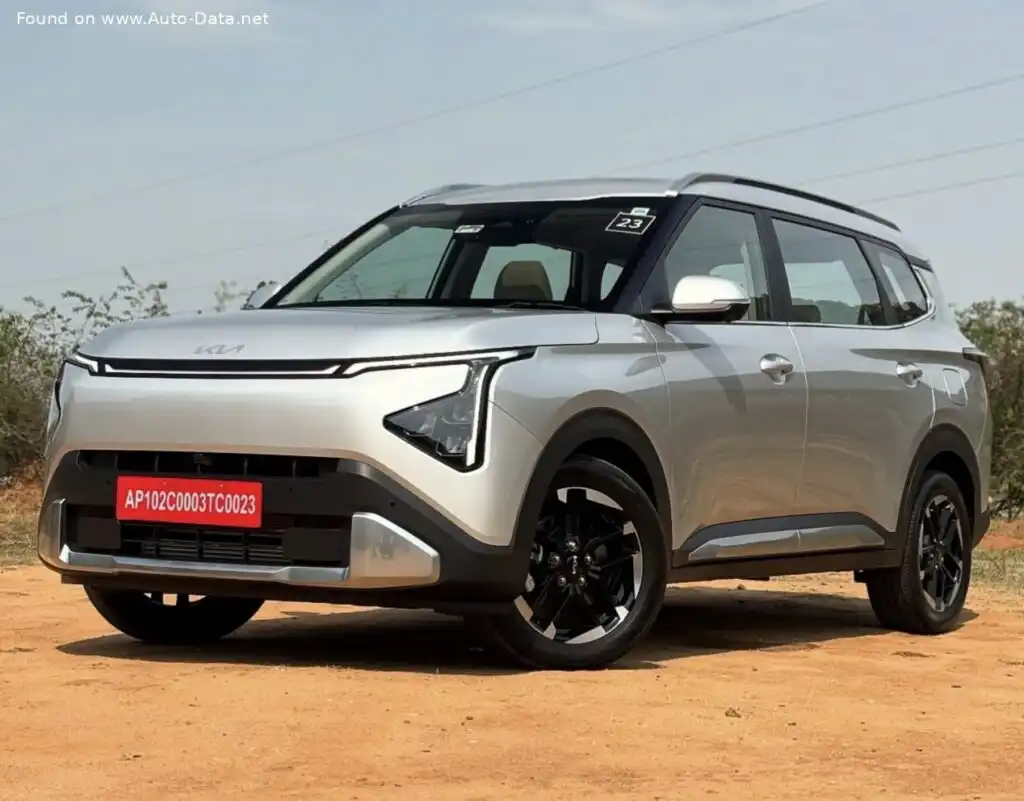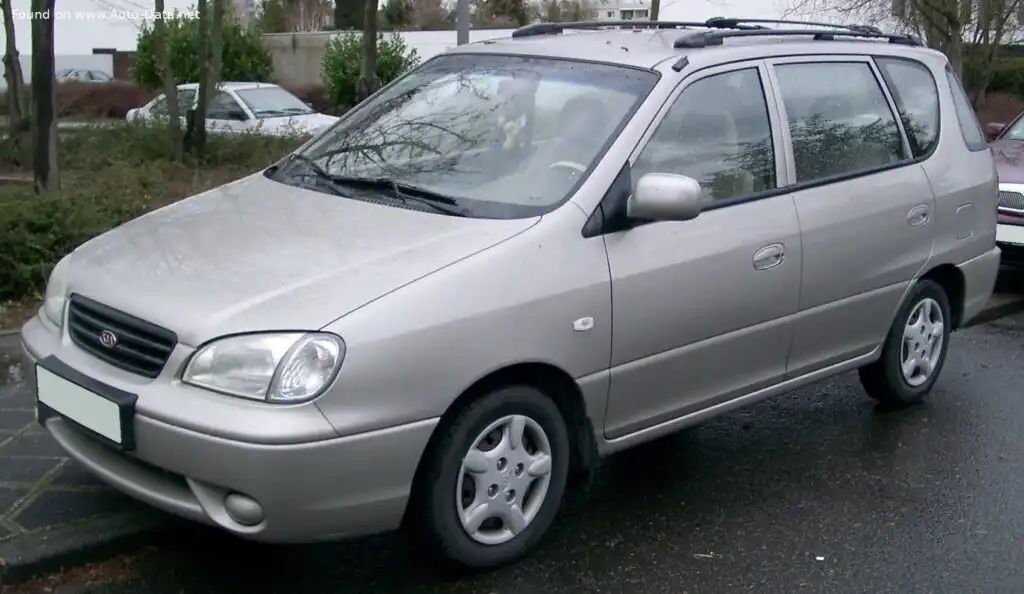
The Kia Carens II 2.0i 16V, produced between 2006 and 2010, represents a significant iteration of Kia’s multi-purpose vehicle (MPV) offering. Positioned as a mid-range trim within the second-generation Carens (UN) lineup, this variant aimed to balance practicality, fuel efficiency, and a reasonable level of performance for family transportation. Built on the Kia ED platform, the Carens II sought to establish Kia as a more competitive player in the European and Asian MPV markets, offering a seven-seat configuration in a relatively compact package. This specific 2.0-liter engine and five-speed manual transmission combination was a popular choice, offering a compromise between the base 1.6L engine and the more expensive diesel options.
Technical Specifications
| Brand | Kia |
| Model | Carens |
| Generation | Carens II |
| Type (Engine) | 2.0i 16V (144 Hp) |
| Start of production | 2006 |
| End of production | 2010 |
| Powertrain Architecture | Internal Combustion engine |
| Body type | MPV |
| Seats | 7 |
| Doors | 5 |
| Fuel consumption (urban) | 10.8 l/100 km (21.8 US mpg) |
| Fuel consumption (extra urban) | 6.6 l/100 km (35.6 US mpg) |
| Fuel Type | Petrol (Gasoline) |
| Acceleration 0 – 100 km/h | 11 sec |
| Acceleration 0 – 62 mph | 11 sec |
| Acceleration 0 – 60 mph | 10.5 sec |
| Maximum speed | 190 km/h (118.06 mph) |
| Weight-to-power ratio | 10.3 kg/Hp |
| Weight-to-torque ratio | 7.9 kg/Nm |
| Power | 144 Hp @ 6000 rpm |
| Power per litre | 72.1 Hp/l |
| Torque | 189 Nm @ 4250 rpm (139.4 lb.-ft. @ 4250 rpm) |
| Engine layout | Front, Transverse |
| Engine Model/Code | Theta II / G4KA |
| Engine displacement | 1998 cm3 (121.93 cu. in.) |
| Number of cylinders | 4 |
| Engine configuration | Inline |
| Cylinder Bore | 86 mm (3.39 in.) |
| Piston Stroke | 86 mm (3.39 in.) |
| Compression ratio | 10.5:1 |
| Number of valves per cylinder | 4 |
| Fuel injection system | Multi-port manifold injection |
| Engine aspiration | Naturally aspirated engine |
| Engine oil capacity | 4 l (4.23 US qt | 3.52 UK qt) |
| Coolant capacity | 6.7 l (7.08 US qt | 5.9 UK qt) |
| Kerb Weight | 1490 kg (3284.89 lbs.) |
| Max. weight | 2155 kg (4750.96 lbs.) |
| Max load | 665 kg (1466.07 lbs.) |
| Trunk (boot) space – minimum | 400 l (14.13 cu. ft.) |
| Trunk (boot) space – maximum | 2106 l (74.37 cu. ft.) |
| Fuel tank capacity | 60 l (15.85 US gal | 13.2 UK gal) |
| Length | 4545 mm (178.94 in.) |
| Width | 1820 mm (71.65 in.) |
| Height | 1650 mm (64.96 in.) |
| Wheelbase | 2690 mm (105.91 in.) |
| Front track | 1575 mm (62.01 in.) |
| Rear track | 1570 mm (61.81 in.) |
| Drivetrain Architecture | Front wheel drive |
| Number of gears | 5 |
| Gearbox type | Manual transmission |
| Front suspension | Independent, McPherson with coil spring and anti-roll bar |
| Rear suspension | Independent multi-link with stabilizer |
| Front brakes | Disc |
| Rear brakes | Disc |
| Assisting systems | ABS (Anti-lock braking system) |
| Tires size | 205/60 R16 |
| Wheel rims size | 16 |
Introduction
The Kia Carens II 2.0i 16V, launched in 2006, was a key model in Kia’s efforts to gain a stronger foothold in the competitive MPV segment. Building upon the foundation laid by the first-generation Carens, the second generation offered improved styling, increased interior space, and a wider range of engine options. This 2.0-liter variant, equipped with a five-speed manual transmission, was designed to appeal to buyers seeking a practical and reasonably efficient family vehicle. It occupied a middle ground in the Carens II lineup, offering more performance than the base 1.6L engine but at a lower price point than the diesel alternatives. The Carens II was primarily marketed in Europe and Asia, where the demand for compact MPVs was particularly strong.
Powertrain & Engine Architecture
At the heart of the Carens II 2.0i 16V lies the Kia Theta II engine, specifically the G4KA code. This 1998cc inline-four cylinder engine utilizes a naturally aspirated configuration and a multi-port fuel injection (MPI) system. The 16-valve dual overhead camshaft (DOHC) valvetrain contributes to its relatively efficient operation. The engine produces 144 horsepower at 6000 rpm and 189 Nm (139.4 lb-ft) of torque at 4250 rpm. The five-speed manual transmission was the standard offering for this trim, providing drivers with direct control over gear selection. The transmission’s gear ratios were tuned for a balance of fuel economy and acceptable acceleration. The Theta II engine family was known for its relatively simple design, contributing to its overall reliability.
Driving Characteristics
The driving experience in the Carens II 2.0i 16V is characterized by adequate, but not exhilarating, performance. Acceleration from 0-60 mph takes approximately 10.5 seconds, and the top speed is around 118 mph. Compared to the base 1.6L engine, the 2.0L offers noticeably more power, making it easier to carry a full load of passengers and luggage, especially on inclines or when overtaking. However, it doesn’t possess the low-end torque of the diesel variants. The five-speed manual transmission allows for precise gear changes, and the gear ratios are well-suited for everyday driving. The steering is light and easy to use, making it maneuverable in urban environments, but it lacks the feedback desired by more enthusiastic drivers. The suspension provides a comfortable ride, absorbing bumps and imperfections in the road surface effectively.
Equipment & Trim Levels
The 2.0i 16V trim of the Carens II typically included features such as air conditioning, power windows, central locking, and an integrated audio system. Safety features included ABS brakes and front airbags. Higher trim levels offered additional features like alloy wheels, a sunroof, rear parking sensors, and upgraded interior upholstery. Interior materials were generally durable and practical, reflecting the vehicle’s family-oriented focus. The dashboard layout was functional and easy to use, with clearly labeled controls. Optional extras included a CD changer, upgraded sound system, and metallic paint finishes.
Chassis & Braking
The Carens II utilizes an independent McPherson strut suspension system at the front, providing good handling and ride comfort. The rear suspension employs an independent multi-link setup, further enhancing ride quality and stability. Disc brakes are fitted to all four wheels, providing adequate stopping power. The ABS (Anti-lock Braking System) helps to prevent wheel lockup during emergency braking, improving control and safety. The vehicle’s weight of approximately 1490 kg (3285 lbs) is relatively moderate for its class, contributing to its manageable handling characteristics. Stabilizer bars are present on both the front and rear axles to reduce body roll during cornering.
Market Reception & Comparison
The Kia Carens II 2.0i 16V was generally well-received by automotive critics as a practical and affordable MPV. It was praised for its spacious interior, comfortable ride, and reasonable fuel economy. However, some critics noted that its performance was not as refined as some of its competitors, such as the Renault Scenic or the Volkswagen Touran. Compared to the diesel variants of the Carens II, the 2.0i 16V offered lower running costs in terms of fuel, but it lacked the diesel’s superior torque and fuel efficiency. The 1.6L engine was considered underpowered for a seven-seat MPV, making the 2.0L a more sensible choice for those who frequently carried passengers or luggage.
Legacy
The Kia Carens II 2.0i 16V has proven to be a relatively reliable vehicle in the used car market. The Theta II engine is known for its durability, and the five-speed manual transmission is generally trouble-free. Common maintenance items include regular oil changes, filter replacements, and brake pad replacements. While not known for exceptional performance, the 2.0i 16V offers a good balance of practicality, affordability, and reliability, making it a popular choice for families seeking a used MPV. Today, these vehicles can be found at reasonable prices, offering a cost-effective transportation solution.