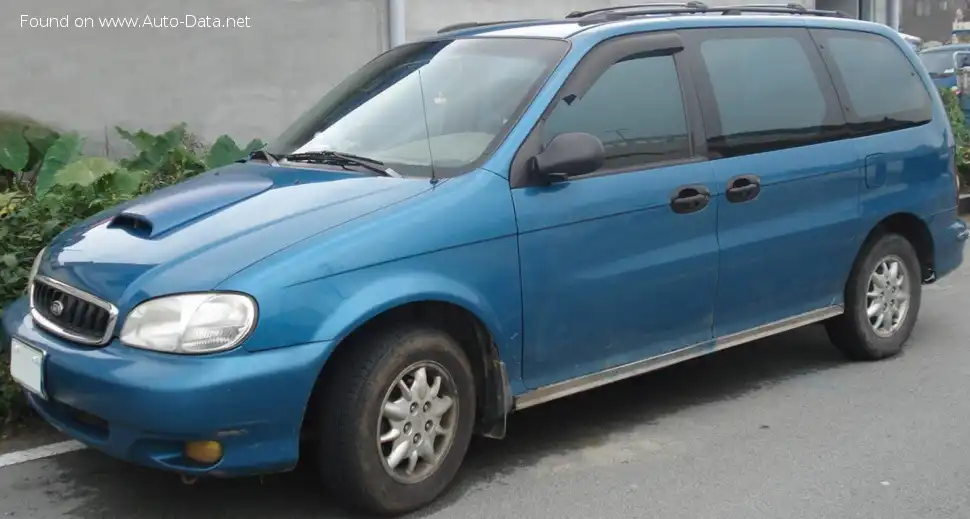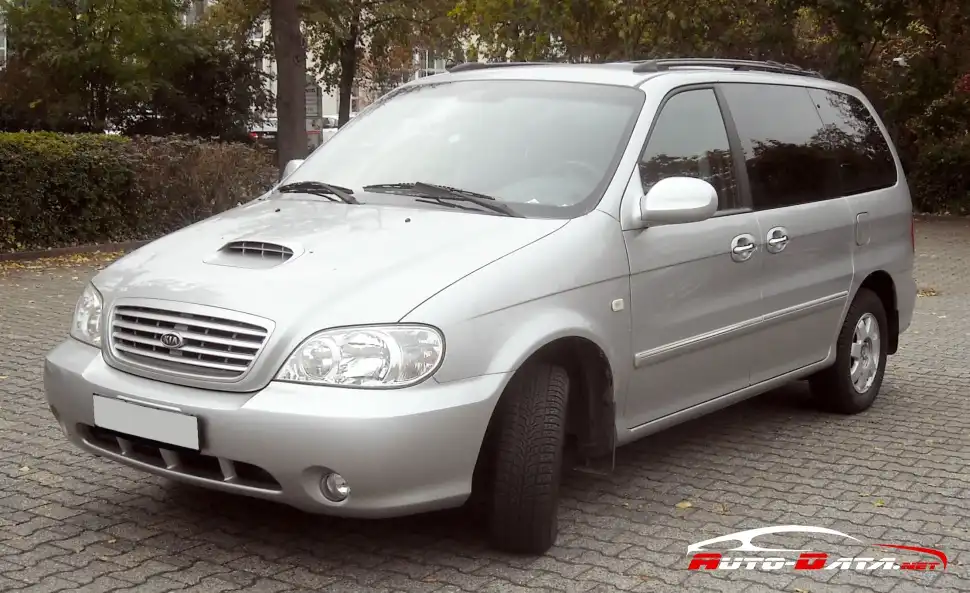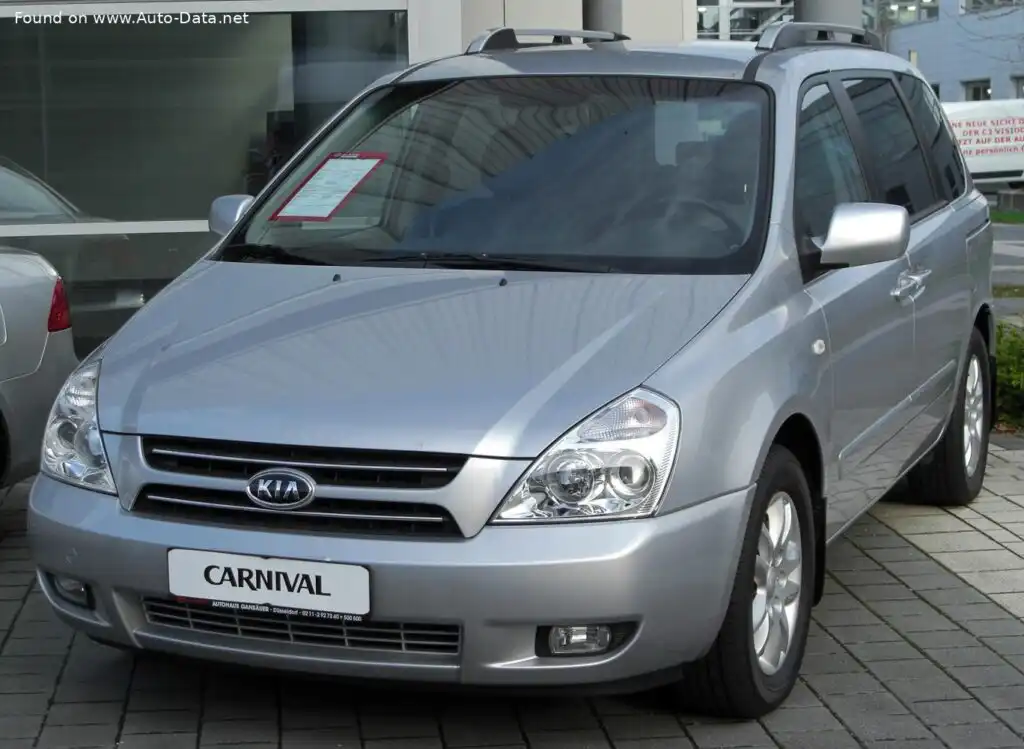
The Kia Carnival II (VQ) 2.9 CRDi Automatic, produced between 2006 and 2010, represented a significant step forward for Kia in the competitive minivan segment. Positioned as a mid-range offering within the VQ Carnival lineup, this variant combined a 2.9-liter turbocharged diesel engine with a five-speed automatic transmission, aiming to provide a balance of fuel efficiency, practicality, and comfortable driving experience. The Carnival, known as the Sedona in the North American market, was Kia’s attempt to establish a foothold against established players like the Dodge Caravan, Chrysler Town & Country, and Honda Odyssey. This specific engine and transmission pairing was primarily aimed at European and Asian markets where diesel engines were more prevalent, though limited numbers were also available in other regions.
Technical Specifications
| Brand | Kia |
| Model | Carnival |
| Generation | Carnival II (VQ) |
| Type (Engine) | 2.9 CRDi (170 Hp) Automatic |
| Start of production | 2006 |
| End of production | 2010 |
| Powertrain Architecture | Internal Combustion engine |
| Body type | Minivan |
| Seats | 7 |
| Doors | 5 |
| Fuel consumption (urban) | 10.7 l/100 km (22 US mpg) |
| Fuel consumption (extra urban) | 6.2 l/100 km (37.9 US mpg) |
| Fuel consumption (combined) | 7.9 l/100 km (29.8 US mpg) |
| Fuel Type | Diesel |
| Weight-to-power ratio | 12.6 kg/Hp |
| Weight-to-torque ratio | 6.1 kg/Nm |
| Power | 170 Hp @ 3700 rpm |
| Power per litre | 58.6 Hp/l |
| Torque | 353 Nm @ 2000-3000 rpm (260.36 lb.-ft.) |
| Engine layout | Front, Transverse |
| Engine displacement | 2902 cm3 (177.09 cu. in.) |
| Number of cylinders | 4 |
| Engine configuration | Inline |
| Cylinder Bore | 97.1 mm (3.82 in.) |
| Piston Stroke | 98 mm (3.86 in.) |
| Number of valves per cylinder | 4 |
| Fuel injection system | Diesel Commonrail |
| Engine aspiration | Turbocharger, Intercooler |
| Valvetrain | DOHC |
| Engine oil capacity | 6.6 l (6.97 US qt | 5.81 UK qt) |
| Coolant capacity | 10 l (10.57 US qt | 8.8 UK qt) |
| Kerb Weight | 2140 kg (4717.89 lbs.) |
| Trunk (boot) space – minimum | 241 l (8.51 cu. ft.) |
| Trunk (boot) space – maximum | 1666 l (58.83 cu. ft.) |
| Fuel tank capacity | 80 l (21.13 US gal | 17.6 UK gal) |
| Length | 4810 mm (189.37 in.) |
| Width | 1985 mm (78.15 in.) |
| Height | 1760 mm (69.29 in.) |
| Wheelbase | 2890 mm (113.78 in.) |
| Front track | 1685 mm (66.34 in.) |
| Rear track | 1685 mm (66.34 in.) |
| Drag coefficient (Cd) | 0.34 |
| Minimum turning circle | 11 m (36.09 ft.) |
| Drivetrain | Front wheel drive |
| Number of gears | 5 |
| Gearbox type | Automatic transmission |
| Front suspension | Independent type McPherson |
| Rear suspension | Dependent spring suspension with transverse stabilizer |
| Front brakes | Ventilated discs |
| Rear brakes | Drum |
| Assisting systems | ABS (Anti-lock braking system) |
| Steering type | Steering rack and pinion |
| Tires size | 235/60 R17 |
| Wheel rims size | 17 |
Powertrain & Engine Architecture
The heart of the Carnival II 2.9 CRDi Automatic is the Kia-developed 2.9-liter inline-four cylinder diesel engine. This engine, internally designated with codes like J3, utilized a common rail direct injection system, a technology that allowed for precise fuel delivery and improved combustion efficiency. The common rail system, supplied by Bosch, operated at extremely high pressures (typically around 16,000 psi) to atomize the fuel into a fine mist, resulting in cleaner emissions and increased power. A turbocharger with an intercooler was employed to further boost power output. The intercooler cooled the compressed air from the turbocharger, increasing its density and allowing for more oxygen to enter the cylinders. The engine featured a double overhead camshaft (DOHC) valvetrain with four valves per cylinder, optimizing airflow for improved performance. The five-speed automatic transmission, sourced from Kia’s own development, was chosen for its smooth shifting characteristics and ease of use, catering to drivers who preferred the convenience of an automatic over a manual gearbox.
Driving Characteristics
The 170 horsepower and 353 Nm (260 lb-ft) of torque produced by the 2.9 CRDi engine provided adequate, though not exhilarating, performance for the relatively heavy Carnival minivan. Acceleration was reasonable, particularly in the lower gears, thanks to the torque-rich diesel engine. However, compared to the more powerful gasoline-powered versions of the Carnival, or even the later 2.2 CRDi models, this variant felt somewhat underpowered, especially when fully loaded with passengers and luggage. The automatic transmission, while smooth, wasn’t particularly quick to downshift, which could sometimes result in a slight delay in response when overtaking or climbing hills. The gear ratios were tuned for fuel efficiency rather than outright performance. The focus was on providing a comfortable and relaxed driving experience, rather than sporty handling.
Equipment & Trim Levels
The 2.9 CRDi Automatic trim typically included features such as air conditioning, power windows and locks, a basic audio system, and alloy wheels. Higher trim levels offered upgrades like leather upholstery, a sunroof, upgraded audio systems with CD changers, and rear parking sensors. Safety features included ABS brakes and dual front airbags. The interior design was functional and practical, with a focus on durability and ease of cleaning. Seating configurations varied, with options for seven or eight passengers, and the rear seats could be folded flat or removed entirely to maximize cargo space.
Chassis & Braking
The Carnival II utilized a front-wheel-drive layout with an independent McPherson strut suspension in the front and a dependent spring suspension with a transverse stabilizer bar in the rear. This suspension setup provided a comfortable ride quality, absorbing bumps and imperfections in the road reasonably well. However, the rear suspension, being a simpler design, wasn’t as sophisticated as the front, and could sometimes feel less controlled when cornering. The braking system consisted of ventilated disc brakes in the front and drum brakes in the rear. While adequate for normal driving conditions, the rear drum brakes were a cost-saving measure and didn’t offer the same stopping power as disc brakes on all four wheels.
Market Reception & Comparison
The Kia Carnival II 2.9 CRDi Automatic received mixed reviews from automotive critics. While praised for its spacious interior, practicality, and relatively affordable price point, it was often criticized for its lack of refinement compared to its Japanese and American competitors. The diesel engine, while fuel-efficient, was considered somewhat noisy and lacked the smoothness of gasoline engines. Compared to the gasoline-powered Carnival variants, the 2.9 CRDi Automatic offered better fuel economy but less overall performance. The 2.2 CRDi engine, introduced in later years, offered a better balance of power and efficiency, quickly becoming the preferred choice for many buyers.
Legacy
The Kia Carnival II 2.9 CRDi Automatic, while not the most powerful or refined minivan on the market, proved to be a reliable and practical vehicle. The 2.9-liter diesel engine, when properly maintained, is known for its durability and longevity. Today, these vehicles can be found in the used car market at relatively affordable prices. Common issues include wear and tear on suspension components, potential problems with the automatic transmission (requiring regular fluid changes), and occasional issues with the fuel injection system. Despite these potential issues, the Carnival II 2.9 CRDi Automatic remains a viable option for budget-conscious buyers seeking a spacious and practical family vehicle.